


 Beachnutts


 Philippines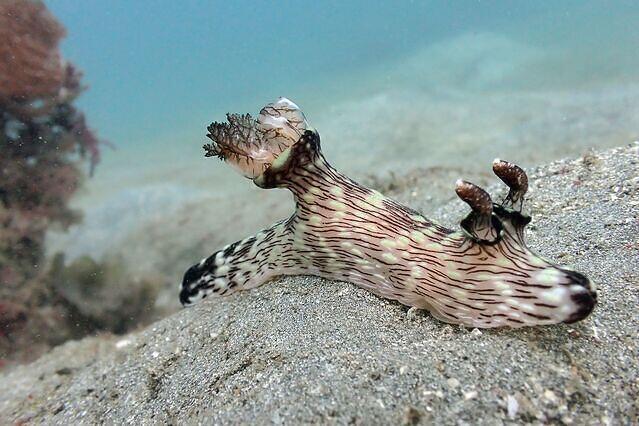
-
Nº139
 Date: 2024-06-04 - 12:19
-
 Max Depth: 19.5m Duration: 78mins
Dive Location

- Surface interval:68 mins
- Temp: Surf 28°C Bottom 28°C
- Dive type : Recreational, Reef, Photo, Muck Dive
- Visibility: Good Water: Salt
Specific gear used
- BCD: Scubapro - Glide Plus
- Camera: Olympus - TG6
- Compass:
- Computer: Oceanic - OCS
- Fins: Scubapro - Jet Fins
- Knife: Scuba MAx - folding
- Lift bag: ScubaMax - SMB
- Light: Sofirn - SD05
- Mask: Promate - Scope
- Regulator: SEAC - Synchro
- Wet suit: Blue Ocean - Diveskin
- Fins: Scubapro - Go Rescue
- Weights: 3.2 kg
Dive reviews
| Overall review | ||
| Dive difficulty | ||
| Marine life quality |
Dive Shop & Buddies
 Dive with Blake Auge
 Dive buddies:
Beachnutts
Dive buddies:
Beachnutts

Link to this spot:
- Spot:
- Country:
- Area:
- Body of water:
Dive Profile
- 1. Air
- 10L Aluminium 207 → 17 bar
- Average depth: 13m
Data provided by EOL.org







Species Identified
Mesosignum latum Birstein, 1970
Gigantione pratti Danforth, 1967
Limicolana dinjerra Bruce, 1986A
Paradella tuberculata Muller, 1991E
Munna nasuta Kussakin & Mezhov, 1979
Moina rectirostris (Leydig, 1860)
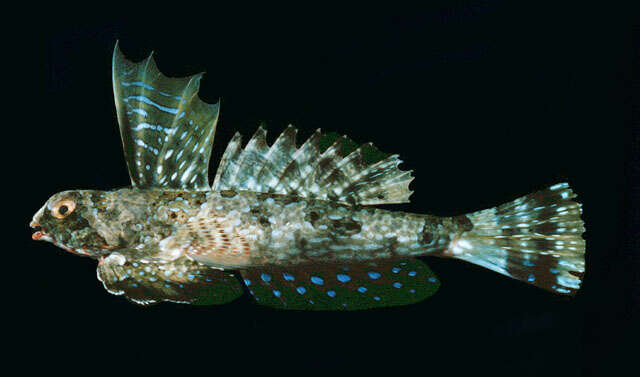
Synchiropus lineolatus (Valenciennes, 1837) (线纹连鳍)
Synchiropus altivelis (Temminck & Schlegel, 1845) (Dragonet)
Inhabits deep trawling grounds .
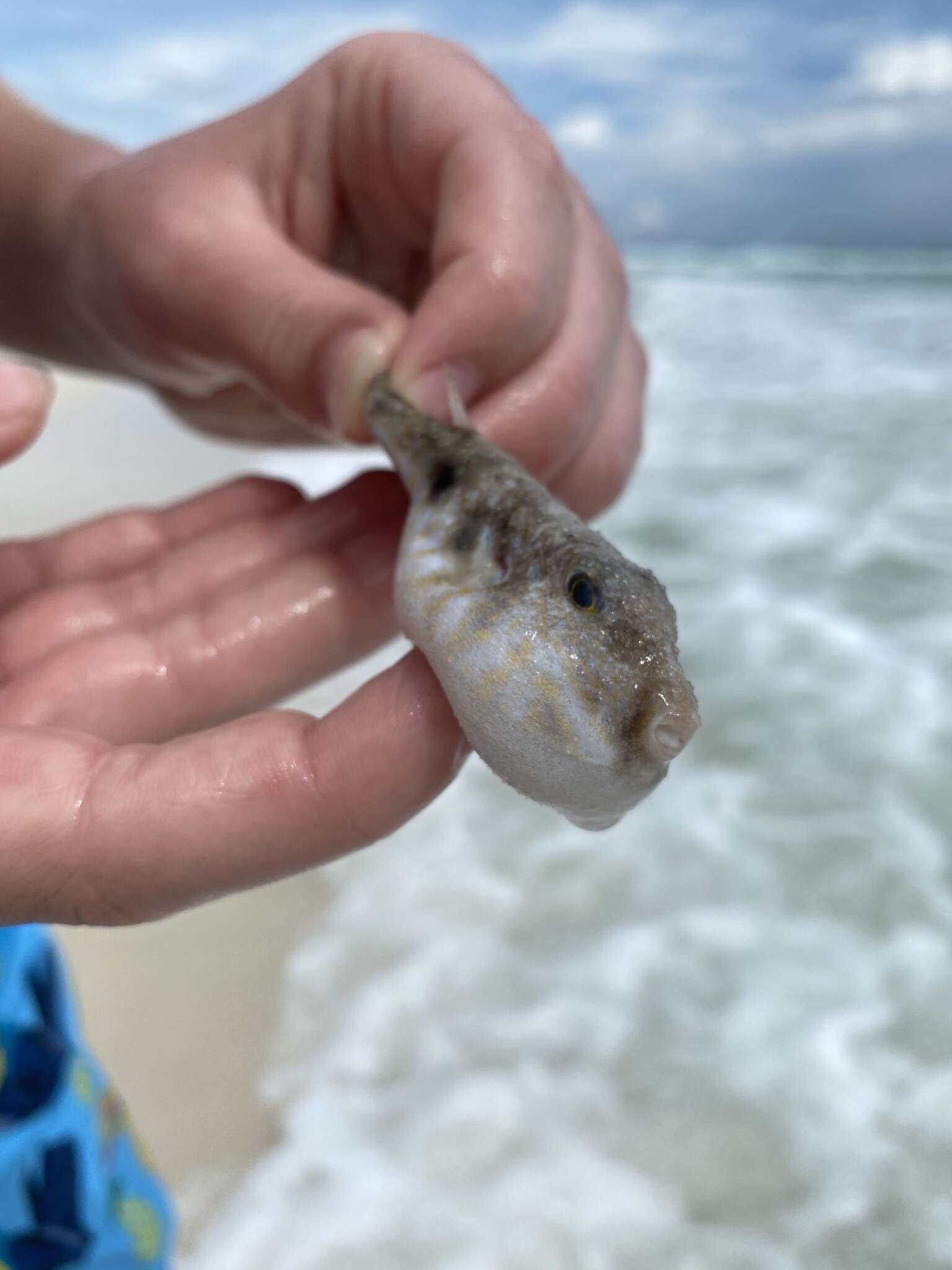
Sphoeroides parvus Shipp and Yerger, 1969 (Puffer)
Inhabits shallow, turbid coastal waters and estuaries.
Sphoeroides dorsalis Longley, 1934 (Puffer)
Found over soft bottoms.
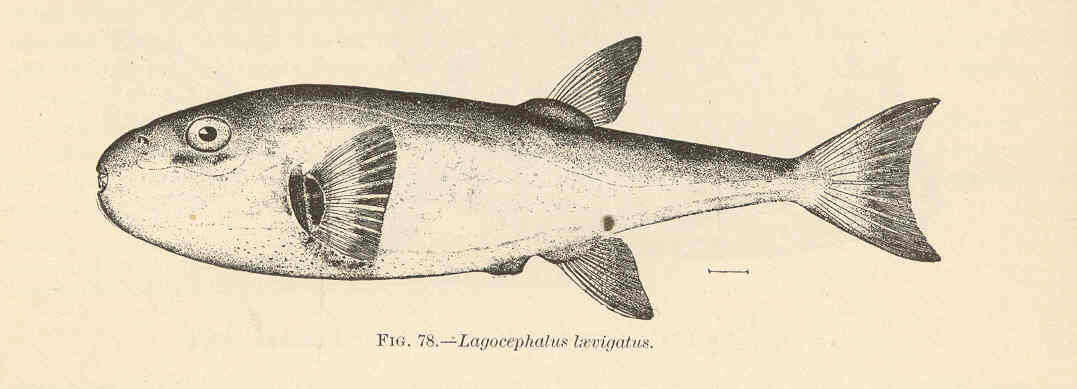
Lagocephalus laevigatus (Linnaeus, 1766) (Puffer)
Inhabits inshore and near-shore areas, over sand or mud bottoms. Usually found alone or in small, loose aggregates. Adults are pelagic, but near continental margins; young are commonly found on coastal and offshore banks...
Read More
Read More
Canthigaster ocellicincta Allen & Randall, 1977 (Shy toby)
Inhabits invertebrate-rich inshore reef to outer reef walls where usually in caves in depths of about 25 meters or more. Found singly or in pairs and on one occasion a small groups was observed among plate-corals on soft ...
Read More
Read More
Halichoeres semicinctus (Ayres, 1859) (rock wrasse)
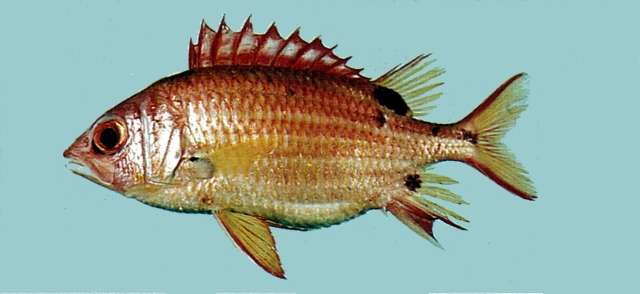
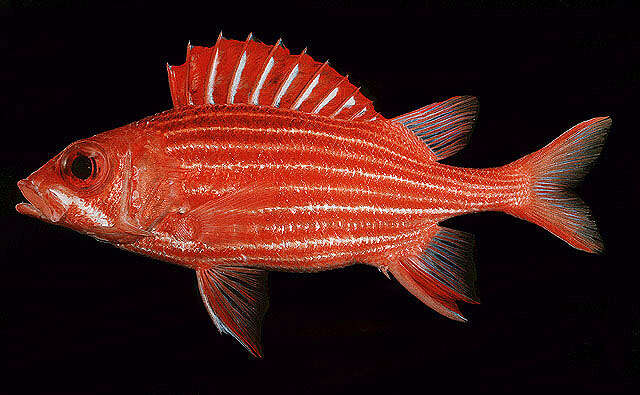
Sargocentron cornutum (Bleeker, 1853) (Squirrelfish)
Inhabits coral-rich areas of outer reef slopes and drop-offs to depths greater than 40 m . Hides in caves or beneath ledges by day; forage for food at night, mainly on benthic crabs and shrimps. Spine of preopercle venomous.
Sargocentron wilhelmi (De Buen, 1963) (威廉棘鳞鱼)
Collected from irregular rocky substratum .
Cuthona veronicae (A. E. Verrill, 1880)
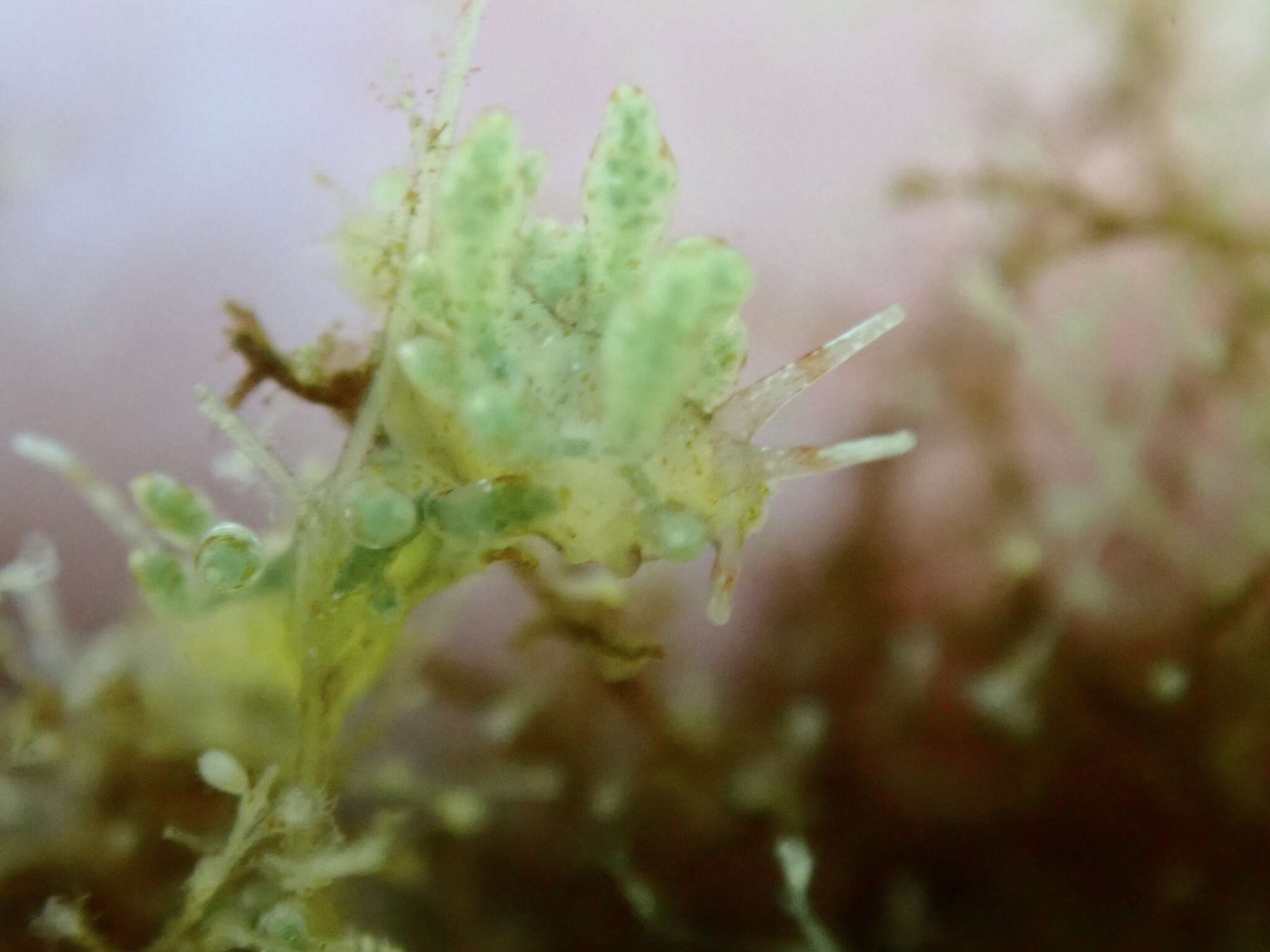
Eubranchus olivaceus (O'Donoghue, 1922) (green balloon aeolis)
Doto formosa A. E. Verrill, 1875
Amphiprion percula (Lacepède, 1802) (Orange clownfish)
Inhabits lagoon and seaward reefs . Each group of fish consists of a breeding pair and 0-4 non-breeders. Within each group there is a size-based hierarchy: the female is largest, the male is second largest, and the non-...
Read More
Read More
Premnas biaculeatus (Bloch, 1790) (Spinecheek anemonefish)
Inhabits lagoon and seaward reefs , found mainly in protected coastal waters and lagoons. Typically found in pairs in which males are much smaller than females . Feeds primarily on zooplankton and benthic algae . Has been reared in captivity . Associated with the anemone Entacmaea quadricolor .
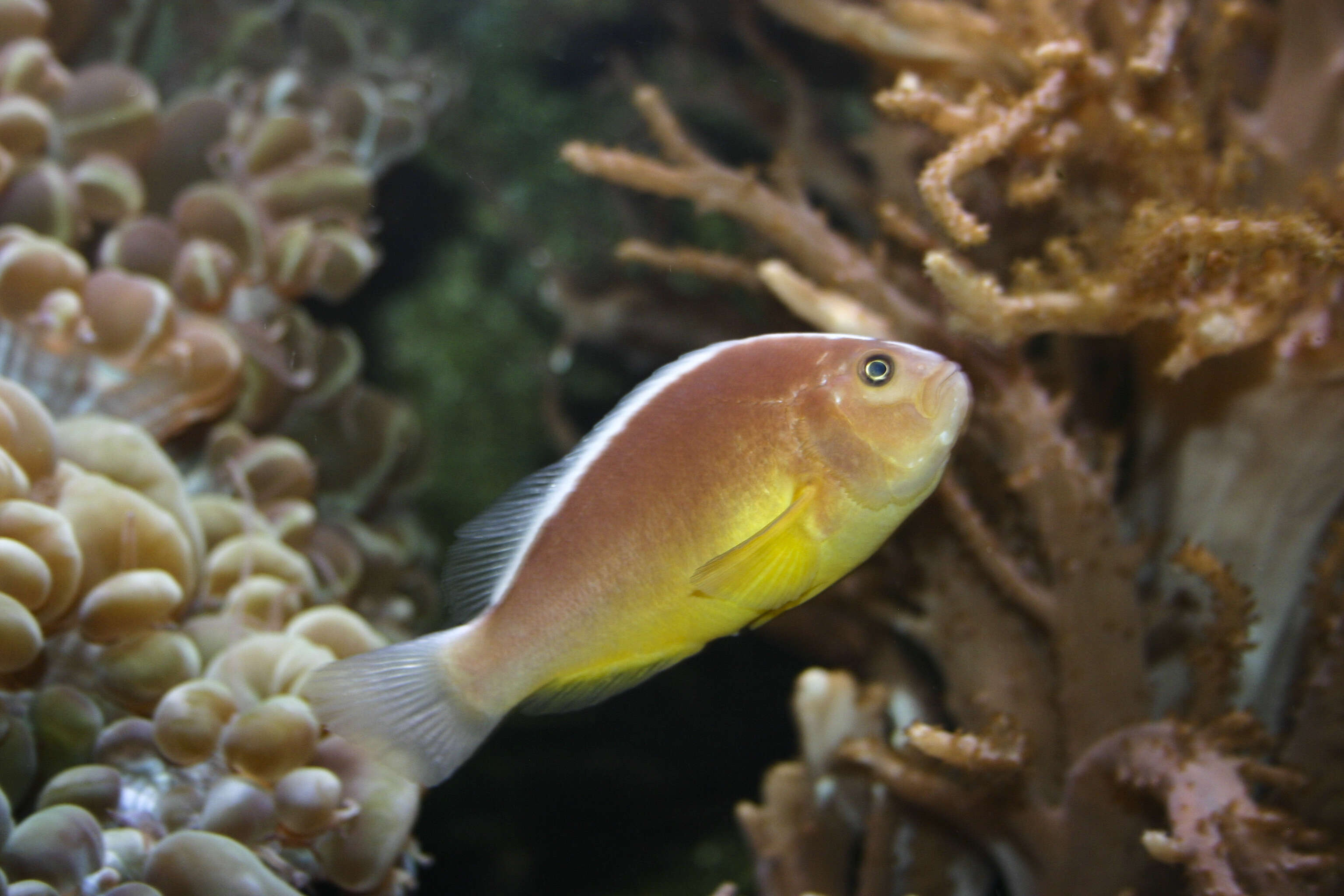
Amphiprion akallopisos Bleeker, 1853 (skunk-stripe anemonefish)
Found in shallow inshore reef habitats, often in strong current zones to about 15 m depth . Are protandrous hermaphrodites . Each pair is monogamous . Each anemone with a large female, a smaller functional male and seve...
Read More
Read More
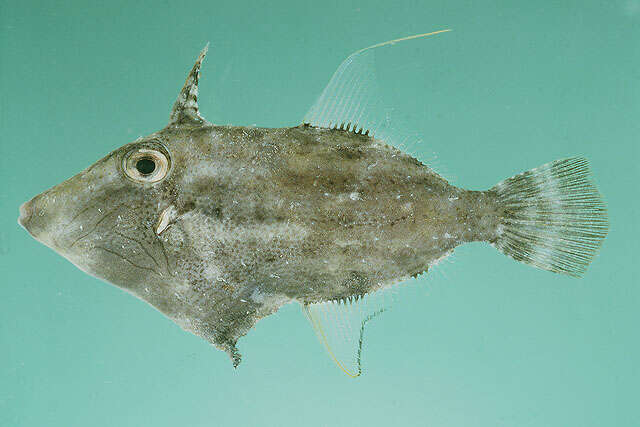
Paramonacanthus nematophorus (Günther, 1870) (线纹副单角鲀)
Stephanolepis cirrhifer (Temminck & Schlegel, 1850) (Thread-sail filefish)
Commercially cultured in Japan. Juveniles associate with drifting seaweed .
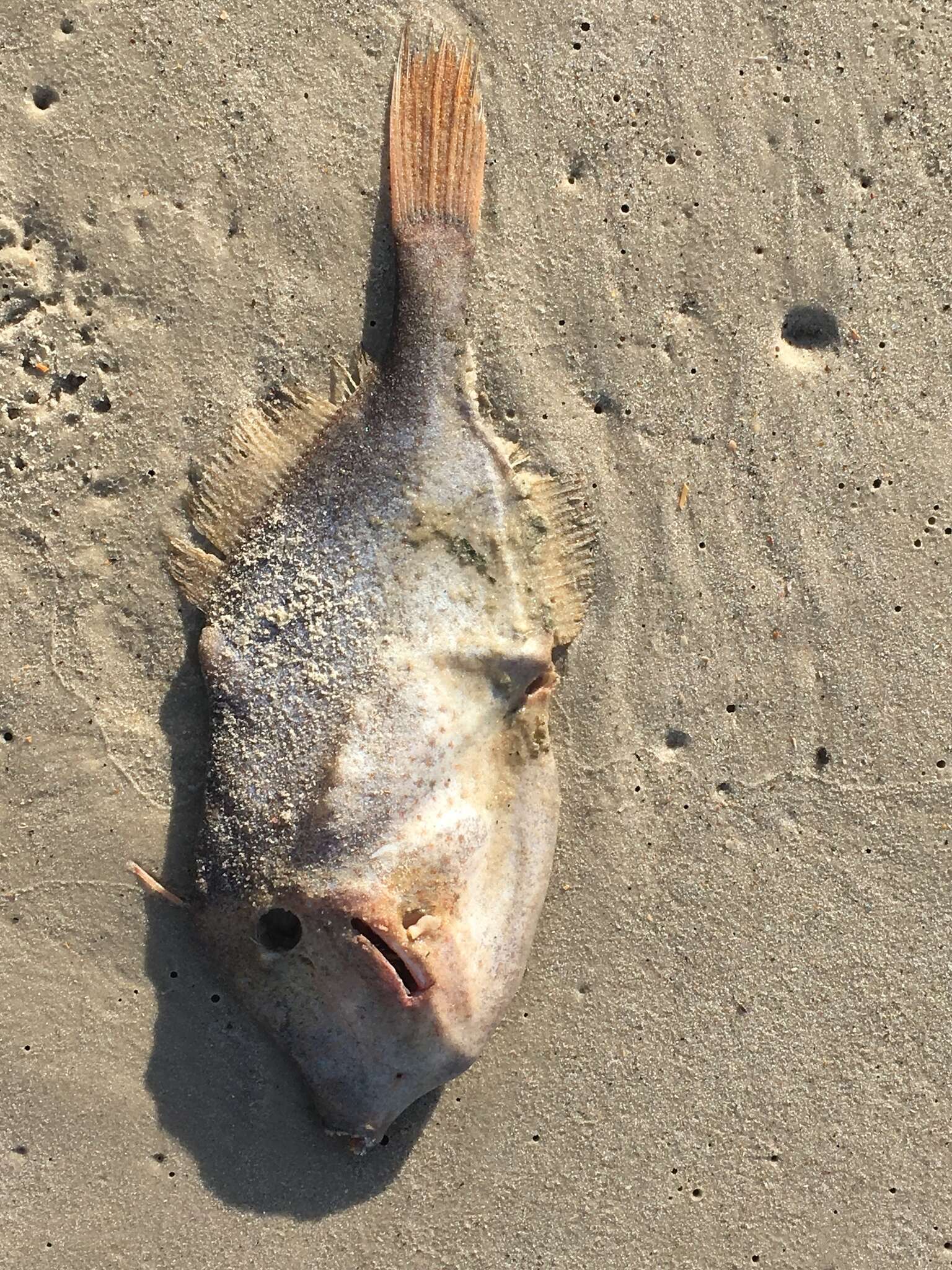
Aluterus schoepfii (Walbaum, 1792) (Orange filefish)
Usually found over bottoms with seagrass, sand, or mud . Juveniles are associated with floating Sargassum. Solitary or in pairs . Feeds on a variety of plants, including algae and seagrasses . Generally considered as trash fish, rarely consumed . Traded as an aquarium fish at Ceará, Brazil .
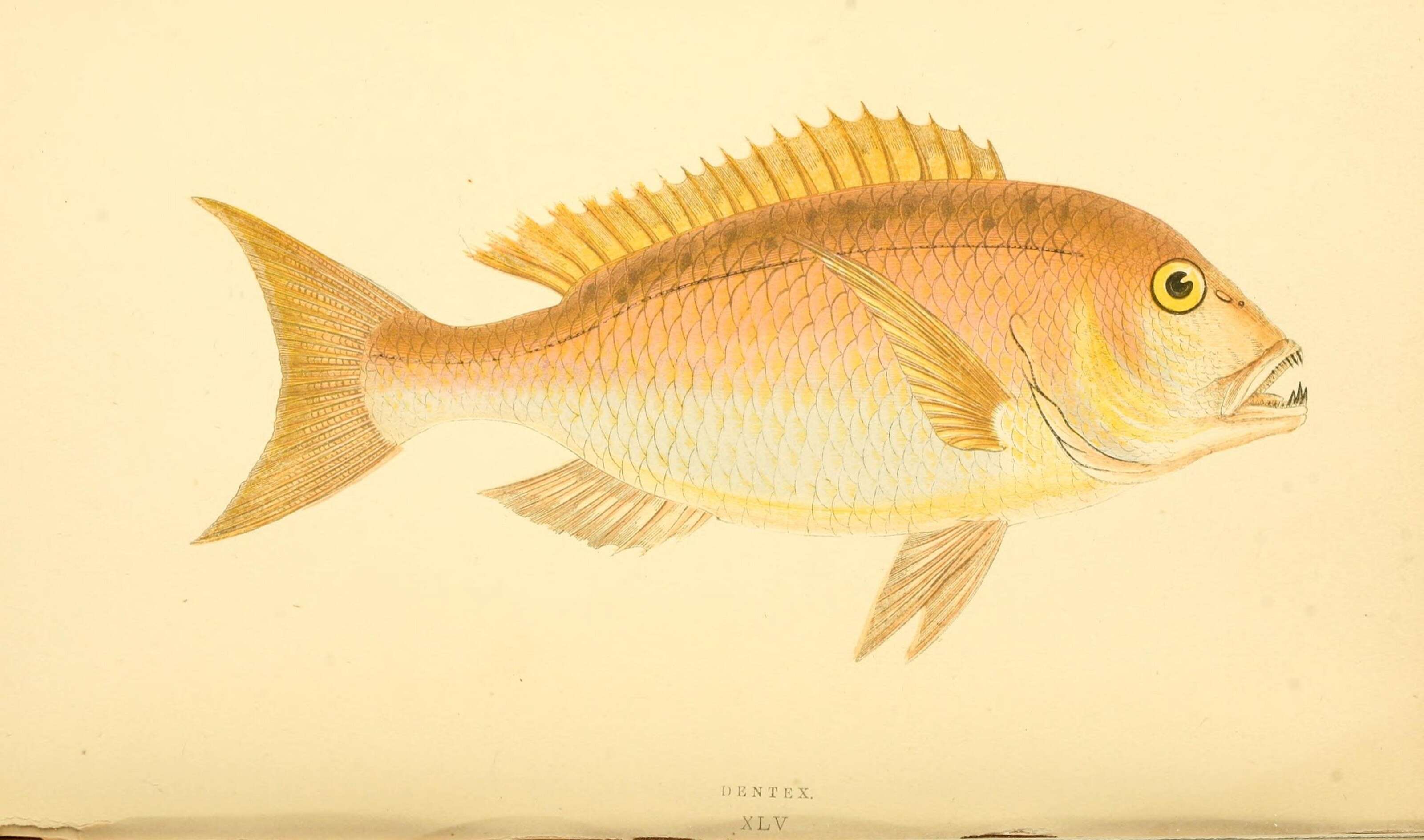
Dentex dentex (Linnaeus, 1758) (Common dentex)
Inhabit hard bottoms down to 200 m depth. Usually found in shallow water less than 50 m deep . Adults solitary; young gregarious . Young fish caught with traps. Feed on fish, mollusks and cephalopods. Important food ...
Read More
Read More
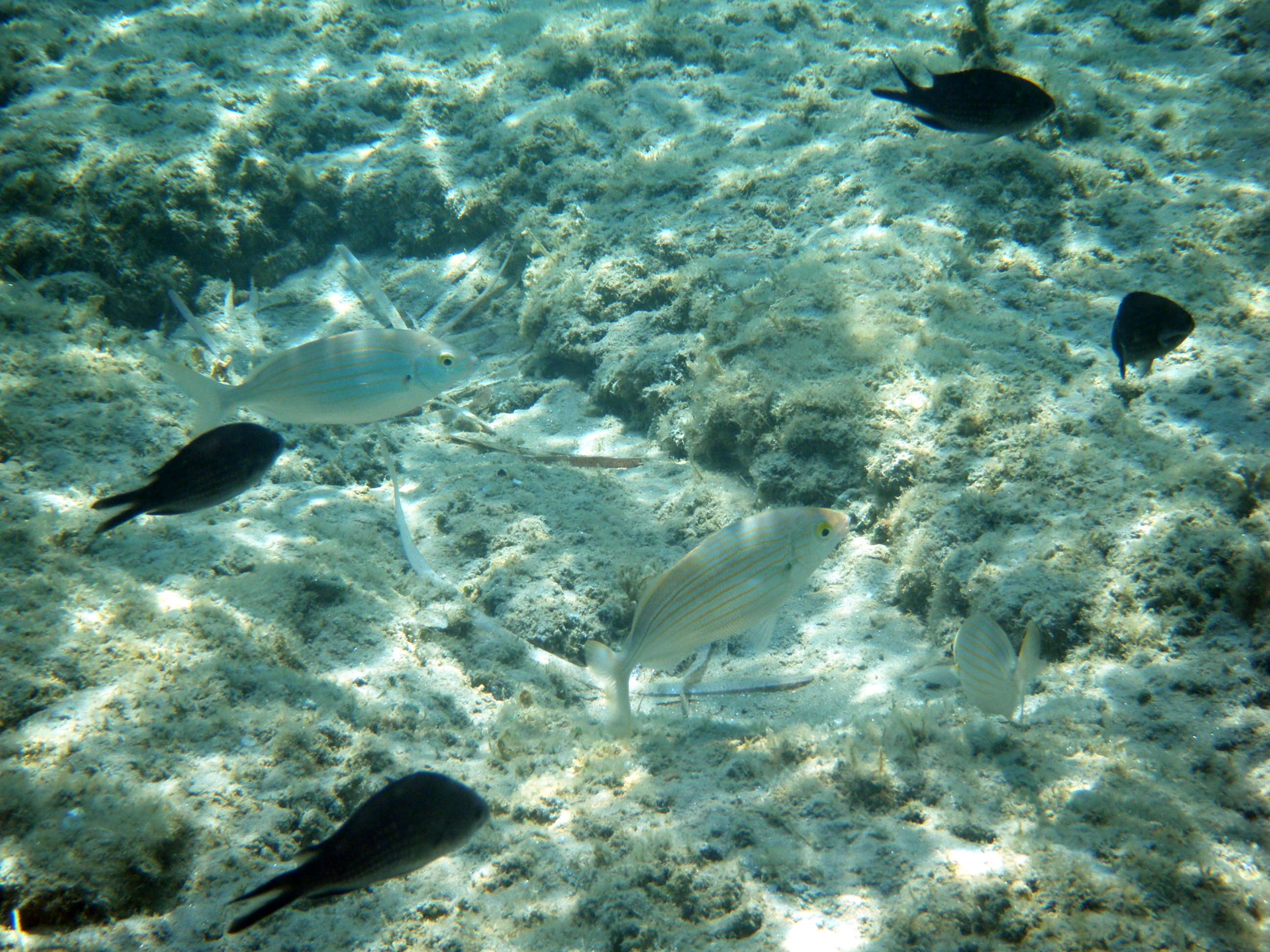
Sarpa salpa (Linnaeus, 1758) (Salema)
Found over rocky substrates and sandy area with algal growth. Gregarious, sometimes forming sizeable schools. Young mainly carnivorous on crustaceans, adults almost exclusively herbivorous , feed on seaweeds . Protandri...
Read More
Read More
Diplodus vulgaris (Geoffroy Saint-Hilaire, 1817) (Common two-banded seabream)
A euryhaline species inhabiting rocky and sometimes sandy bottoms to depths of 160 m, but more commonly in less than 50 m. The young are sometimes found in seagrass beds. Adults feed on crustaceans, worms and mollusks . Important food fish.
Mullus auratus Jordan and Gilbert, 1882 (goatfish)
Inhabits neritic waters, especially over sand or mud bottoms . Flesh considered excellent quality; marketed fresh .
Share on Social Networks
- Facebook:

personalize your shared text as well as its destination (wall, page...) or send as a private message to a friend
- Twitter: Tweet personalize your tweet
- Google Plus:
Direct link to this dive
- Long link:
- Short link:


 We are participating today in the startup contest Techcrunch Disrupt. Support Diveboard by voting for us!
























































































Dive 2 2/2 DBC DDAY II
Same plan as first dive off pier to depth but more South side of Nudiville
Multilevel, SOLO
Excellent conditions and viz, better than 1st dive
Highlight 4 big Jorunna at end of dive on safety stop