


 Beachnutts


 Philippines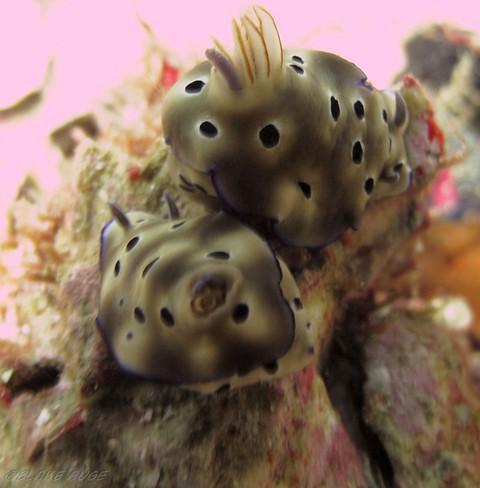
-
Nº26
 Date: 2022-06-15 - 10:18
-
 Max Depth: 21.9m Duration: 63mins
Dive Location

- Surface interval:197 mins
- Temp: Surf 27°C Bottom 27°C
- Dive type : Recreational, Drift
- Visibility: Average Water: Salt
Specific gear used
- BCD: Seac Sub - Portofino
- Camera: Canon - G12
- Computer: Oceanic - OCS
- Fins: Scubapro - Jet Fins
- Mask: Cressi Sub - Big Eyes
- Regulator: Aqualung - Titan LX
- Wet suit: Blue Ocean - Diveskin
- Weights: 4.1 kg
Dive reviews
| Overall review | ||
| Dive difficulty | ||
| Marine life quality |
Recent Divers in Malapascua lsland
Recent Pictures in Malapascua lsland
Dive Shop & Buddies
 Dive with Barry

Link to this spot:
- Spot:
- Country:
- Area:
- Body of water:
Dive Profile
- 1. Air
- 10L Aluminium 207 → 21 bar
- Average depth: 14.6m
Data provided by EOL.org


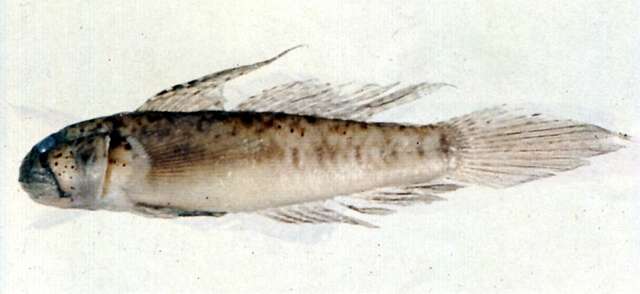
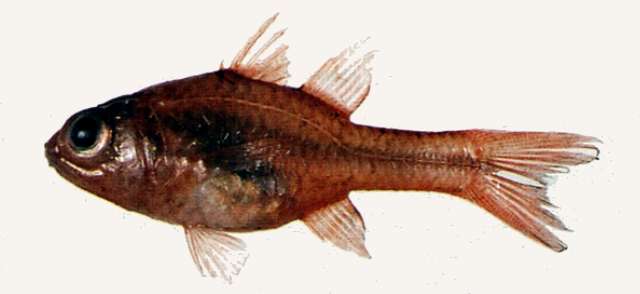
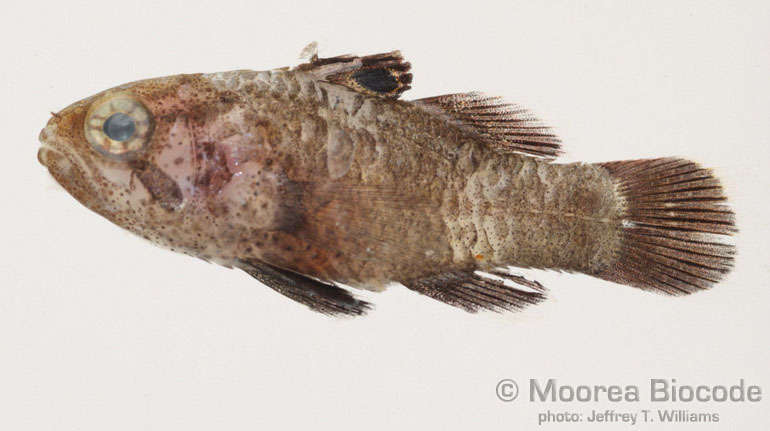

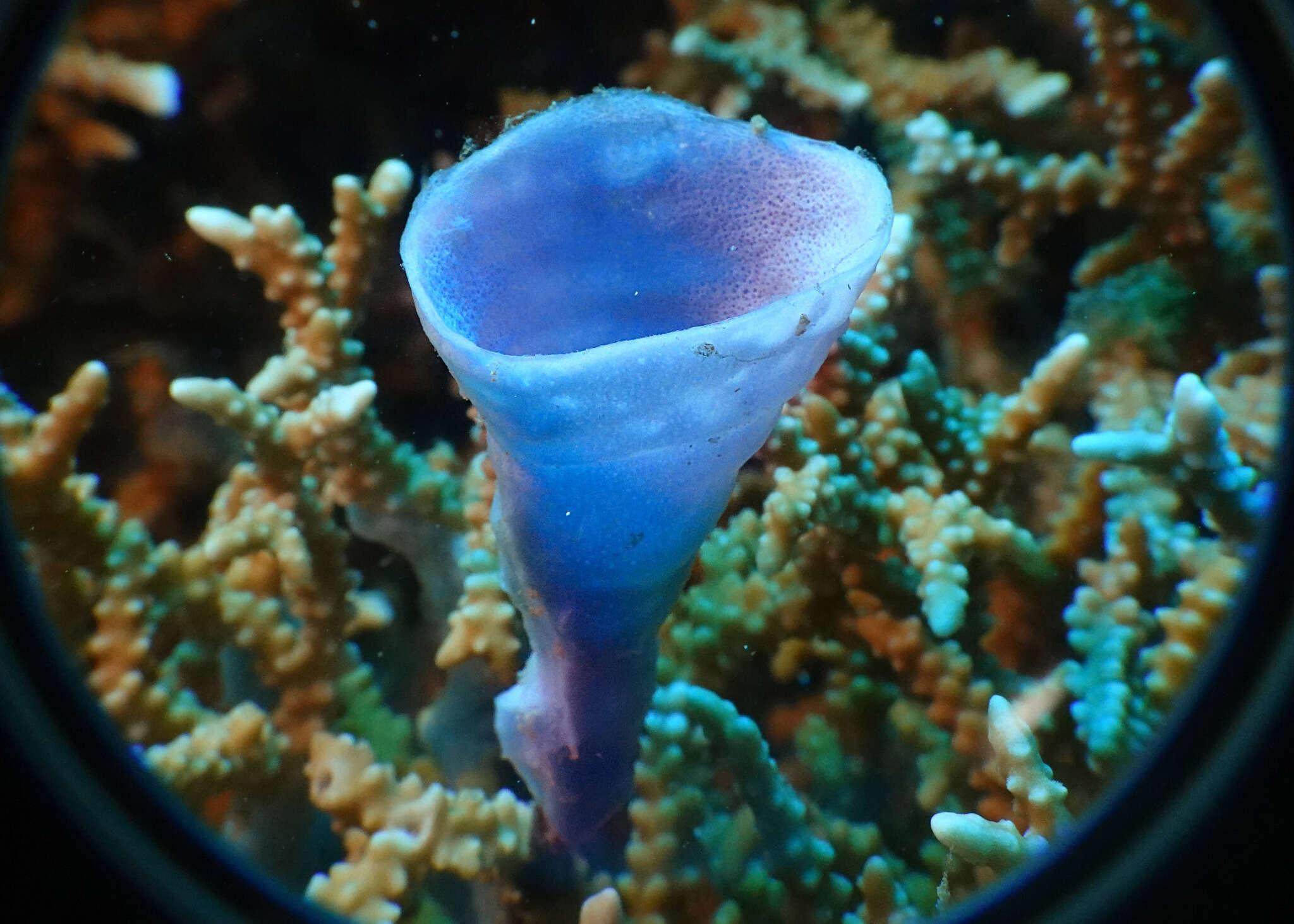

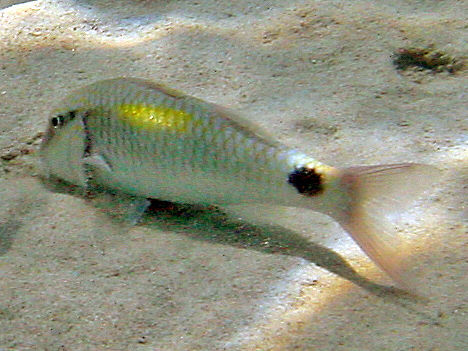


Species Identified
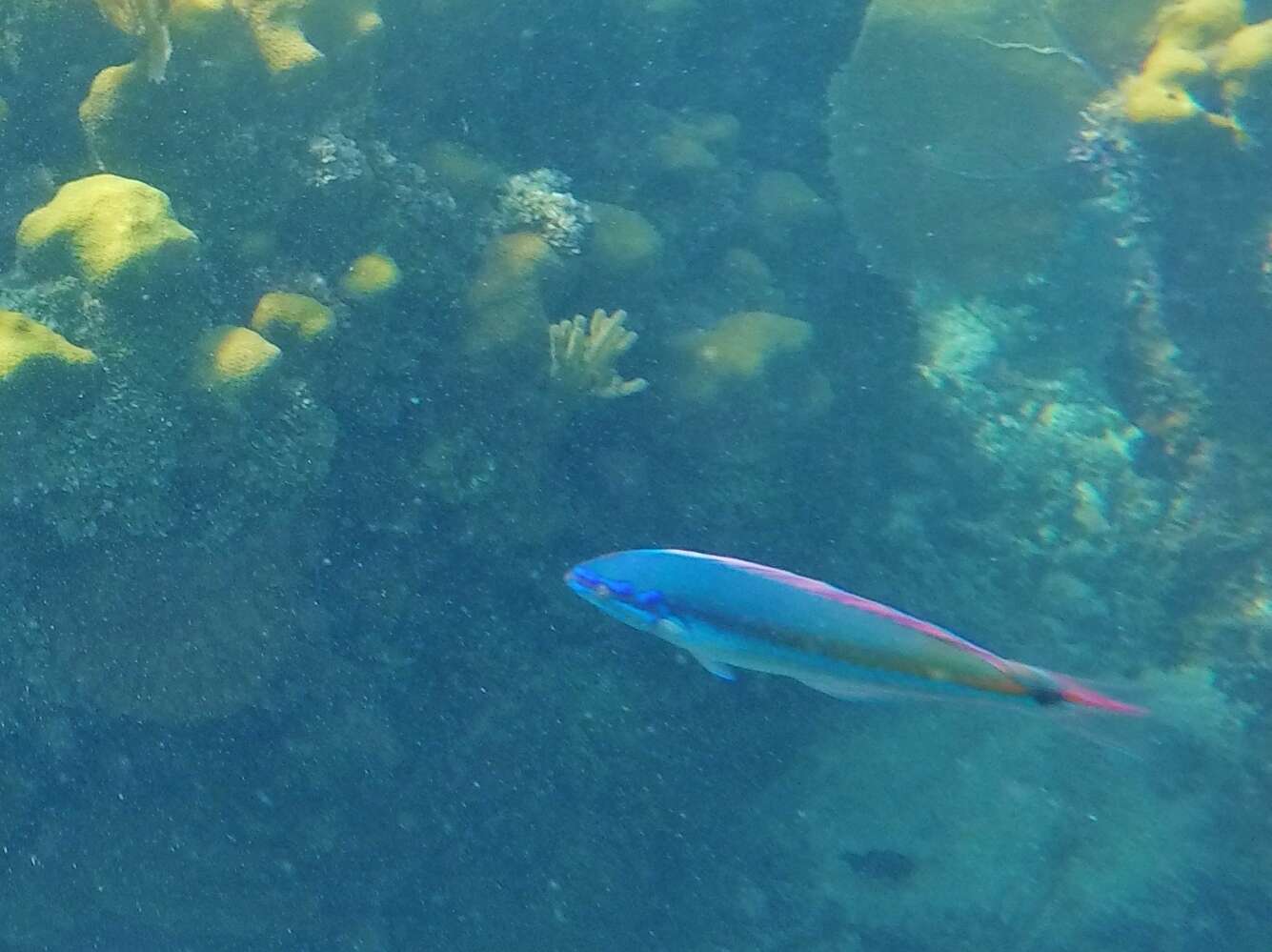
Halichoeres pictus (Poey, 1860) (painted wrasse)
Inhabits coral reefs, normally high above the bottom. Swims with worm-like movements. Feeds on various invertebrates. A protogynous hermaphrodite . Generally of no interest to fisheries because of its small average size .
Xiphocheilus typus Bleeker, 1857 (Blue-banded wrasse)
Lives on flat sandy bottoms or rubble .
Halichoeres semicinctus (Ayres, 1859) (rock wrasse)
Choerodon schoenleinii (Valenciennes, 1839) (Green wrasse)
Inhabit flat sandy or weedy areas near lagoon and seaward reefs . Solitary. Feed mainly on hard-shelled prey including crustaceans, mollusks and sea urchins. Marketed mostly fresh. In Hong Kong live fish markets .
Seriola lalandi Valenciennes, 1833 (Yellowtail amberjack)
Gobiosoma nudum (Meek & Hildebrand, 1928) (goby)
Oligolepis acutipennis (Valenciennes, 1837) (Sharptail goby)
Occurs inshore, enters lagoons . Found in muddy estuaries and coastal bays . Enters lower reaches of freshwater streams . Feeds on small fishes, crustaceans and other invertebrates .
Apogon erythrinus Snyder, 1904 (Ruby cardinalfish)
Found in shallow water and observed to be active only at night, near the bottom, and never far from its shelter . Benthopelagic .
Apogonichthys ocellatus (Weber, 1913) (Ocellated cardinalfish)
Occurs inshore . Found in shallow sheltered lagoons and harbors, hiding among rocks, rubble, or clumps of brown algae . Nocturnal species.
Fowleria marmorata (Alleyne & MacLeay, 1877) (Marbled cardinalfish)
Nocturnal species. Occurs inshore over rocky bottoms . Also found in outer reefs in mixed rich coral and algae rubble slopes .
Haliclona fascigera (Hentschel, 1912)
Haliclona griessingeri Van Lent & De Weerdt, 1987
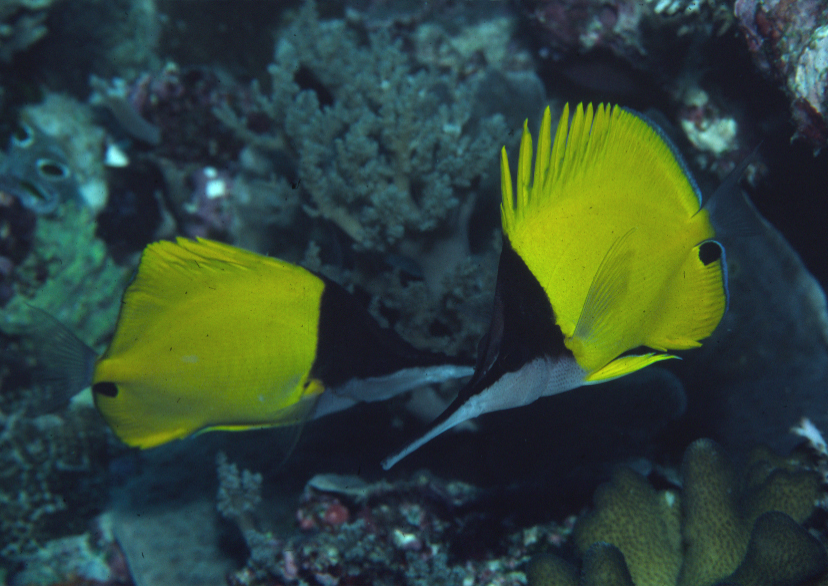
Forcipiger longirostris (Broussonet, 1782) (Big longnosed butterflyfish)
A generally uncommon species that inhabits seaward reefs to depths greater than 60 m . Benthopelagic . Feeds mainly on whole organisms such as small crustaceans. Usually seen in pairs. Oviparous , monogamous . Forms pairs during breeding . Sometimes dark brown instead of yellow .
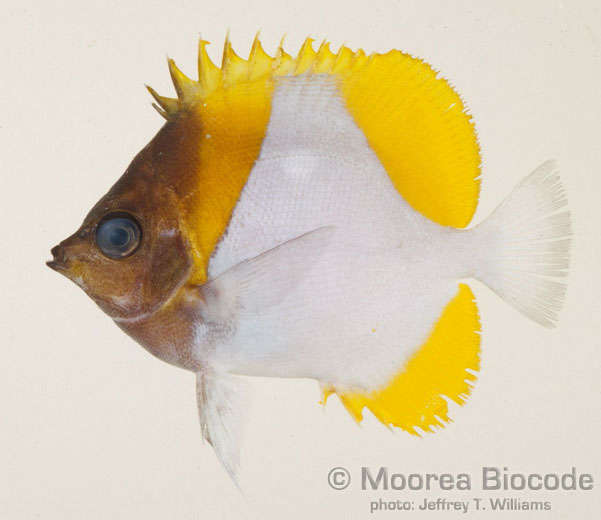
Hemitaurichthys polylepis (Bleeker, 1857) (Pyramid butterflyfish)
Occur in large schools that may extend several meters above the edges of steep current-swept outer reef slopes. Common . Benthopelagic . Feed on plankton . Oviparous . Form pairs during breeding .
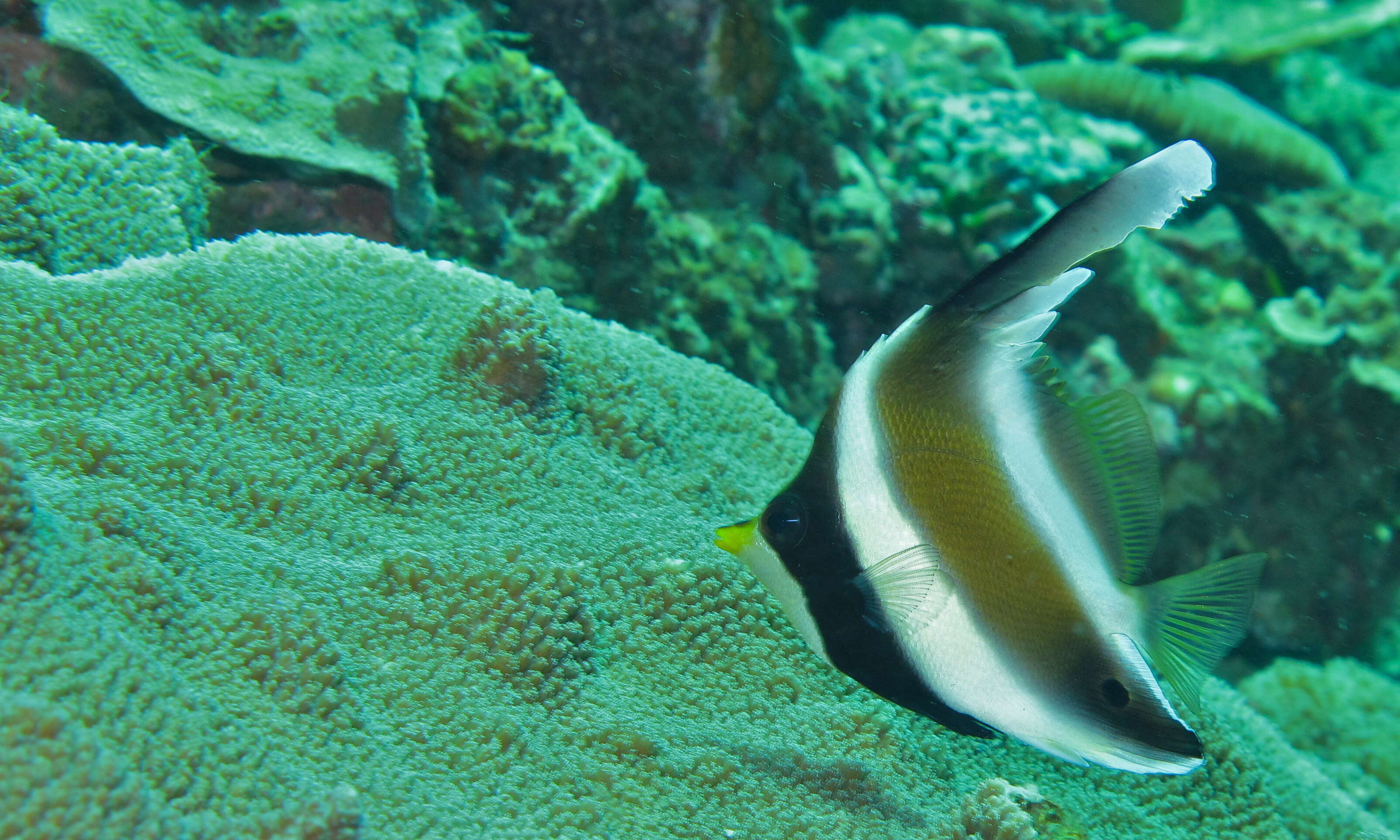
Heniochus chrysostomus Cuvier, 1831 (Threeband pennantfish)
Common in coral-rich areas of subtidal reef flats and lagoon and seaward reefs. Juveniles solitary and usually found in estuaries and lagoons; adults usually in pairs . Feed mainly on coral polyps. Oviparous . Form pairs during breeding . Minimum depth reported taken from Ref. 30874.
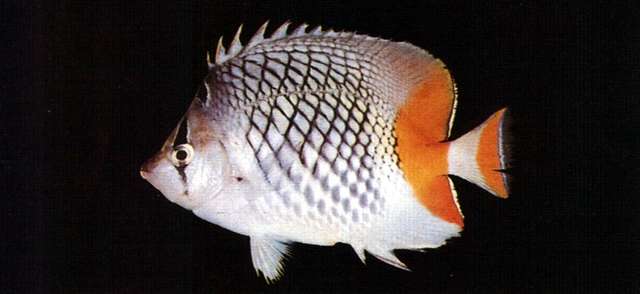
Chaetodon xanthurus Bleeker, 1857 (Pearlscale butterflyfish)
Clear coastal to outer reef slopes and drop-offs . Found around staghorn corals. The only member of the family with a crosshatch pattern of dark lines on the sides. Generally seen below 15 m depth and occurs singly or i...
Read More
Read More
Mulloidichthys dentatus (Gill, 1862) (Mexican goatfish)
Parupeneus heptacanthus (Lacepède, 1802) (Cinnabar goatfish)
Occurs singly or in small groups, over muddy, sandy, rubble, or seagrass bottoms of lagoon and seaward reefs, usually below 20 m. Flesh is fairly good for human consumption .
Parupeneus indicus (Shaw, 1803) (Indian goatfish)
Inhabit shallow sandy or silty areas of coastal and inner lagoon reefs . Occur singly or in schools . Large adults usually at moderate depths to about 30 m . Feed on benthic invertebrates; the diet including small crab...
Read More
Read More
Parupeneus chrysonemus (Jordan and Evermann, 1903) (Yellow-threaded goatfish)
Found over sand . Generally found at depths deeper than 60 meters .
Mullus auratus Jordan and Gilbert, 1882 (goatfish)
Inhabits neritic waters, especially over sand or mud bottoms . Flesh considered excellent quality; marketed fresh .
Share on Social Networks
- Facebook:

personalize your shared text as well as its destination (wall, page...) or send as a private message to a friend
- Twitter: Tweet personalize your tweet
- Google Plus:
Direct link to this dive
- Long link:
- Short link:


 We are participating today in the startup contest Techcrunch Disrupt. Support Diveboard by voting for us!
























































































2nd dive of day, 1st dive Gato Island
South Wall site, dropped in, tried to swim near steep rocks, but current is too strong, drop in to depth, looking for escape of ripping current. Found some on outside, but not much for photos, DISAPPOINTING