


 Beachnutts



 Philippines
-
Nº102
 Date: 2023-10-01 - 09:47
-
 Max Depth: 23.2m Duration: 84mins
Dive Location

- Temp: Surf 27°C Bottom 27°C
- Dive type : Recreational, Reef, Photo
- Visibility: Good Water: Salt
Specific gear used
- BCD: Oceanic - OceanPro
- Camera: Olympus - TG6
- Computer: Oceanic - OCS
- Fins: Scubapro - Jet Fins
- Knife: Scuba MAx - folding
- Lift bag: ScubaMax - SMB
- Light: Sofirn - SD05
- Mask: Promate - Scope
- Regulator: Aqualung - Legend
- Wet suit: Blue Ocean - Diveskin
- Weights: 3.2 kg
Dive reviews
| Overall review | ||
| Dive difficulty | ||
| Marine life quality |
Dive Shop & Buddies
 Dive with Mike Tacansan
 Dive buddies:
Cesar,
Mike Tacansan

Link to this spot:
- Spot:
- Country:
- Area:
- Body of water:
Dive Profile
- 1. Air
- 10L Aluminium 193 → 14 bar
- Average depth: 15.4m
Data provided by EOL.org









Species Identified
Brissus brissus (Leske, 1778)
Xenia viridus Schenk, 1896
Xenia tripartita Roxas, 1933
Xenia sansibariana May, 1899
Xenia nana Hickson, 1930
Xenia multipinnata (Tixier-Durivault, 1966)
Xenia intermedia Roxas, 1933
Xenia kukenthali Roxas, 1933
Xenia lillieae Roxas, 1933
Xenia miniata Reinicke, 1997
Xenia novaecaledoniae Verseveldt, 1974
Xenia pulsitans Kent, 1893
Xenia novaebritanniae Ashworth, 1900
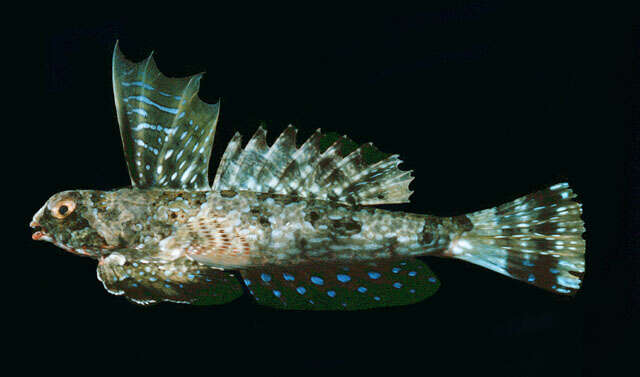
Synchiropus lineolatus (Valenciennes, 1837) (线纹连鳍)
Foetorepus agassizii (Goode & Bean, 1888) (Spotfin dragonet)
Found on muddy or sandy bottoms . Neither opercular spine gland nor anterolateral glandular groove with venom gland is present . Minimum depth from Ref. 58018.
Callionymus maculatus Rafinesque, 1810 (spotted dragonet)
Benthic on sandy bottoms. Feeds on small bottom invertebrates mainly worms, snails and crustaceans. Eggs and larvae pelagic .
Callionymus lyra Linnaeus, 1758 (Dragonet)
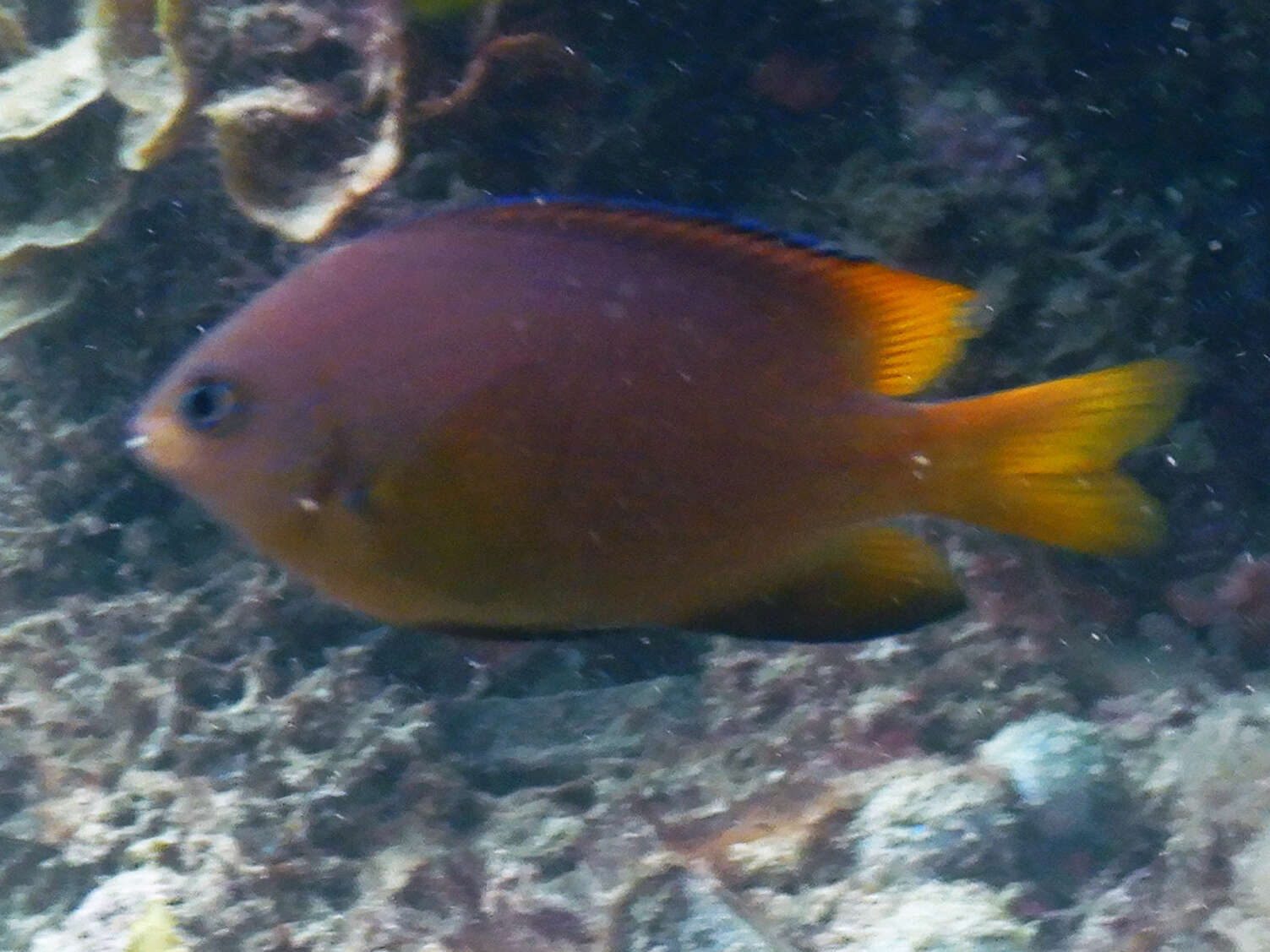
Stegastes leucostictus (Müller & Troschel, 1848) (Yellow-belly)
Occurs in seagrass beds, coral or rocky reefs and sandy areas. Also found around mangrove shores and sponge beds; less common on flourishing coral reefs . Remains within 50 cm from the substrate. Adults feed on algae, p...
Read More
Read More
Pomacentrus atriaxillaris Allen, 2002
Mecaenichthys immaculatus (Ogilby, 1885) (Immaculate damsel)
Inhabits rocky or weedy inshore reefs.
Pomacentrus baenschi Allen, 1991 (Baensch's damsel)
Inhabits inshore and offshore coral reefs.
Parma victoriae (Günther, 1863) (Victorian scalyfin)
Occurs inshore . Inhabits rocky reefs.
Parma unifasciata (Steindachner, 1867) (Girdled scalyfin)
Inhabits rocky inshore reefs.
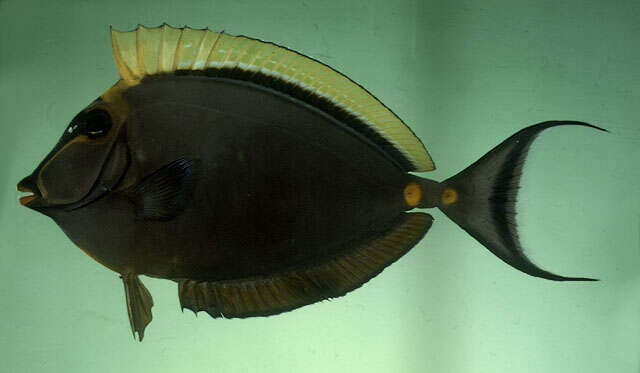
Naso tonganus (Valenciennes, 1835) (Bulbnose unicornfish)
Inhabits coral reefs . Feeds on leafy or fleshy algae and zooplankton . Found singly or in small groups .
Naso brachycentron (Valenciennes, 1835) (Humpback unicornfish)
Inhabits deep coastal, usually in small groups but occasionally in large schools . An uncommon species found in seaward reef slopes , also along rocky shores . Feeds on benthic algae . Caught with nets .
Naso vlamingii (Valenciennes, 1835) (Bignose unicornfish)
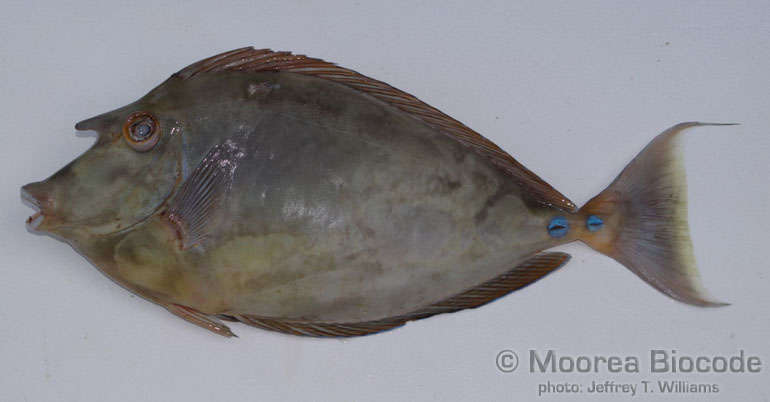
Naso unicornis (Forsskål, 1775) (Bluespine unicornfish)
Inhabit channels, moats, lagoon and seaward reefs with strong surge . Benthopelagic . Typically occurring in small groups. Juveniles in shallow protected bays and harbours . Mainly diurnal, feed on coarse leafy brown algae like Sargassum. Pair-spawning has been observed.
Naso elegans (Rüppell, 1829) (Elegant unicornfish)
Inhabits coastal and sheltered reef flats in small groups and schools in oceanic locations . Feeds on benthic algae .
Serranus tabacarius (Cuvier, 1829) (Golden fish)
Inhabits shallow rocky or coral bottoms with clear water . In groups on deeper reefs . Synchronously hermaphroditic. Negligible commercial value due to its small size . Sometimes follows goatfishes as they probe the sand for invertebrates .
Serranus subligarius (Cope, 1870) (belted sandfish)
Occurs from water's edge to at least 18 m depth, often in silty water. Synchronously hermaphroditic. Not a coral-reef species .
Pseudanthias squamipinnis (Peters, 1855) (Sea goldie)
Found above coral outcrops or patch reefs of clear lagoons, channels, or outer reef slopes. Form large aggregations. Feed on zooplankton . A protogynous hermaphrodite . Males are territorial and haremic . Color patter...
Read More
Read More
Lates calcarifer (Bloch, 1790) (Barramundi)
Found in coastal waters, estuaries and lagoons, in clear to turbid water . A diadromous fish, inhabiting rivers before returning to the estuaries to spawn. A protandrous hermaphrodite . Larvae and young juveniles live i...
Read More
Read More
Xiphocheilus typus Bleeker, 1857 (Blue-banded wrasse)
Lives on flat sandy bottoms or rubble .
Suezichthys notatus (Kamohara, 1958)
Occurs in deep shelf waters .
Halichoeres bathyphilus (Beebe and Tee-Van, 1932) (greenband wrasse)
Inhabits deep reefs . Traded as an aquarium fish at Ceará, Brazil .
Halichoeres notospilus (Günther, 1864) (Banded wrasse)
Centrolabrus exoletus (Linnaeus, 1758) (smallmouthed wrasse)
Labrichthys unilineatus (Guichenot, 1847) (Tubelip wrasse)
Inhabits shallow lagoon and semi-protected seaward reefs with high coral cover . Found near branching corals and feeds on its coral polyps, particularly staghorn Acropora .
Thalassoma pavo (Linnaeus, 1758) (Ornate wrasse)
Inhabits coastal waters near rocks and eel-grass beds. Usually solitary, sometimes in small groups. Feeds on small mollusks and crustaceans . Protogynous hermaphrodite, with distinct sexual dichromatism . Eggs are pelagic .
Parona signata (Jenyns, 1841) (Parona leatherjacket)
Maximum length assumed to be 1.5 * 40 = 60 cm TL .
Myoxocephalus aenaeus (Mitchill, 1814) (Little sculpin)
Occurs in estuaries to 357 m depth . It is tolerant of temperatures between 0 and 21°C . Abundant among beds of eelgrass . Feeds on crustaceans, mollusks, sea squirts, sea urchins and fishes (alewives, cunner, eels, saand lance, mummichogs, silversides, sticklebacks and tomcod ) .
Sebastes constellatus (Jordan and Gilbert, 1880) (starry rockfish)
Adults usually found on deep reefs . Viviparous, with planktonic larvae and pelagic juveniles . Occasionally captured by sport fishers .
Eutrigla gurnardus (Linnaeus, 1758) (Grey gurnard)
Sebastes crameri (Jordan, 1897) (Blackblotched rockfish)
Found on soft bottoms . Viviparous . Anterolateral glandular grooves with venom gland .
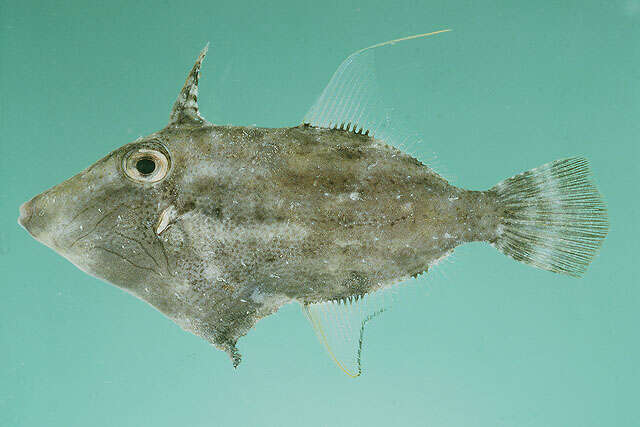
Paramonacanthus nematophorus (Günther, 1870) (线纹副单角鲀)
Pervagor randalli Hutchins, 1986 (伦氏前角鲀)
Occurs in shallow coral reefs to depths of 10 m or more.
Pervagor marginalis Hutchins, 1986 (缘前角鲀)
Occurs in rocky reefs to depths of 25 m.
Share on Social Networks
- Facebook:

personalize your shared text as well as its destination (wall, page...) or send as a private message to a friend
- Twitter: Tweet personalize your tweet
- Google Plus:
Direct link to this dive
- Long link:
- Short link:


 We are participating today in the startup contest Techcrunch Disrupt. Support Diveboard by voting for us!
























































































1st dive 2 tanker aboard Datu Budas
Overcast, hot, hazy day breezy, Habagat waves and small chop
Red House @ far South buoy Dizon Wall
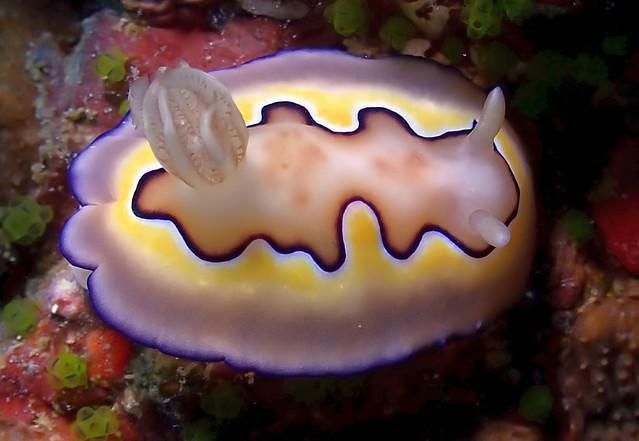
drop in shallows slowly S and W to depth out 2/3, and back to boat. lots of fish and nudis
multilevel