


 Beachnutts



 Philippines
-
Nº96
 Date: 2023-08-16 - 07:22
-
 Max Depth: 25.9m Duration: 81mins
Dive Location

- Surface interval:1038 mins
- Temp: Surf 27°C Bottom 27°C
- Dive type : Recreational, Reef, Photo, Exploration
- Visibility: Average Water: Salt
Specific gear used
- BCD: Oceanic - OceanPro
- Camera: Olympus - TG6
- Computer: Oceanic - OCS
- Fins: Scubapro - Jet Fins
- Knife: Scuba MAx - folding
- Lift bag: ScubaMax - SMB
- Light: Sofirn - SD05
- Mask: Promate - Scope
- Regulator: Aqualung - Titan LX
- Wet suit: Blue Ocean - Diveskin
- Weights: 3.2 kg
Dive reviews
| Overall review | ||
| Dive difficulty | ||
| Marine life quality |
Dive Shop & Buddies
 Dive with Blake Auge from Carabao Dive Center
 Dive buddies:
Cesar

Link to this spot:
- Spot:
- Country:
- Area:
- Body of water:
Dive Profile
- 1. Air
- 10L Aluminium 207 → 41 bar
- Average depth: 17.3m
Data provided by EOL.org





Species Identified
Amblyeleotris wheeleri (Polunin & Lubbock, 1977) (Gorgeous prawn-goby)
Apparently the most common shallow-water species of the genus found in coral reef areas, but may occur at depths greater than 30 m. Usually found in rubble areas near or within coral reefs and in symbiotic association wit...
Read More
Read More
Plectroglyphidodon lacrymatus (Quoy and Gaimard, 1825) (whitespeckled demoiselle)
Inhabits clear lagoon and seaward reefs, in areas with mixed coral and rubble or dead coral rocks. Feeds mainly on benthic algae and associated small invertebrates and fish eggs.
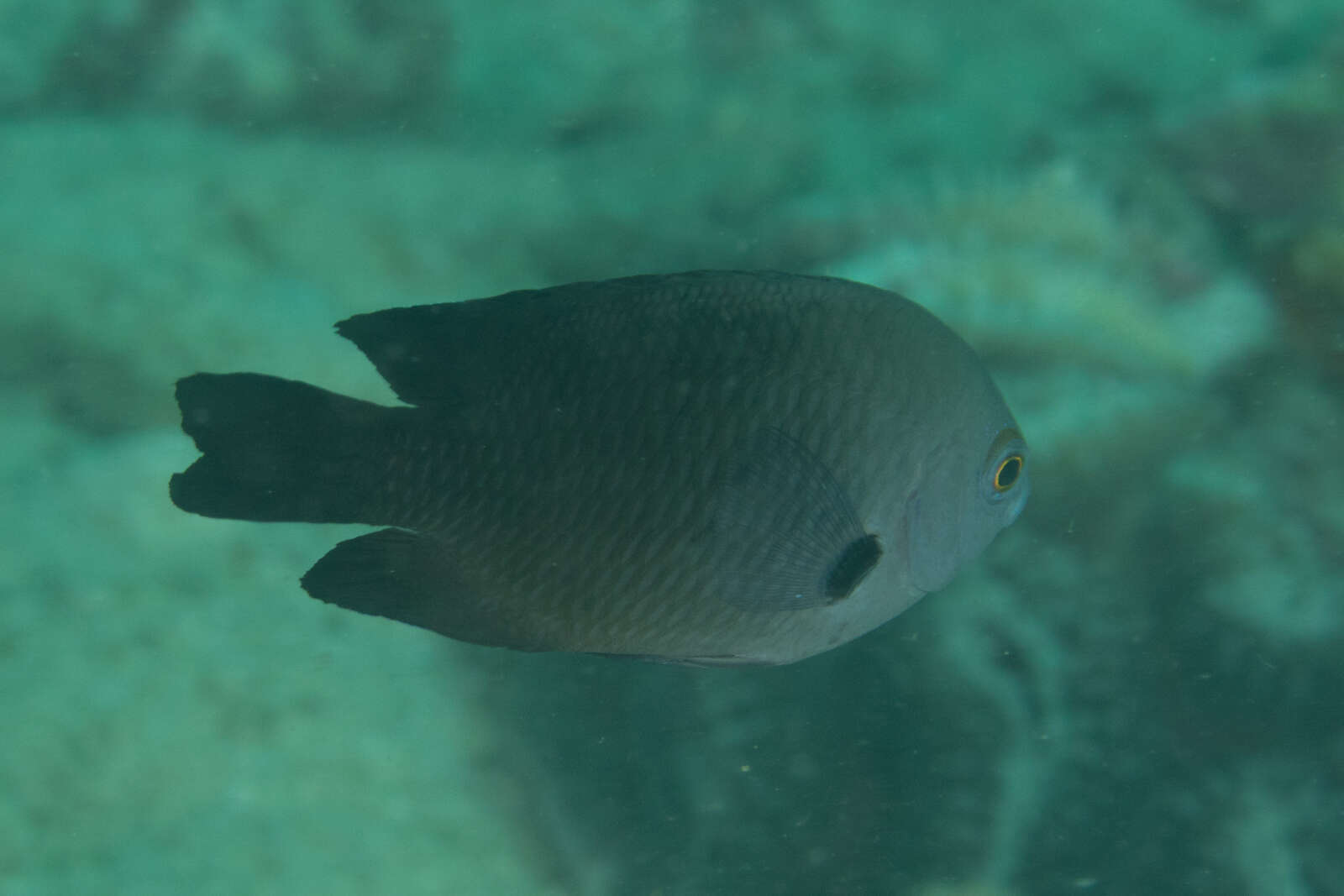
Pomacentrus brachialis Cuvier, 1830 (Charcoal damsel)
Found in passages and outer reef slopes ; also in current prone and clear water reef flats to 40 m depth . Occurs singly or in small groups . Feeds on zooplankton and benthic algae .
Dascyllus aruanus (Linnaeus, 1758) (black-and-white damselfish)
Territorial, inhabit shallow lagoon and subtidal reef flats. Form large aggregations above staghorn Acropora thickets or in smaller groups above isolated coral heads. Feed on zooplankton, benthic invertebrates, and algae...
Read More
Read More
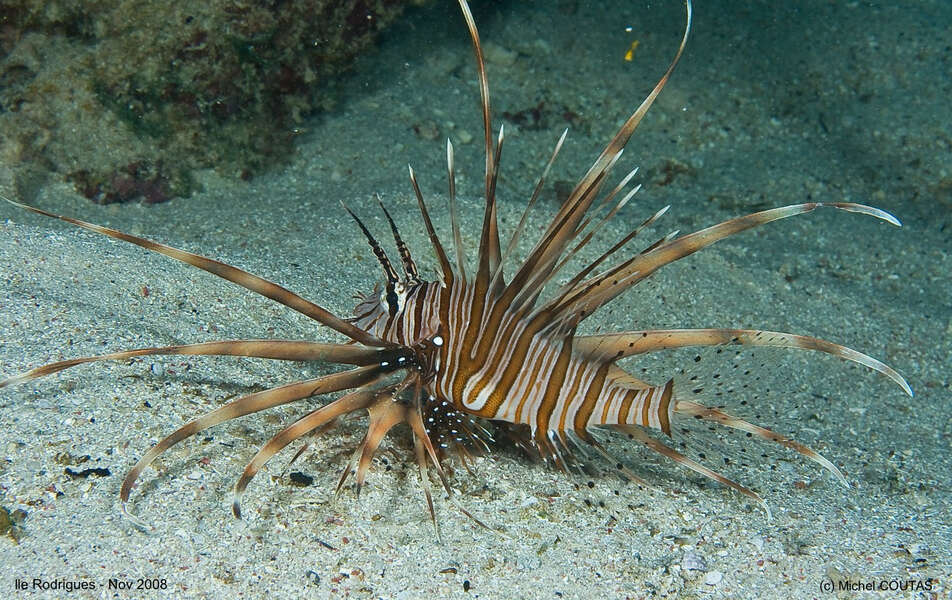
Pterois volitans (Linnaeus, 1758) (Red lionfish)
Dendrochirus zebra (Cuvier, 1829) (Zebra turkeyfish)
Found on coral, rubble, or rock bottoms of reef flats ; also in coastal to outer reef habitats in sheltered lagoons and in caves, sometimes in small aggregations. Usually shallow, from 3-60m but also reported to 80 m dep...
Read More
Read More
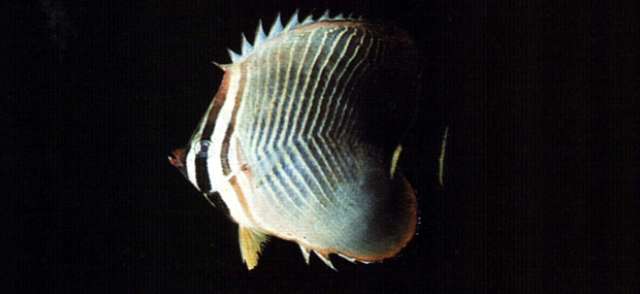
Chaetodon baronessa Cuvier, 1829 (Eastern triangular butterflyfish)
Occur in lagoon and seaward reefs. Feed exclusively on the polyps of the tubular Acropora corals. Swim in pairs and are territorial. Oviparous . Form pairs during breeding .
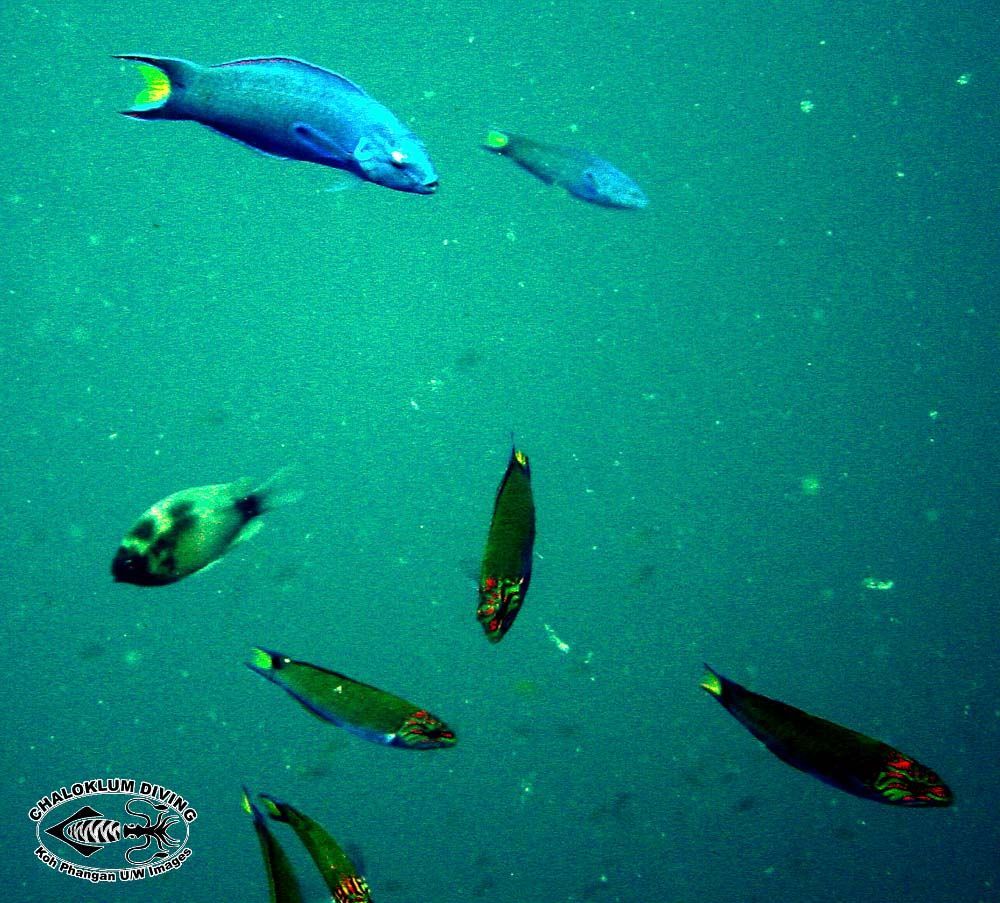
Thalassoma lunare (Linnaeus, 1758) (Blue wrasse)
Occurs in the upper portions of lagoon and coastal reefs, and in protected seaward reefs . Enters estuaries . Usually found on upper portions of ledges and heads . Feeds mainly on small benthic invertebrates and fish eggs . A protogynous hermaphrodite .
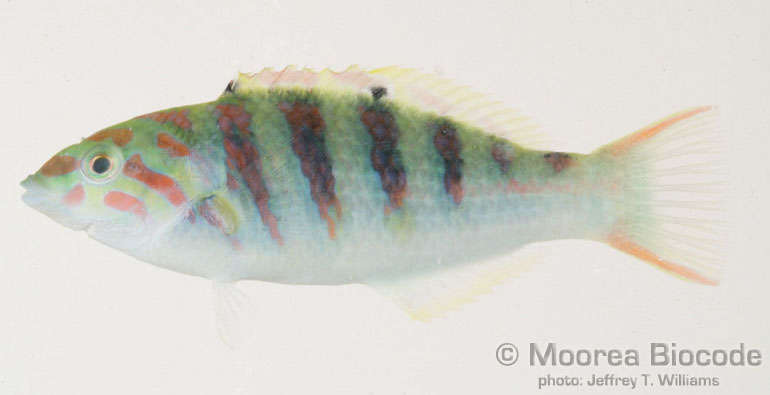
Thalassoma hardwicke (Bennett, 1830) (Sixbar wrasse)
Occurs in shallow lagoon and seaward reefs, slopes and along drop-offs to moderate depths. Occurs in small, loose groups . Feeds on benthic and planktonic crustaceans, small fishes, and foraminiferans.
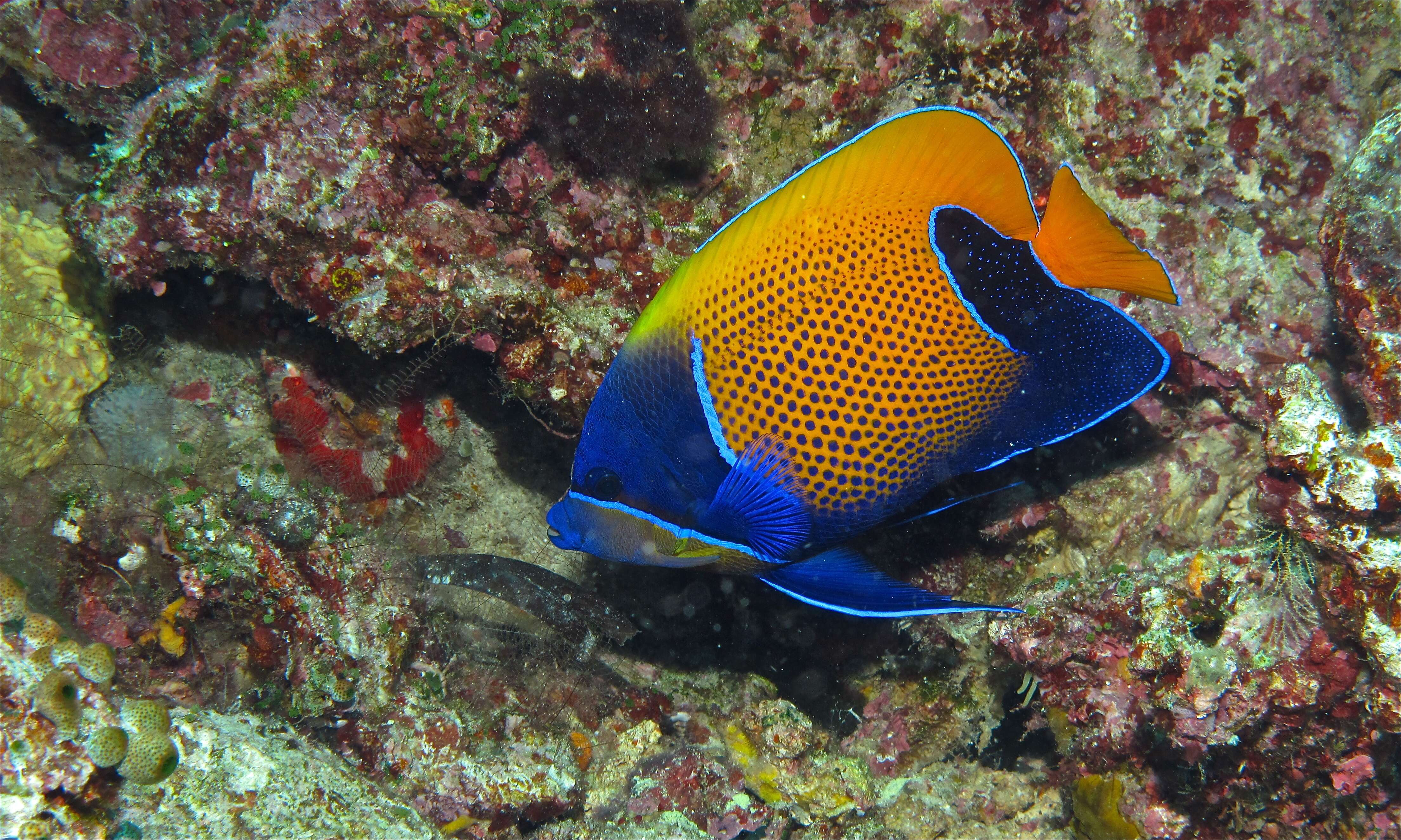
Pomacanthus navarchus (Cuvier, 1831) (Majestic angelfish)
Occurs in coral rich areas of clear lagoons, channels, and protected outer reef slopes. Changes to adult pattern is dramatic, and intermediate stage are rarely seen . Often solitary. Feeds on sponges and tunicates. Uncommon . Highly prized aquarium export .
Centropyge multifasciata (Smith & Radcliffe, 1911) (Barred angelfish)
Inhabits ledges and caves and crevices of steep outer reef slopes; occasionally found in clear lagoon reefs. It is secretive and rarely goes out more than a few centimeters from an escape hole . Forms pairs or small grou...
Read More
Read More
Share on Social Networks
- Facebook:

personalize your shared text as well as its destination (wall, page...) or send as a private message to a friend
- Twitter: Tweet personalize your tweet
- Google Plus:
Direct link to this dive
- Long link:
- Short link:


 We are participating today in the startup contest Techcrunch Disrupt. Support Diveboard by voting for us!
























































































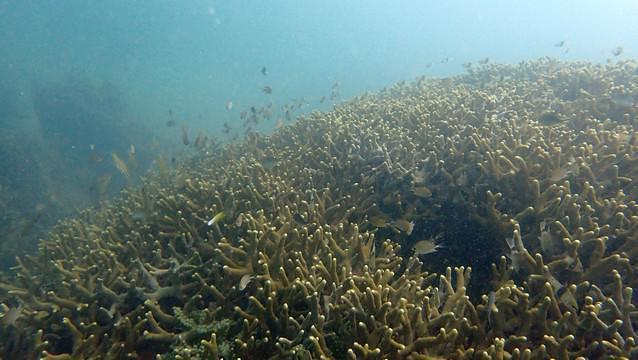
2nd day diving @ Gov Gen
morning dive front of Gov Gen Beach Resort
drop in front shallow water sand slope reef continuous as we swim to North looking for macro
TONS of tree coral everywhere, many other species coral, few fish, few of anything else
eerie dive, very calm and quiet
multilevel, boat PU