


 Beachnutts


 Philippines
-
Nº120
 Date: 2024-02-14 - 08:39
-
 Max Depth: 20.1m Duration: 75mins
Dive Location

- Temp: Surf 25°C Bottom 25°C
- Dive type : Recreational, Reef, Photo, Muck dive
- Visibility: Average Water: Salt
Specific gear used
- BCD: Scubapro - Glide Plus
- Boots: Orca - Dive shoes
- Camera: Olympus - TG6
- Computer: Oceanic - OCS
- Fins: Scubapro - Jet Fins
- Knife: Scuba MAx - folding
- Lift bag: ScubaMax - SMB
- Light: Sofirn - SD05
- Mask: Promate - Scope
- Regulator: Aqualung - Calypso
- Wet suit: Blue Ocean - Diveskin
- Weights: 3.2 kg
Dive reviews
| Overall review | ||
| Dive difficulty | ||
| Marine life quality |
Dive Shop & Buddies
 Dive with Blake Auge
 Dive buddies:
Beachnutts
Dive buddies:
Beachnutts

Link to this spot:
- Spot:
- Country:
- Area:
- Body of water:
Dive Profile
- 1. Air
- 10L Aluminium 207 → 21 bar
- Average depth: 13.4m
Data provided by EOL.org




Species Identified
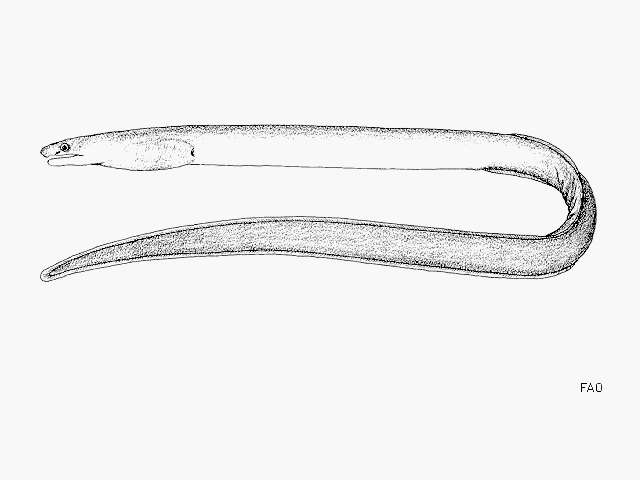
Muraenichthys schultzei Bleeker, 1857 (Maimed snake eel)
Found in reef flats and lagoons to at least 13 m. Burrows in soft bottoms . Benthic . Caught in bags or nets, or by digging . Used as shark bait .
Pisodonophis cancrivorus (Richardson, 1848) (Estuary snake eel)
Occurs in lagoons and estuaries, entering freshwater . Often in tidal channels where loose groups congregate, and usually seen with just the head exposed . Caught most often in tidal areas and estuaries . Caught in bag nets and similar gear. Marketed fresh .
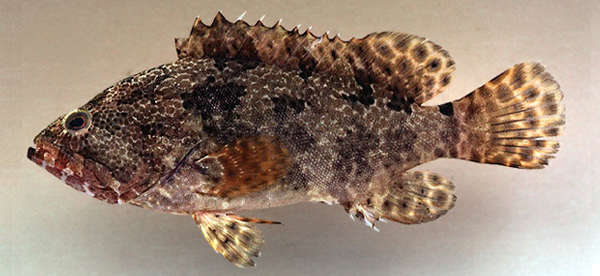
Epinephelus polyphekadion (Bleeker, 1849) (Camouflage grouper)
Usually found in coral-rich areas of lagoon and outer reefs; in caves and large crevices to swim through . Most abundant around islands, particularly atolls. Usually in small schools. Feeds mainly on crustaceans and fi...
Read More
Read More
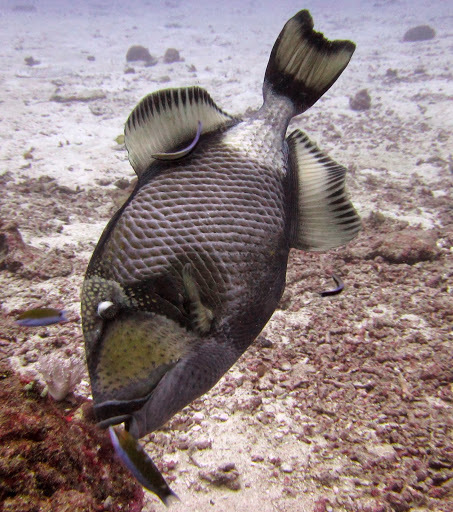
Balistoides viridescens (Bloch and Schneider, 1801) (Titan triggerfish)
Occur in lagoon, seaward reefs and sheltered inner reef slopes . Juveniles often associated with isolated patches of branching coral or rubble of shallow sandy protected areas. Adults occur singly or in pairs on the slo...
Read More
Read More
Abalistes stellaris (Bloch & Schneider, 1801) (Star puffer)
Inhabit coastal areas, usually found over muddy and sandy bottoms, also around reefs, together with the sponges and algae . Feed on benthic animals . Oviparous . Also caught with vertical long-lines . Marketed fresh and dried-salted .
Diplogrammus xenicus (Jordan & Thompson, 1914) (Kobu-numeri)
Found on sandy bottoms of rocky or coral reefs.
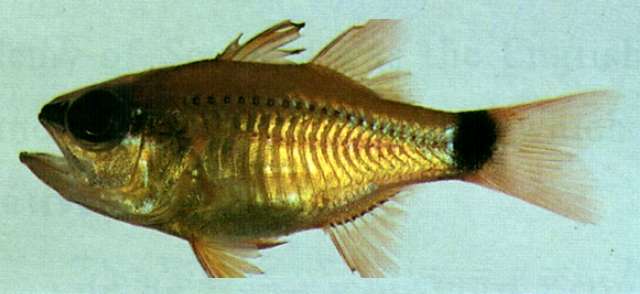
Apogon fleurieu (Lacepède, 1802) (Cardinalfish)
Common in shallow coastal reefs with moderate currents . Also in tidal channels of estuaries . Adults usually in small schools comprising pairs .
Cuthona veronicae (A. E. Verrill, 1880)
Flabellina nobilis (A. E. Verrill, 1880)
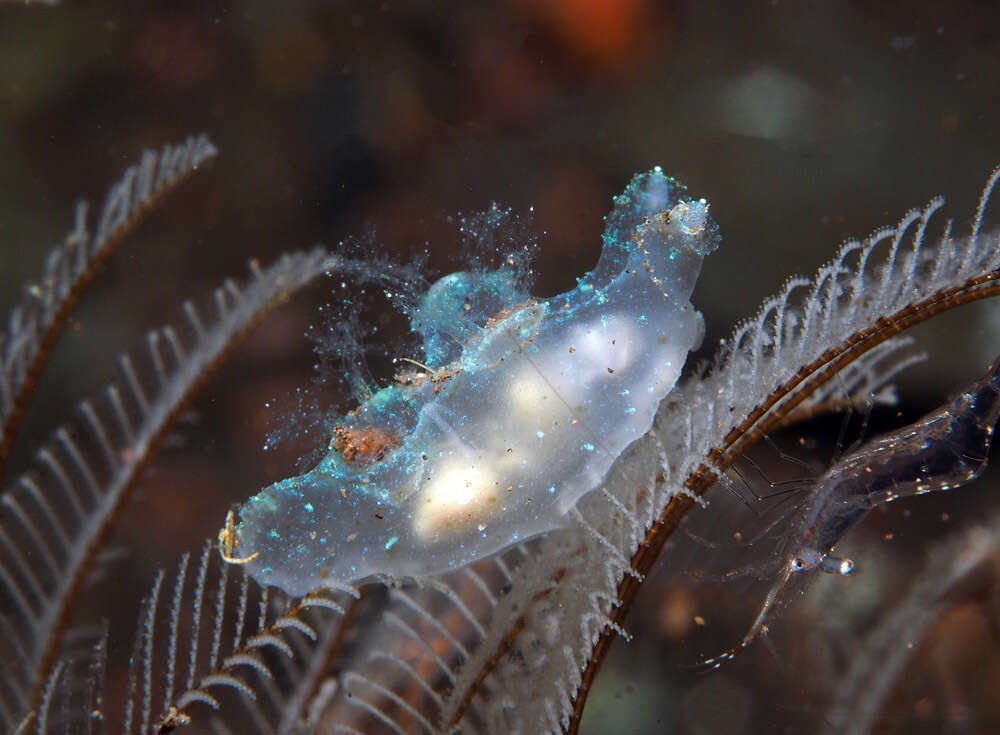
Notobryon wardi (iridescent nudibranch)
Share on Social Networks
- Facebook:

personalize your shared text as well as its destination (wall, page...) or send as a private message to a friend
- Twitter: Tweet personalize your tweet
- Google Plus:
Direct link to this dive
- Long link:
- Short link:


 We are participating today in the startup contest Techcrunch Disrupt. Support Diveboard by voting for us!
























































































Single dive Valentines Day. High tide 8:34am dive time 8:39am
good viz at shallows up to 40ft. deeper murky and dark. To depth then up to Nudiville, coule of large blue dragon nudies, some smaller Flabellina. Skae eel in coral head.
multilevel
big high tide, swam all the way to beach