


 Beachnutts



 Philippines
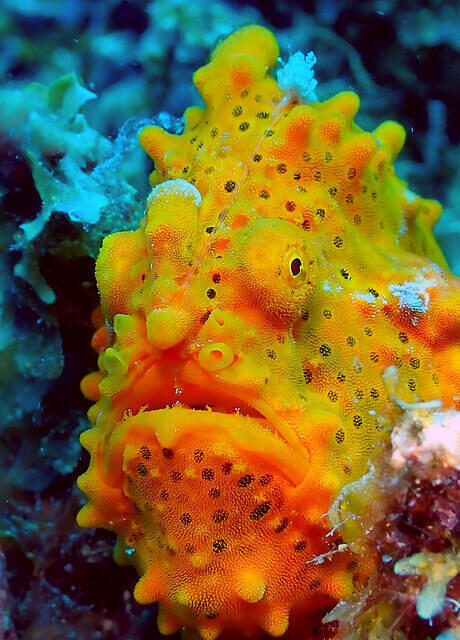
-
Nº178
 Date: 2025-05-25 - 01:36
-
 Max Depth: 18.9m Duration: 97mins
Dive Location

- Surface interval:97 mins
- Temp: Surf 28°C Bottom 28°C
- Dive type : Recreational, Reef, Research
- Visibility: Average Water: Salt
Specific gear used
- BCD: Scubapro - Glide Plus
- Boots: Orca - Dive shoes
- Camera: Olympus - TG6
- Computer: Oceanic - OCS
- Fins: Scubapro - Jet Fins
- Lift bag: ScubaMax - SMB
- Light: Sofirn - SD05
- Mask: Promate - Scope
- Regulator: SEAC - Synchro
- Wet suit: Blue Ocean - Diveskin
- Weights: 3.2 kg
Dive reviews
| Overall review | ||
| Dive difficulty | ||
| Marine life quality |
Recent Divers in Samal island, Davao
Recent Pictures in Samal island, Davao
Dive Shop & Buddies
 Dive with Blake Auge
 Dive buddies:
Maeng,
Mike Tacansan,
Blake Auge,
Beachnutts

Link to this spot:
- Spot:
- Country:
- Area:
- Body of water:
Dive Profile
- 1. Air
- 10L Aluminium 207 → 21 bar
- Average depth: 12.6m
Data provided by EOL.org
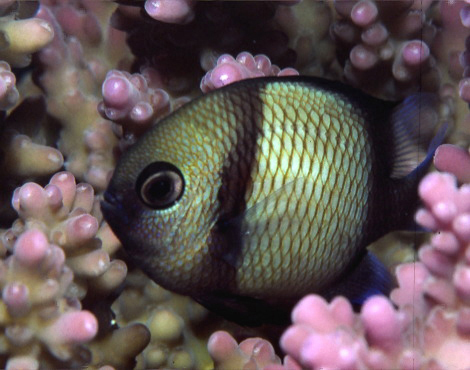

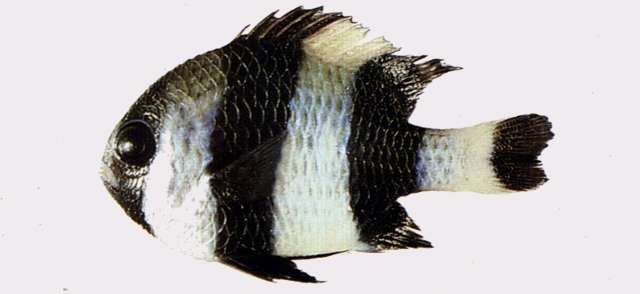


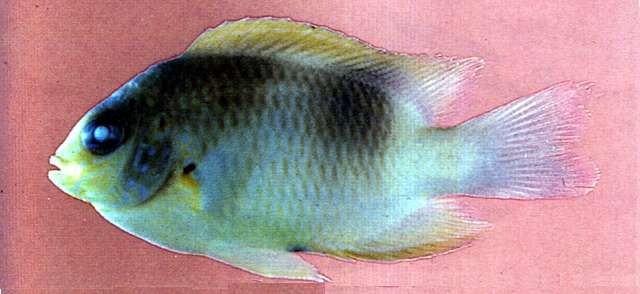
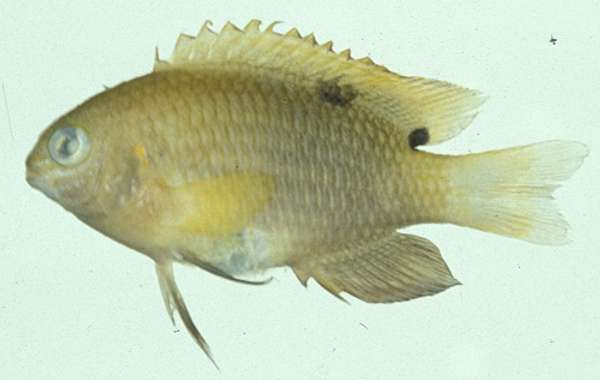








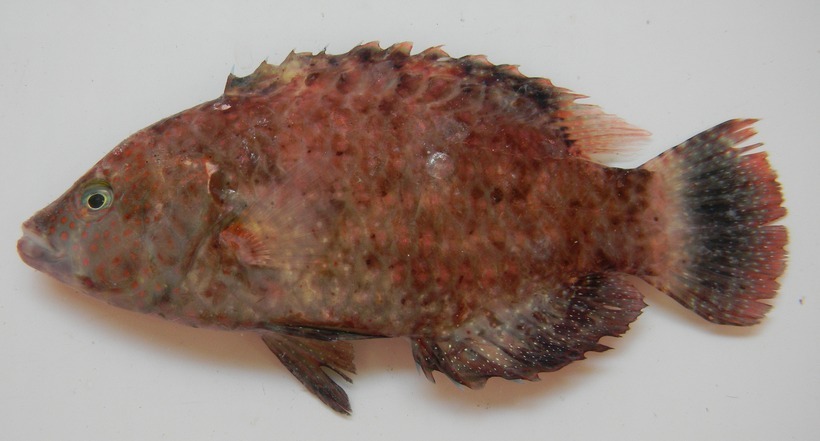

Species Identified
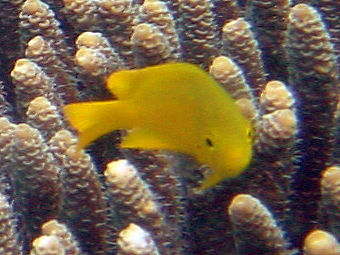
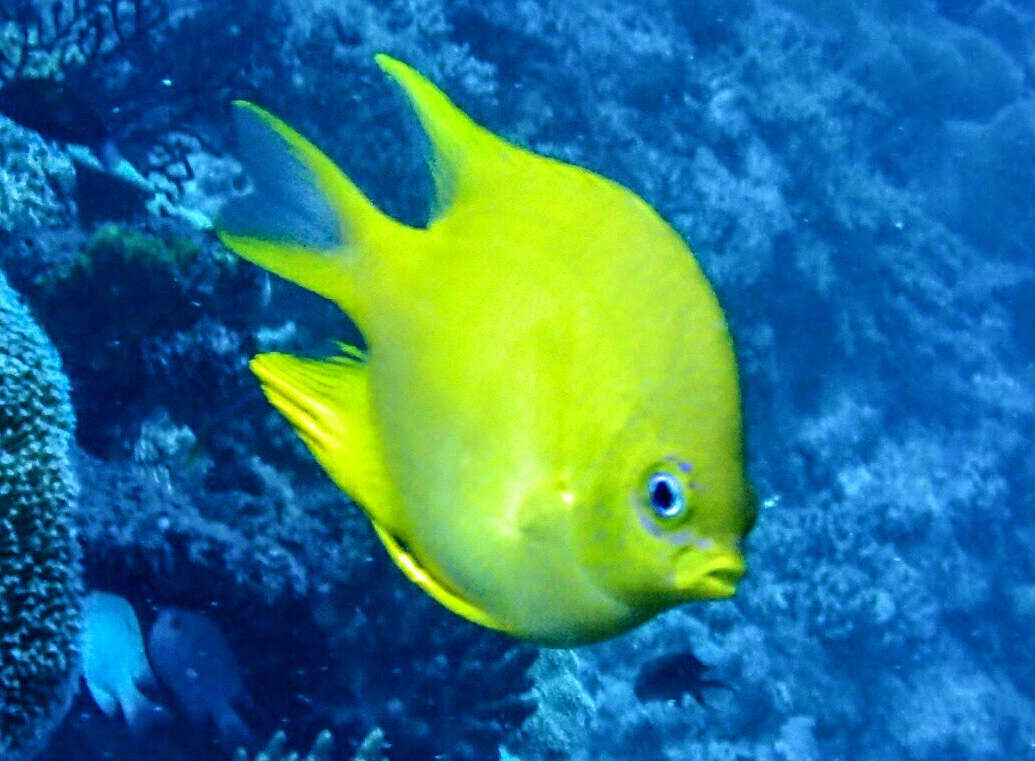
Pomacentrus moluccensis Bleeker, 1853 (Lemon damsel)
Inhabits clear lagoon and seaward reefs among branching corals. Occurs in small aggregations. Feeds mainly on algae and planktonic crustaceans.
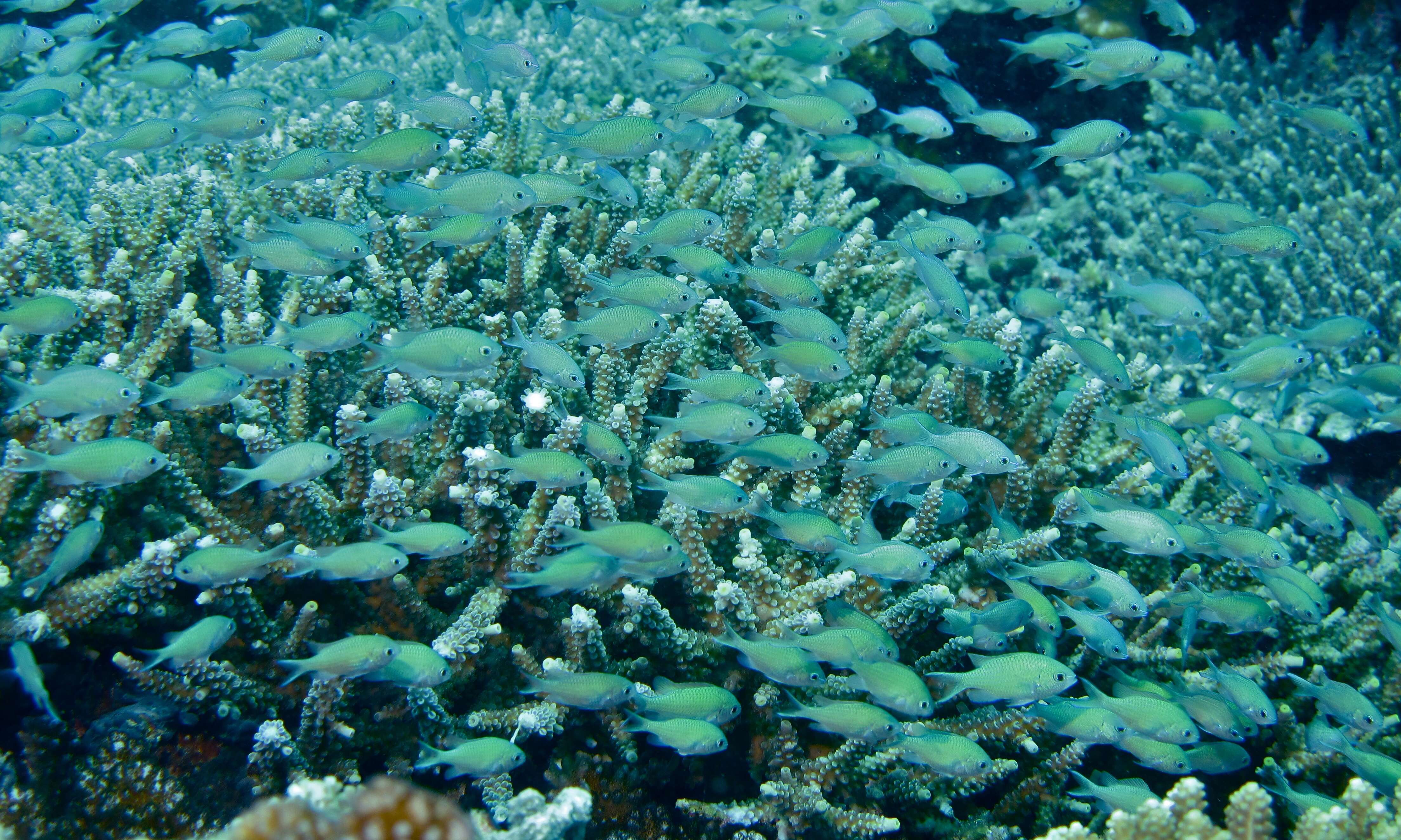
Chromis viridis (Cuvier, 1830) (blue-green chromis)
Found in large aggregations above thickets of branching Acropora corals in sheltered areas such as subtidal reef flats and lagoons. Juveniles closely tied to individual coral heads . Phytoplankton feeders. Breeding is d...
Read More
Read More
Dascyllus reticulatus (Richardson, 1846) (twostriped damselfish)
Occurs in outer lagoon and seaward reefs. Inhabits branching coral heads, particularly Pocillopora eydouxi. Forms schools, often in silty habitats . Male prepares a nest by cleaning with its mouth a rock or coral surface where the female will attach the eggs .
Plectroglyphidodon dickii (Liénard, 1839) (Dick's damsel)
Inhabits coral-rich and surge areas of clear lagoon and seaward reefs . Commonly associated with Pocillopora or Acropora corals . Feeds on filamentous algae, small benthic invertebrates, and occasionally small fishes . Minimum depth range taken from Ref. 7247.
Dascyllus melanurus Bleeker, 1854 (blacktailed humbug)
Schooling species, inhabits sheltered lagoons, harbors and inlets. Also in somewhat open substrates with outcrops of Acropora corals . Often associated with small coral heads. Feeds on a variety of plankton, including l...
Read More
Read More
Pomacentrus simsiang Bleeker, 1856 (Blueback damsel)
Occurs singly or in small aggregations at slightly turbid areas of lagoon and coastal reefs. Feeds mainly on benthic algae.
Dischistodus chrysopoecilus (Schlegel and Müller, 1839) (Lagoon damsel)
Found among coral outcrops and seagrass beds of silty areas of lagoon and coastal reefs , usually subtidal to a few meters depth .
Dischistodus prosopotaenia (Bleeker, 1852) (Honey-head damsel)
Inhabits lagoons and coastal reefs, usually in silty areas . The true D. prosopotaenia ranges from Singapore to Sulawesi while the yellow-breasted variant ranges from Irian Jaya to eastern Australia and Vanuatu .
Chrysiptera unimaculata (Cuvier, 1830) (Onespot demoiselle)
Found solitarily or in small groups among coastal algal reefs, rubble or over open beach-rock of reef flats exposed to moderate surge and feeds mainly on benthic algae .
Amblyglyphidodon aureus (Cuvier, 1830) (Golden damsel)
Occurs in steep outer reef, occasionally in deep lagoons and along channel walls, usually in current prone habitats and where there are abundant gorgonian and long sea-whip corals on which they lay and guard eggs. Juvenil...
Read More
Read More
Opistognathus macrognathus Poey, 1860 (longjaw jawfish)
Inhabits sandy bottoms near coral reefs . Feeds on gastropods, crabs and fishes . Monogamous . Oviparous, mouthbrooding by males .
Stalix eremia Smith-Vaniz, 1989
Mouthbrooders. Eggs which are clumped together in a sticky ball get incubated inside the parent's mouth . Minimum depth from Ref. 58018.
Stalix versluysi (Weber, 1913)
Stalix dicra Smith-Vaniz, 1989
Mouthbrooders. Eggs which are clumped together in a sticky ball get incubated inside the parent's mouth . Minimum depth from Ref. 58018.
Opistognathus darwiniensis Macleay, 1878 (Darwin jawfish)
Found in shallow reefs, in sand or rubble areas. Mouthbrooders .
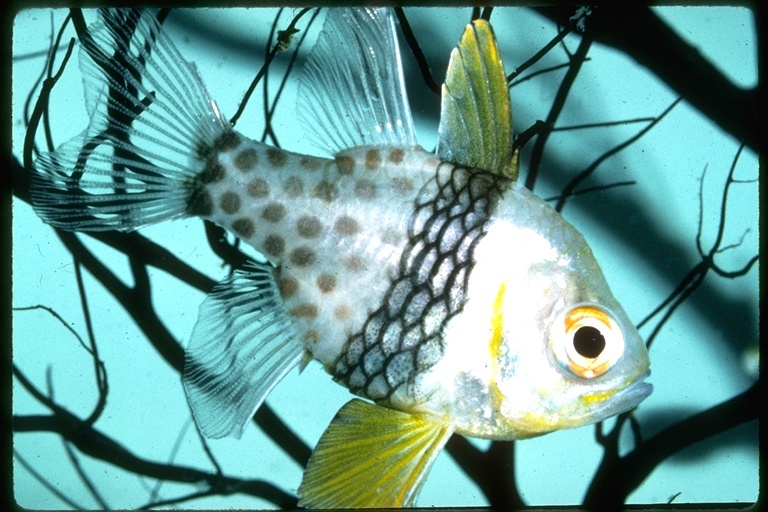
Sphaeramia nematoptera (Bleeker, 1856) (Pajama cardinalfish)
Forms aggregations among the branches of Porites nigrescens and P. cylindrica in sheltered bays and lagoons . Disperses at night to feed close to the bottom . Has been reared in captivity . Popular aquarium fish .
Archamia fucata (Cantor, 1849) (Orangelined cardinalfish)
Inhabits continental and insular shelves; on coral and rocky reefs in sheltered bays and lagoon, patch reefs, with muddy, sandy and silty bottoms or coral rubble, and mangroves ; typically forming dense aggregations at the entrance of caves and among branching corals . Nocturnal species .
Apogon angustatus (Smith & Radcliffe, 1911) (Striped cardinalfish)
Commonly found in clear-waters of seaward reefs; on reef crests and slopes, where usually shallow, and along deep drop-offs to 25 m . Feeds on polychaetes and other small benthic invertebrates at night; cryptic under ledges or in holes by day .
Fowleria variegata (Valenciennes, 1832) (Spotcheek cardinalfish)
Found in coral reefs and seagrass beds of inner bays and shallow lagoons ; also in dead reef and rubble . Nocturnal species .
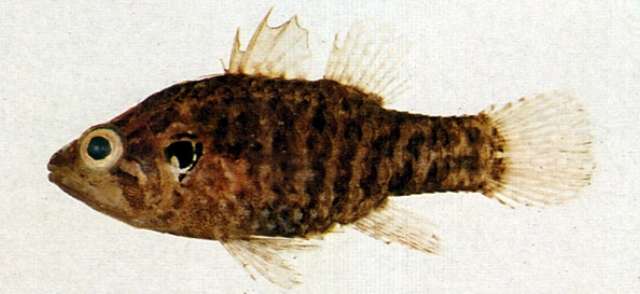
Apogon exostigma (Jordan & Starks, 1906) (Narrowstripe cardinalfish)
Found under ledges or among isolated coral heads in silty inner reef areas . Solitary and rather rare . Nocturnal species .
Pterapogon mirifica (Mees, 1966) (鳍竺鲷)
Nocturnal species; occurs inshore .
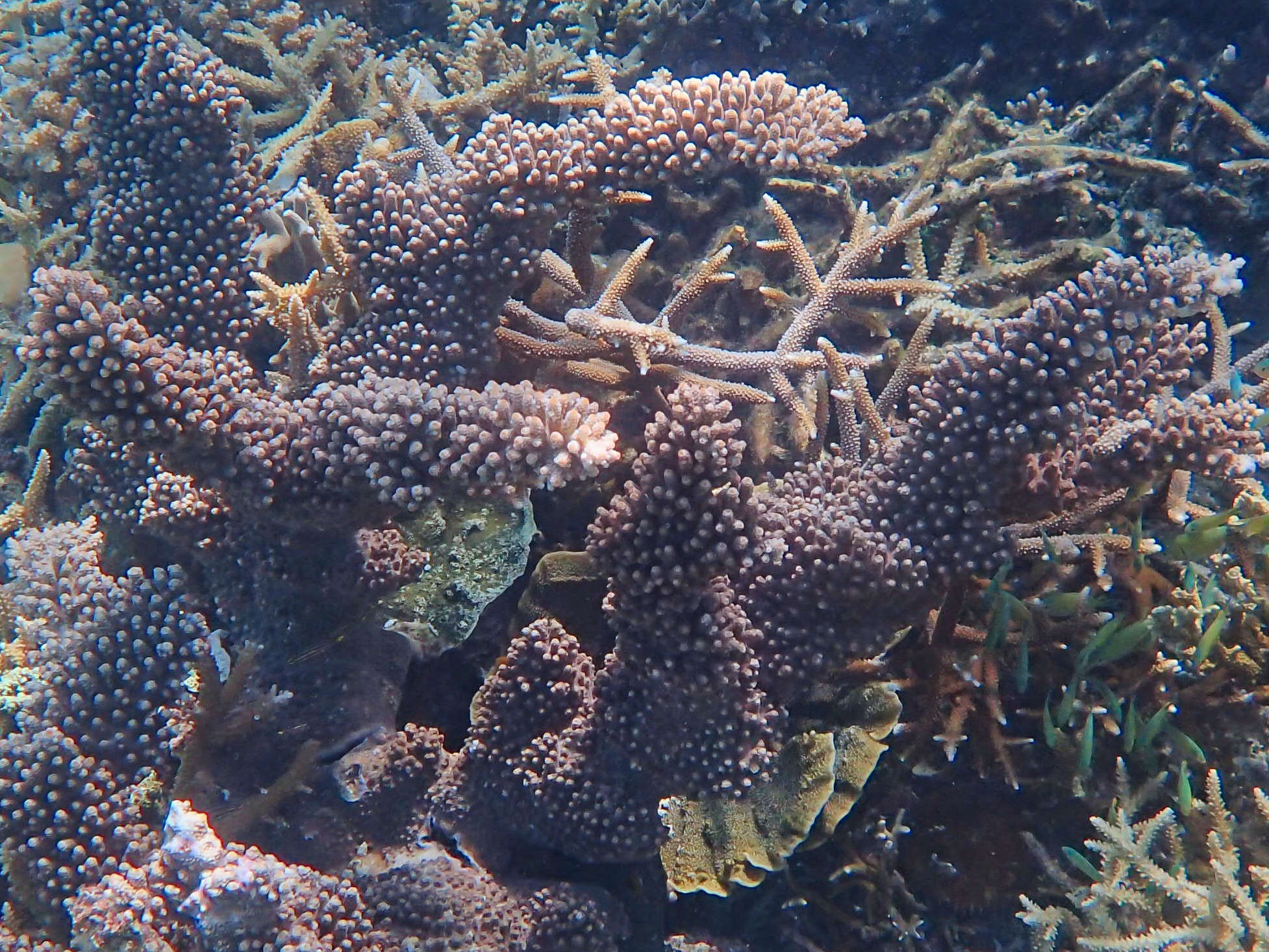
Acropora sarmentosa (Brook, 1892)
zooxanthellate
Acropora selago (Studer, 1878)
zooxanthellate
Acropora striata (Verrill, 1866)
zooxanthellate
Acropora subglabra (Brook, 1891)
zooxanthellate
Acropora tumida Verrill, 1866
zooxanthellate
Astreopora gracilis Bernard, 1896 (Starflower coral)
zooxanthellate
Cheilinus chlorourus (Bloch, 1791) (yellowdotted maori wrasse)
Inhabits lagoon and coastal reefs, in areas with mixed sand, rubble, and coral . Occasionally in grassy areas. Feeds mainly on benthic invertebrates such as mollusks and crustaceans.
Choerodon schoenleinii (Valenciennes, 1839) (Green wrasse)
Inhabit flat sandy or weedy areas near lagoon and seaward reefs . Solitary. Feed mainly on hard-shelled prey including crustaceans, mollusks and sea urchins. Marketed mostly fresh. In Hong Kong live fish markets .
Share on Social Networks
- Facebook:

personalize your shared text as well as its destination (wall, page...) or send as a private message to a friend
- Twitter: Tweet personalize your tweet
- Google Plus:
Direct link to this dive
- Long link:
- Short link:


 We are participating today in the startup contest Techcrunch Disrupt. Support Diveboard by voting for us!
























































































2nd dive 2 dive day @ Marisa I. Nice conditions but murky water.
drop in dive around to the right
solo and buddies
multilevel