


 Beachnutts



 Philippines
-
Nº97
 Date: 2023-08-20 - 10:10
-
 Max Depth: 26.2m Duration: 87mins
Dive Location

- Temp: Surf 27°C Bottom 27°C
- Dive type : Recreational, Reef, Photo
- Visibility: Average Water: Salt
Specific gear used
- BCD: Oceanic - OceanPro
- Camera: Olympus - TG6
- Computer: Oceanic - OCS
- Fins: Scubapro - Jet Fins
- Knife: Scuba MAx - folding
- Lift bag: ScubaMax - SMB
- Light: Sofirn - SD05
- Mask: Promate - Scope
- Regulator: Aqualung - Titan LX
- Wet suit: Blue Ocean - Diveskin
- Weights: 3.2 kg
Dive reviews
| Overall review | ||
| Dive difficulty | ||
| Marine life quality |
Dive Shop & Buddies
 Dive with Maeng
 Dive buddies:
Cesar,
Ton Ton,
Maeng,
Mike Tacansan

Link to this spot:
- Spot:
- Country:
- Area:
- Body of water:
Dive Profile
- 1. Air
- 10L Aluminium 207 → 28 bar
- Average depth: 17.5m
Data provided by EOL.org

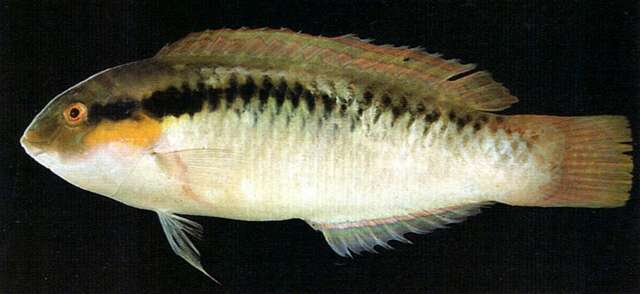

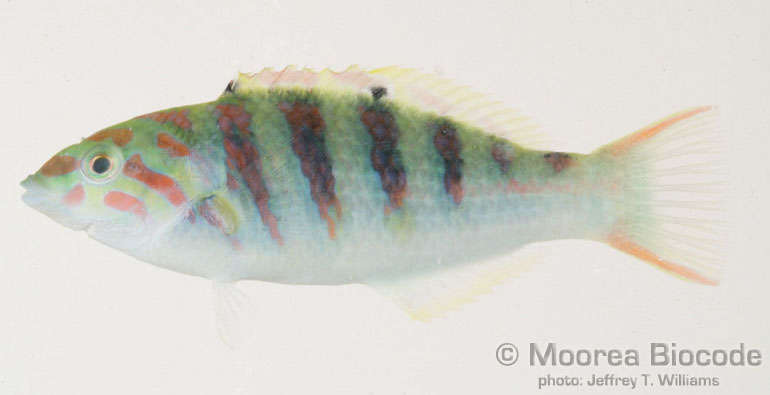


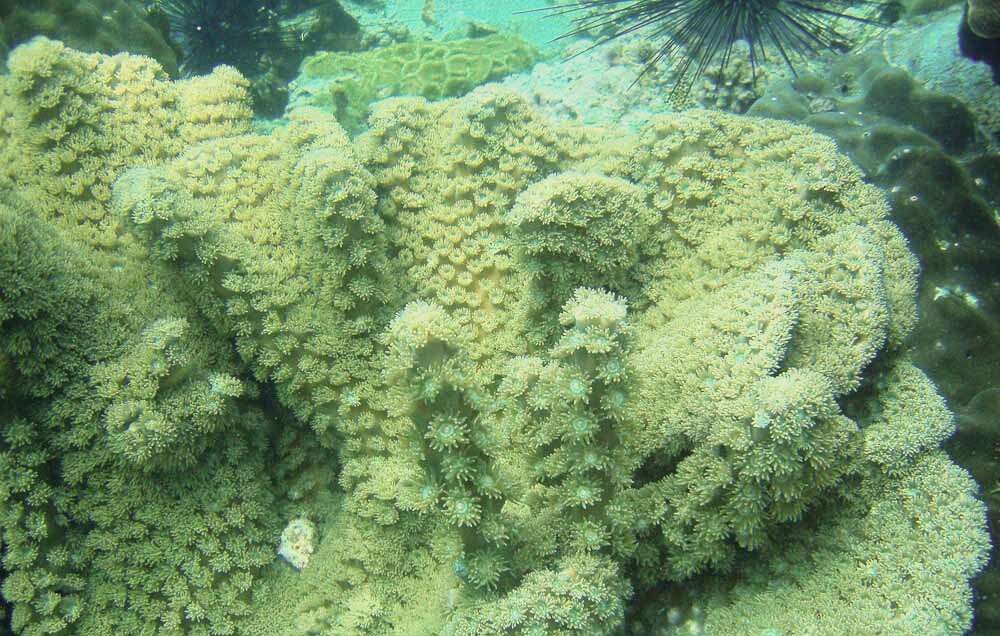
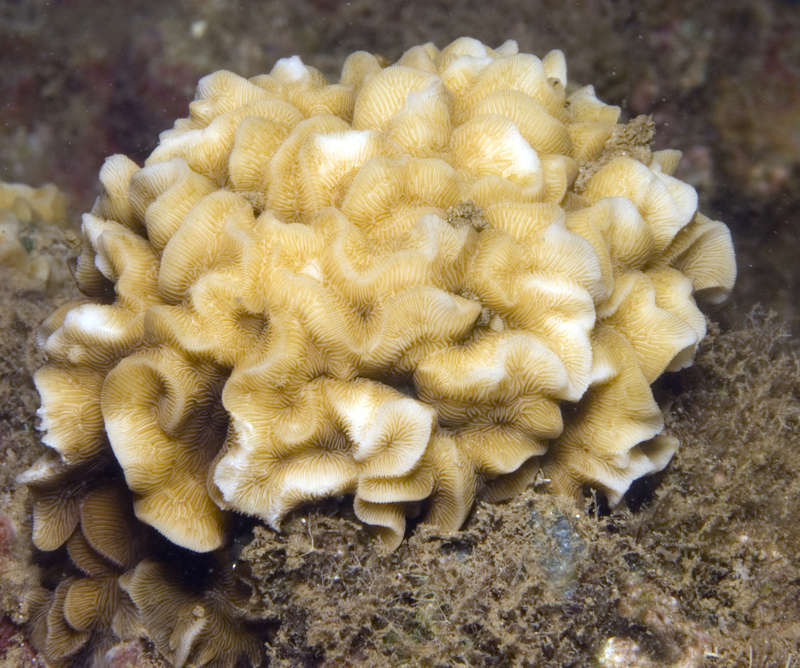






Species Identified
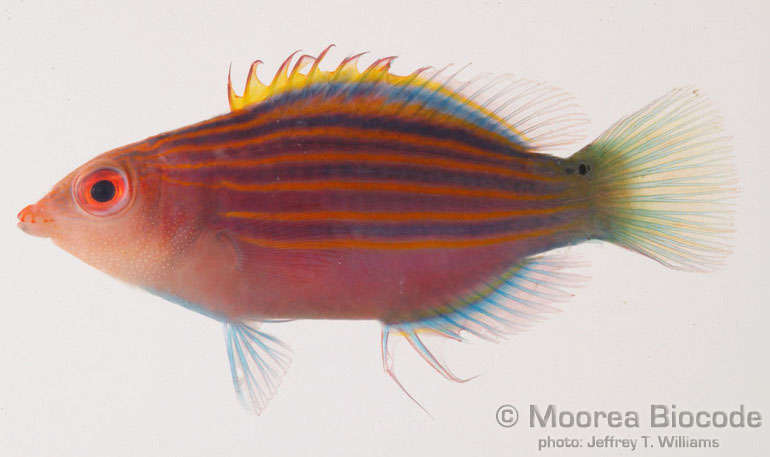
Pseudocheilinus hexataenia (Bleeker, 1857) (Pyjama)
Occurs in seaward reefs among coral branches. Also in clear coastal waters, dense coral habitats on shallow reef crest or slopes to depth of about 20 m. Usually occurs in small loose groups. A shy species, usually swimm...
Read More
Read More
Oxycheilinus bimaculatus (Valenciennes, 1840) (Two-spot wrasse)
Inhabits outer reef slopes or deep clear lagoons among rubble or clumps of algae; also in seagrass beds . Often in sheltered estuaries and harbors . Benthic and benthopelagic .
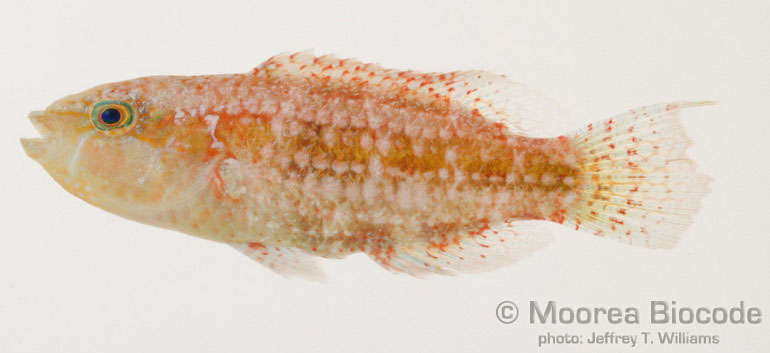
Pseudocheilinus evanidus Jordan and Evermann, 1903 (Striated wrasse)
Found among patches of rubble or among branching coral of seaward reef slopes from 6 to at least 40 m . Benthopelagic . Rare in less than 20 m . Generally solitary and feeds on small benthic invertebrates .
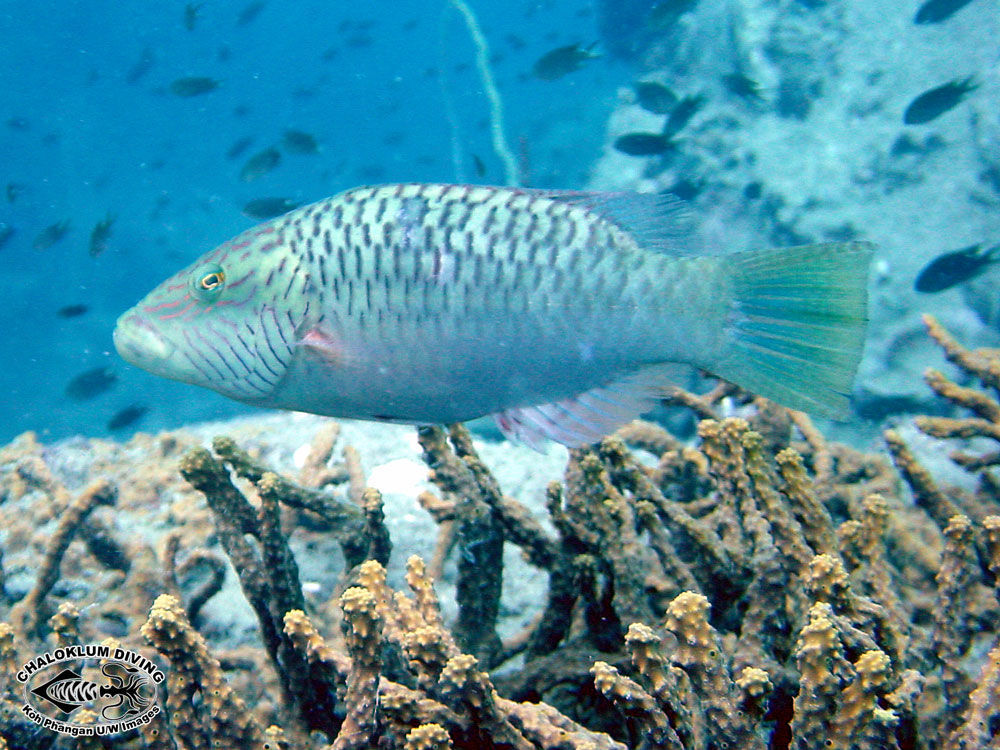
Oxycheilinus digramma (Lacepède, 1801) (Cheeklined wrasse)
Inhabits lagoon and sheltered seaward reefs in coral rich areas . Possibly to 120 m depths. Young is more inshore on sheltered reef crests or slopes, usually amongst soft corals or stinging hydrozoans . Feeds on hard-sh...
Read More
Read More
Halichoeres scapularis (Bennett, 1832) (Zigzag wrasse)
Common in shallow lagoons or bays; usually over sand, rubble, or seagrass bottom , rather than on coral reefs. Usually solitary and aggressive towards members of its own species. Feeds on small crustaceans by picking them off the sandy bottom .
Cheilinus trilobatus Lacepède, 1801 (Tripletail wrasse)
Adults inhabit lagoon and seaward reefs at depths of 1 to over 30 m, and relatively common along shallow reef margins with good coral cover . Usually solitary . Feed mainly on shelled benthic invertebrates such as mollus...
Read More
Read More
Thalassoma hardwicke (Bennett, 1830) (Sixbar wrasse)
Occurs in shallow lagoon and seaward reefs, slopes and along drop-offs to moderate depths. Occurs in small, loose groups . Feeds on benthic and planktonic crustaceans, small fishes, and foraminiferans.
Ptilocaulis spiculifer (Lamarck, 1813)
Rhabdastrella globostellata (Carter, 1883)
Dactylospongia elegans (Thiele, 1899)
Stelletta clavosa Ridley, 1884
Carteriospongia foliascens (Pallas 1766)
Luffariella variabilis (Polejaeff, 1884)
Stelletta purpurea Ridley 1884
Crispatotrochus rubescens (Moseley, 1881)
azooxanthellate
Premocyathus dentiformis (Alcock, 1902)
azooxanthellate
Conotrochus brunneus (Moseley, 1881)
azooxanthellate
Turbinaria peltata (Esper, 1794) (Disc coral)
zooxanthellate
Pavona cactus (Forskål, 1775) (Leaf coral)
zooxanthellate
Heterocyathus alternatus Verrill, 1865 (Striped bum coral)
azooxanthellate
Ericiocyathus echinatus Cairns and Zibrowius, 1997
azooxanthellate
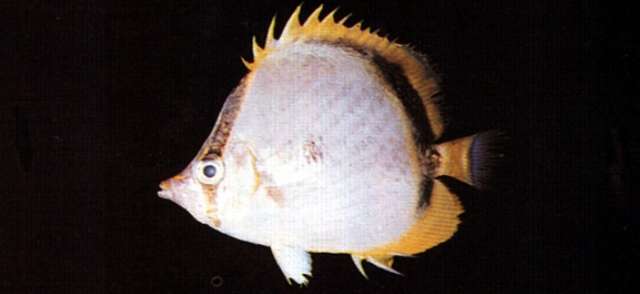
Chaetodon selene Bleeker, 1853 (Yellowdotted butterflyfish)
Inhabit coastal reefs, primarily on rubble slopes . Oviparous . Adults usually swim in pairs in search of small benthic invertebrates .
Chaetodon meyeri Bloch and Schneider, 1801 (Scrawled butterflyfish)
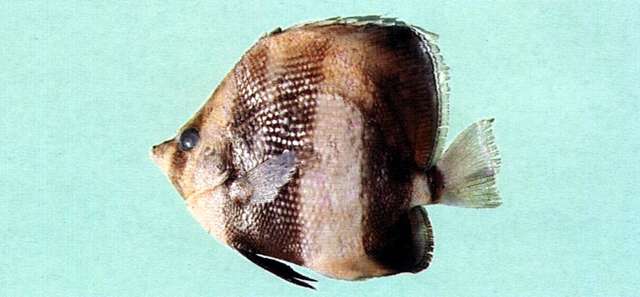
Coradion chrysozonus (Cuvier, 1831) (Goldengirdled coralfish)
Found in coastal to outer reef drop-offs with rich invertebrate growth to 60 m depth; may also occur in areas with sparse coral growth. Feed on sponges . Oviparous . Form pairs during breeding .
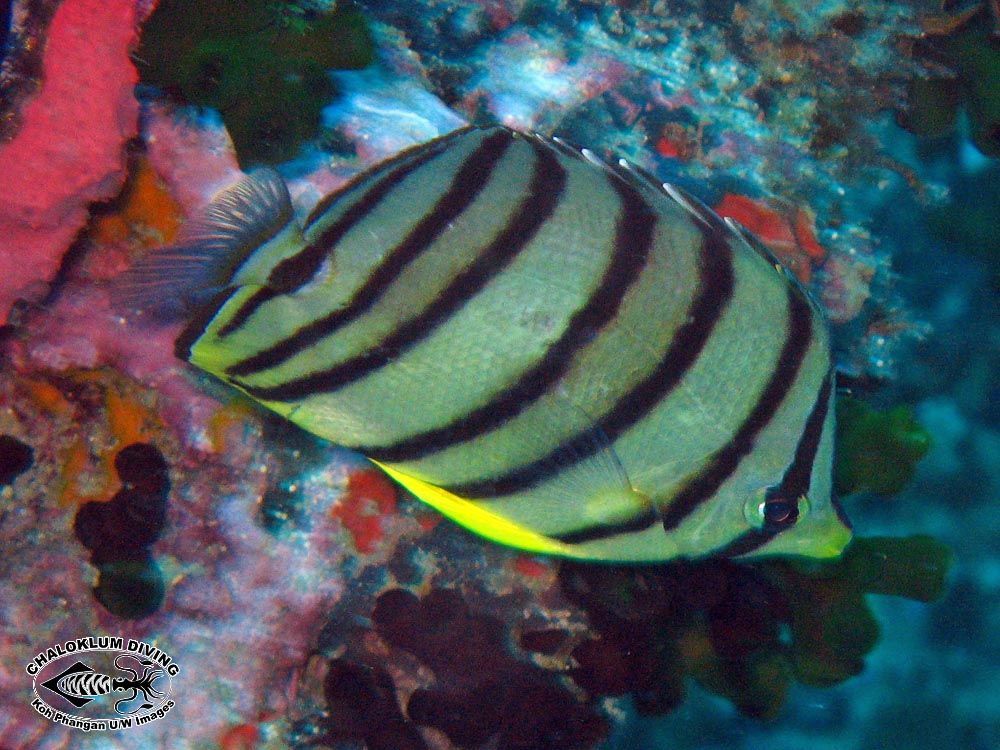
Chaetodon octofasciatus Bloch, 1787 (Eightband butterflyfish)
Swim in pairs in coral rich areas of sheltered lagoon and inshore reefs; juveniles seen in groups among Acropora corals. Feed exclusively on coral polyps. Oviparous . Form pairs during breeding .
Chaetodon punctatofasciatus Cuvier, 1831 (Spotband butterflyfish)
Common in coral rich areas and clear waters of lagoon and seaward reefs. Sometimes found on outer subtidal reef flats . Juveniles secretive . Feed on filamentous algae, corals, and benthic invertebrates. Often in pairs...
Read More
Read More
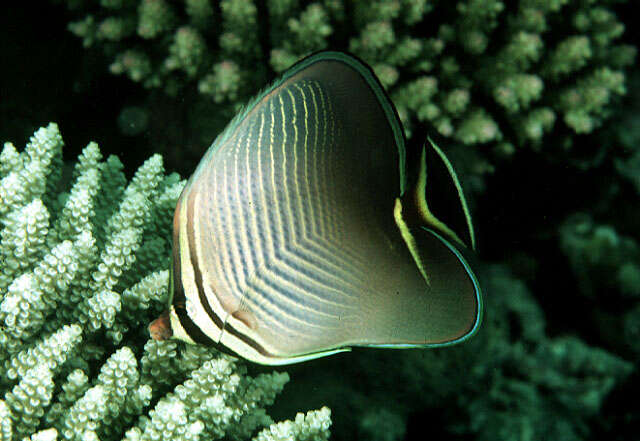
Chaetodon trifasciatus Park, 1797 (Melon butterflyfish)
Occur in coral-rich lagoons and semi-protected seaward reefs. Territorial and aggressive to other Chaetodon. Small juveniles secretive in corals . Swim in pairs. Feed exclusively on coral polyps, particularly of the Pocillopora type . Oviparous , monogamous . Form pairs during breeding .
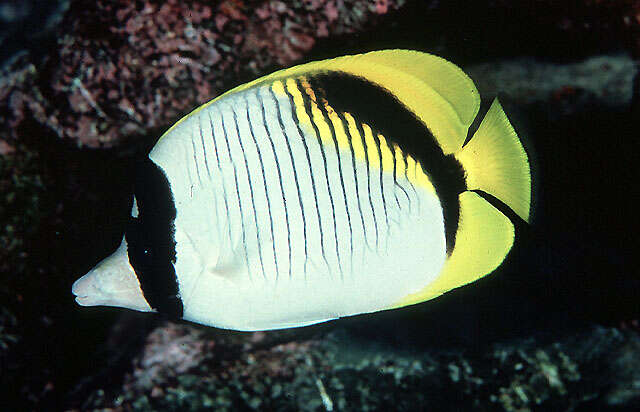
Chaetodon lineolatus Cuvier, 1831 (Line butterflyfish)
Occur in lagoon and seaward reefs, usually in pairs in coral rich areas . Benthopelagic . Feed mainly on coral polyps and anemones, but also on small invertebrates and algae . Largest species in the genus . Oviparous . Form pairs during breeding .
Chaetodon triangulum Cuvier, 1831 (Triangle butterflyfish)
Inhabit lagoon and seaward reefs . Closely associated with Acropora corals, particularly the staghorn variety. Territorial and in pairs . Juveniles solitary among coral branches . Feed mainly on coral polyps and theref...
Read More
Read More
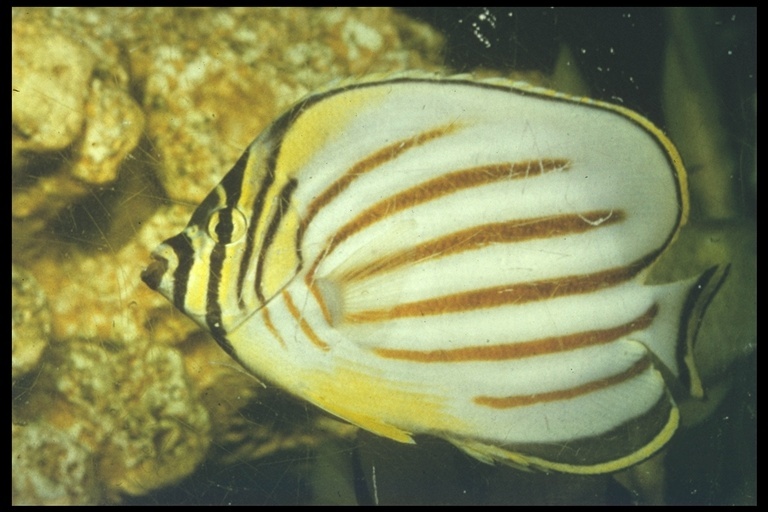
Chaetodon ornatissimus Cuvier, 1831 (Ornate butterflyfish)
Occur in clear waters and coral-rich areas of lagoon and seaward reefs. However, only common in seaward reefs . Benthopelagic . Juveniles are solitary, living among branching corals, while adults are almost always in pa...
Read More
Read More
Scarus ghobban Forsskål, 1775 (Blue-barred parrotfish)
Scarus flavipectoralis Schultz, 1958 (Yellowfin parrotfish)
Inhabits lagoon and channel reefs, usually deeper 20 m .
Scarus chameleon Choat and Randall, 1986 (Chameleon parrotfish)
Inhabits outer reef flats and exposed lagoon and seaward slopes from a depth of 3 to at least 30 m . Feeds mainly on algae . Females often in schools of mixed species when feeding, males usually seen separate .
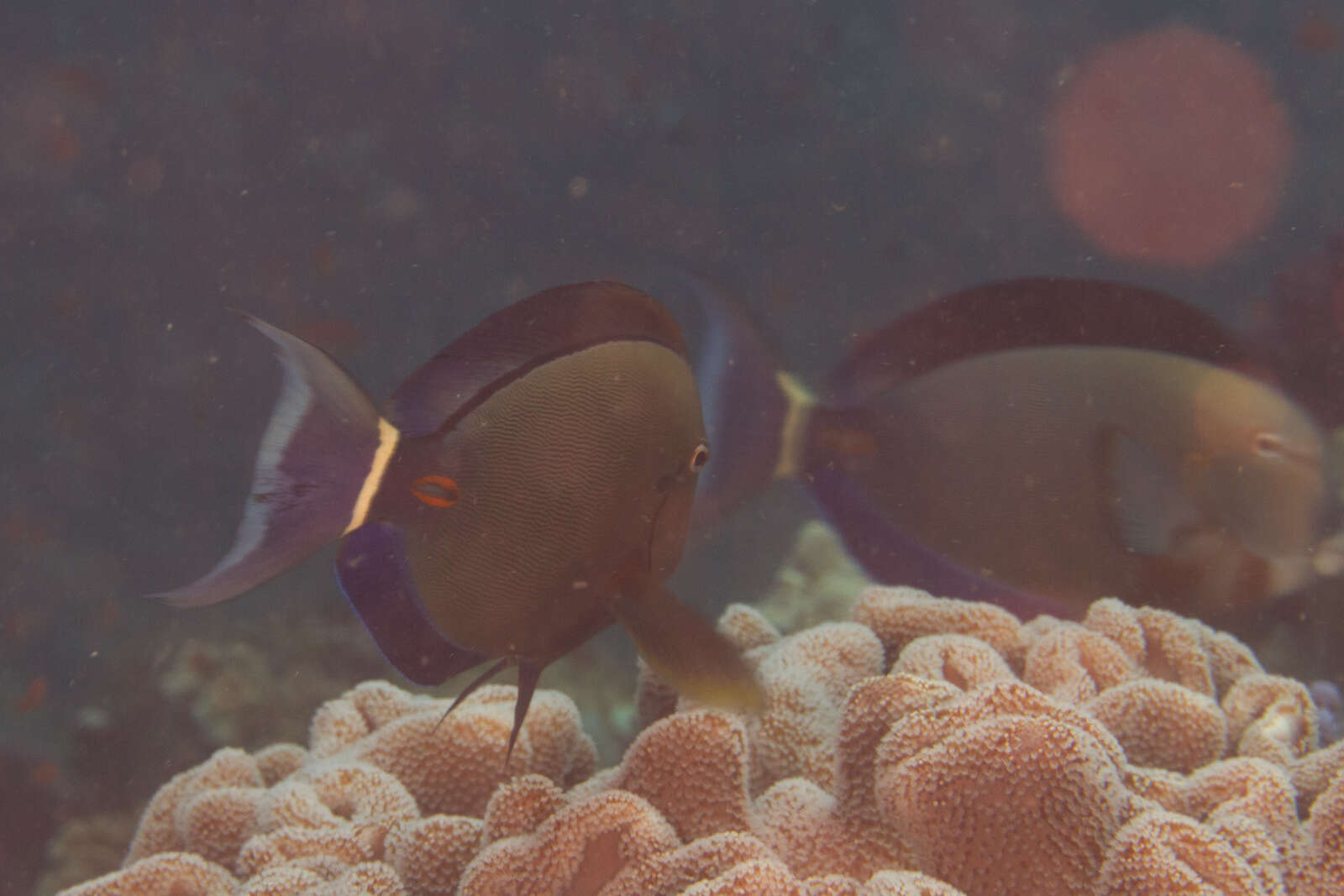
Acanthurus auranticavus Randall, 1956 (Orange-socket surgeonfish)
Inhabits shallow reefs, both in lagoons and outer reef areas. Frequently moves in groups. Juveniles found between soft corals in lagoons at depths of up to 2 m . Adults in groups, often mixed with other similar species .
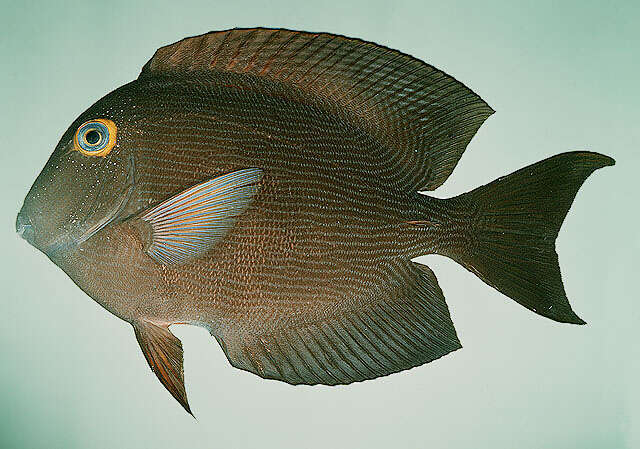
Acanthurus nigroris Valenciennes, 1835 (Bbuelined surgeonfish)
Inhabits clear lagoon and seaward reefs; often in areas with mixed coral, pavement, rubble and sand substrates . Benthopelagic . Occurs singly or in small groups . Feeds on filamentous algae, diatoms and fine algal film...
Read More
Read More
Ctenochaetus strigosus (Bennett, 1828) (Spotted surgeonfish)
Benthopelagic over coral, rock, and rubble . Solitary. Mainly diurnal . Feeds on detritus by whisking its comb-like teeth over the bottom as it closes its mouth .
Canthigaster epilampra (Jenkins, 1903) (Lantern toby)
Inhabits outer reef slopes, generally at depths greater than 24 m, but also seen below 6 m . Benthopelagic . Solitary or paired. Feeds on mollusks, echinoderms, brachiopods, and filamentous algae .
Canthigaster ocellicincta Allen & Randall, 1977 (Shy toby)
Inhabits invertebrate-rich inshore reef to outer reef walls where usually in caves in depths of about 25 meters or more. Found singly or in pairs and on one occasion a small groups was observed among plate-corals on soft ...
Read More
Read More
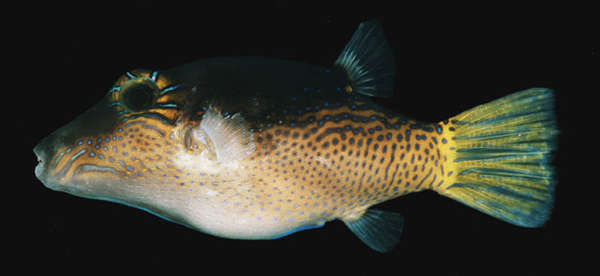
Canthigaster janthinoptera (Bleeker, 1855) (Honeycomb toby)
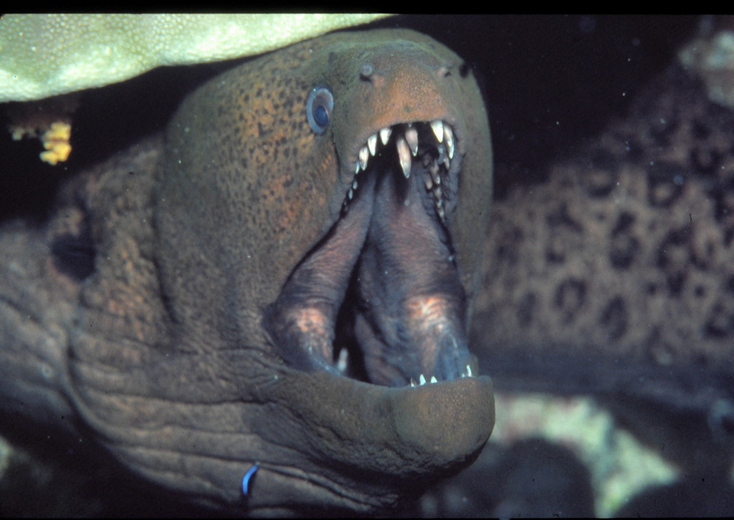
Gymnothorax undulatus (Lacepède, 1803) (Moray)
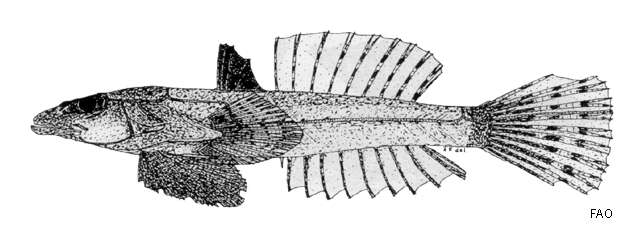
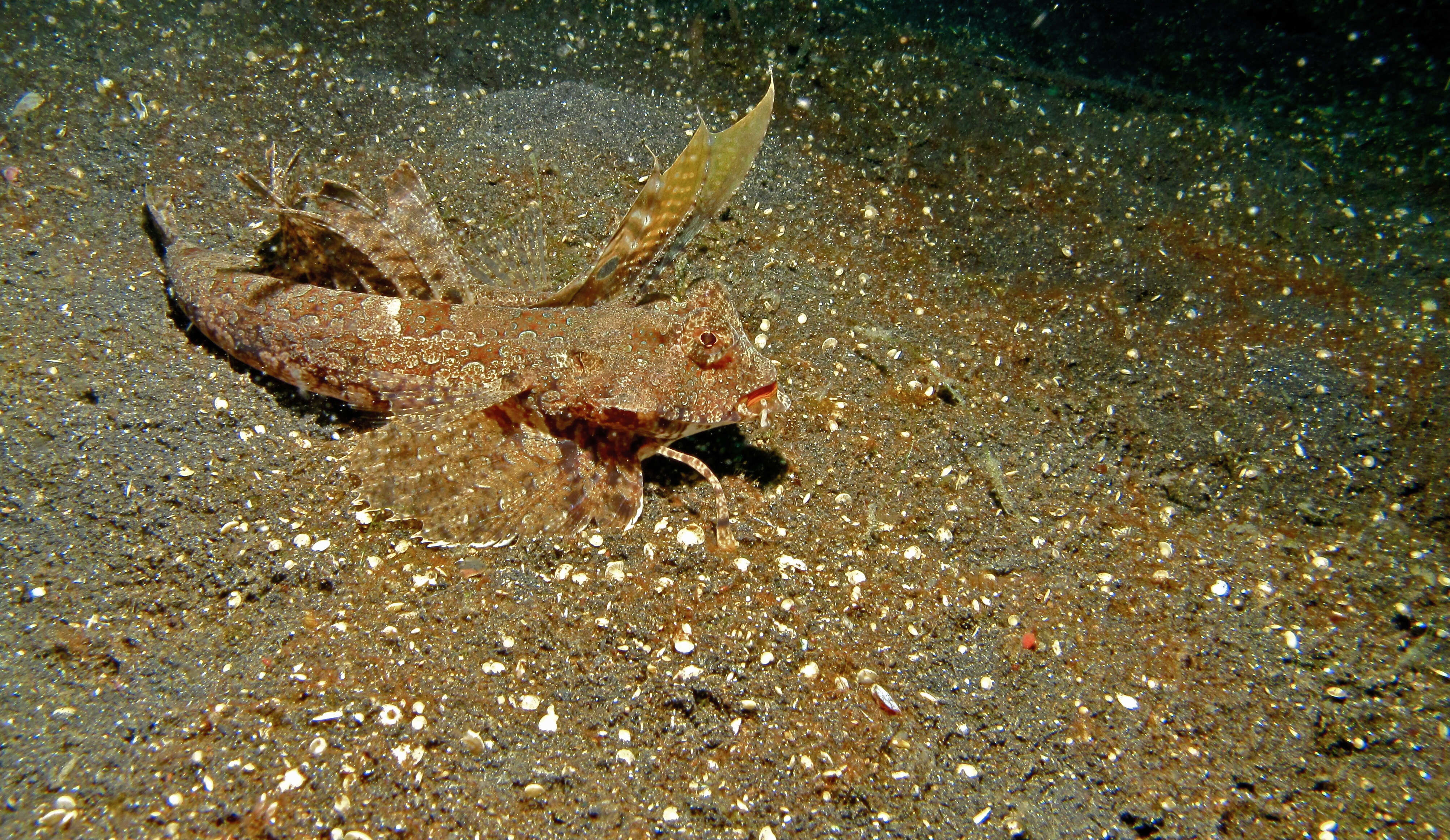
Eleutherochir opercularis (Valenciennes, 1837) (Flap-gilled dragonet)
Inhabits shallow sandy and muddy bottoms in the sea, but also enters mouths of rivers and may live even in freshwater .
Dactylopus dactylopus (Valenciennes, 1837) (fingered dragonet)
Lives on sand-weed bottoms . Inhabits protected sand and mud flats and slopes at depths of 1 to 55 m ; also include estuaries and deep water .
Share on Social Networks
- Facebook:

personalize your shared text as well as its destination (wall, page...) or send as a private message to a friend
- Twitter: Tweet personalize your tweet
- Google Plus:
Direct link to this dive
- Long link:
- Short link:


 We are participating today in the startup contest Techcrunch Disrupt. Support Diveboard by voting for us!
























































































1st dive of 2 tanker aboard Romyca
Talicud Island Red House Dive site near Dizon Wall
Drop in South end of Angels Cove swim S front of Red House approaching the wall but stay mostly in shallower water on top, back to boat
Nice yellow frogfish
multilevel, large group