


 Beachnutts



 Philippines
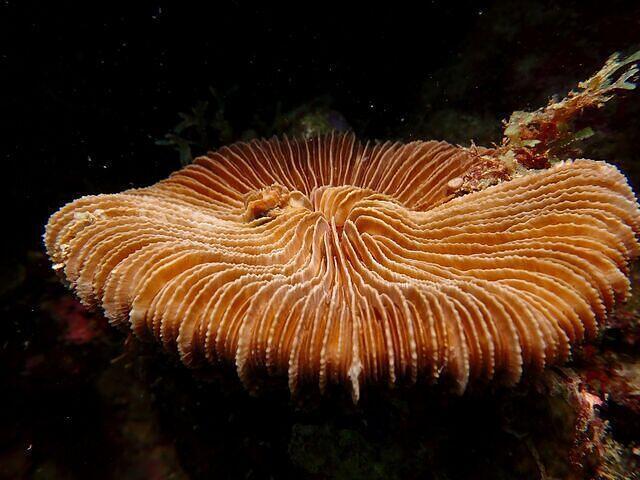
-
Nº160
 Date: 2024-12-22 - 01:14
-
 Max Depth: 20.7m Duration: 75mins
Dive Location

- Surface interval:94 mins
- Temp: Surf 27°C Bottom 27°C
- Dive type : Recreational, Reef, Photo
- Visibility: Good Water: Salt
Specific gear used
- BCD: Scubapro - Glide Plus
- Camera: Olympus - TG6
- Computer: Oceanic - OCS
- Fins: Atomic Aquatics - Blade Fins
- Lift bag: ScubaMax - SMB
- Light: Sofirn - SD05
- Mask: Promate - Scope
- Regulator: SEAC - Synchro
- Wet suit: Blue Ocean - Diveskin
- Weights: 3.2 kg
Dive reviews
| Overall review | ||
| Dive difficulty | ||
| Marine life quality |
Recent Divers in Talicud island, Davao
Recent Pictures in Talicud island, Davao
Dive Shop & Buddies
 Dive with Blake Auge
 Dive buddies:
Maeng,
Lac Lac,
Beachnutts

Link to this spot:
- Spot:
- Country:
- Area:
- Body of water:
Dive Profile
- 1. Air
- 10L Aluminium 207 → 34 bar
- Average depth: 13.8m
Data provided by EOL.org



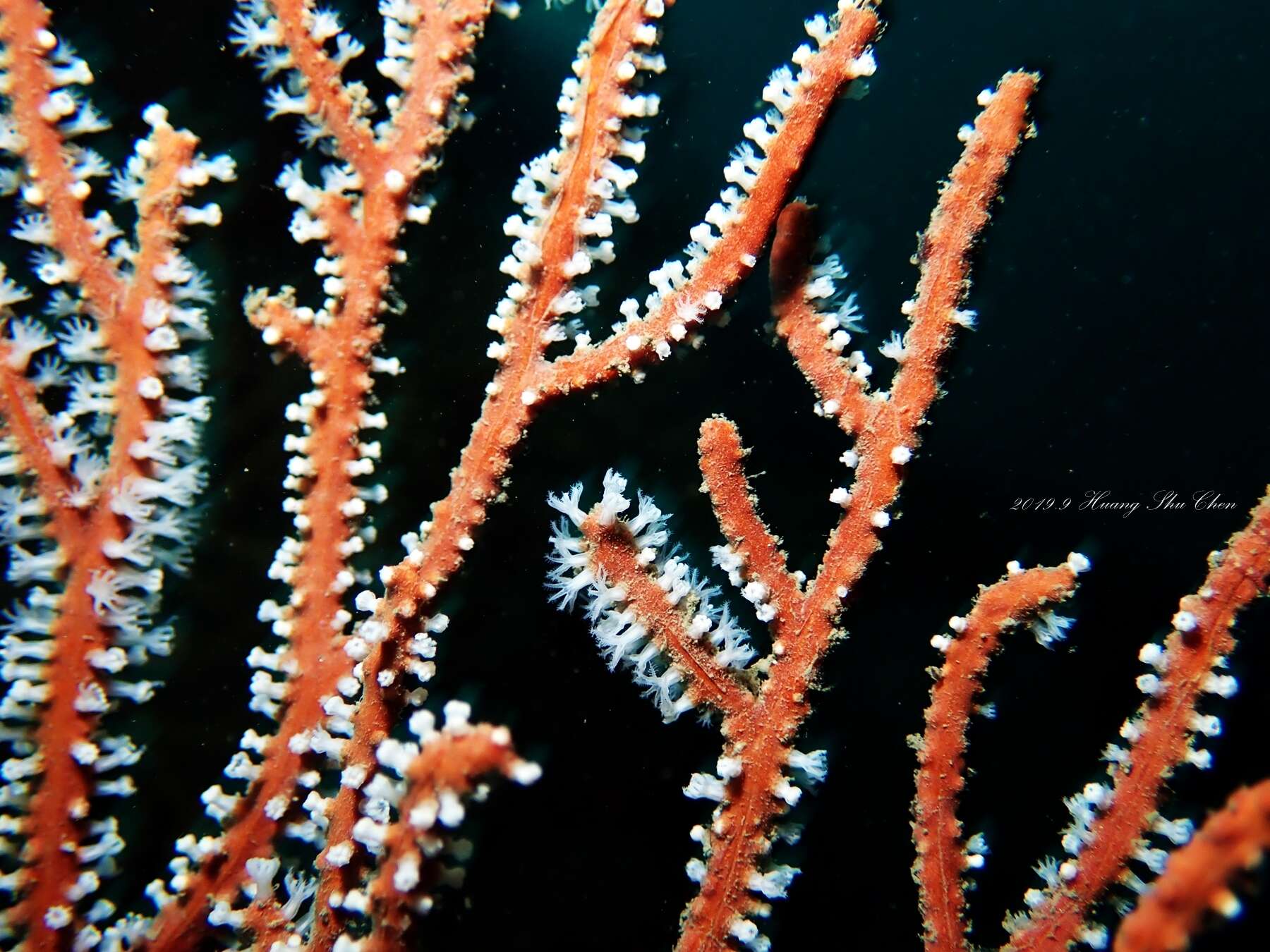
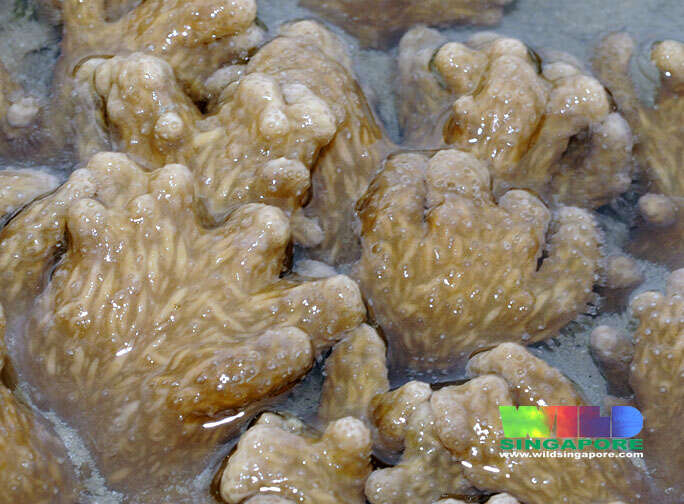
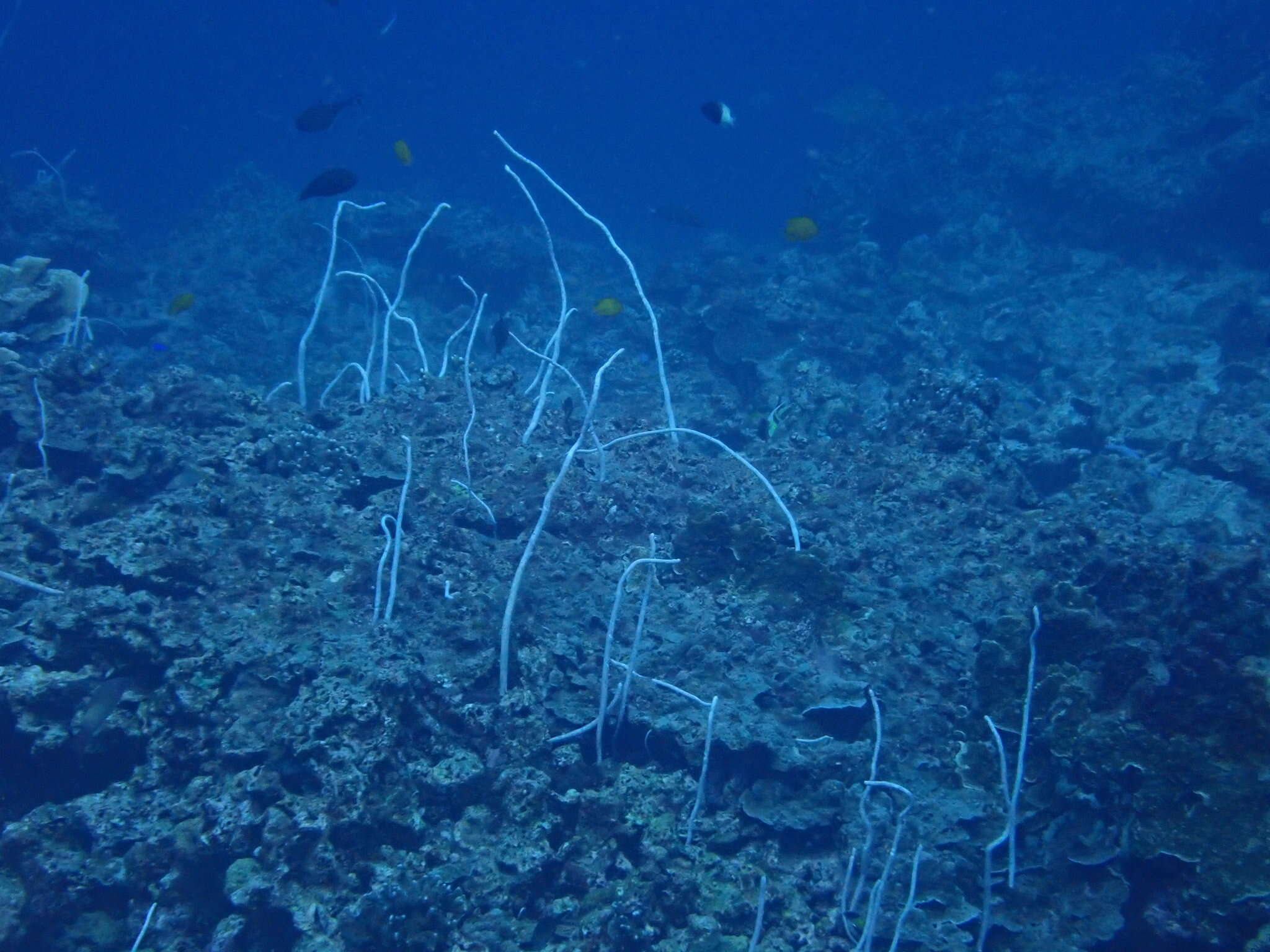
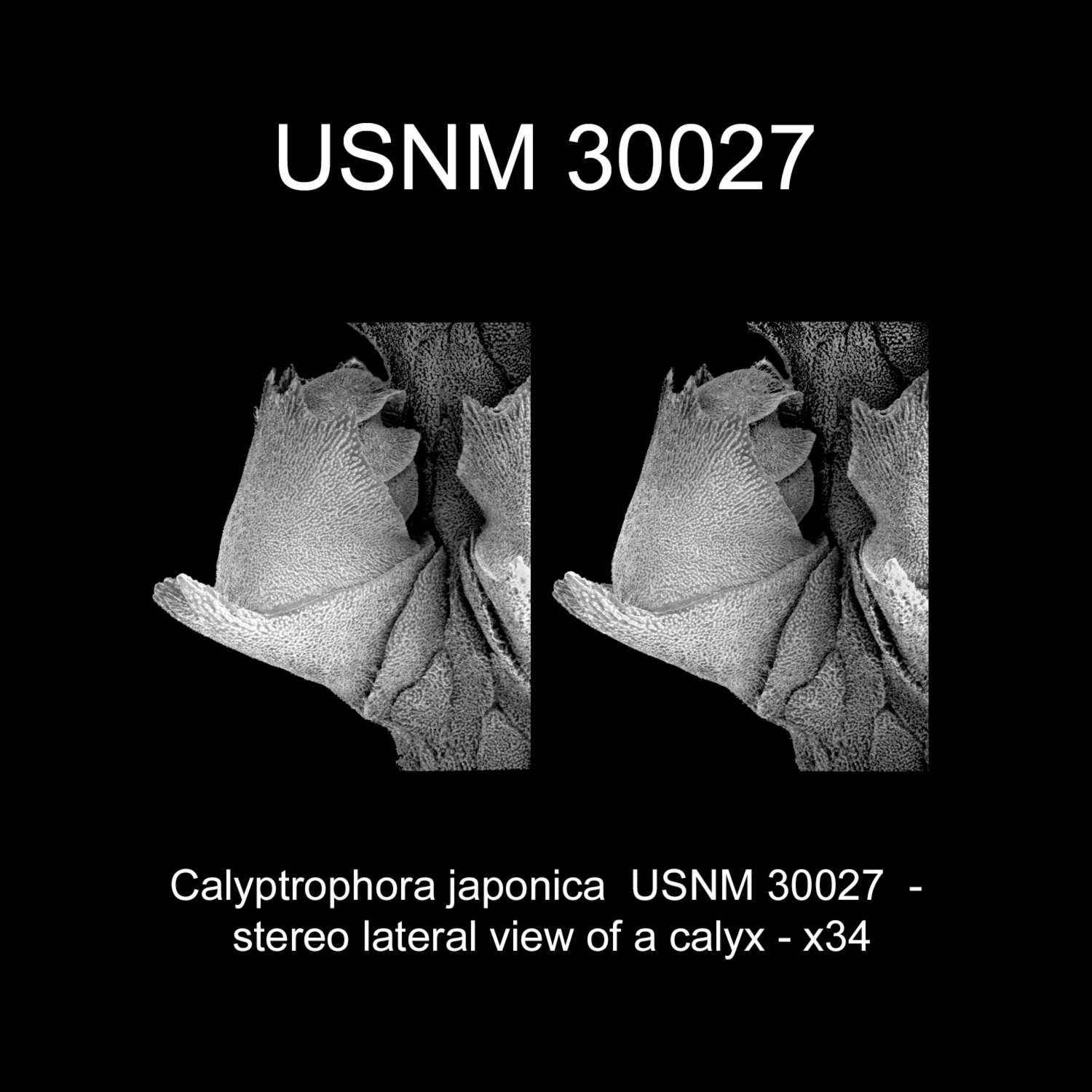










Species Identified
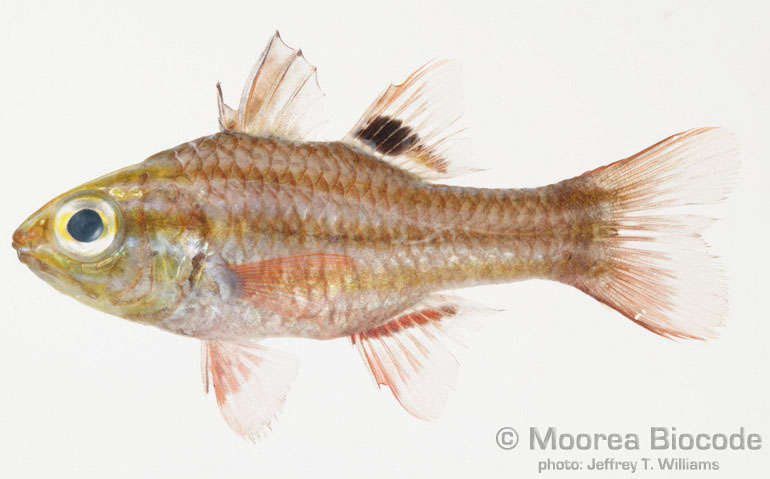
Apogon taeniophorus Regan, 1908 (Reef-flat cardinalfish)
Occurs inshore . Found in holes or ledges of outer reef flats in areas exposed to surge , to depths of about 10 m . Nocturnal .
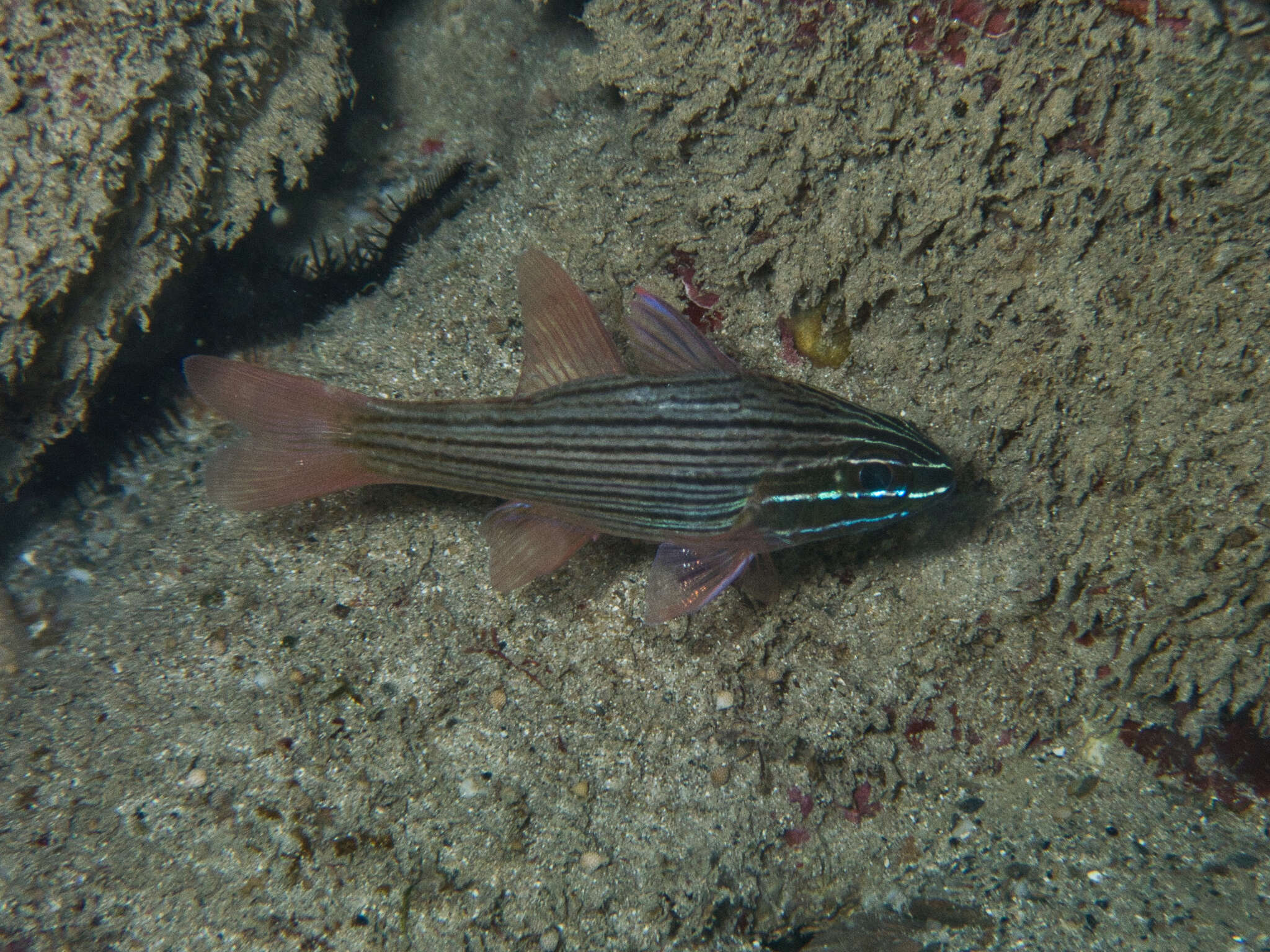
Apogon novemfasciatus Cuvier, 1828 (Nine-banded soldierfish)
Common in reef flats and shallow lagoons to a depth of about 4 m. Feeds on small crustaceans and fishes . Nocturnal species . Usually in pairs swimming close to shelter .
Apogon multilineatus (Bleeker, 1874) (Many-lined cardinalfish)
Found in deep and shallow lagoons with coral heads .
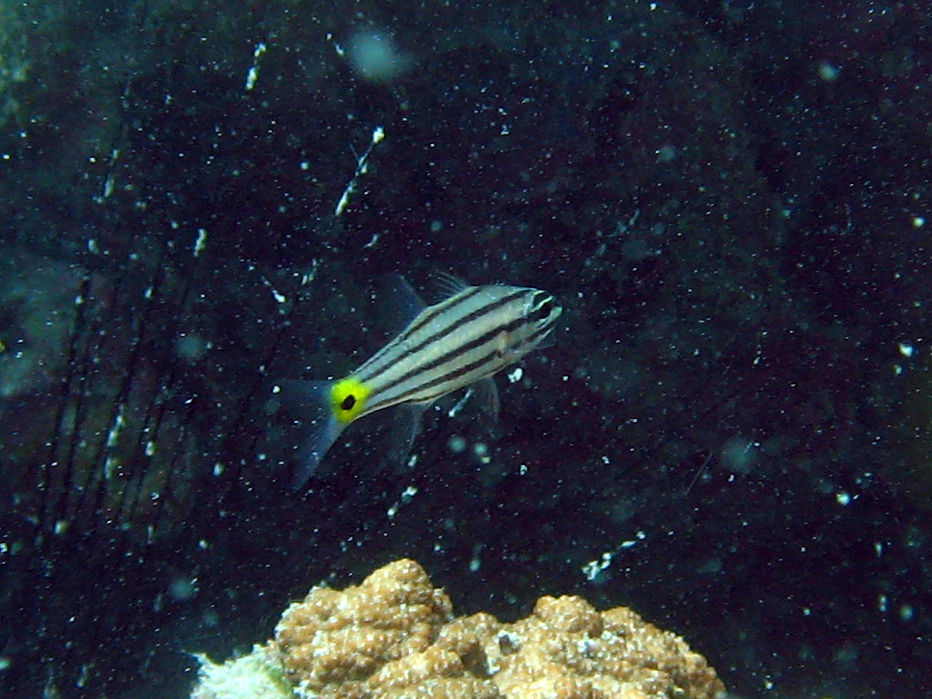
Cheilodipterus quinquelineatus Cuvier, 1828 (Fiveband cardinalfish)
Inhabits reef flats and lagoon and seaward reefs to a depth of 40 m or more. Occurs singly or in small to large aggregations, taking shelter in dark crevices, branched coral, under ledges, and among the spines of Diadema ...
Read More
Read More
Apogon melas Bleeker, 1848 (Black cardinalfish)
Found in shallow well protected coastal bays, commonly found under jetties, hiding in dark areas ; also in inshore rocky areas and among branching coral .
Apogon monospilus Fraser, Randall & Allen, 2002 (Yellow-eye cardinalfish)
Nocturnal species which inhabits coral reef . Most specimens were collected from deeper waters .
Apogon aureus (Lacepède, 1802) (Ringtailed cardinalfish)
Inhabits holes in rocks or under ledges in shallow waters. Known to occur in mixed aggregates with Apogon apogonoides during summer and autumn, but form separate aggregates in winter and spring .
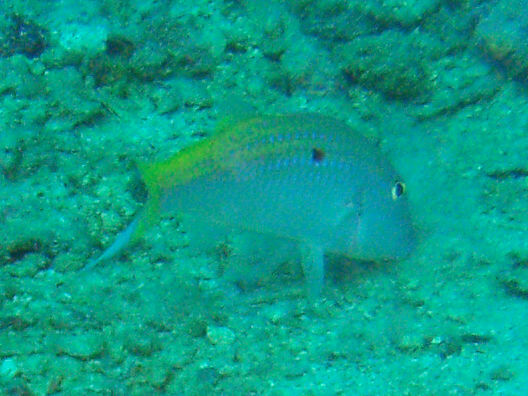
Upeneus tragula Richardson, 1846 (Freckled goatfish)
Found over sand and mud bottoms near coral reefs . Known to enter lower reaches of rivers. Generally solitary , but forms small to moderately large aggregations at all sizes . Minimum depth from Ref. 3470.
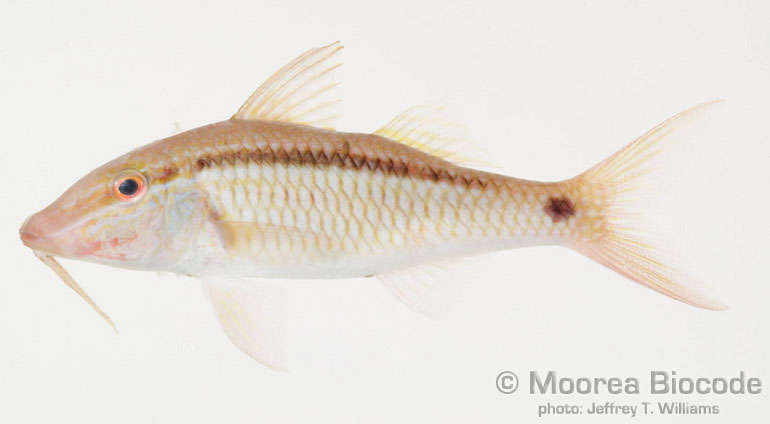
Mulloidichthys flavolineatus (Lacepède, 1801) (Samoan goatfish)
Occasionally schooling species inhabit shallow sandy areas of lagoon and seaward reefs . Large adults are often found solitary on sand slopes with other species following to feed on prey that are disturbed when the goatfi...
Read More
Read More
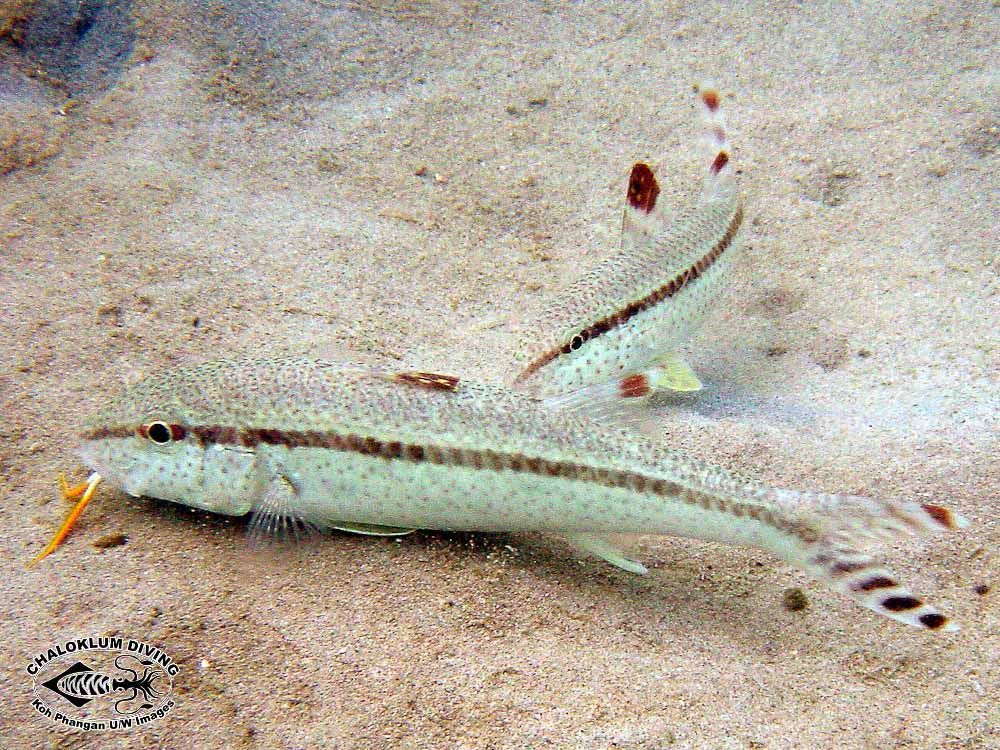
Parupeneus barberinus (Lacepède, 1801) (Dash-and-dot goatfish)
One of the most abundant species of Parupeneus . Inhabits large sand patches as well as sand and rubble areas of reef flats, and lagoon and seaward reefs to a depth of about 100 m. Forages on sand-dwelling invertebrates ...
Read More
Read More
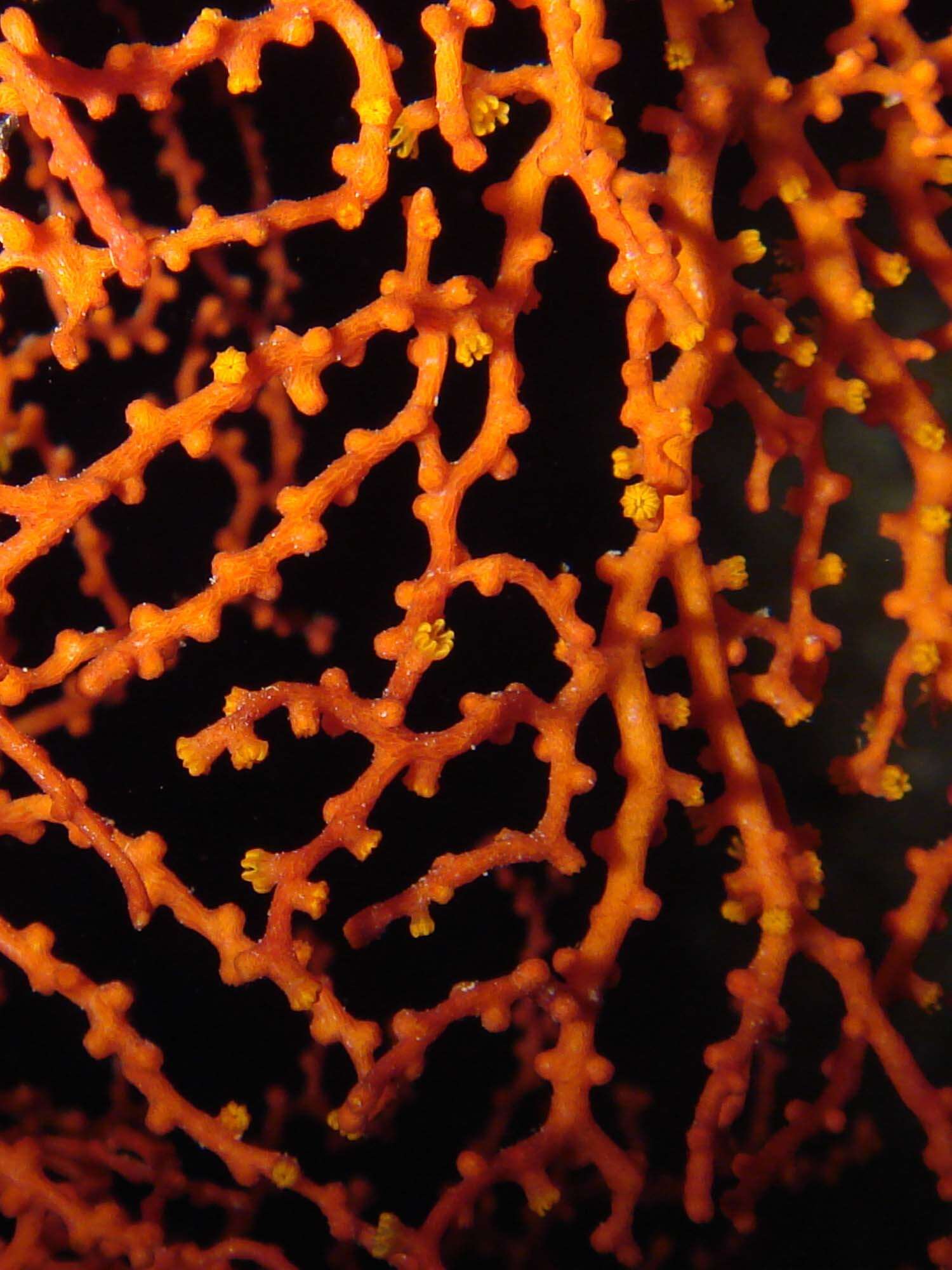
Subergorgia suberosa (Pallas, 1766)
Sinularia brassica May, 1898
Junceella fragilis (Ridley, 1884)
Calyptrophora japonica Gray 1866
Bellonella petila Verseveldt & Bayer, 1988
Stephanogorgia diomedea Bayer & Muzik, 1976
Muricella grandis Nutting, 1910
Nephthea cupressiformis Kükenthal, 1903
Echinomuricea coronalis Germanos, 1896
Sinularia nanolobata Verseveldt, 1977
Sinularia flexibilis (Quoy & Gaimard, 1833)
Callogorgia cristata Aurivillius, 1931
Chromonephthea pellucida (Kükenthal, 1911)
Callogorgia flabellum (Ehrenberg, 1834)
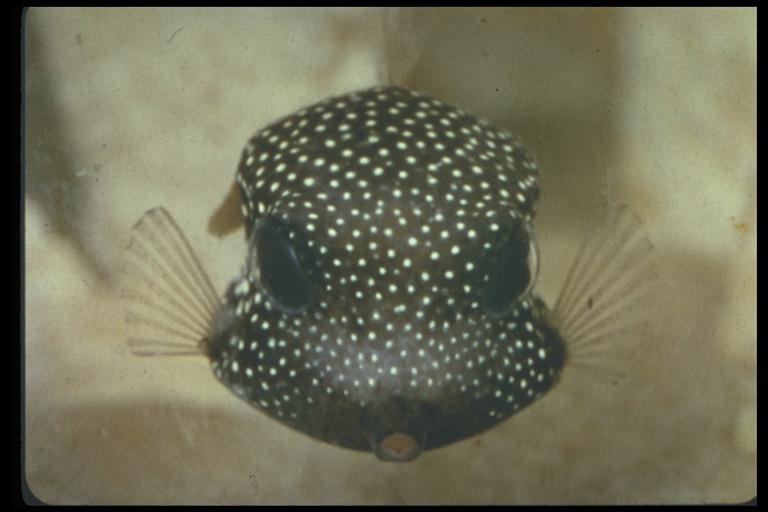
Ostracion meleagris Shaw, 1796 (pahu)
Scorpaenopsis vittapinna Randall & Eschmeyer, 2001 (Bigmouth scorpionfish)
Inhabits coral reefs and areas with rubble bottom .
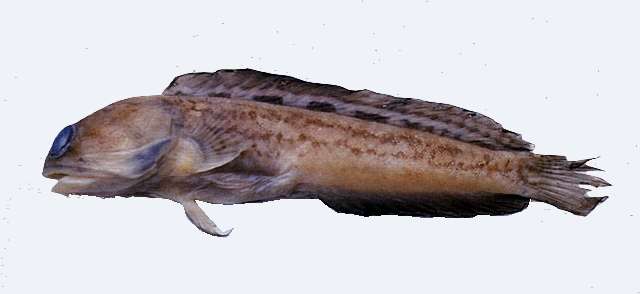
Opistognathus castelnaui Bleeker, 1860 (Blue-spotted jawfish)
Inhabits open sand and rubble substrates in about 20-25 meters . May be found in depths greater than 100 m . Mouthbrooders .
Synaphobranchus affinis Günther, 1877 (Grey cutthroat)
Found on the upper continental slope , over rocky substrata .
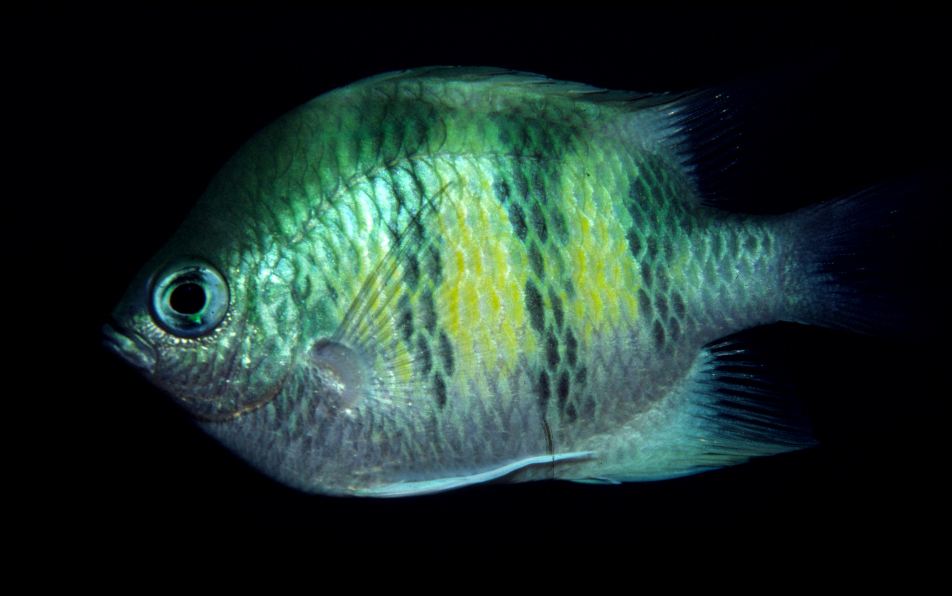
Amblyglyphidodon curacao (Bloch, 1787) (Black-snouted sergeant-major)
Inhabits lagoons, coastal embayments, reef passages and outer reefs. Juveniles often found among Sarcophyton and Sinularia soft corals. Feeding aggregations are frequently observed over growths of the staghorn coral Acro...
Read More
Read More
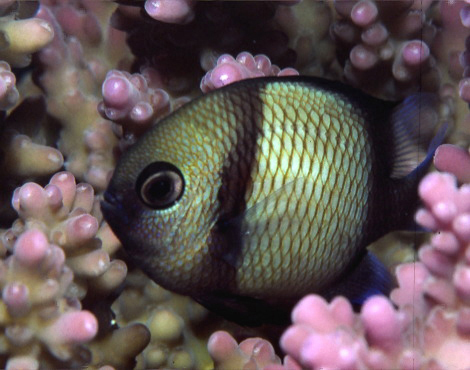
Dascyllus reticulatus (Richardson, 1846) (twostriped damselfish)
Occurs in outer lagoon and seaward reefs. Inhabits branching coral heads, particularly Pocillopora eydouxi. Forms schools, often in silty habitats . Male prepares a nest by cleaning with its mouth a rock or coral surface where the female will attach the eggs .
Chrysiptera rollandi (Whitley, 1961) (Rolland's demoiselle)
Occurs singly or in small groups in lagoons, harbors, and outer reef slopes. Found among corals and coral rubble . Feeds mainly on zooplankton.
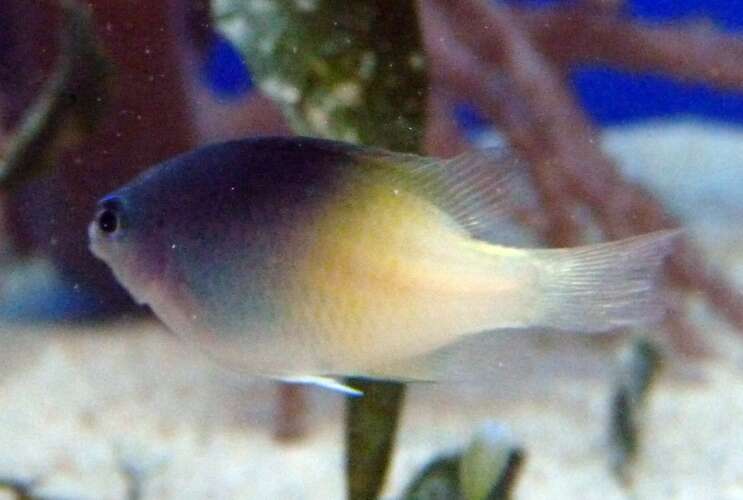
Chromis retrofasciata Weber, 1913 (Black-bar chromis)
Inhabits coral-rich areas of clear lagoon and seaward reefs. Occurs singly or in small groups and remains close to thickly branching coral shelter .
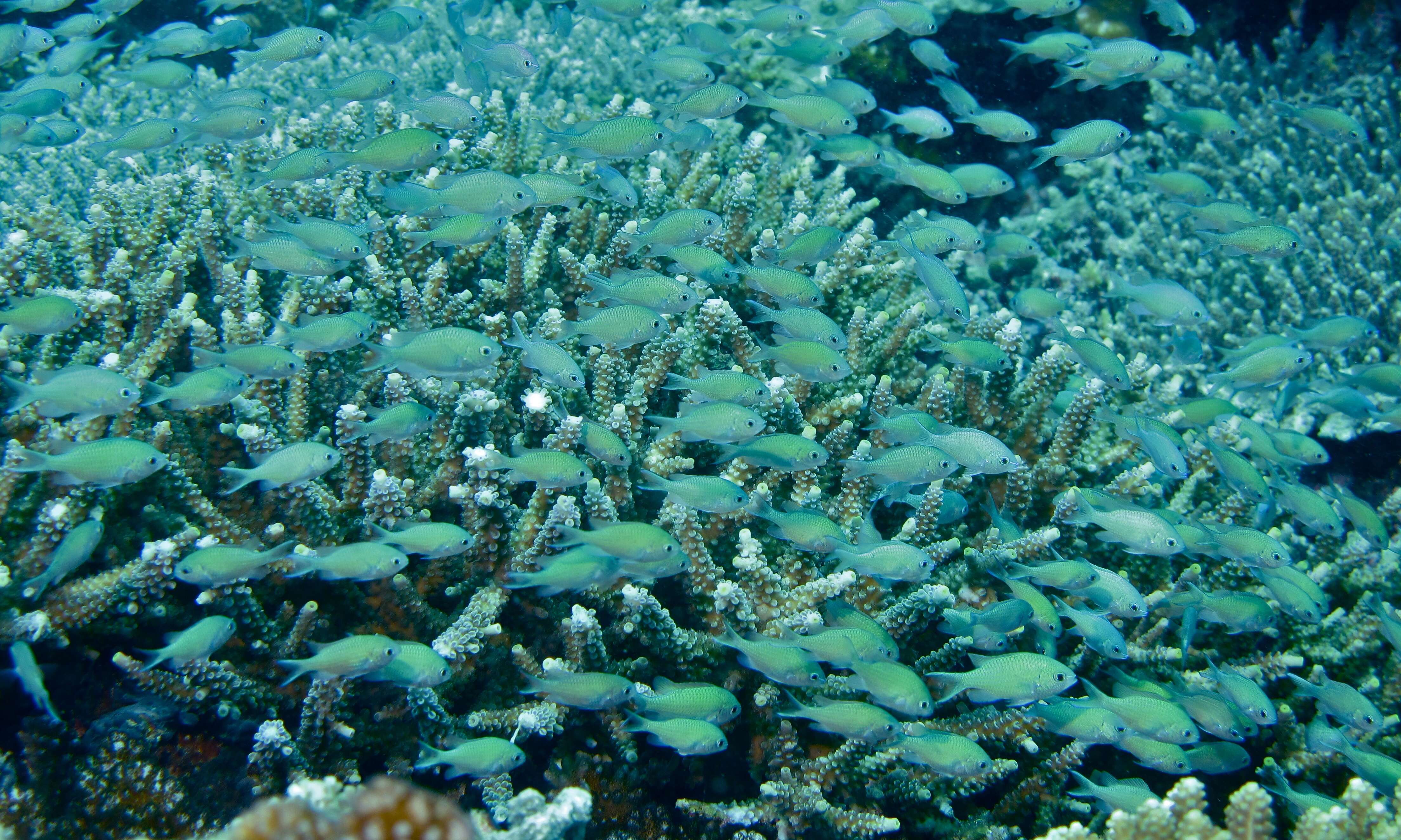
Chromis viridis (Cuvier, 1830) (blue-green chromis)
Found in large aggregations above thickets of branching Acropora corals in sheltered areas such as subtidal reef flats and lagoons. Juveniles closely tied to individual coral heads . Phytoplankton feeders. Breeding is d...
Read More
Read More
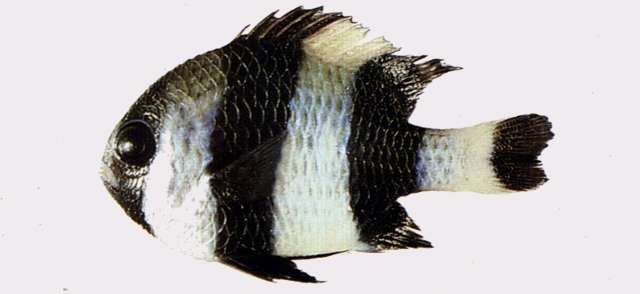
Dascyllus melanurus Bleeker, 1854 (blacktailed humbug)
Schooling species, inhabits sheltered lagoons, harbors and inlets. Also in somewhat open substrates with outcrops of Acropora corals . Often associated with small coral heads. Feeds on a variety of plankton, including l...
Read More
Read More
Dischistodus chrysopoecilus (Schlegel and Müller, 1839) (Lagoon damsel)
Found among coral outcrops and seagrass beds of silty areas of lagoon and coastal reefs , usually subtidal to a few meters depth .
Pomacentrus simsiang Bleeker, 1856 (Blueback damsel)
Occurs singly or in small aggregations at slightly turbid areas of lagoon and coastal reefs. Feeds mainly on benthic algae.
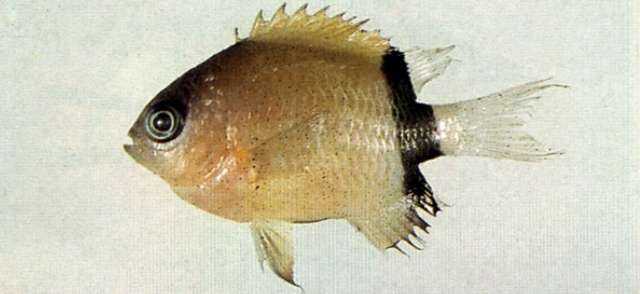
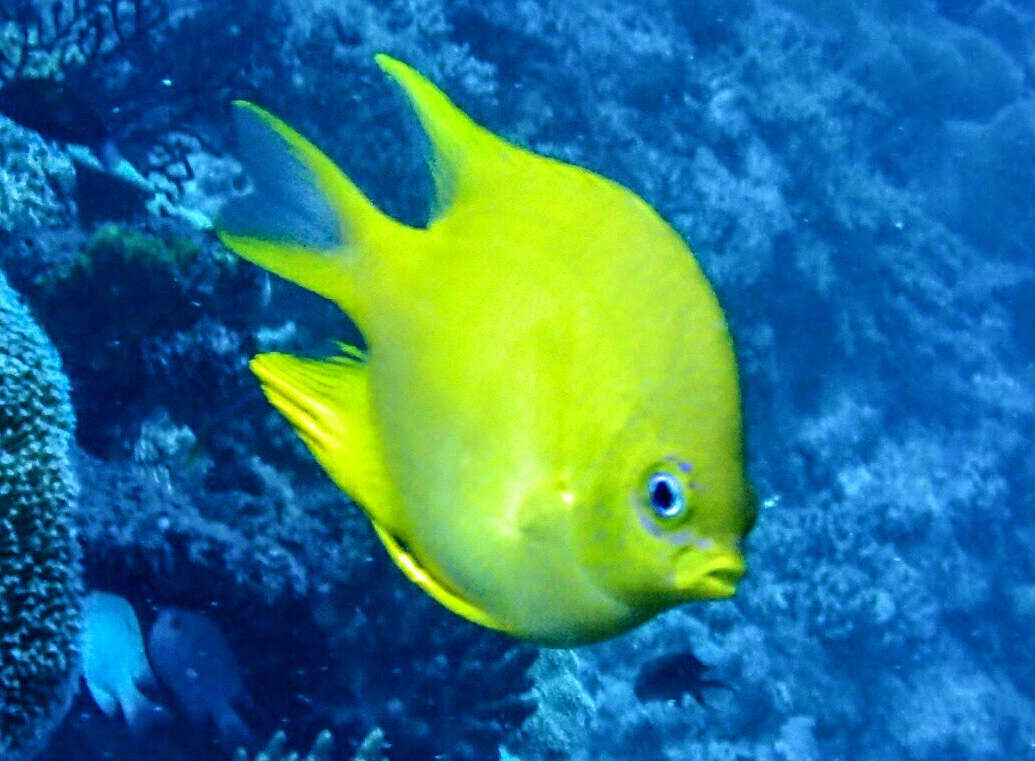
Amblyglyphidodon aureus (Cuvier, 1830) (Golden damsel)
Occurs in steep outer reef, occasionally in deep lagoons and along channel walls, usually in current prone habitats and where there are abundant gorgonian and long sea-whip corals on which they lay and guard eggs. Juvenil...
Read More
Read More
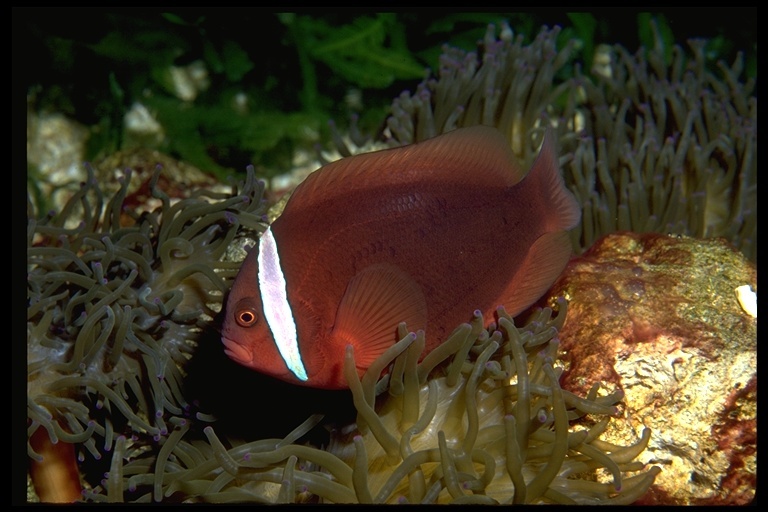
Amphiprion frenatus Brevoort, 1856 (oneband anemonefish)
Found in lagoon reefs and embayment. Monogamous , protandrous hermaphrodite . Associated with the anemone Entacmaea quadricolor . Has been reared in captivity .
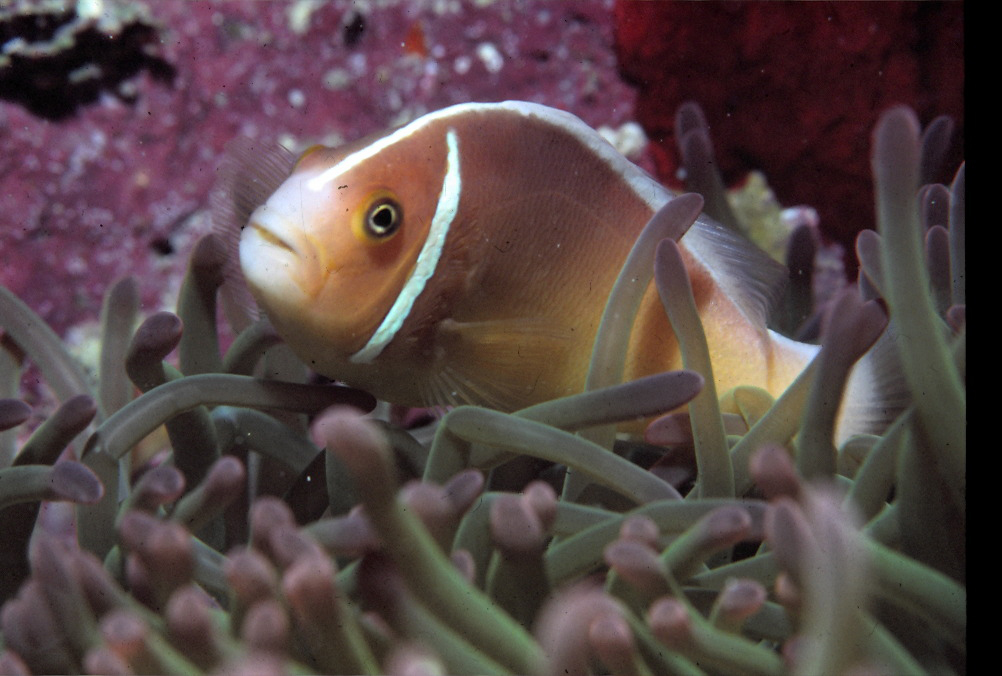
Amphiprion perideraion Bleeker, 1855 (False skunk-striped anemonefish)
Inhabits lagoon and seaward reefs . Mainly diurnal. Non-burrowing. Monogamous . A protandrous hermaphrodite . Associated with the anemones: Heteractis magnifica , Heteractis crispa, Macrodactyla doreensis, and Sticho...
Read More
Read More
Actinodendron arboreum (Quoy and Gaimard, 1833)
burrowing
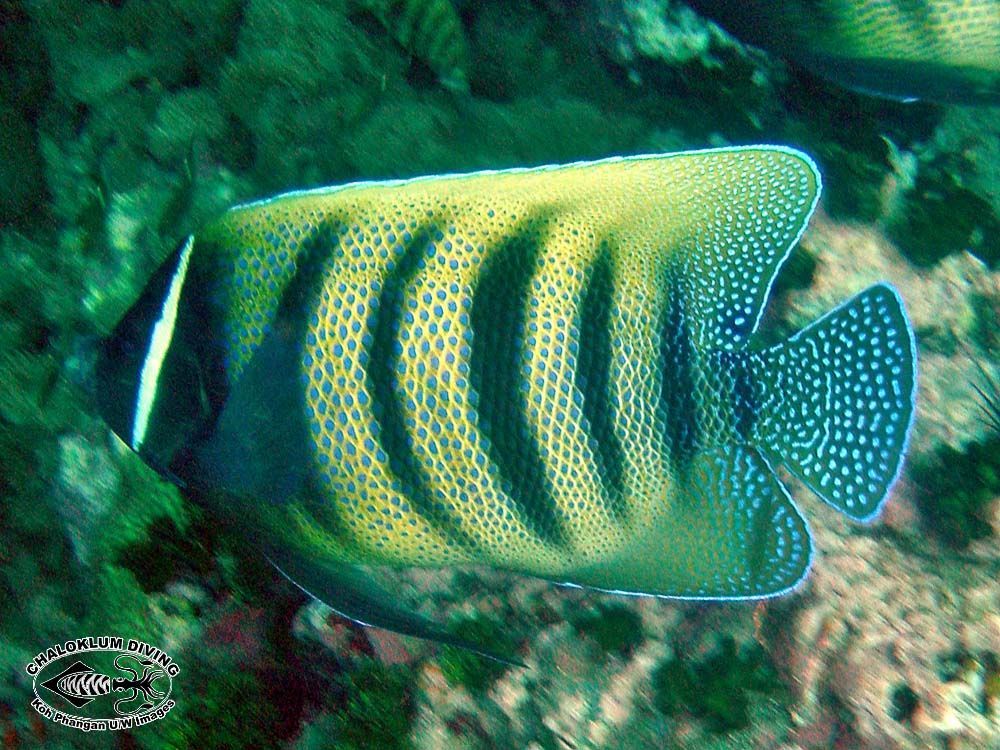
Pomacanthus sexstriatus (Cuvier, 1831) (Sixbar angelfish)
Juveniles prefer sheltered inner reefs while adults occur in areas of rich coral growth and high vertical relief of lagoon and seaward reefs. Adults semi-silty coastal to about 50 m depth, often seen in pairs . Occur sol...
Read More
Read More
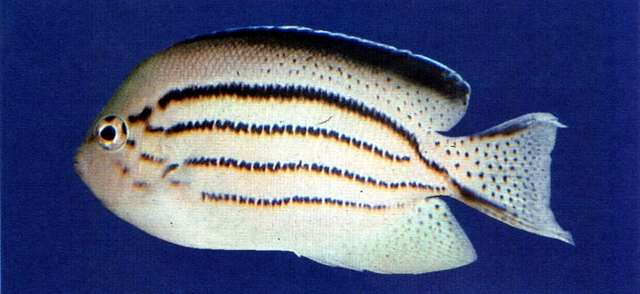
Genicanthus lamarck (Lacepède, 1802) (Blackstriped angelfish)
Inhabit shallow reef crests and deep reefs adjacent to steep slopes. Form aggregations to feed in midwater well above the bottom; harems of 3-7 individuals. Feeds on plankton. Frequently exported through the aquarium trade .
Pygoplites diacanthus (Boddaert, 1772) (Bluebanded angelfish)
Occurs in coral rich areas of lagoon and seaward reefs to a depth of 48 m or more. Often found in the vicinity of caves and feeds on sponges and tunicates. Solitary or in pairs, or in groups. Frequently exported through the aquarium trade . Rarely survives in the aquarium.
Centropyge eibli Klausewitz, 1963 (Blacktail angelfish)
Inhabits rocky areas of seaward reefs as well as rich coral areas . Feeds on algae; forms harems of 3-7 individuals. Frequently exported through the aquarium trade. Forms hybrids with Centropyge vrolikii in areas where ...
Read More
Read More
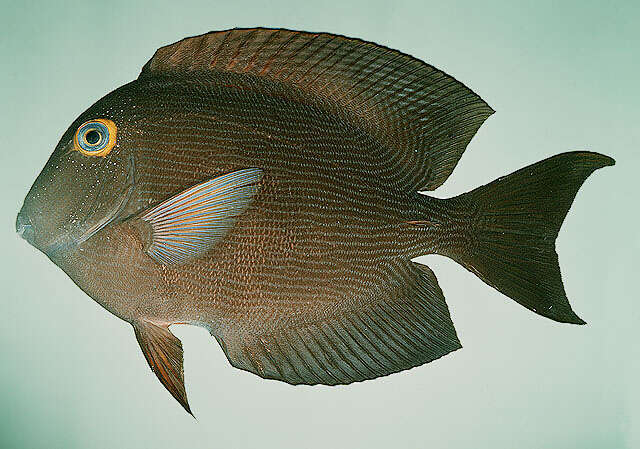
Ctenochaetus strigosus (Bennett, 1828) (Spotted surgeonfish)
Benthopelagic over coral, rock, and rubble . Solitary. Mainly diurnal . Feeds on detritus by whisking its comb-like teeth over the bottom as it closes its mouth .
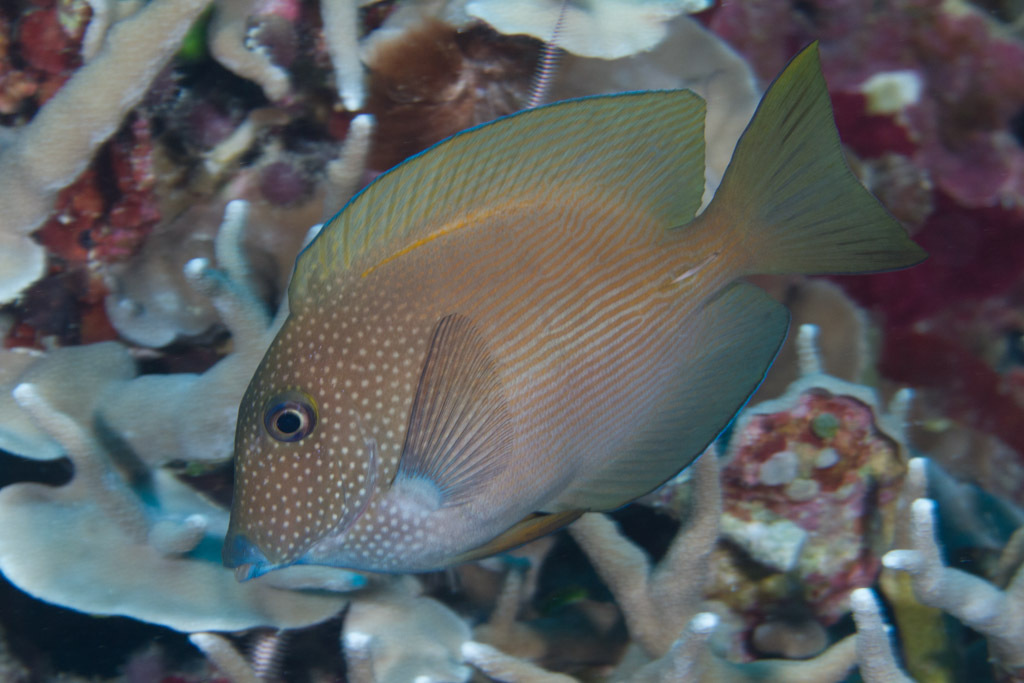
Ctenochaetus striatus (Quoy and Gaimard, 1825) (Striated surgeonfish)
Inhabits reef flats and lagoon and seaward reefs to a depth of over 30 m. Occurs over coral , rock, pavement, or rubble substrates. May occur singly or in small to very large, often mixed-species aggregations . Feeds on...
Read More
Read More
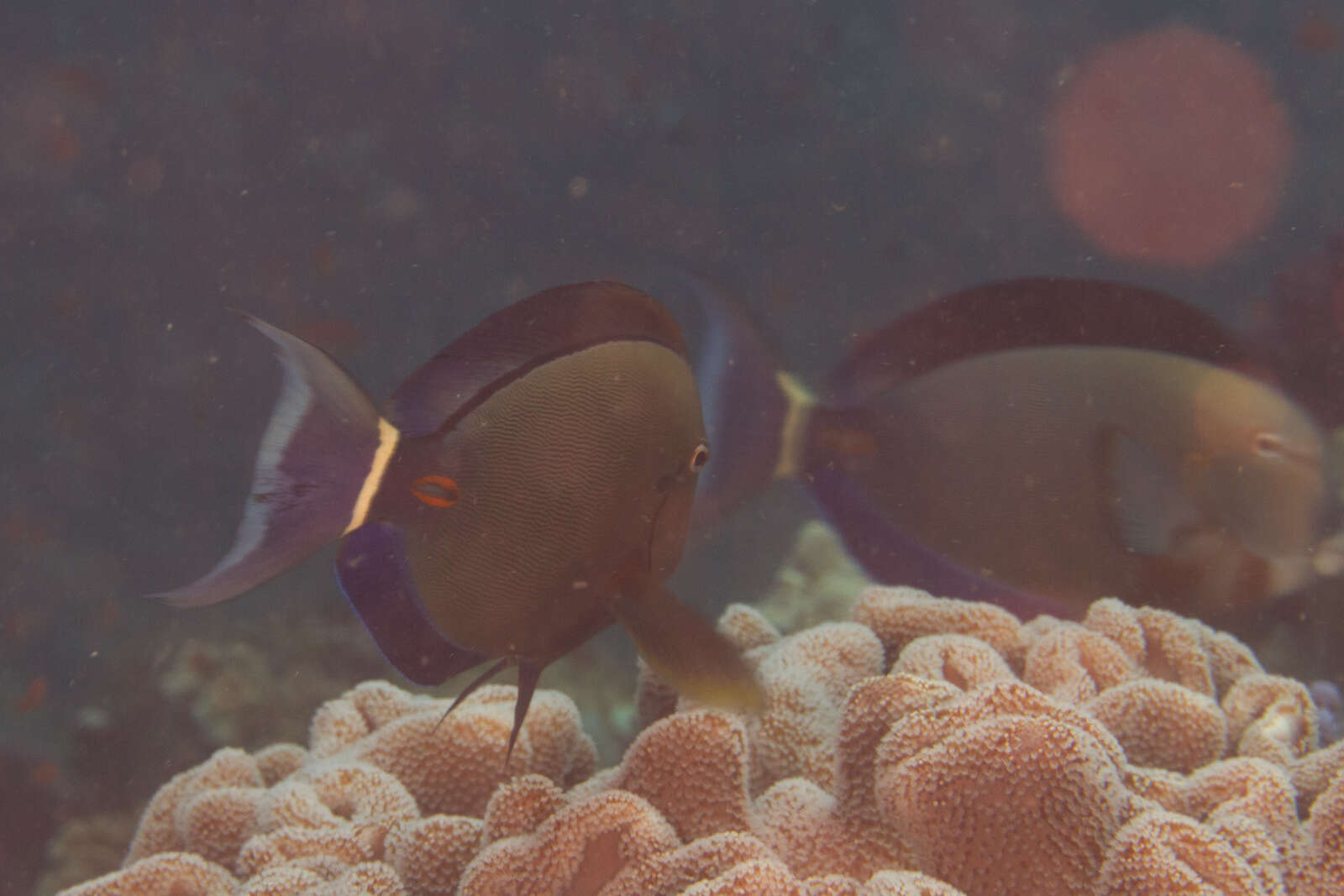
Acanthurus auranticavus Randall, 1956 (Orange-socket surgeonfish)
Inhabits shallow reefs, both in lagoons and outer reef areas. Frequently moves in groups. Juveniles found between soft corals in lagoons at depths of up to 2 m . Adults in groups, often mixed with other similar species .
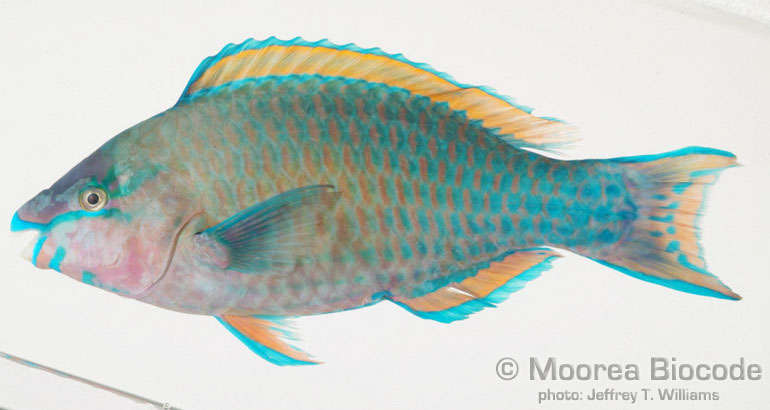
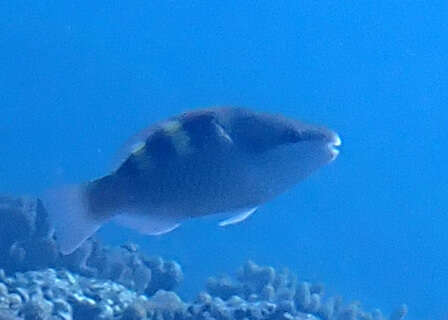
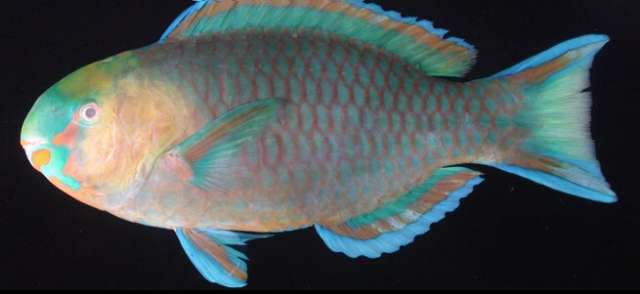
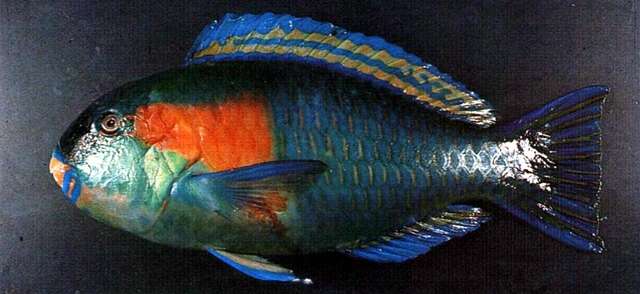
Scarus niger Forsskål, 1775 (loro)
Inhabits coral-rich areas of clear lagoons, channels, and outer reef slopes . Generally solitary . Juveniles in small groups on algae and coral reefs inshore . Feeds on benthic algae . Males maintain small harems and pair spawn .
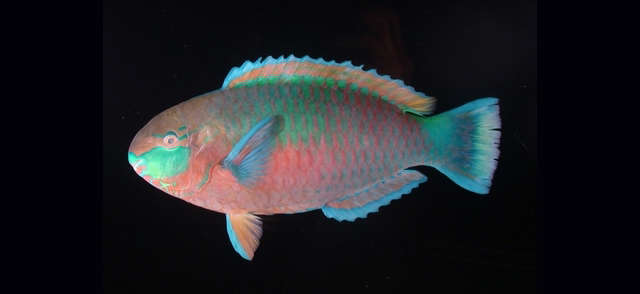
Scarus psittacus Forsskål, 1775 (Common parrotfish)
Inhabit reef flats and lagoon and seaward reefs to at least 25 m depth . Found over corals . Benthopelagic . Initial-phase fish stage usually form small feeding schools . Graze on benthic algae . Secrete a mucus cocoon .
Chlorurus sordidus (Forsskål, 1775) (Daisy parrotfish)
Scarus quoyi Valenciennes, 1840 (Quoy's parrotfish)
Inhabits coral-rich areas of outer channels and seaward reefs . Occurs singly or in small groups over intertidal flats to graze on algae during high water mark .
Chlorurus japanensis (Bloch, 1789) (Palecheek parrotfish)
Inhabits seaward coral and rocky reefs ; inner reefs with rich coral habitat . Feeds on benthic algae . Caught mainly with traps, nets and other types of artisanal gear.
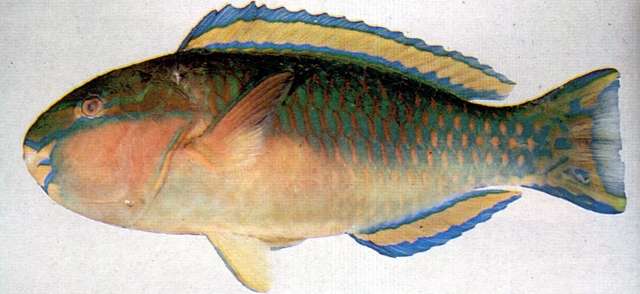
Scarus scaber Valenciennes, 1840 (Dusky-capped parrotfish)
Inhabits shallow lagoon reefs, in areas with dense coral cover . Individuals in the initial phase form groups . Feeds on algae by incessant grazing in coral reefs . Marked sexual dimorphism.
Chlorurus bleekeri (De Beaufort, 1940) (Bleeker's parrotfish)
Found in clear coastal and inner reefs ; in lagoons and channel reefs . Feed mainly on algae . Females usually in small groups and maybe mixed with other species when feeding; males solitary nearby .
Scarus spinus (Kner, 1868) (Greensnout parrotfish)
Inhabits coral-rich areas of outer lagoon and seaward reefs . Usually solitary . Females usually in small groups with a male nearby; they may mix with females of similar species . An uncommon fish patchily distributed through much of its range.
Chlorurus bowersi (Snyder, 1909) (Bower's parrotfish)
Inhabits channel and lagoon reef slopes, in coral-rich areas . Occurs singly .
Share on Social Networks
- Facebook:

personalize your shared text as well as its destination (wall, page...) or send as a private message to a friend
- Twitter: Tweet personalize your tweet
- Google Plus:
Direct link to this dive
- Long link:
- Short link:


 We are participating today in the startup contest Techcrunch Disrupt. Support Diveboard by voting for us!
























































































2nd dive Xmas party aboard Datu Budas
Tiffanie looking for Frogfish
dark clear water, some off and on current
nice dive, not much spotted
multilevel, solo mostly