


 Beachnutts


 Philippines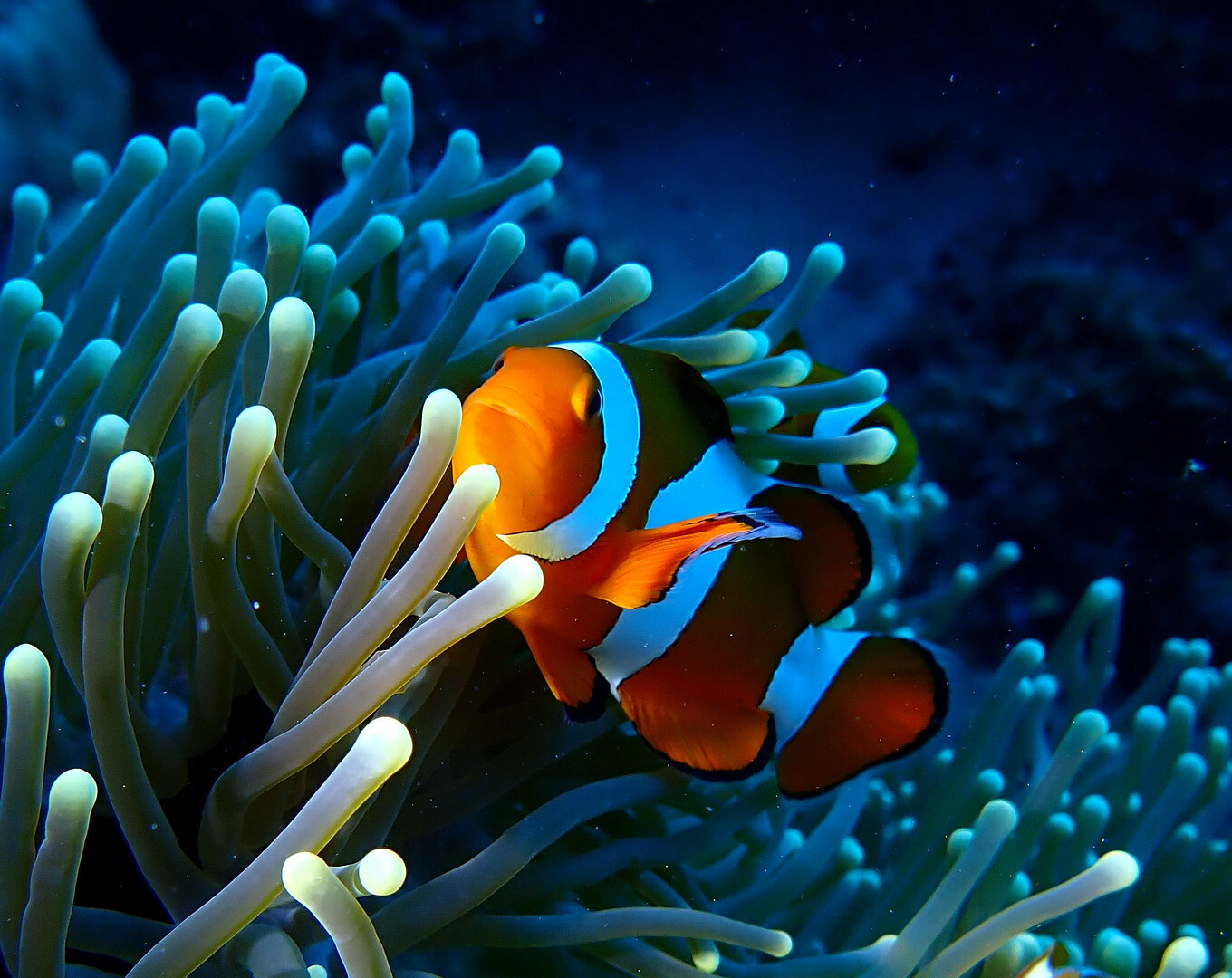
-
Nº191
 Date: 2025-12-28 - 10:34
-
 Max Depth: 34.1m Duration: 82mins
Dive Location

- Temp: Surf 27°C Bottom 27°C
- Dive type : Recreational, Deep dive, Reef, Photo
- Visibility: Good Water: Salt
Specific gear used
- BCD: Scubapro - Glide Plus
- Boots: Orca - Dive shoes
- Camera: Olympus - TG6
- Compass:
- Computer: Oceanic - OCS
- Fins: Scubapro - Go Rescue
- Lift bag: ScubaMax - SMB
- Light: Cree - L2
- Light: Sofirn - SD05
- Mask: Promate - Scope
- Regulator: SEAC - Synchro
- Wet suit: Blue Ocean - Diveskin
- Weights: 3.2 kg
Dive reviews
| Overall review | ||
| Dive difficulty | ||
| Marine life quality |
Dive Shop & Buddies
 Dive with Blake Auge
 Dive buddies:
Blake Auge,
Maeng,
Eric Cembrano,
Ipe Alino
Dive buddies:
Blake Auge,
Maeng,
Eric Cembrano,
Ipe Alino

Link to this spot:
- Spot:
- Country:
- Area:
- Body of water:
Dive Profile
- 1. Air
- 10L Aluminium 207 → 21 bar
- Average depth: 22.8m
Data provided by EOL.org






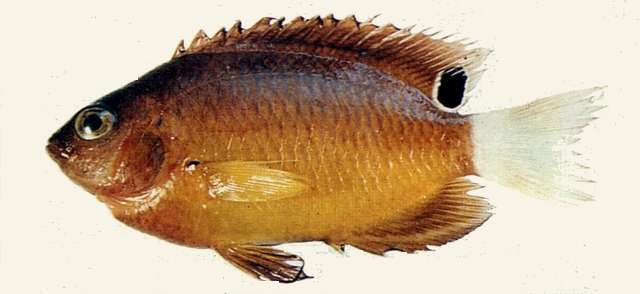
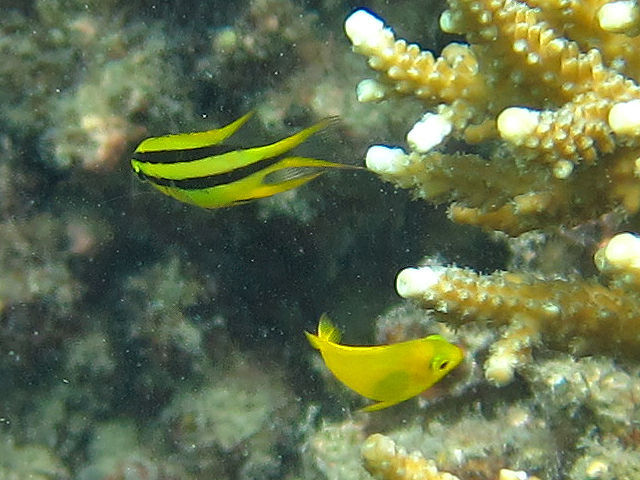

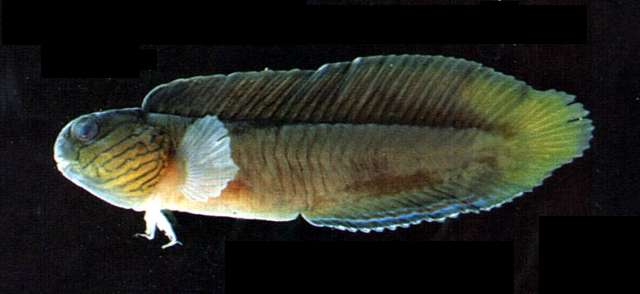
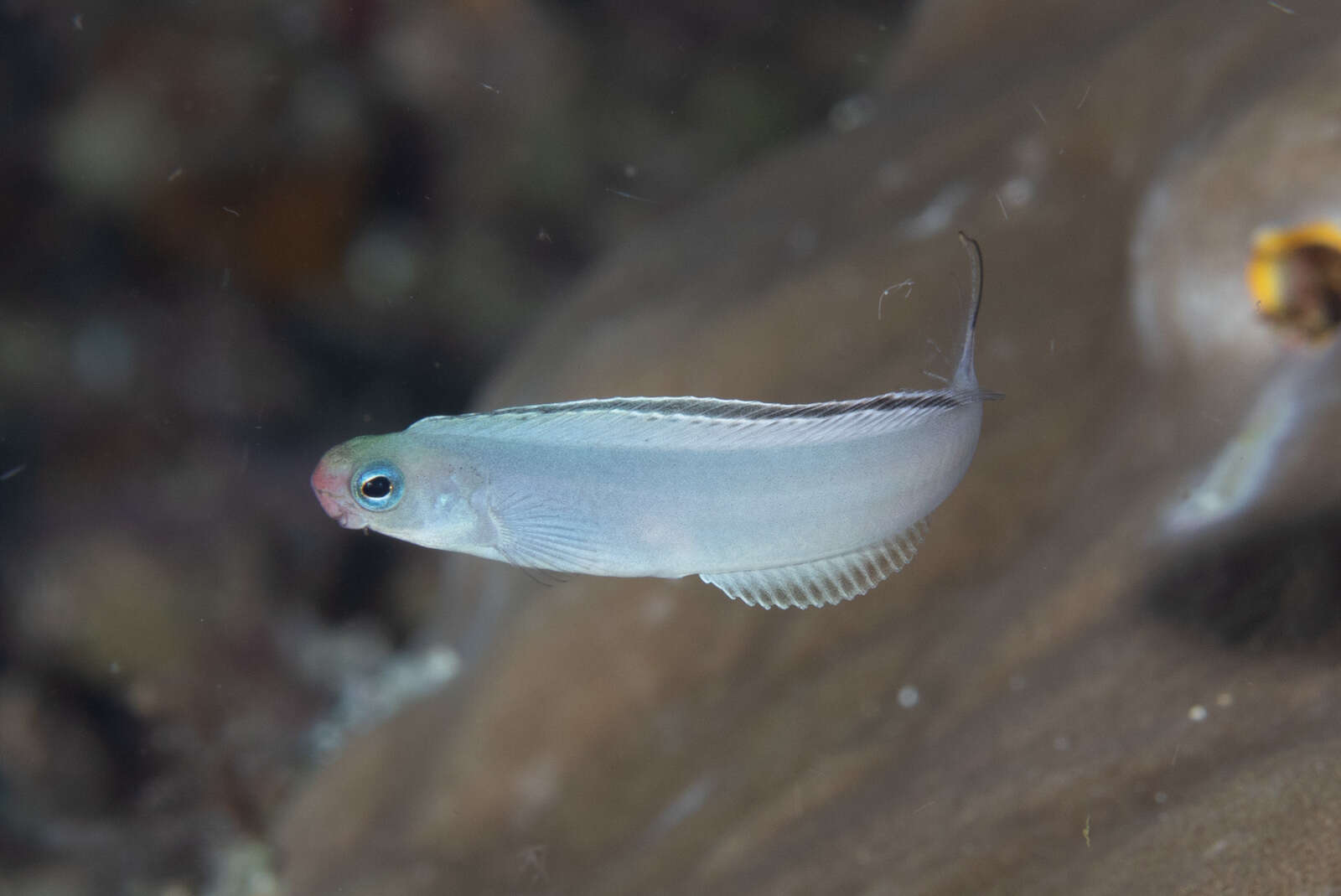
Species Identified
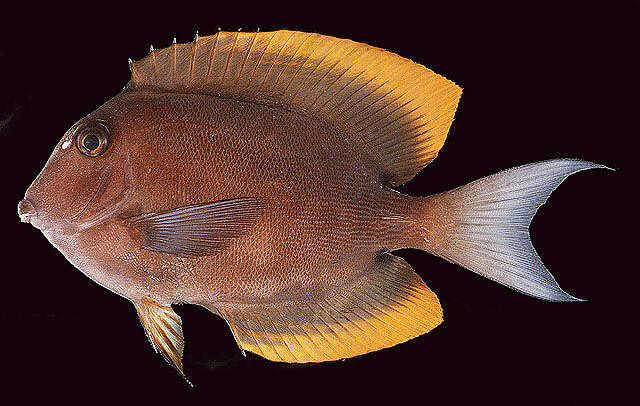
Ctenochaetus tominiensis Randall, 1955 (Tomini surgeonfish)
Occurs singly or in small groups along steep coral-rich drop-offs of sheltered coasts .
Acanthurus nigricans (Linnaeus, 1758) (backsurgeonfish)
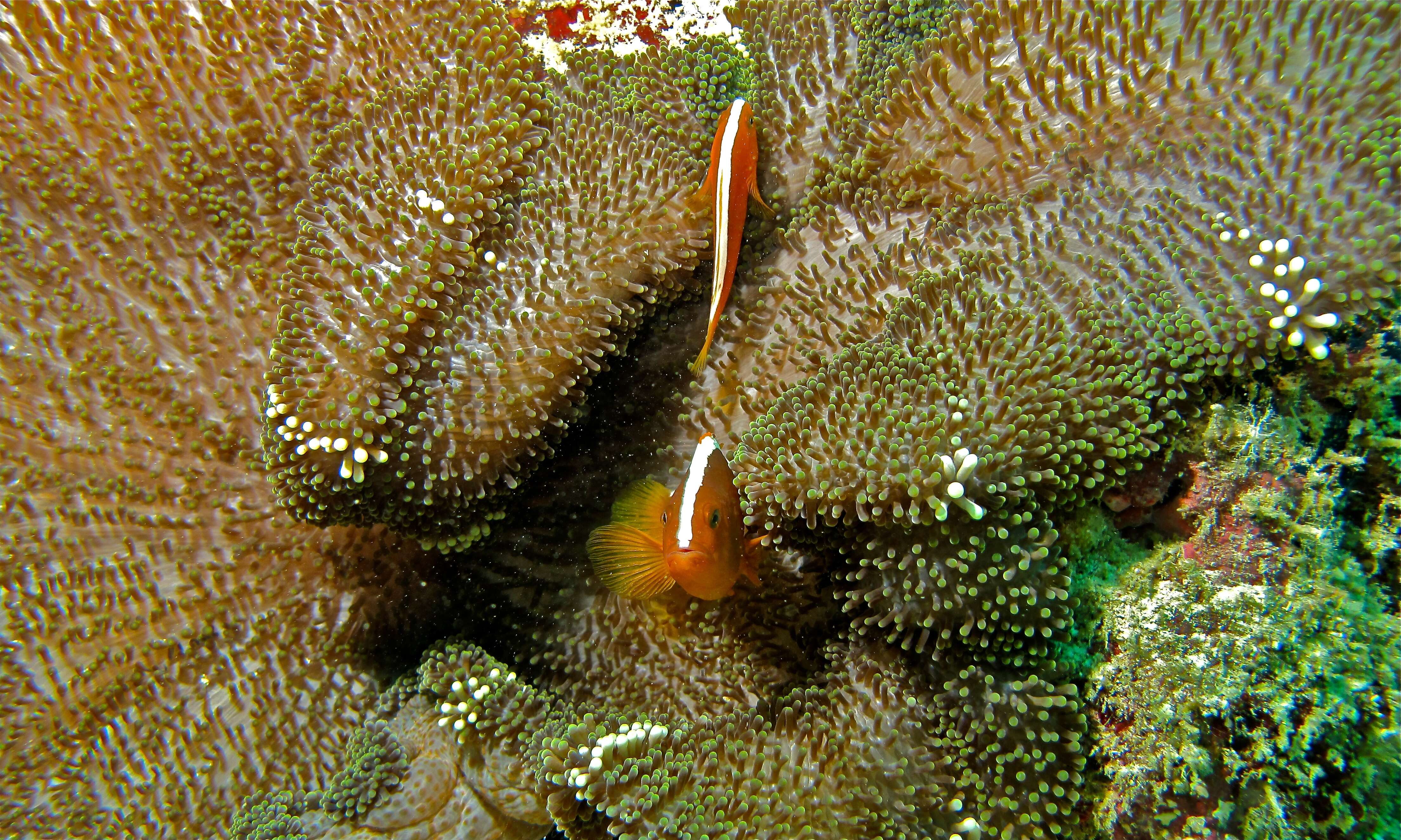
Amphiprion sandaracinos Allen, 1972 (Golden anemonefish)
Occurs in lagoon and outer reefs. Occurs in pairs and small groups . Monogamous . A protandrous hermaphrodite . Associated with the anemones: Heteractis crispa and Stichodactyla mertensii . Has been reared in captivity .
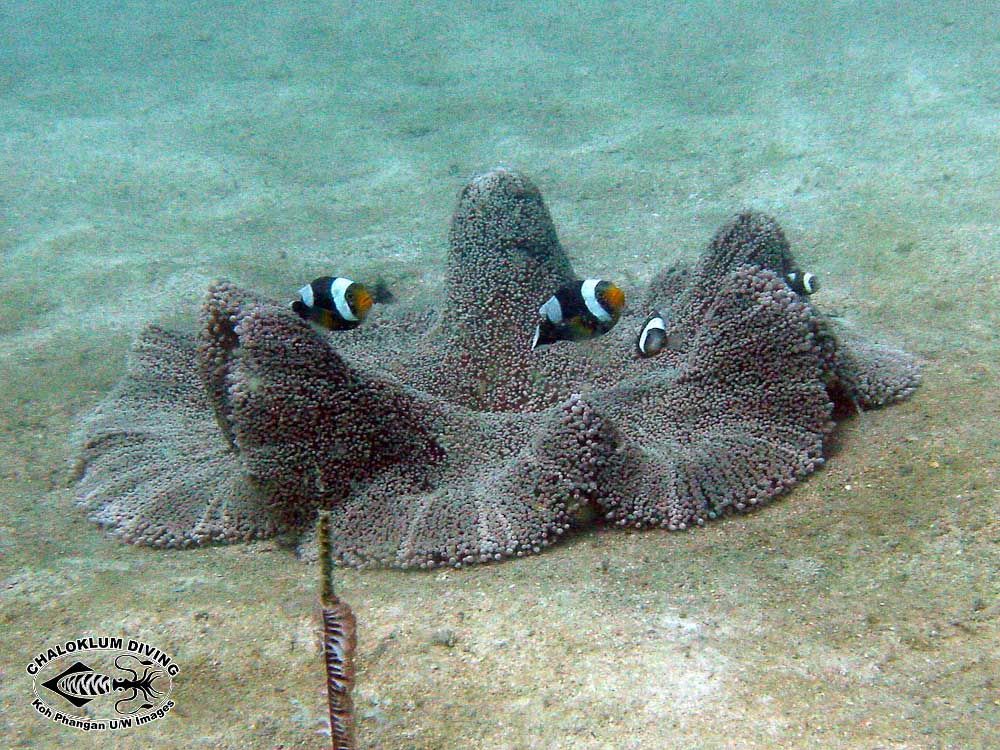
Amphiprion sebae Bleeker, 1853 (Sebae anemonefish)
Found in coastal waters and lagoons. It grows rather large . Associated with the anemone Stichodactyla haddoni .
Amphiprion percula (Lacepède, 1802) (Orange clownfish)
Inhabits lagoon and seaward reefs . Each group of fish consists of a breeding pair and 0-4 non-breeders. Within each group there is a size-based hierarchy: the female is largest, the male is second largest, and the non-...
Read More
Read More
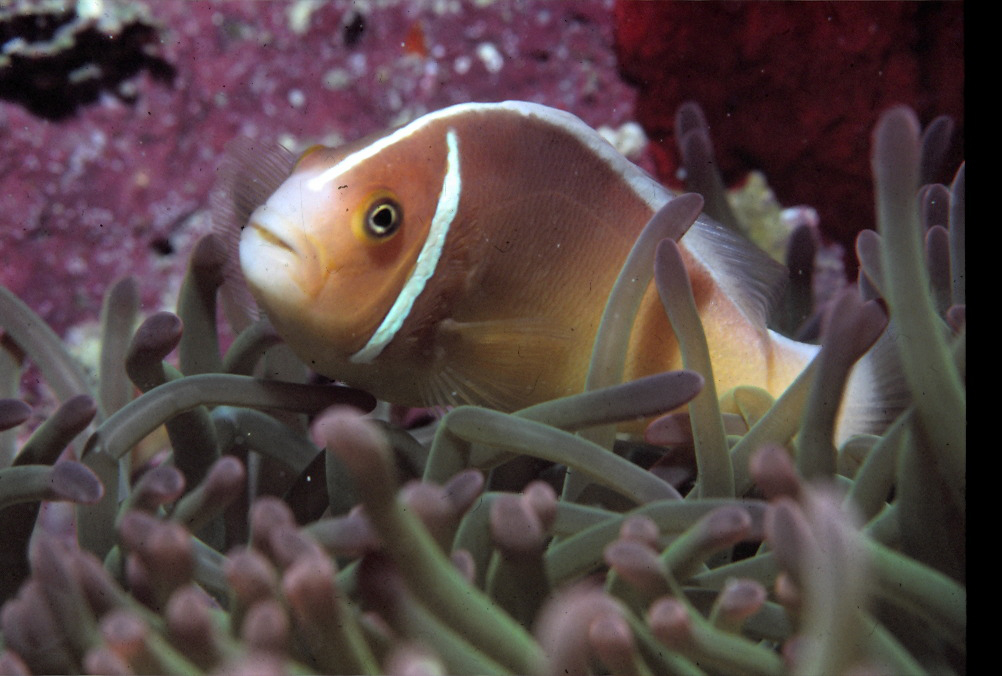
Amphiprion perideraion Bleeker, 1855 (False skunk-striped anemonefish)
Inhabits lagoon and seaward reefs . Mainly diurnal. Non-burrowing. Monogamous . A protandrous hermaphrodite . Associated with the anemones: Heteractis magnifica , Heteractis crispa, Macrodactyla doreensis, and Sticho...
Read More
Read More
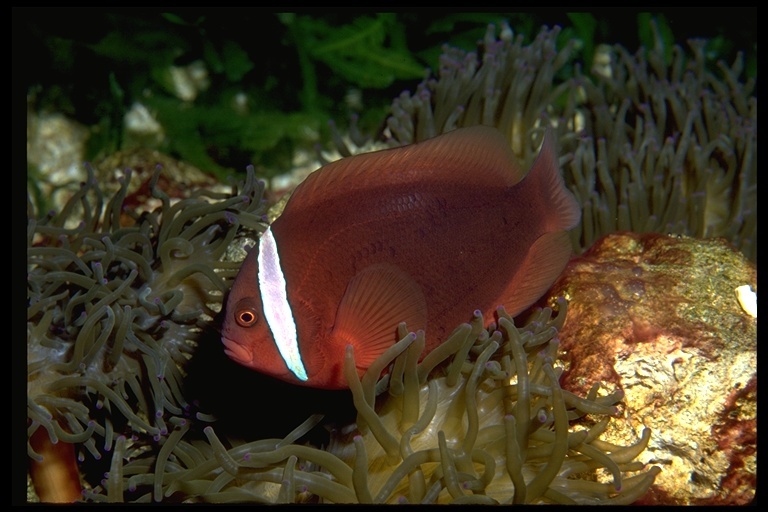
Amphiprion frenatus Brevoort, 1856 (oneband anemonefish)
Found in lagoon reefs and embayment. Monogamous , protandrous hermaphrodite . Associated with the anemone Entacmaea quadricolor . Has been reared in captivity .
Amphiprion polymnus (Linnaeus, 1758) (yellowfinned anemonefish)
Inhabits silty lagoons and harbors. Monogamous . A protandrous hermaphrodite . Associated with the anemones: Heteractis crispa and Stichodactyla haddoni . Has been reared in captivity .
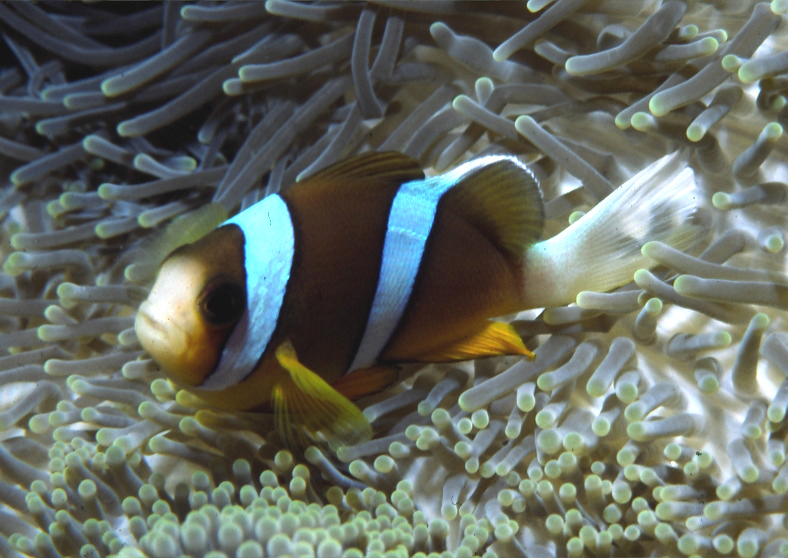
Amphiprion clarkii (Bennett, 1830) (Brown anemonefish)
Inhabits lagoons and outer reef slopes. Omnivorous. Oviparous, with elliptical eggs . Monogamous . Has been reared in captivity . Associated with the anemones: Cryptodendrum adhaesivum, Entacmaea quadricolor, Heterac...
Read More
Read More
Premnas biaculeatus (Bloch, 1790) (Spinecheek anemonefish)
Inhabits lagoon and seaward reefs , found mainly in protected coastal waters and lagoons. Typically found in pairs in which males are much smaller than females . Feeds primarily on zooplankton and benthic algae . Has been reared in captivity . Associated with the anemone Entacmaea quadricolor .
Amphiprion ocellaris Cuvier, 1830 (false clown anemonefish)
Dascyllus aruanus (Linnaeus, 1758) (black-and-white damselfish)
Territorial, inhabit shallow lagoon and subtidal reef flats. Form large aggregations above staghorn Acropora thickets or in smaller groups above isolated coral heads. Feed on zooplankton, benthic invertebrates, and algae...
Read More
Read More
Amblyglyphidodon curacao (Bloch, 1787) (Black-snouted sergeant-major)
Inhabits lagoons, coastal embayments, reef passages and outer reefs. Juveniles often found among Sarcophyton and Sinularia soft corals. Feeding aggregations are frequently observed over growths of the staghorn coral Acro...
Read More
Read More
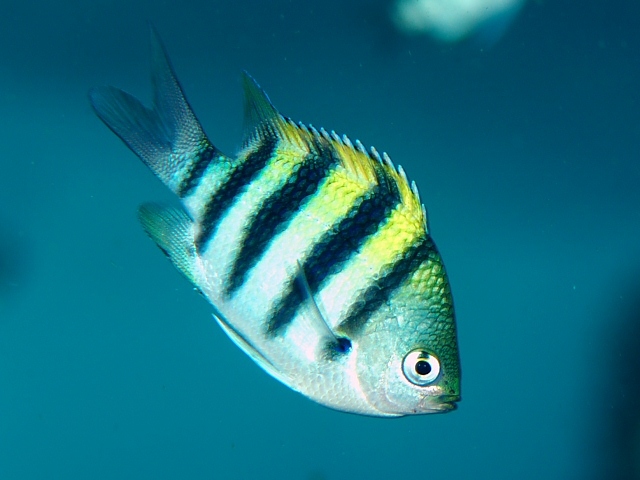
Abudefduf vaigiensis (Quoy and Gaimard, 1825) (Five finger)
Adults inhabit upper edge of outer reef slopes and inshore rocky reefs. Juveniles associated with drifting seaweed . Benthopelagic . Feed on zooplankton, benthic algae, and small invertebrates . Often in aggregations ...
Read More
Read More
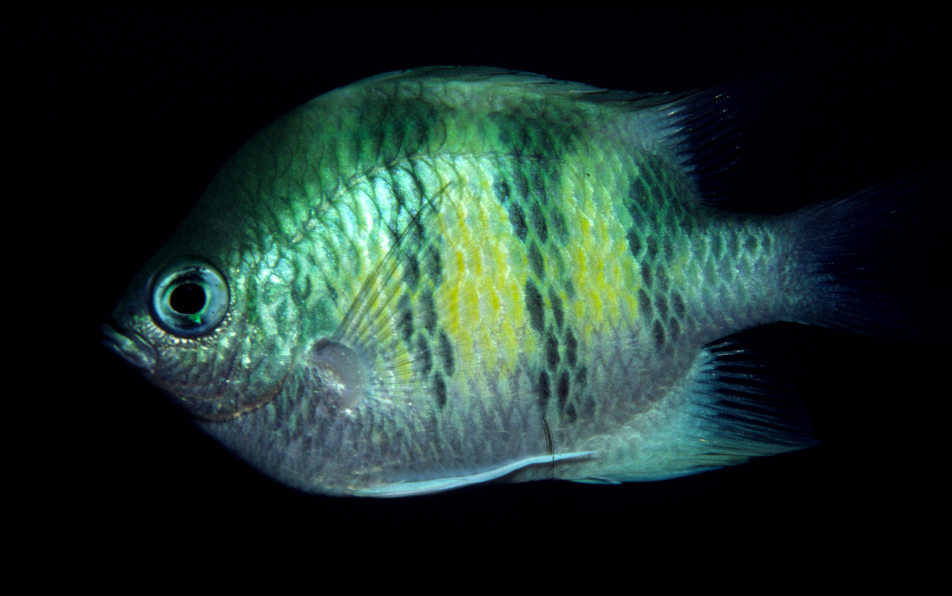
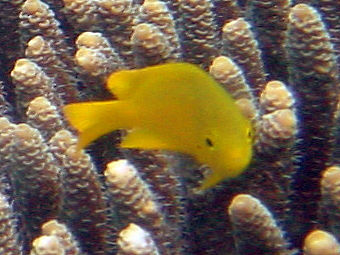
Pomacentrus moluccensis Bleeker, 1853 (Lemon damsel)
Inhabits clear lagoon and seaward reefs among branching corals. Occurs in small aggregations. Feeds mainly on algae and planktonic crustaceans.
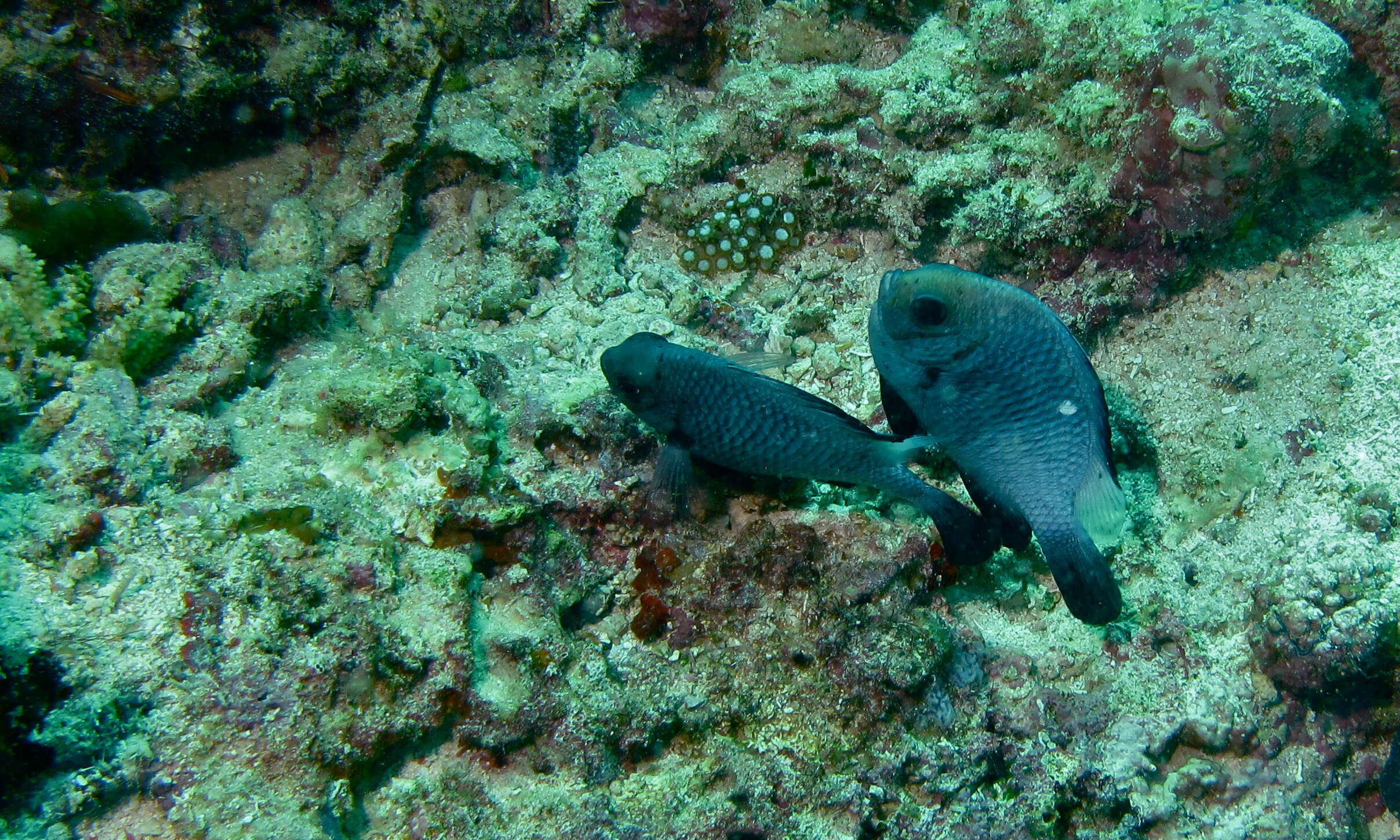
Plectroglyphidodon lacrymatus (Quoy and Gaimard, 1825) (whitespeckled demoiselle)
Inhabits clear lagoon and seaward reefs, in areas with mixed coral and rubble or dead coral rocks. Feeds mainly on benthic algae and associated small invertebrates and fish eggs.
Dascyllus trimaculatus (Rüppell, 1829) (threespot humbug)
Inhabits coral and rocky reefs, juveniles often commensal with large sea anemones, sea urchins, or small coral heads . Occurs in small to large aggregations. Stomach contents include algae, copepods, and other planktonic crustaceans.
Pomacentrus bankanensis Bleeker, 1853 (Speckled damselfish)
Occurs solitarily or in small groups in lagoons, reef flats, passages, and outer reef slopes. Usually amongst coarse rubble or rock . Feeds primarily on algae, but also takes copepods, isopods, and pelagic tunicates.
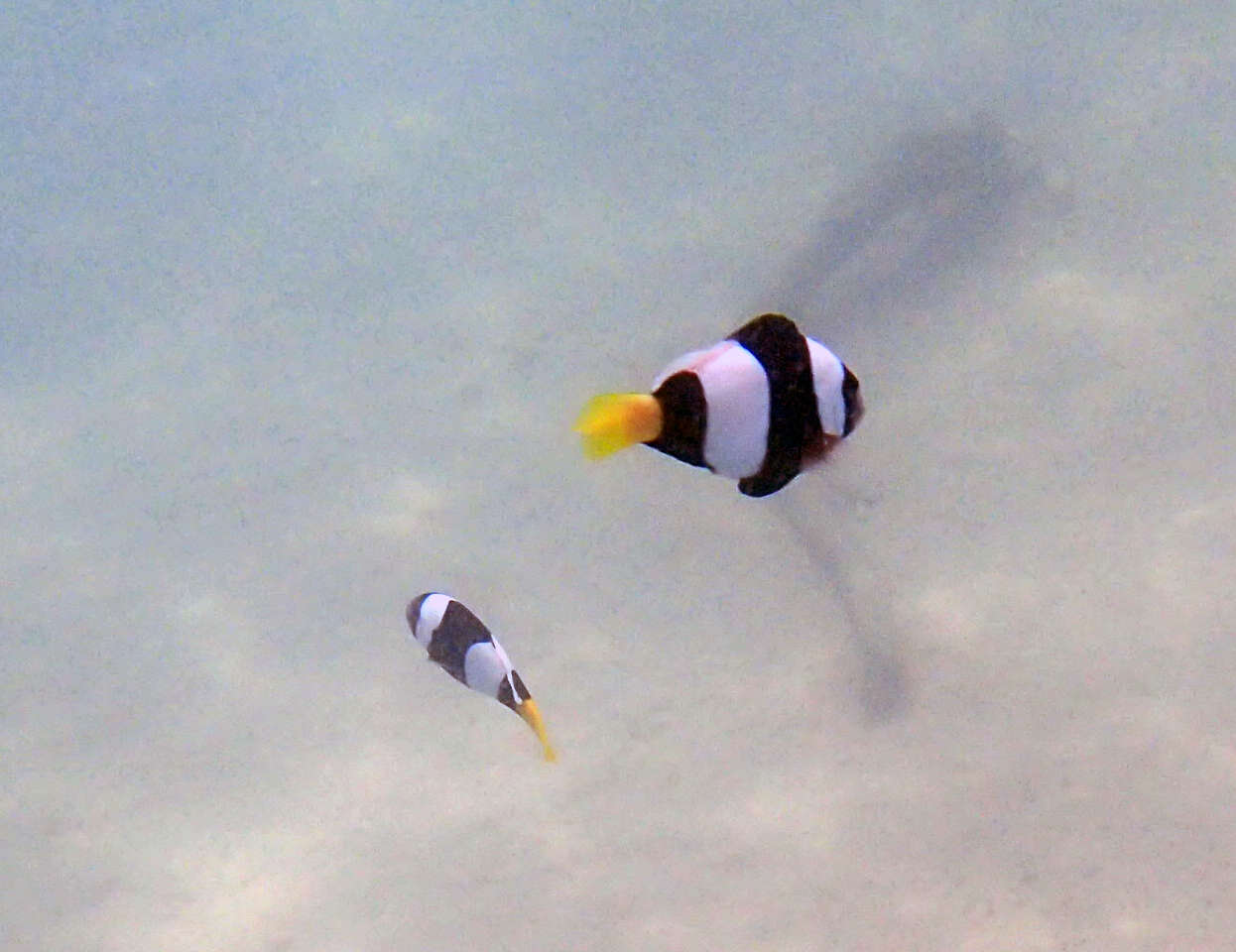
Neoglyphidodon nigroris (Cuvier, 1830) (Yellowfin damsel)
Two forms: long-tailed and black as adults occurs in the Andaman Sea, ranging east to western Bali and north to Japan. Second form, probably valid as N. xanthurus occurs in the rest of the West Pacific and the two overla...
Read More
Read More
Ucla xenogrammus Holleman, 1993 (Largemouth triplefin)
Found in caves, crevices and on flat surfaces of coral, sponges or rubble with algae .
Enchelyurus kraussii (Klunzinger, 1871) (Krauss' blenny)
Cryptic among coral and rubble on reef flats and upper portion of seaward reefs . Oviparous . Eggs are demersal and adhesive .
Plagiotremus laudandus (Whitley, 1961) (Bicolour fangblenny)
Share on Social Networks
- Facebook:

personalize your shared text as well as its destination (wall, page...) or send as a private message to a friend
- Twitter: Tweet personalize your tweet
- Google Plus:
Direct link to this dive
- Long link:
- Short link:


 We are participating today in the startup contest Techcrunch Disrupt. Support Diveboard by voting for us!
























































































Last dives of 2025
2 tanker aboard FHY
Coral Gardens White House near Yoyong's Place
drop in offshore swim to depth at bottom of wall, trouble with ears led to wicked ear infection days later
multilevel , some solo