


 Beachnutts


 Philippines
-
Nº193
 Date: 2026-01-25 - 01:21
-
 Max Depth: 22.9m Duration: 70mins
Dive Location

- Surface interval:104 mins
- Temp: Surf 26°C Bottom 26°C
- Dive type : Recreational, Reef, Photo, Wall
- Visibility: Good Water: Salt
Specific gear used
- BCD: Scubapro - Glide Plus
- Boots: Orca - Dive shoes
- Camera: Olympus - TG6
- Compass:
- Computer: Oceanic - OCS
- Fins: Scubapro - Go Rescue
- Lift bag: ScubaMax - SMB
- Light: Sofirn - SD05
- Mask: Promate - Scope
- Regulator: Aqualung - Legend
- Wet suit: Blue Ocean - Diveskin
- Weights: 3.2 kg
Dive reviews
| Overall review | ||
| Dive difficulty | ||
| Marine life quality |
Recent Divers in Samal island, Davao

Recent Pictures in Samal island, Davao
Dive Shop & Buddies
 Dive with Arnold Bate
 Dive buddies:
Reymar Tano,
Maeng,
Beachnutts
Dive buddies:
Reymar Tano,
Maeng,
Beachnutts

Link to this spot:
- Spot:
- Country:
- Area:
- Body of water:
Dive Profile
- 1. Air
- 10L Aluminium 207 → 21 bar
- Average depth: 15.2m
Data provided by EOL.org










Species Identified
Amphiprion percula (Lacepède, 1802) (Orange clownfish)
Inhabits lagoon and seaward reefs . Each group of fish consists of a breeding pair and 0-4 non-breeders. Within each group there is a size-based hierarchy: the female is largest, the male is second largest, and the non-...
Read More
Read More
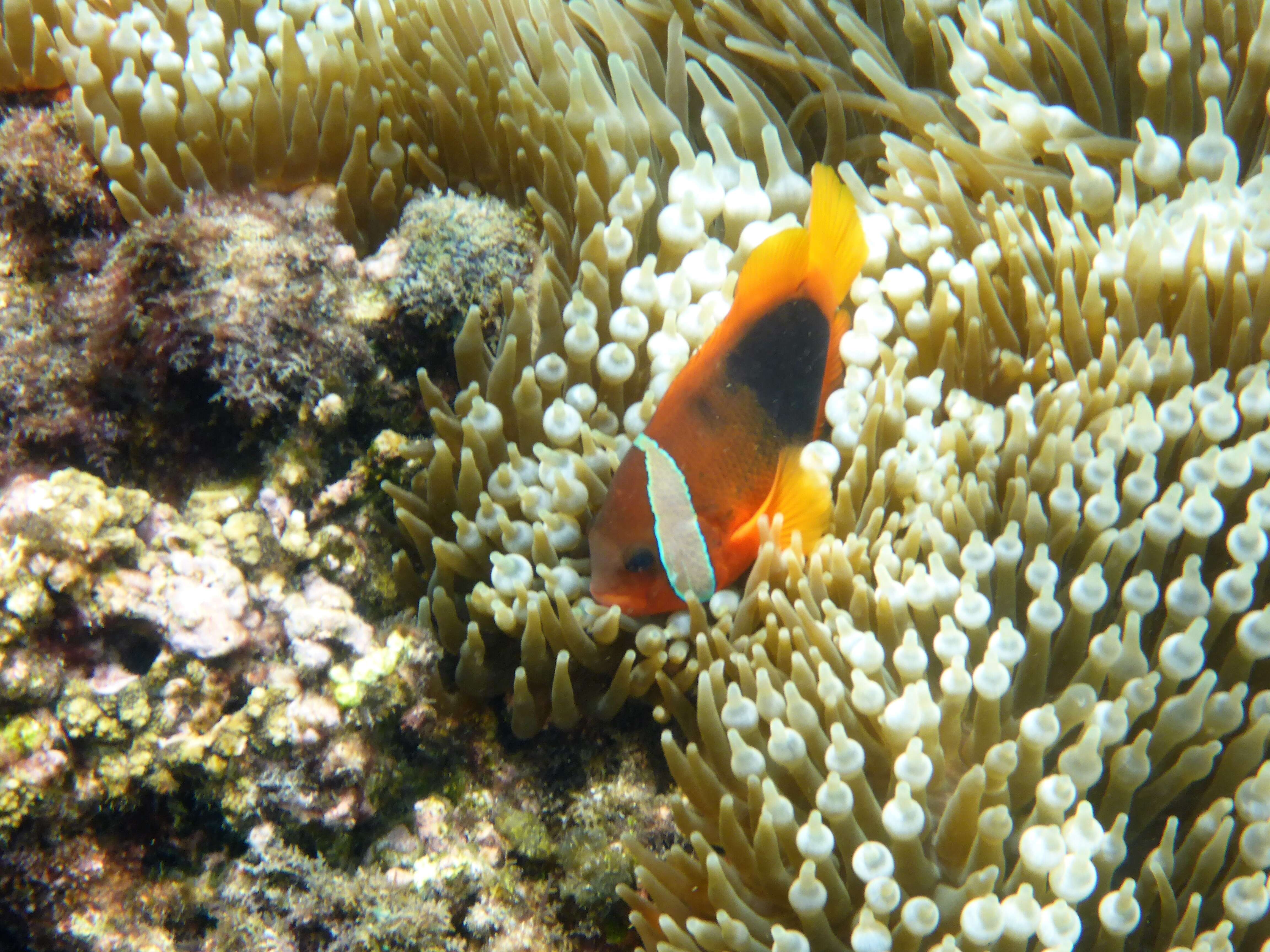
Amphiprion melanopus Bleeker, 1852 (Chocolate clown)
Inhabits lagoon and outer reef environments. Feeds predominantly on planktonic copepods and algae. Has been reared in captivity . Associated with the anemones: Entacmaea quadricolor , Heteractis crispa , and Heteractis magnifica .
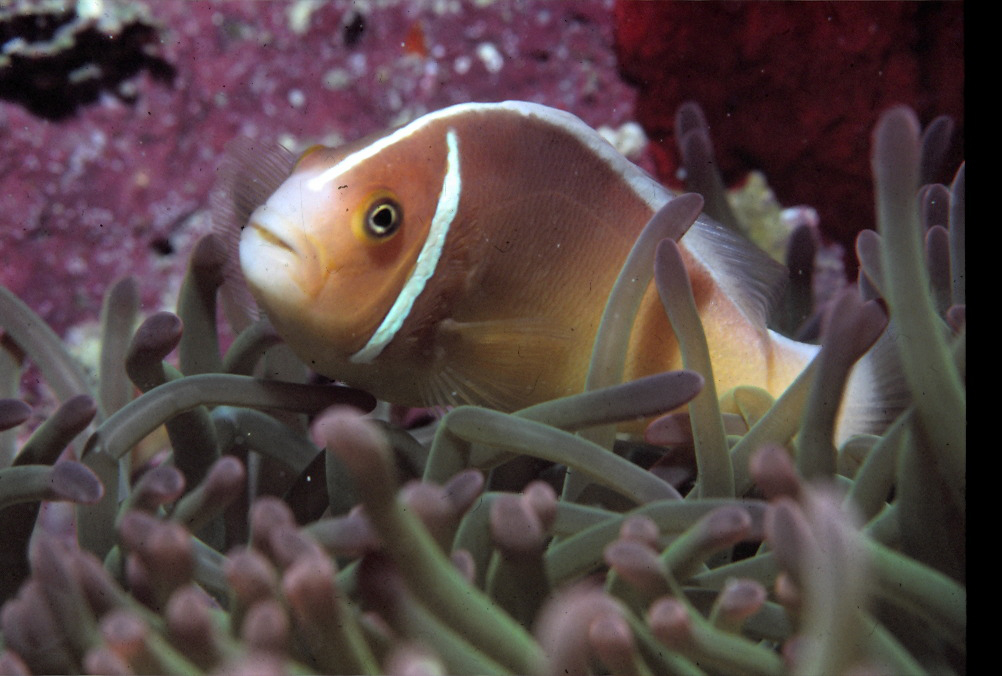
Amphiprion perideraion Bleeker, 1855 (False skunk-striped anemonefish)
Inhabits lagoon and seaward reefs . Mainly diurnal. Non-burrowing. Monogamous . A protandrous hermaphrodite . Associated with the anemones: Heteractis magnifica , Heteractis crispa, Macrodactyla doreensis, and Sticho...
Read More
Read More
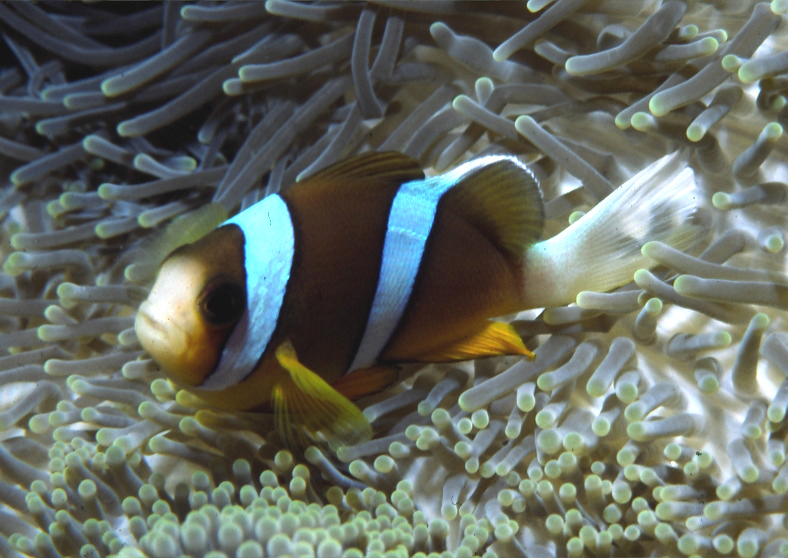
Amphiprion clarkii (Bennett, 1830) (Brown anemonefish)
Inhabits lagoons and outer reef slopes. Omnivorous. Oviparous, with elliptical eggs . Monogamous . Has been reared in captivity . Associated with the anemones: Cryptodendrum adhaesivum, Entacmaea quadricolor, Heterac...
Read More
Read More
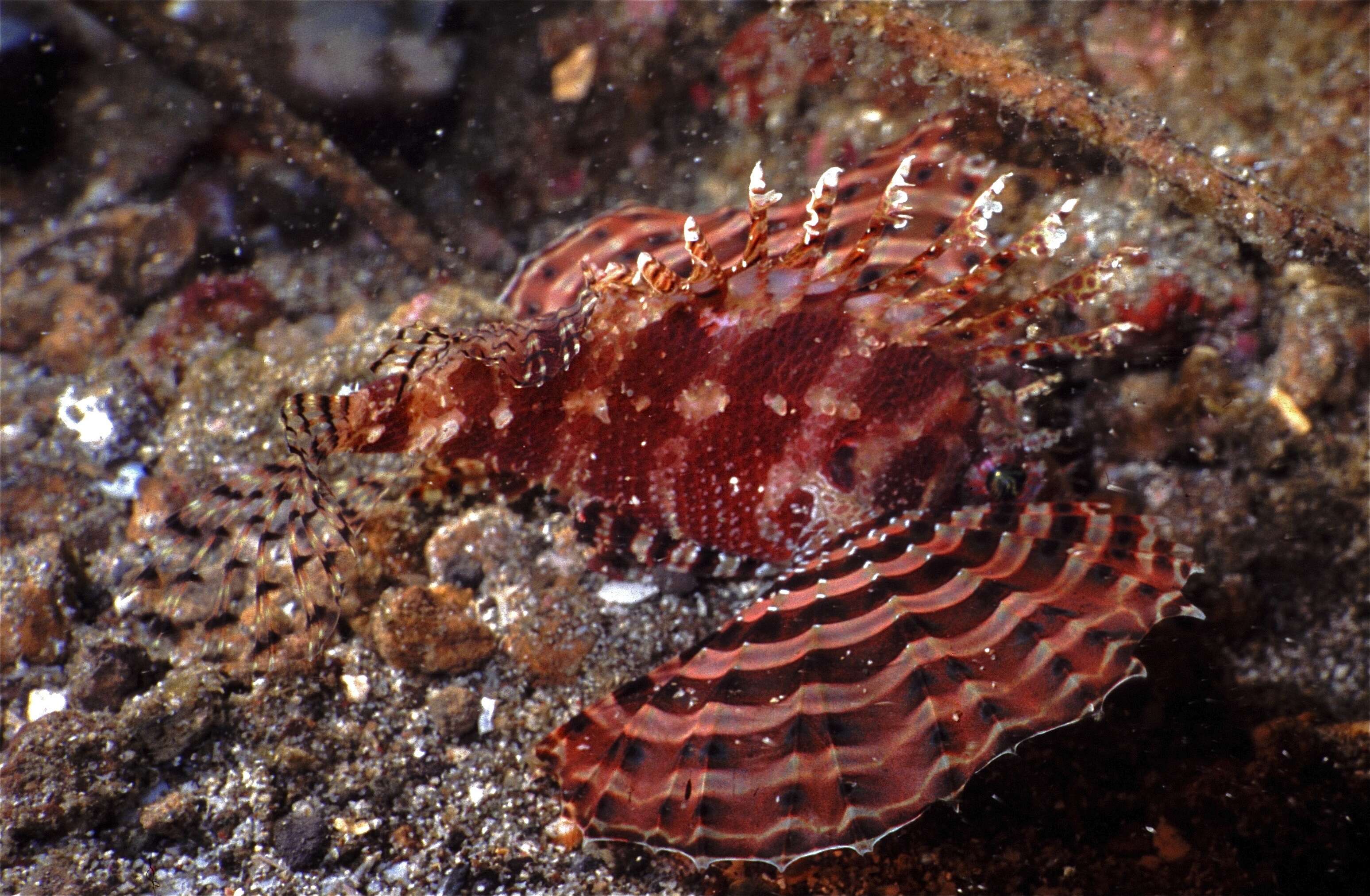
Dendrochirus zebra (Cuvier, 1829) (Zebra turkeyfish)
Found on coral, rubble, or rock bottoms of reef flats ; also in coastal to outer reef habitats in sheltered lagoons and in caves, sometimes in small aggregations. Usually shallow, from 3-60m but also reported to 80 m dep...
Read More
Read More
Scorpaenopsis possi Randall & Eschmeyer, 2001 (Poisson-scorpion de Poos)
Dendrochirus brachypterus (Cuvier, 1829) (Shortfin turkeyfish)
Common in reef flats and shallow lagoons, in areas with weed-covered rocks on sandy substrates. Adults often found on sponges and juveniles are sometimes found in small aggregations on remote bommies with 10 or so individuals . Nocturnal. Feeds on small crustaceans .
Pterois russelii Bennett, 1831 (Plaintail turkeyfish)
Found on muddy substrates, from well-protected shallow estuaries to quiet, deep offshore reefs .
Cirrhitichthys falco Randall, 1963 (Dwarf hawkfish)
Shallow coastal to outer reef flats and slopes to 45 m depth . Common inhabitant of coral reefs, typically resting at the bases of coral heads . Studies indicate that it is haremic and spawns nightly . Occasionally in pairs .
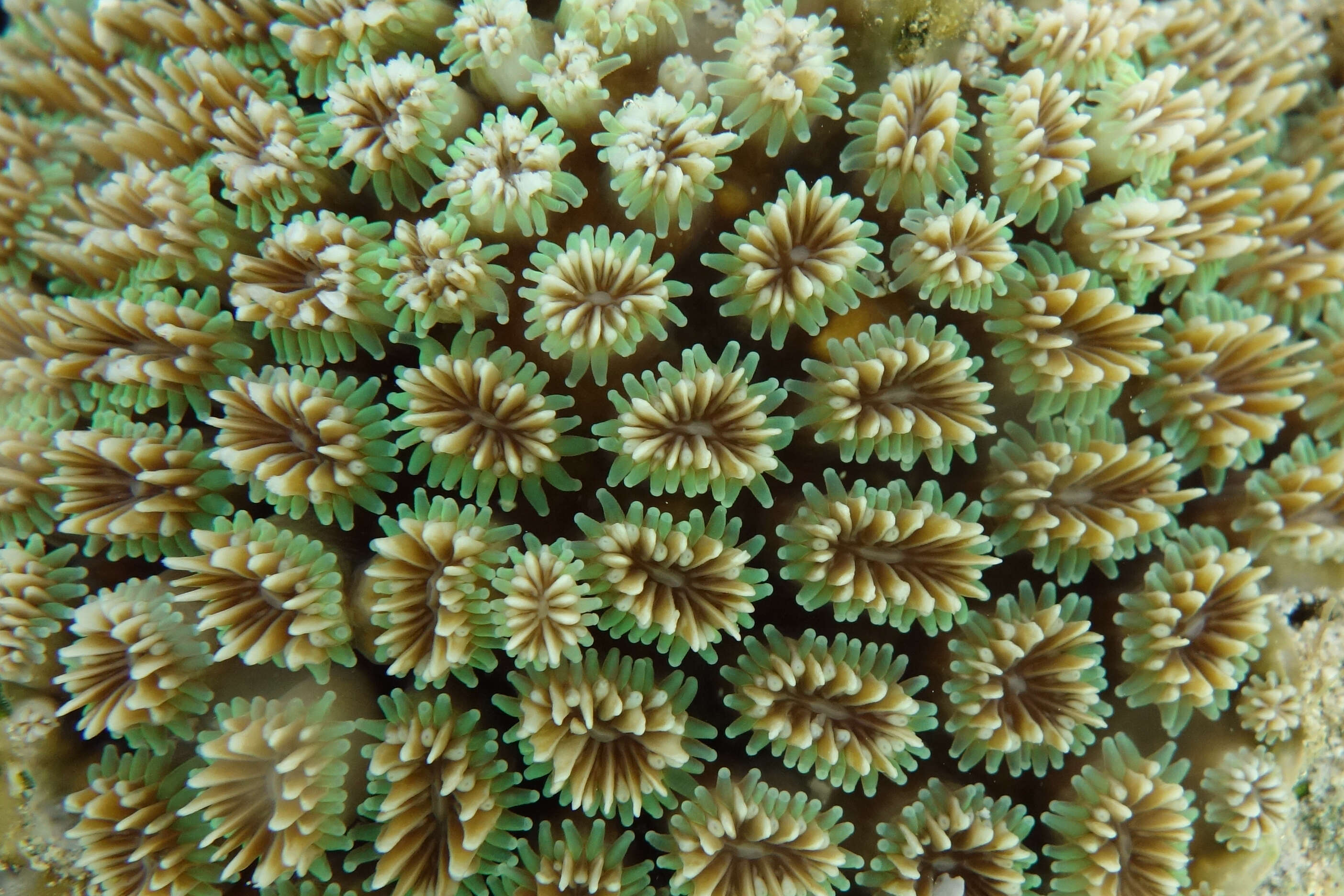
Galaxea fascicularis (Linnaeus, 1767) (Octopus coral)
zooxanthellate
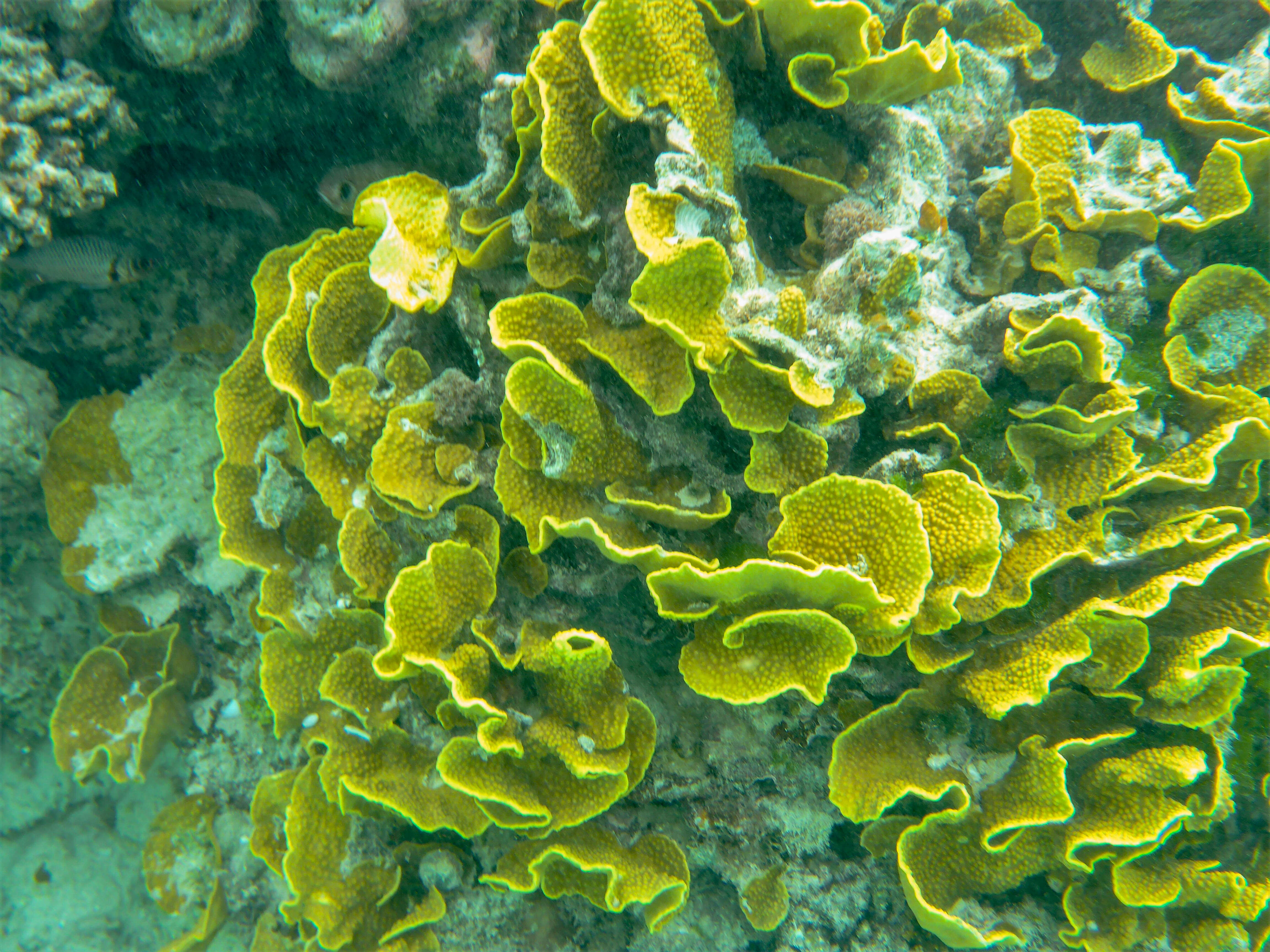
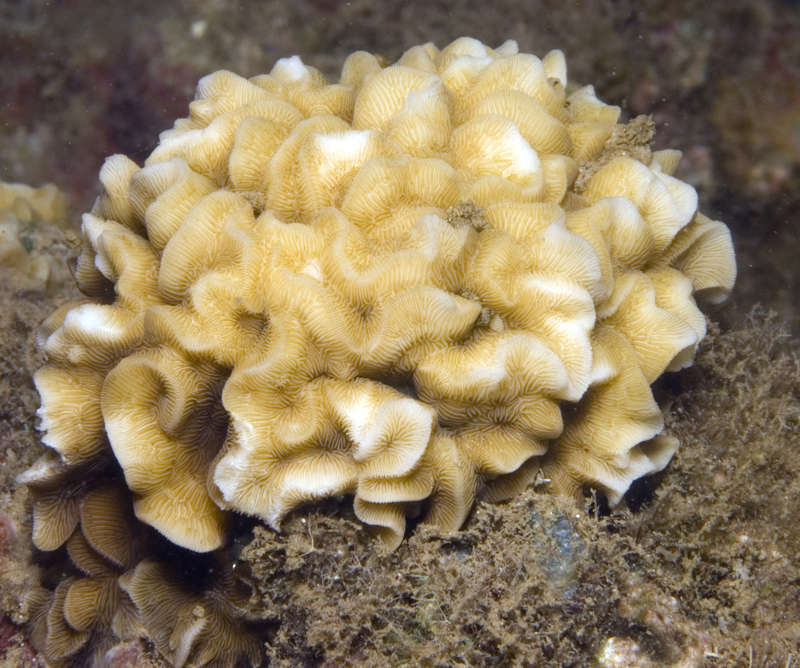
Pavona decussata (Dana, 1846) (Leaf coral)
zooxanthellate
Pavona frondifera Lamarck, 1816 (Leaf coral)
zooxanthellate
Galaxea astreata (Lamarck, 1816) (Octopus coral)
zooxanthellate
Pachyseris speciosa (Dana, 1846) (Serpent coral)
zooxanthellate
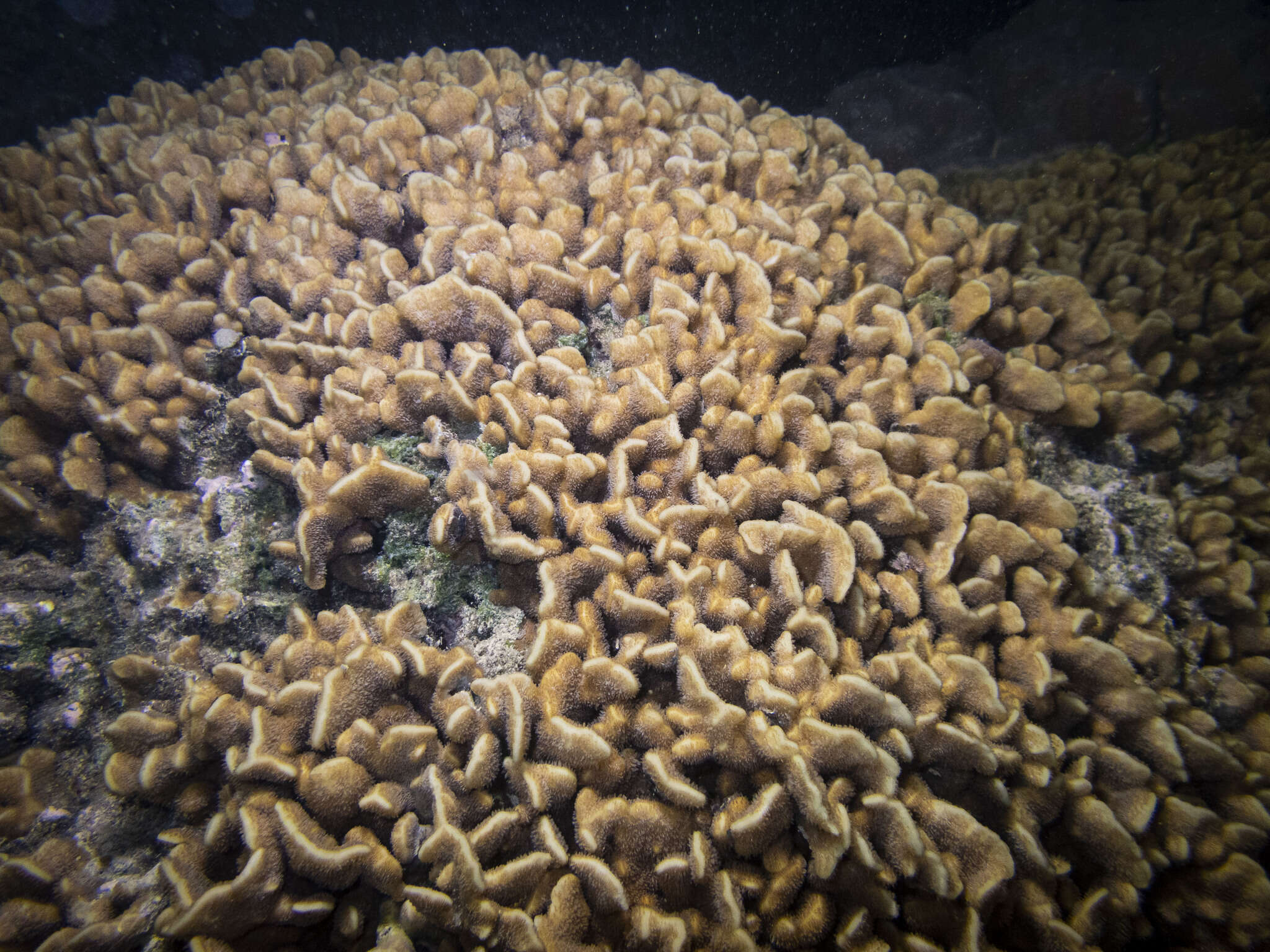
Pavona cactus (Forskål, 1775) (Leaf coral)
zooxanthellate
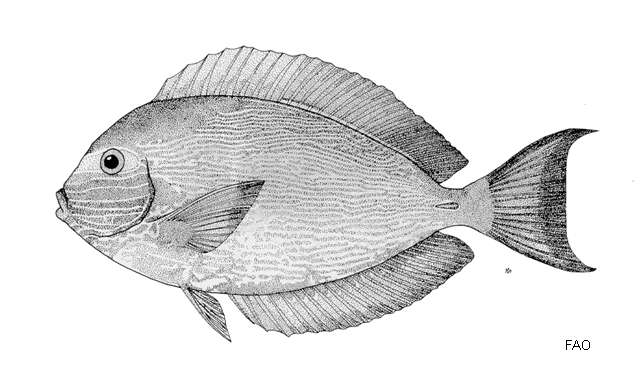
Acanthurus mata (Cuvier, 1829) (Elongate surgeonfish)
Inhabit steep slopes, often in turbid waters, generally in the vicinity of coral reefs or rocky bottoms. Form resident spawning aggregations . Adults often seen in schools, feeding mid-water on plankton . Feed on zooplankton. Marketed fresh. Flesh is almost never poisonous .
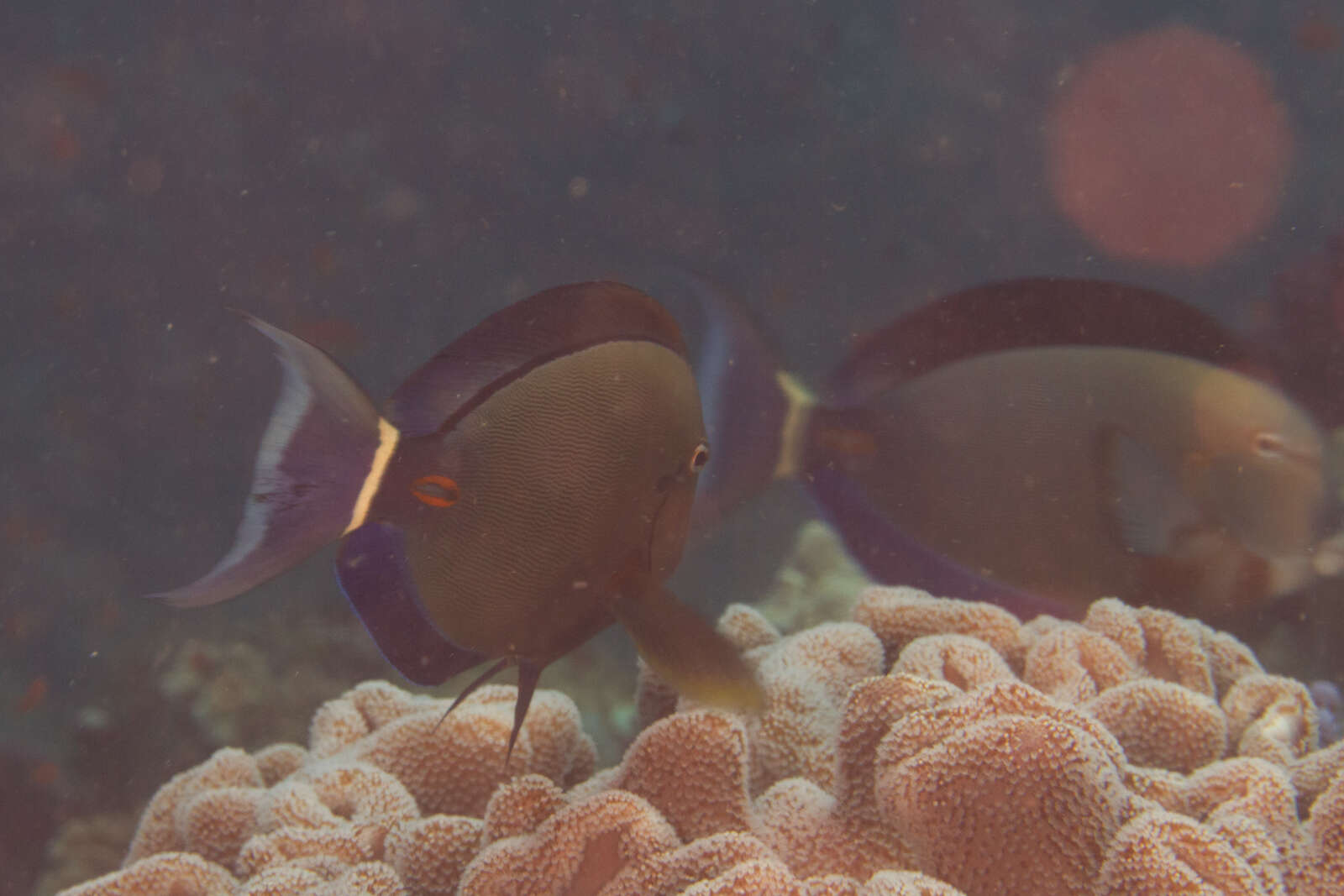
Acanthurus auranticavus Randall, 1956 (Orange-socket surgeonfish)
Inhabits shallow reefs, both in lagoons and outer reef areas. Frequently moves in groups. Juveniles found between soft corals in lagoons at depths of up to 2 m . Adults in groups, often mixed with other similar species .
Acanthurus olivaceus Bloch and Schneider, 1801 (Orangespot surgeonfish)
Inhabit seaward reefs, in areas of bare rock or mixed rubble and sand, from 9 to at least 46 m depth; juveniles inhabit protected bays and lagoons, singly or in small groups in as little as 3 m . Benthopelagic . Adults o...
Read More
Read More
Acanthurus nigricans (Linnaeus, 1758) (backsurgeonfish)
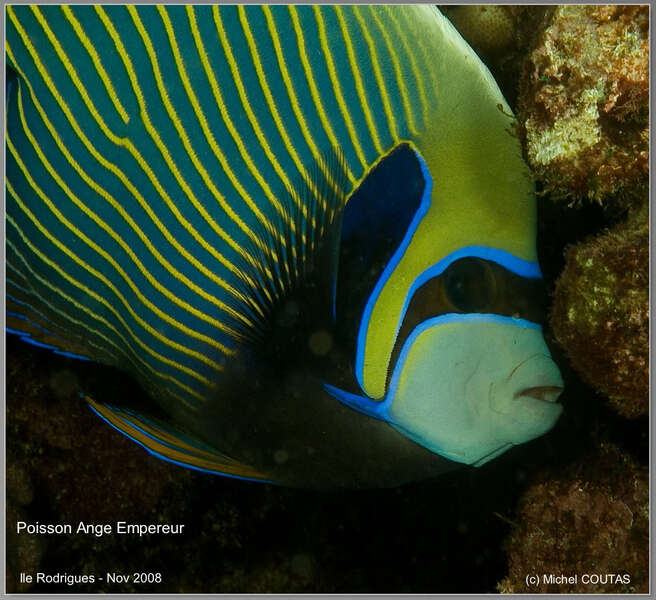
Pomacanthus imperator (Bloch, 1787) (Angel fish)
Juveniles are encountered under ledges, or in holes of outer lagoon patch reefs or semi-protected areas of exposed channels and outer reef flats. Subadults move to reef front holes and surge channels. Large adults inhabi...
Read More
Read More
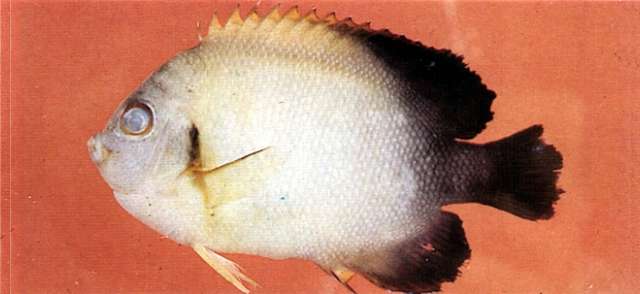
Centropyge vrolikii (Bleeker, 1853) (Pearlscale angelfish)
Inhabit lagoon and seaward reefs, mainly in coral rich areas . Feed on algae. Oviparous , monogamous . Frequently exported through the aquarium trade. Form hybrids with Centropyge eibli and C. flavissima at areas of sympatry. Mimicked by juveniles of the acanthurid Acanthurus pyroferus .
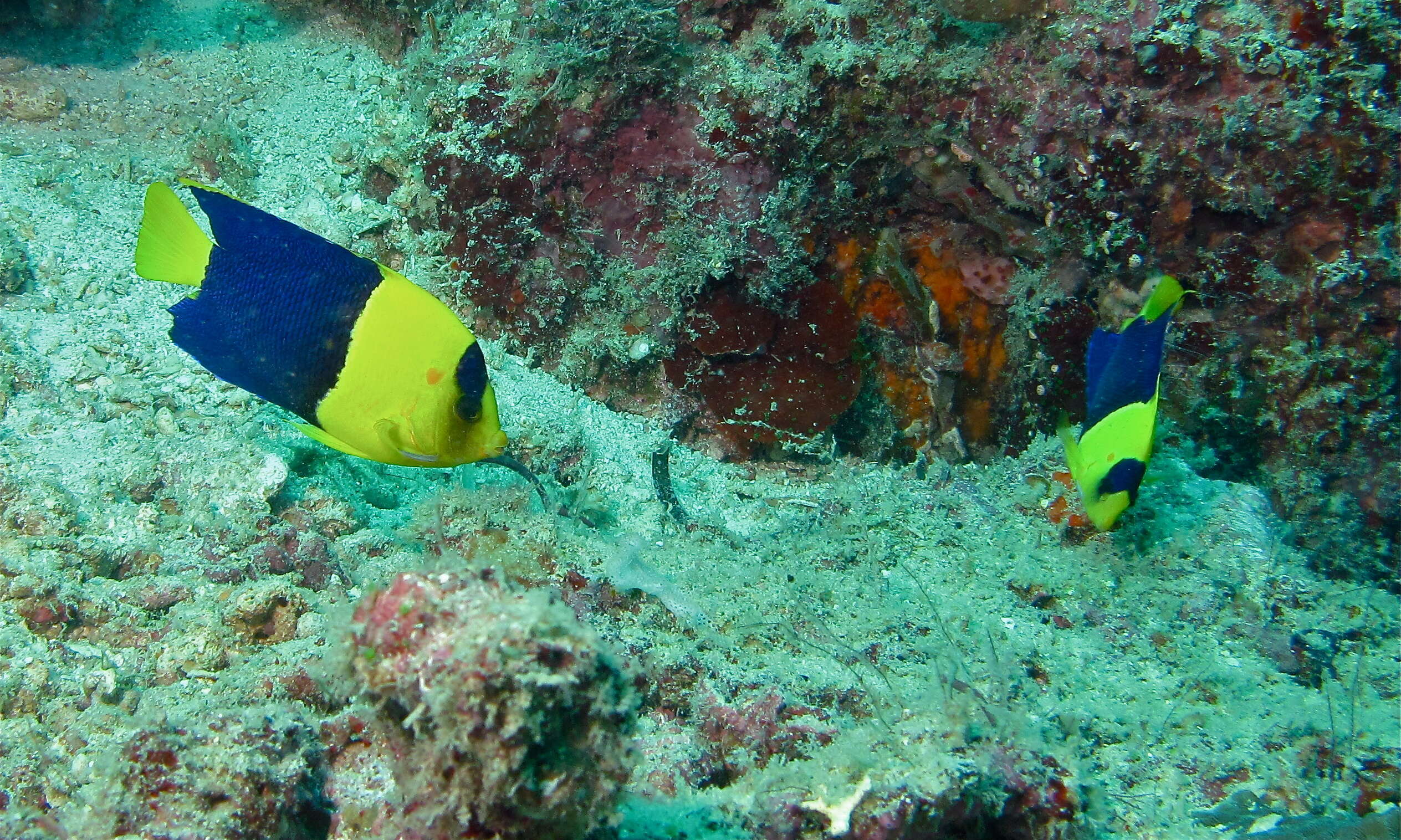
Centropyge bicolor (Bloch, 1787) (Bicolor angelfish)
Inhabits lagoon, channel, or protected seaward reef slopes, drop offs, coral and rubble areas . Usually in pairs or in small groups. Feeds on algae, small crustaceans and worms. Darts from one hiding place to the next. Commonly exported through the aquarium trade .
Centropyge multifasciata (Smith & Radcliffe, 1911) (Barred angelfish)
Inhabits ledges and caves and crevices of steep outer reef slopes; occasionally found in clear lagoon reefs. It is secretive and rarely goes out more than a few centimeters from an escape hole . Forms pairs or small grou...
Read More
Read More
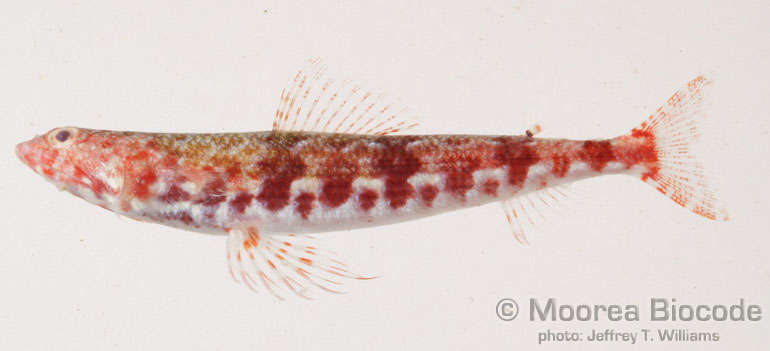
Synodus variegatus (Lacepède, 1803) (Variegated lizardfish)
Inhabits deep lagoon and seaward reefs to depths over 40 m ; sometimes found on sandy bottoms concealing itself in the sand. Prefers to rest on hard surfaces and frequently occurs in pairs . Benthic . Feeds on small fis...
Read More
Read More
Share on Social Networks
- Facebook:

personalize your shared text as well as its destination (wall, page...) or send as a private message to a friend
- Twitter: Tweet personalize your tweet
- Google Plus:
Direct link to this dive
- Long link:
- Short link:


 We are participating today in the startup contest Techcrunch Disrupt. Support Diveboard by voting for us!
























































































2nd dive Waling Waling windy waves with sun
nice calm dive along wall to end then back on top
many boats
solo at end
multilevel