


 Beachnutts


 Philippines
-
Nº177
 Date: 2025-05-18 - 02:17
-
 Max Depth: 25.9m Duration: 74mins
Dive Location

- Surface interval:100 mins
- Temp: Surf 27°C Bottom 27°C
- Dive type : Recreational, Reef, Photo
- Visibility: Average Water: Salt
Specific gear used
- BCD: Scubapro - Glide Plus
- Boots: Orca - Dive shoes
- Camera: Olympus - TG6
- Computer: Oceanic - OCS
- Fins: Scubapro - Jet Fins
- Lift bag: ScubaMax - SMB
- Light: Sofirn - SD05
- Mask: Promate - Scope
- Regulator: SEAC - Synchro
- Wet suit: Blue Ocean - Diveskin
- Weights: 3.2 kg
Dive reviews
| Overall review | ||
| Dive difficulty | ||
| Marine life quality |
Dive Shop & Buddies
 Dive with Blake Auge
 Dive buddies:
Reymar Tano,
Beachnutts
Dive buddies:
Reymar Tano,
Beachnutts

Link to this spot:
- Spot:
- Country:
- Area:
- Body of water:
Dive Profile
- 1. Air
- 10L Aluminium 179 → 3 bar
- Average depth: 17.3m
Data provided by EOL.org








Species Identified
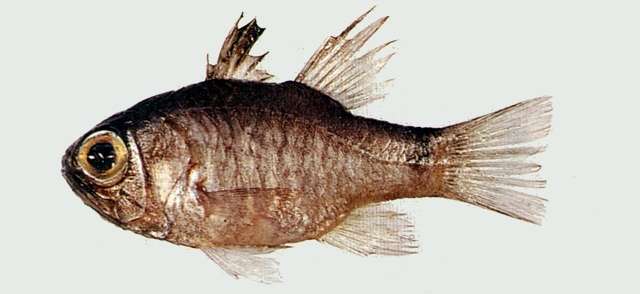
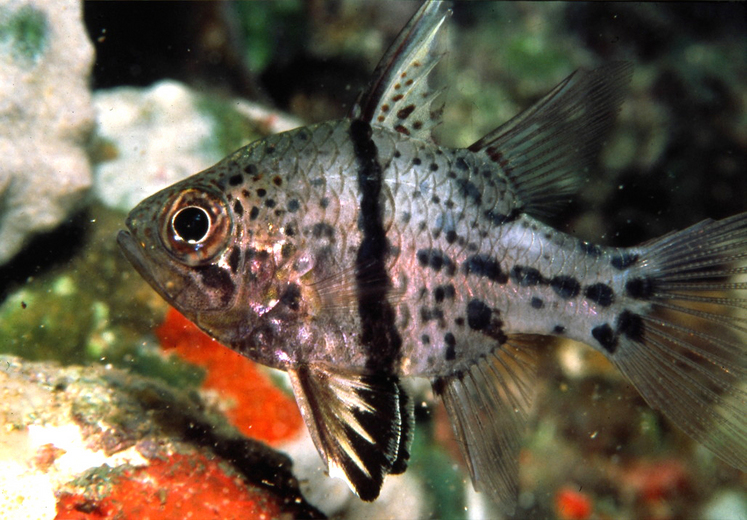
Apogon guamensis Valenciennes, 1832 (Guam cardinalfish)
Common in reef flats and shallow lagoons, but hiding by day within Acropora thickets and other corals, as well as in holes and crevices and emerging at night to forage on free-swimming invertebrates .
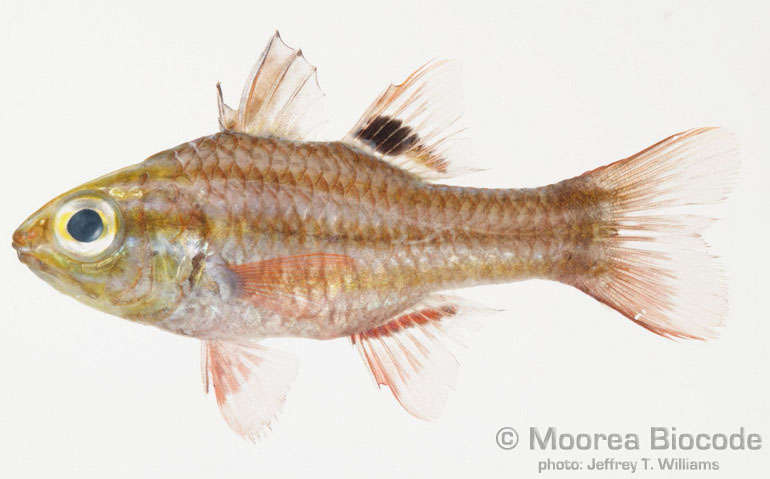
Apogon taeniophorus Regan, 1908 (Reef-flat cardinalfish)
Occurs inshore . Found in holes or ledges of outer reef flats in areas exposed to surge , to depths of about 10 m . Nocturnal .
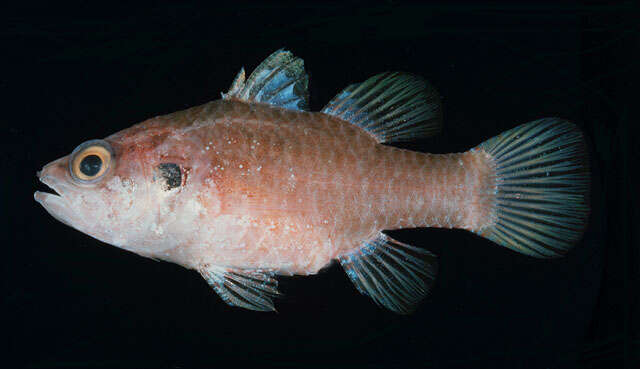
Fowleria aurita (Valenciennes, 1831) (Crosseyed cardinalfish)
Occurs inshore in reef areas . Commonly found among weeds in tide pools . Nocturnal species . Minimum depth reported taken from Ref. 30874.
Sphaeramia orbicularis (Cuvier, 1828) (Orbiculate cardinalfish)
Restricted to coastal waters, forming small aggregations among mangroves, rocks, debris, or piers of shallow sheltered shorelines. Feeds at night , primarily on planktonic crustaceans. Courtship and spawning occur fortni...
Read More
Read More
Centropyge eibli Klausewitz, 1963 (Blacktail angelfish)
Inhabits rocky areas of seaward reefs as well as rich coral areas . Feeds on algae; forms harems of 3-7 individuals. Frequently exported through the aquarium trade. Forms hybrids with Centropyge vrolikii in areas where ...
Read More
Read More
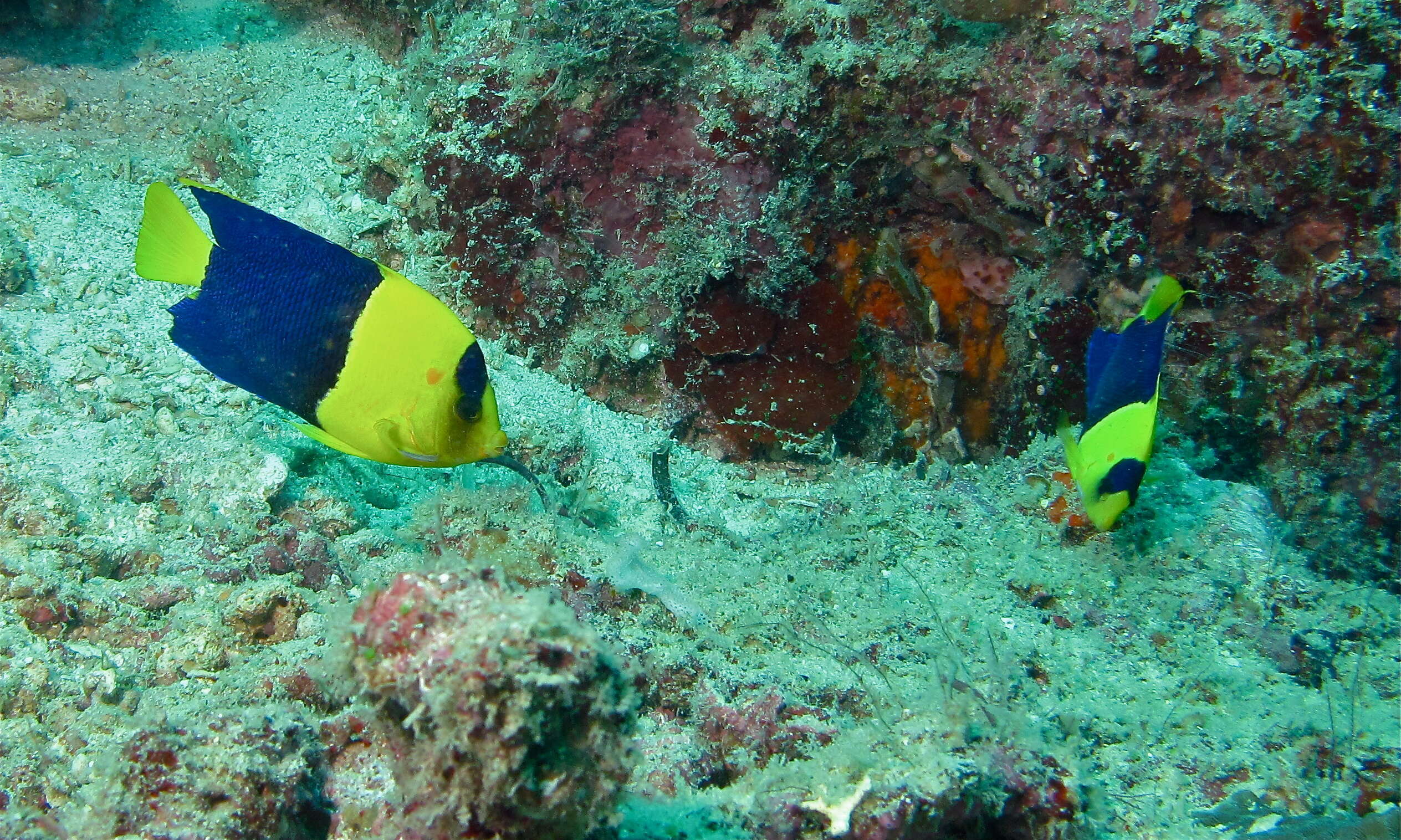
Centropyge bicolor (Bloch, 1787) (Bicolor angelfish)
Inhabits lagoon, channel, or protected seaward reef slopes, drop offs, coral and rubble areas . Usually in pairs or in small groups. Feeds on algae, small crustaceans and worms. Darts from one hiding place to the next. Commonly exported through the aquarium trade .
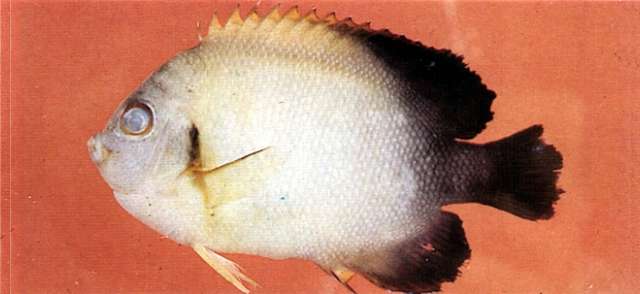
Centropyge tibicen (Cuvier, 1831) (Keyhole angelfish)
Relatively uncommon in mixed coral and rubble areas of lagoon and seaward reefs. The largest member of the genus . Feeds mainly on algae. Forms harems of 3-7 individuals. Frequently exported through the aquarium trade .
Centropyge vrolikii (Bleeker, 1853) (Pearlscale angelfish)
Inhabit lagoon and seaward reefs, mainly in coral rich areas . Feed on algae. Oviparous , monogamous . Frequently exported through the aquarium trade. Form hybrids with Centropyge eibli and C. flavissima at areas of sympatry. Mimicked by juveniles of the acanthurid Acanthurus pyroferus .
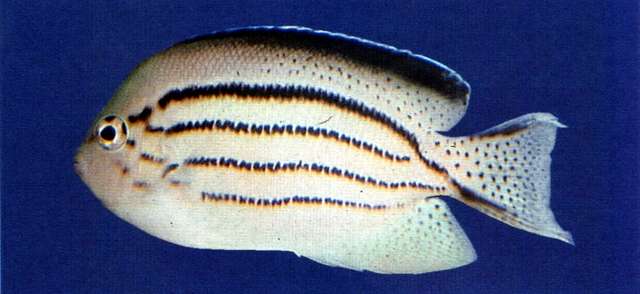
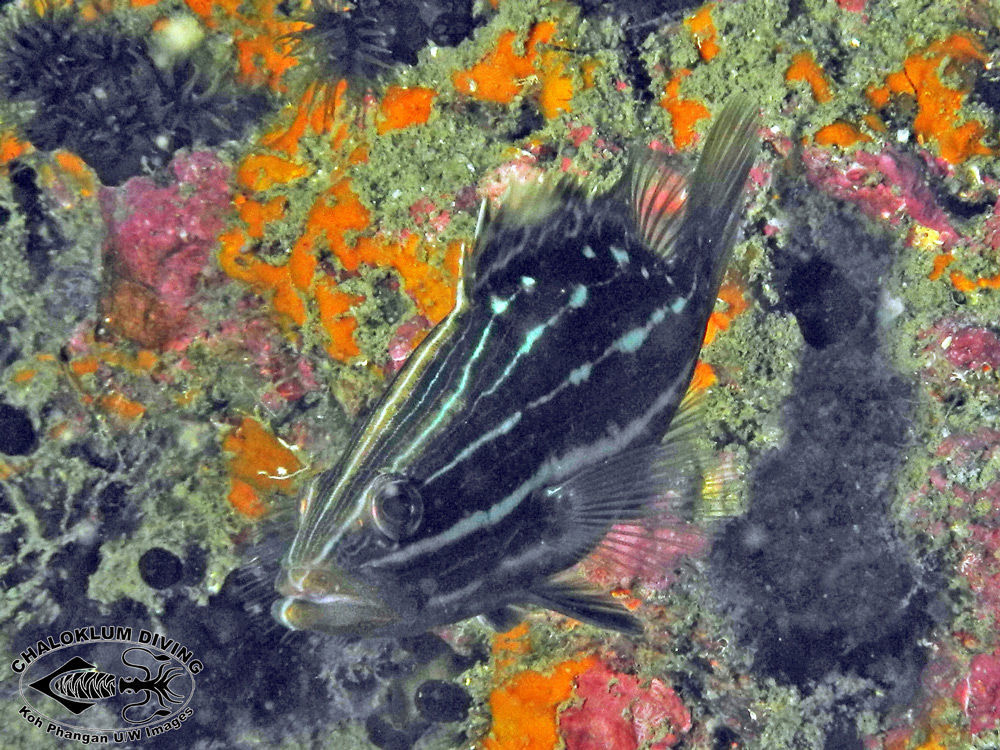
Genicanthus lamarck (Lacepède, 1802) (Blackstriped angelfish)
Inhabit shallow reef crests and deep reefs adjacent to steep slopes. Form aggregations to feed in midwater well above the bottom; harems of 3-7 individuals. Feeds on plankton. Frequently exported through the aquarium trade .
Dendrochirus zebra (Cuvier, 1829) (Zebra turkeyfish)
Found on coral, rubble, or rock bottoms of reef flats ; also in coastal to outer reef habitats in sheltered lagoons and in caves, sometimes in small aggregations. Usually shallow, from 3-60m but also reported to 80 m dep...
Read More
Read More
Pterois volitans (Linnaeus, 1758) (Red lionfish)
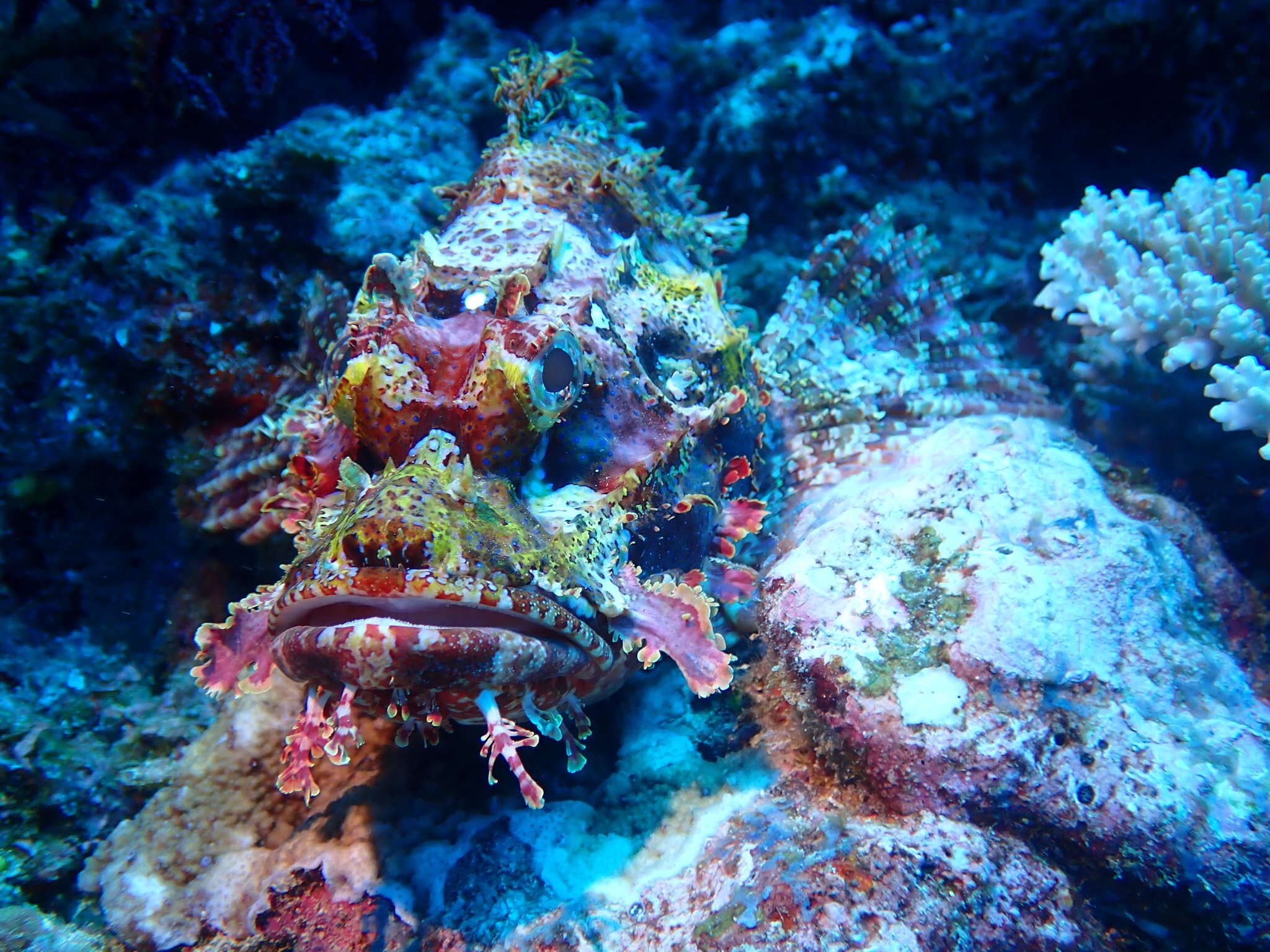
Scorpaenopsis papuensis (Cuvier, 1829) (Papuan scorpionfish)
Found in coral and rocky areas to depths over 40 m ; also in coastal sand slopes, estuaries and lagoons, often in algae covered rubble zones .
Anyperodon leucogrammicus (Valenciennes, 1828) (Balala)
Inhabits coral rich areas and clear waters on lagoon and seaward reefs. Feeds mainly on fishes and probably on crustaceans. The distinctive blue and gold striped juveniles are mimics of the wrasse Halichoeres purpurescen...
Read More
Read More
Cephalopholis leopardus (Lacepède, 1801) (red-spotted rock cod)
Occurs in coral-rich areas of lagoon pinnacles, channels, and outer reef slopes. Solitary , a secretive species, usually hiding in caves and crevices in the reefs. One of the smallest species of groupers known. Gut analysis revealed crustacean remains.
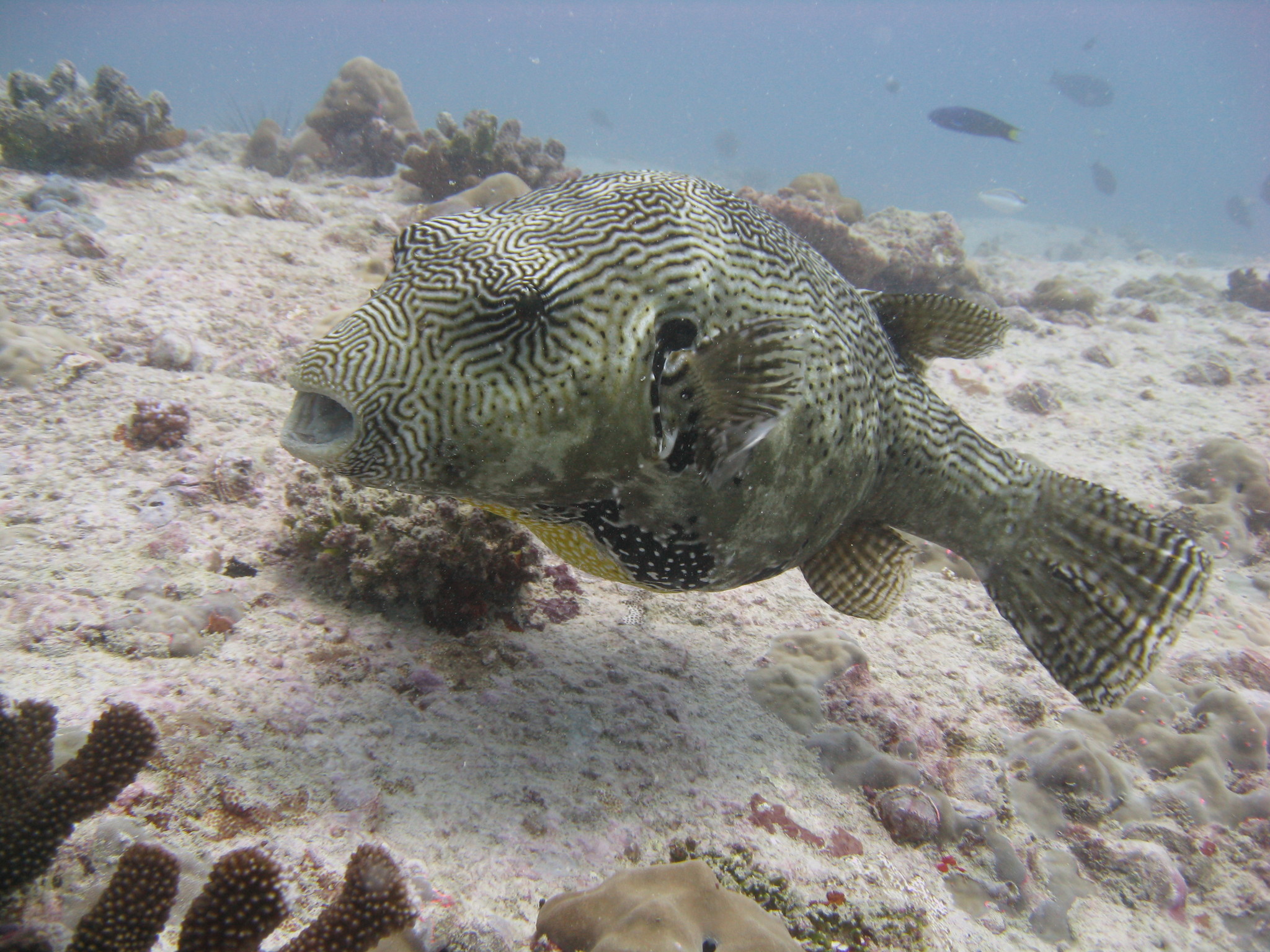
Arothron mappa (Lesson, 1831) (Map puffer)
Occur in clear lagoon and sheltered seaward reefs . Adults usually along deep drop-offs . Usually close to shelter. Occur singly . Feed on algae, sponges, and benthic invertebrates.
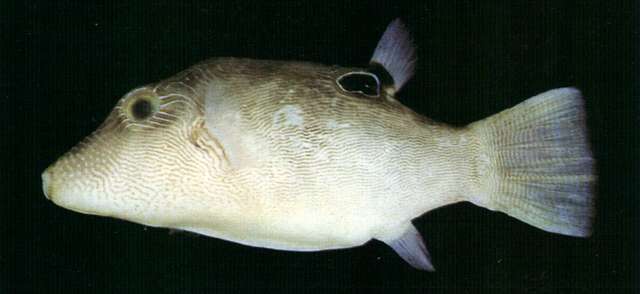
Canthigaster compressa (Marion de Procé, 1822) (Compressed toby)
Inhabits sandy areas of shallow lagoons and channels . Also found in silty bays or harbors around wharf pilings. Adults usually in pairs .
Arothron nigropunctatus (Bloch & Schneider, 1801) (Blackspotted puffer)
Inhabit coastal to outer reef crest and slopes with rich invertebrate growth. Adults often in pairs . Feed on corals , crustaceans, mollusks, sponges, tunicates and algae . Generally common .
Cryptodendrum adhaesivum Klunzinger, 1877 (Adhesive sea anemone)
Acanthaster planci (Linnaeus, 1758) (crown-of-thorns starfish)
Calliactis polypus (Forskål, 1775)
on hermit crabs
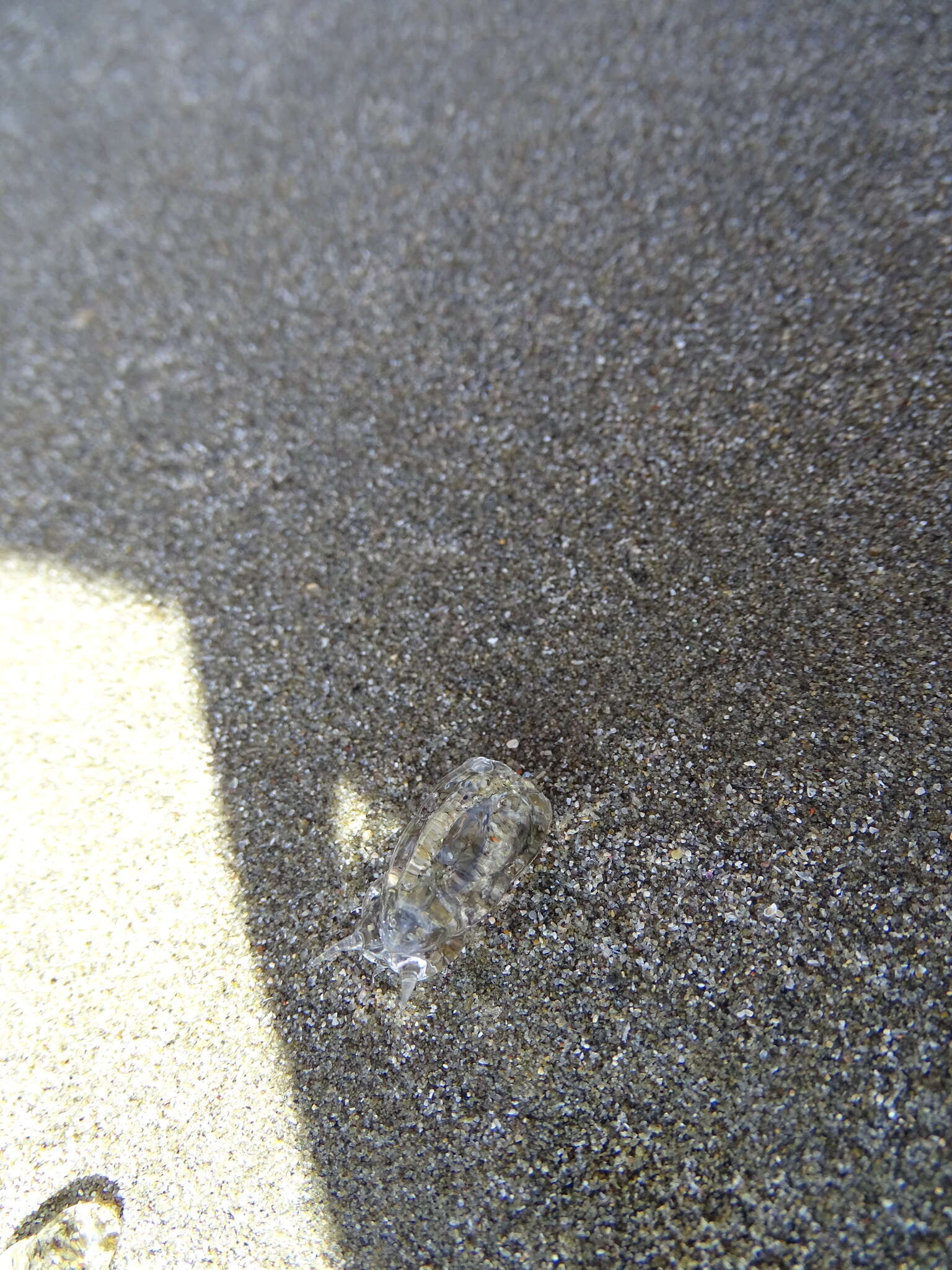
Thalia democratica (Forskål, 1775) (Salp)
Heteractis crispa (Hemprich and Ehrenberg in Ehrenberg, 1834) (Leathery sea anemone)
Share on Social Networks
- Facebook:

personalize your shared text as well as its destination (wall, page...) or send as a private message to a friend
- Twitter: Tweet personalize your tweet
- Google Plus:
Direct link to this dive
- Long link:
- Short link:


 We are participating today in the startup contest Techcrunch Disrupt. Support Diveboard by voting for us!
























































































2nd dive 2tanker aboard Datu Budas
jump in far end angel's cove near red house, swim in shallows until on top of Dizon Wall, swim South , then back to boat
multilevel