


 Beachnutts



 Philippines
-
Nº141
 Date: 2024-06-28 - 09:31
-
 Max Depth: 17.1m Duration: 88mins
Dive Location

- Temp: Surf 27°C Bottom 27°C
- Dive type : Recreational, Reef, Photo, Muck Dive
- Visibility: Average Water: Salt
Specific gear used
- BCD: Scubapro - Glide Plus
- Boots: Orca - Dive shoes
- Camera: Olympus - TG6
- Compass:
- Computer: Oceanic - OCS
- Fins: Scubapro - Jet Fins
- Lift bag: ScubaMax - SMB
- Light: Sofirn - SD05
- Mask: Promate - Scope
- Regulator: SEAC - Synchro
- Wet suit: Blue Ocean - Diveskin
- Weights: 3.2 kg
Dive reviews
| Overall review | ||
| Dive difficulty |
Dive Shop & Buddies
 Dive with Blake Auge
 Dive buddies:
Beachnutts

Link to this spot:
- Spot:
- Country:
- Area:
- Body of water:
Dive Profile
- 1. Air
- 10L Aluminium 207 → 21 bar
- Average depth: 11.4m
Data provided by EOL.org



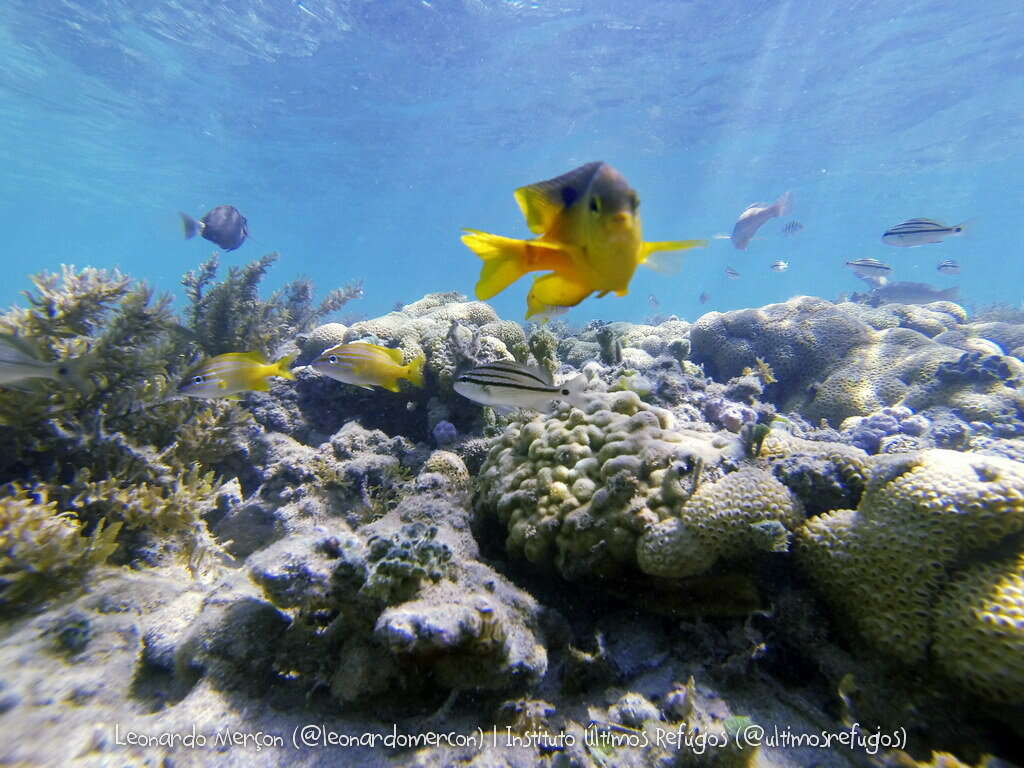
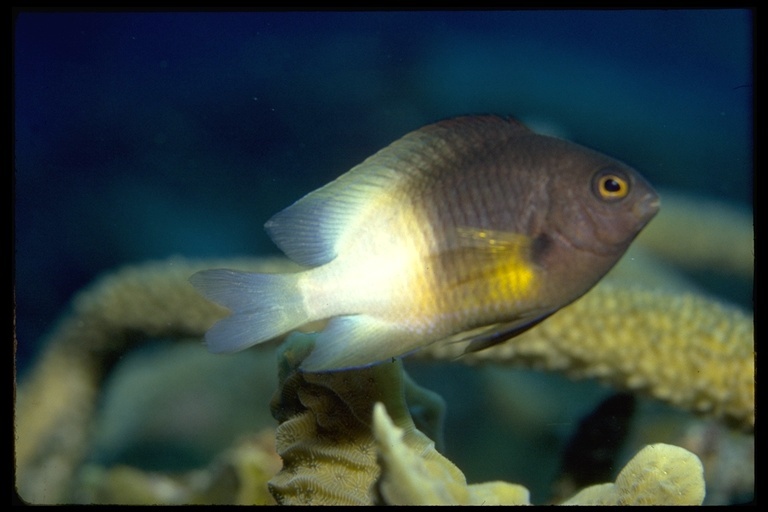


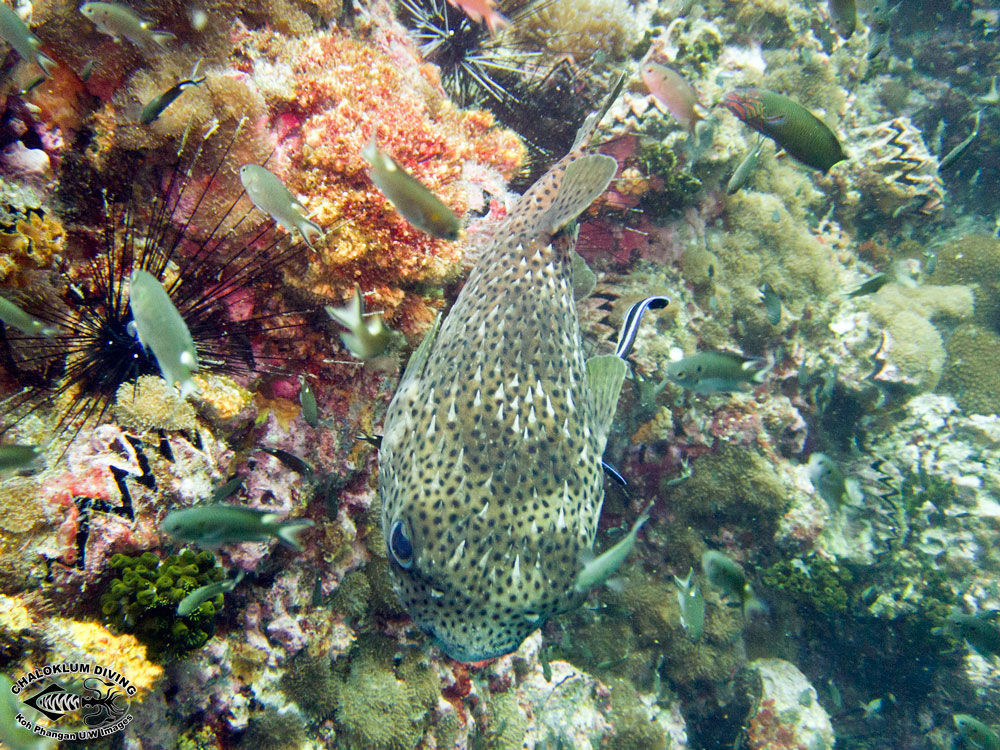

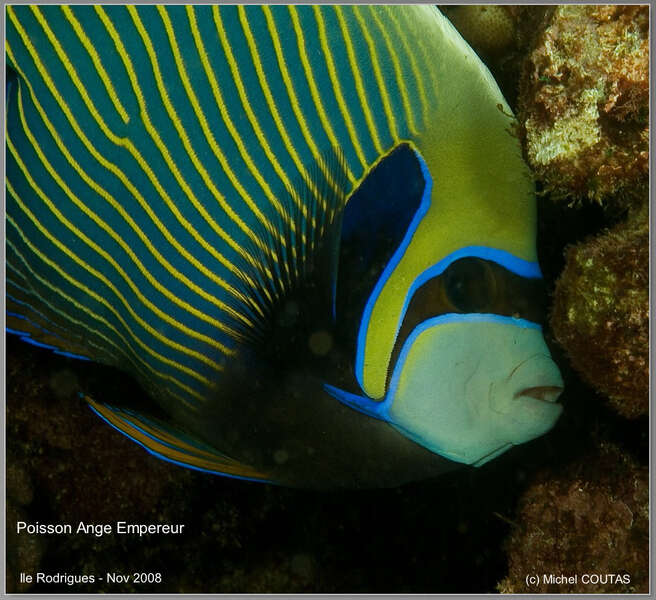


Species Identified
Anguilla rostrata (Lesueur, 1817) (Eel)
Occur in streams, rivers, muddy or silt-bottomed lakes ; usually in permanent streams with continuous flow. Hide during the day in undercut banks and in deep pools near logs and boulders. Feed on larvae of Ephemeroptera,...
Read More
Read More
Gobiosoma nudum (Meek & Hildebrand, 1928) (goby)
Sicydium adelum Bussing, 1996 (Chupapiedra)
Inhabits creeks and rivers between sea level and 1180 m elevation, usually present in rapids or riffles of high current velocity. Always stuck to rocks or hidden between stones. Ingests great quantities of mud, diatoms and filamentous algae that it scrapes from the substratum .
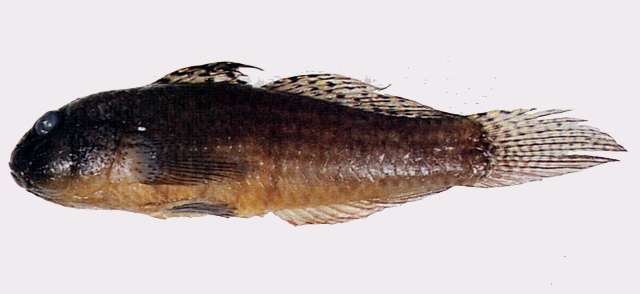
Parrella fusca Ginsburg, 1939 (goby)
Exyrias puntang (Bleeker, 1851) (Puntang goby)
Inhabits muddy bottoms of shallow, turbid marine to brackish coastal inlets and estuaries. Also lives in shallow coastal waters, large tidal pools, mangroves, siltty lagoons and brackish lakes .
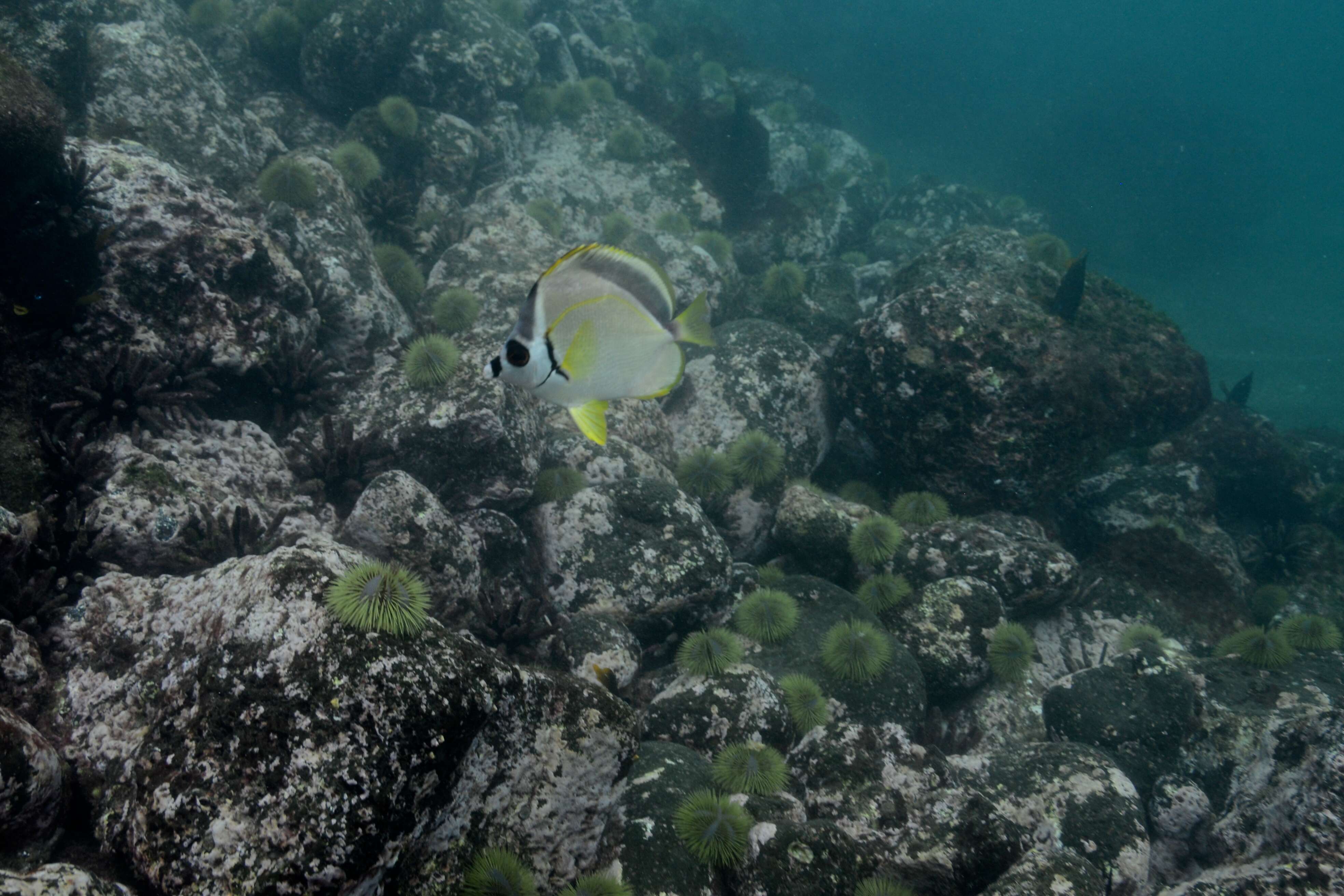
Chaetodon litus Randall and Caldwell, 1973 (White-tip butterflyfish)
Found in algal covered rocky reefs. Juveniles in tide pools, observed to pick bodies of other fishes for parasites . Oviparous . Form pairs during breeding .
Johnrandallia nigrirostris (Gill, 1862) (Blacknosed butterflyfish)
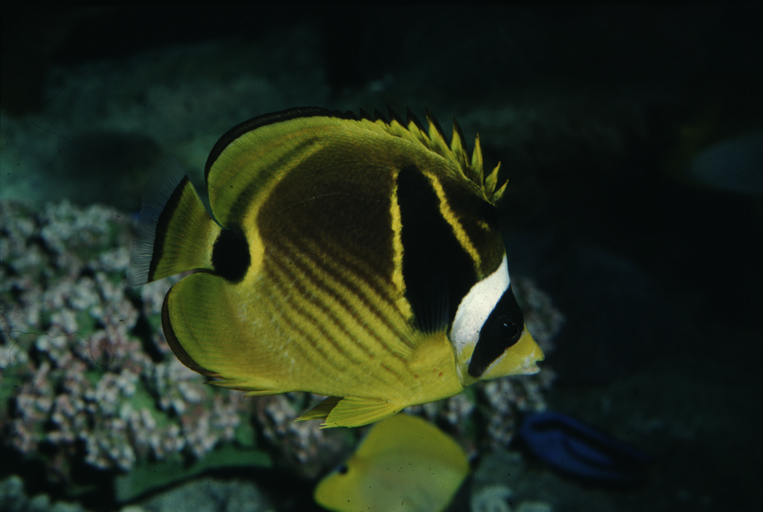
Chaetodon lunula (Lacepède, 1802) (Butterflyfish)
Stegastes variabilis (Castelnau, 1855) (yellow demoiselle)
Inhabits inshore and offshore coral reefs. Adults feed mainly on benthic algae but also on sponges, ascidians and anemones while juvenile feed on invertebrates like harpacticoid copepods and nemerteans . Often solitary ....
Read More
Read More
Stegastes partitus (Poey, 1868) (bicolor damselfish)
Inhabits shallow coral reefs and isolated patch reefs in deeper water. Feeds primarily on algae but also on polychaetes, hydroids, copepods and ascidians . Aggressively territorial but only around a small area . Taken incidentally in traps and small-meshed beach nets .
Pomacentrus aquilus Allen and Randall, 1980 (Dark damsel)
Inhabits inshore coral reefs.
Neopomacentrus filamentosus (Macleay, 1882) (Brown demoiselle)
Sporadic distribution . Inhabits soft bottoms of lagoons and inshore reefs around coral outcrops, rocks, debris, etc.
Diodon liturosus Shaw, 1804 (Black-blotched porcupinefish)
Inhabits reef edges and slopes . Hides in caves and ledges during the day and forages at night . Also found below plate-corals during the day and often deep, ranging to at least 40 meters depth. Juveniles occur in lagoo...
Read More
Read More
Diodon hystrix Linnaeus, 1758 (Spot-fin porcupinefish)
Sargocentron suborbitalis (Gill, 1863) (Squirrelfish)
Holocentrus adscensionis (Osbeck, 1765) (Squirrelfish)
Occurs in shallow coral reefs, as well as deeper offshore waters . A nocturnal species, hiding in deep crevices or under coral ledges during the day; at night it usually moves over sand and grass beds, taking mainly crabs...
Read More
Read More
Pomacanthus imperator (Bloch, 1787) (Angel fish)
Juveniles are encountered under ledges, or in holes of outer lagoon patch reefs or semi-protected areas of exposed channels and outer reef flats. Subadults move to reef front holes and surge channels. Large adults inhabi...
Read More
Read More
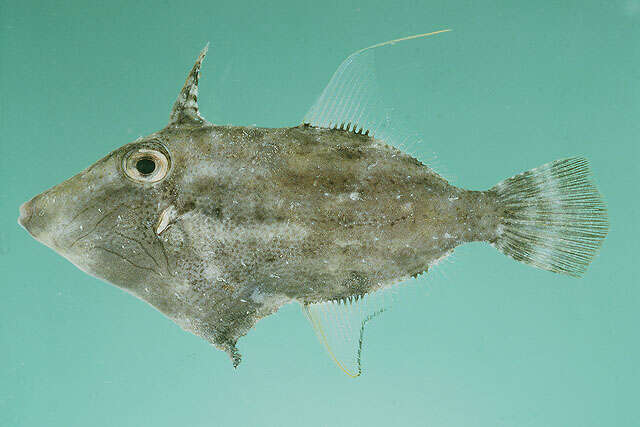
Paramonacanthus nematophorus (Günther, 1870) (线纹副单角鲀)
Mullus auratus Jordan and Gilbert, 1882 (goatfish)
Inhabits neritic waters, especially over sand or mud bottoms . Flesh considered excellent quality; marketed fresh .
Choerodon schoenleinii (Valenciennes, 1839) (Green wrasse)
Inhabit flat sandy or weedy areas near lagoon and seaward reefs . Solitary. Feed mainly on hard-shelled prey including crustaceans, mollusks and sea urchins. Marketed mostly fresh. In Hong Kong live fish markets .
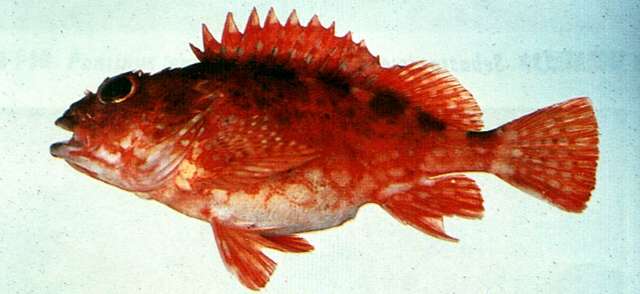
Sebastiscus marmoratus (Cuvier, 1829) (Filefish)
Found near shore, on rock bottom . Commercially cultured in Japan. Viviparous . Anterolateral glandular grooves with venom gland .
Share on Social Networks
- Facebook:

personalize your shared text as well as its destination (wall, page...) or send as a private message to a friend
- Twitter: Tweet personalize your tweet
- Google Plus:
Direct link to this dive
- Long link:
- Short link:


 We are participating today in the startup contest Techcrunch Disrupt. Support Diveboard by voting for us!
























































































Single dive @DBC DBC DEBARE DAY
drop in end of pier first south, then north and to shallows hopes for second dive, single dive, not great back to beach
multilevel, SOLO
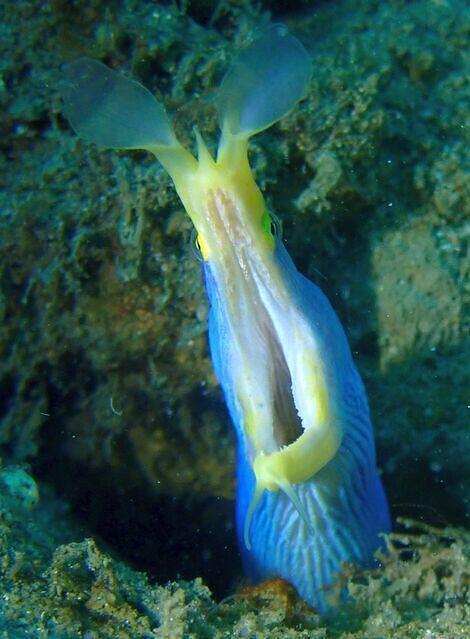
highlight nice blue ribbon eel photos