


 Beachnutts



 Philippines
-
Nº127
 Date: 2024-03-18 - 12:52
-
 Max Depth: 22.9m Duration: 81mins
Dive Location

- Surface interval:65 mins
- Temp: Surf 25°C Bottom 25°C
- Dive type : Recreational, Reef, Photo, Muck Dive
- Visibility: Average Water: Salt
Specific gear used
- BCD: Scubapro - Glide Plus
- Camera: Olympus - TG6
- Compass:
- Computer: Oceanic - OCS
- Fins: Scubapro - Jet Fins
- Lift bag: ScubaMax - SMB
- Light: Sofirn - SD05
- Mask: Promate - Scope
- Regulator: Aqualung - Calypso
- Wet suit: Blue Ocean - Diveskin
- Weights: 3.2 kg
Dive reviews
| Overall review | ||
| Dive difficulty | ||
| Marine life quality |
Dive Shop & Buddies
 Dive with Blake Auge
 Dive buddies:
Beachnutts

Link to this spot:
- Spot:
- Country:
- Area:
- Body of water:
Dive Profile
- 1. Air
- 10L Aluminium 207 → 21 bar
- Average depth: 15.2m
Data provided by EOL.org




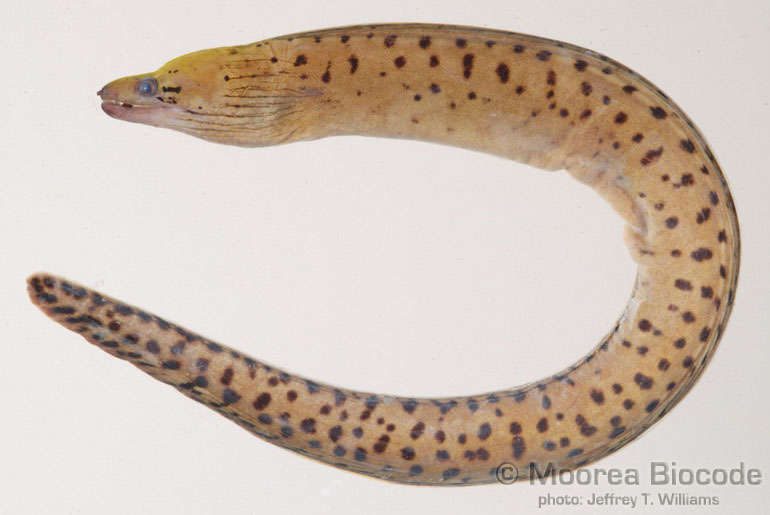

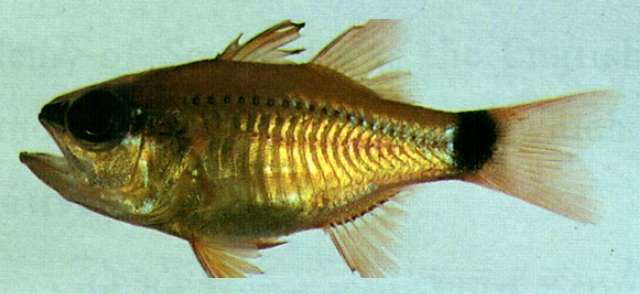

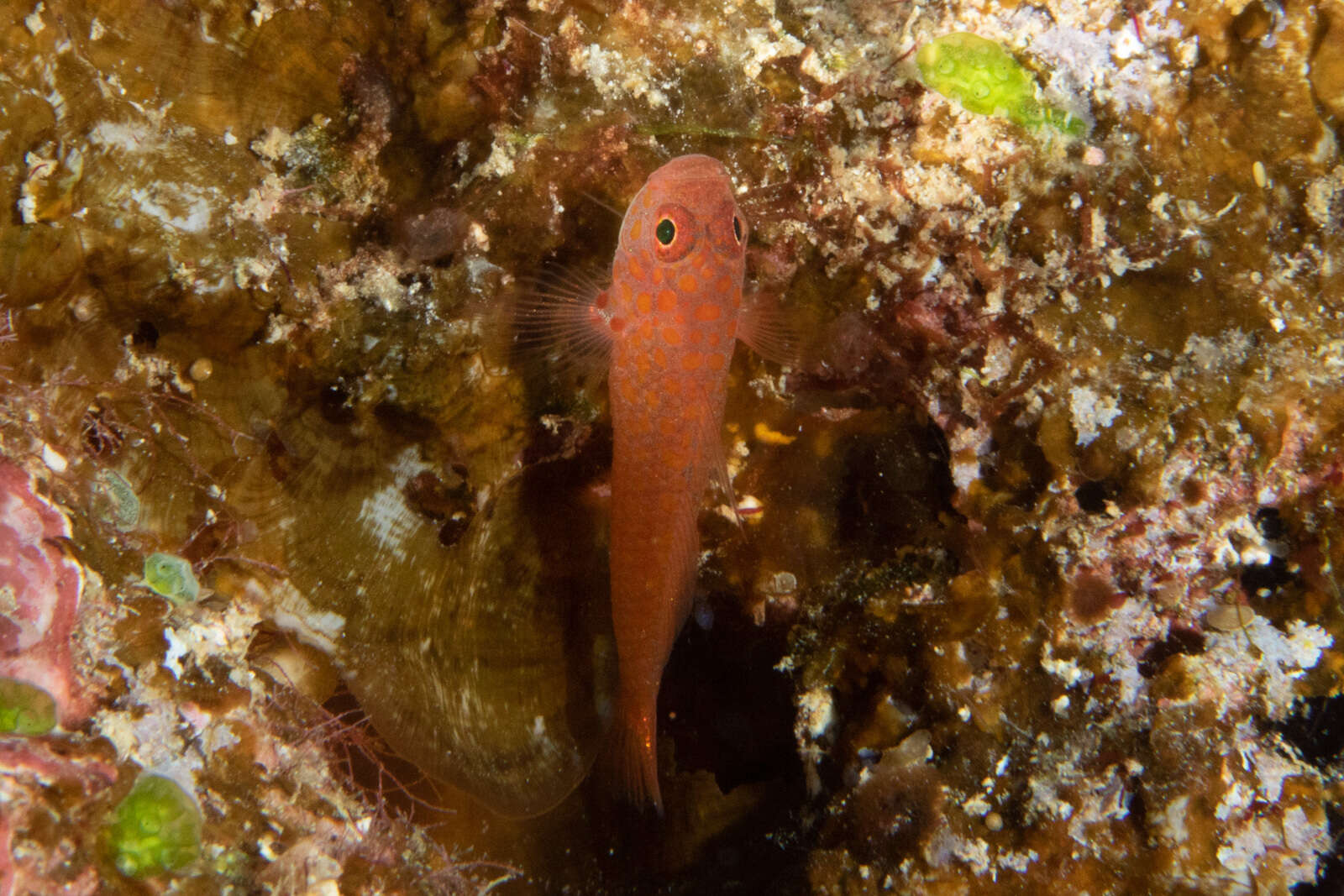
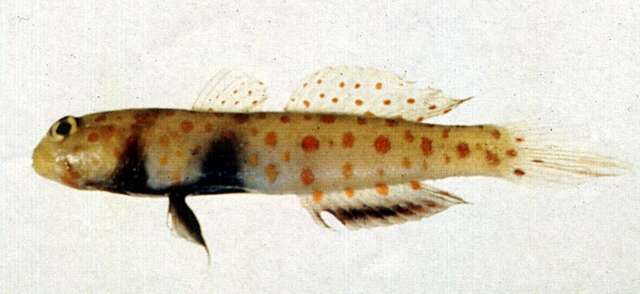


Species Identified
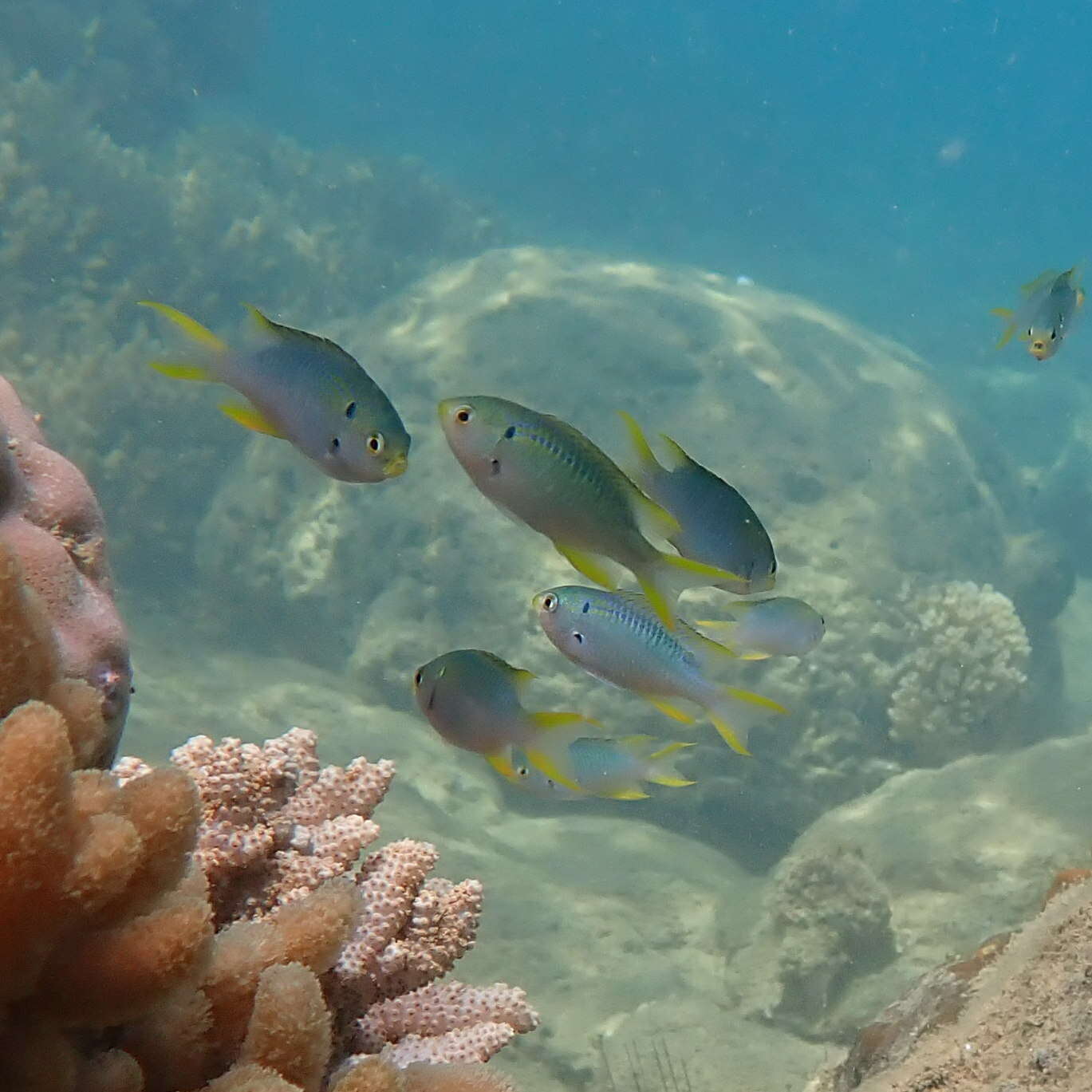
Chromis scotochiloptera Fowler, 1918 (Philippines chromis)
Inhabits seaward reef slopes , with caves and large crevices. Congregated in groups in caves when not feeding on plankton away from the reefs. Often see well away from shelter and in spread-out schools .
Chrysiptera glauca (Cuvier, 1830) (Grey demoiselle)
Occurs among rubble or consolidated reef rock of exposed intertidal reef flats and sandy beaches, subject to mild surge. Also near freshwater run-offs . Occurs in small groups. Feeds mainly on benthic algae.
Dischistodus pseudochrysopoecilus (Allen and Robertson, 1974) (Monarch damsel)
Inhabits lagoon reefs in areas of scattered live coral thickets interspersed with open areas of sand and dead coral .
Pomacentrus grammorhynchus Fowler, 1918 (Bluespot damsel)
Inhabits lagoons and passages among branching corals. Occurs solitarily or in small groups. Feeds mainly on benthic algae.
Abudefduf septemfasciatus (Cuvier, 1830) (Banded sergeant)
Inhabits lagoon and outer reefs in shallow areas exposed to mild or moderate surge. Feeds on benthic algae and small invertebrates. Highly territorial .
Pomacentrus stigma Fowler and Bean, 1928 (Blackspot damsel)
Inhabit inshore reefs. Found in small groups around coral outcrops .
Chromis elerae Fowler and Bean, 1928 (Twin-spot chromis)
Inhabits cave openings and crevices of steep outer reef slopes in small aggregations . May also be seen singly with black corals, large sponges or gorgonian fans. Minimum depth reported taken from Ref. 48636.
Chromis xanthura (Bleeker, 1854) (Black chromis)
Found in steep outer reef slopes and shallow coastal reef flats, sometimes forming large aggregations feeding on zooplankton several meters above the bottom. Juveniles remain close to shelter. Nests in small patches of loose sand under ledges or at the base of slopes .
Amblypomacentrus breviceps (Schlegel and Müller, 1839) (Black-banded demoiselle)
Inhabits lagoon and coastal areas . Found in sandy or silty areas around outcrops of rubble on sand, mud, sponge or rocks. Occurs singly or in small groups. Young often with anemones for protection .
Pomacentrus trilineatus Cuvier, 1830 (Threeline damsel)
Inhabits coral reefs and rocky inshore areas.
Amblyglyphidodon batunai Allen, 1995 (Green sergeant)
Occurs in silty lagoons with large staghorn coral colonies, usually congregating in small groups . It is usually encountered alone or in pairs and hovers to about one meter or so above the coral substratum. Relatively common at all sites where it has been observed.
Neopomacentrus nemurus (Bleeker, 1857) (Coral demoiselle)
Inhabits lagoon and inshore coral reefs, usually in areas where silting is prevalent. Aggregates over coral outcrops to feed on zooplankton .
Chromis agilis Smith, 1960 (Agile chromis)
Occurs in clear lagoon and seaward reefs, usually in loose aggregations near caves and ledges. Abundant over branching corals and leeward coasts . Benthopelagic .
Neopomacentrus cyanomos (Bleeker, 1856) (Regal demoiselle)
Inhabits inshore and offshore coral reefs; also in harbors and protected outer reef slopes and current prone habitats. Form schools in harbors in depths from near surface to about 25 m .
Neoglyphidodon crossi Allen, 1991 (Cross' damsel)
Inhabits shallow gutters of rocky areas or coral reefs of protected bays and lagoons. Solitary and shy . Often swimming near the surface .
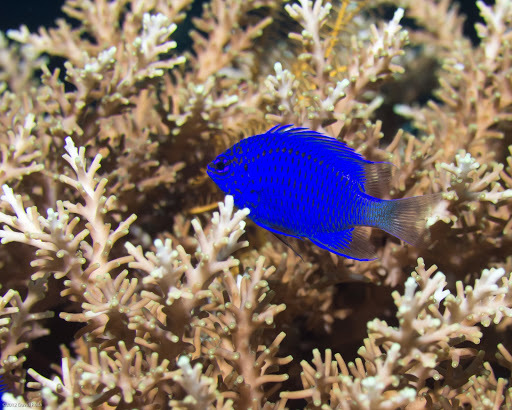
Chrysiptera springeri (Allen and Lubbock, 1976) (Springer's demoiselle)
Inhabit coral-rich areas of sheltered lagoon and inshore coral reefs . Seen with similar yellow-tailed species, often on the same coral patches. Mostly found in aggregations on coastal reef slopes with low Acropora patches on sand to 30 m .
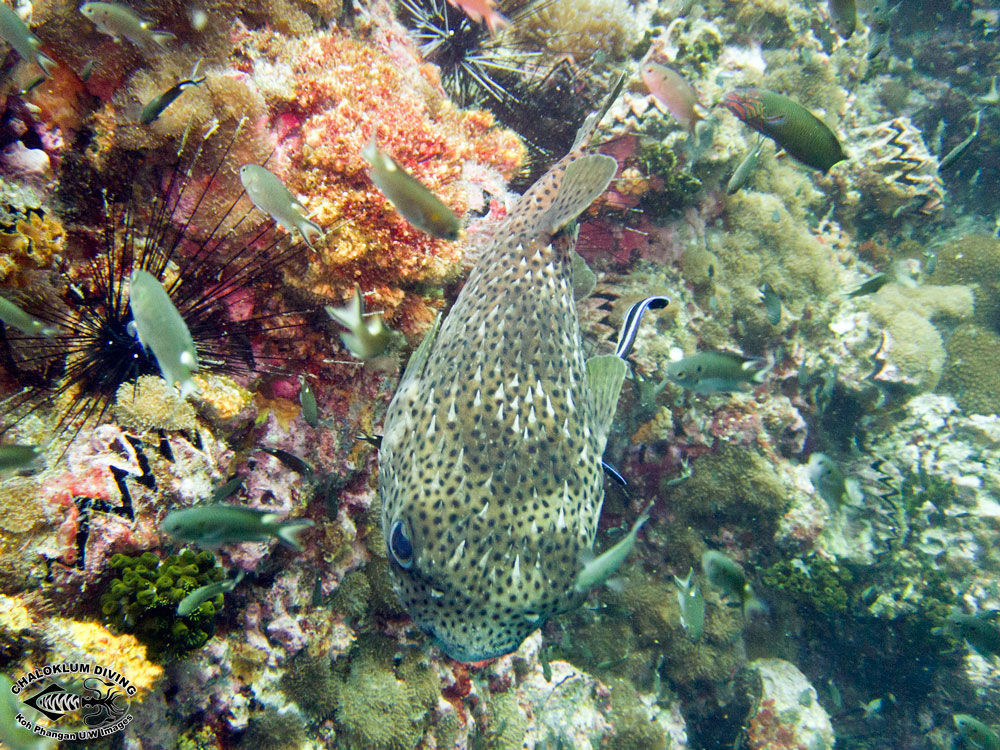
Diodon liturosus Shaw, 1804 (Black-blotched porcupinefish)
Inhabits reef edges and slopes . Hides in caves and ledges during the day and forages at night . Also found below plate-corals during the day and often deep, ranging to at least 40 meters depth. Juveniles occur in lagoo...
Read More
Read More
Diodon hystrix Linnaeus, 1758 (Spot-fin porcupinefish)
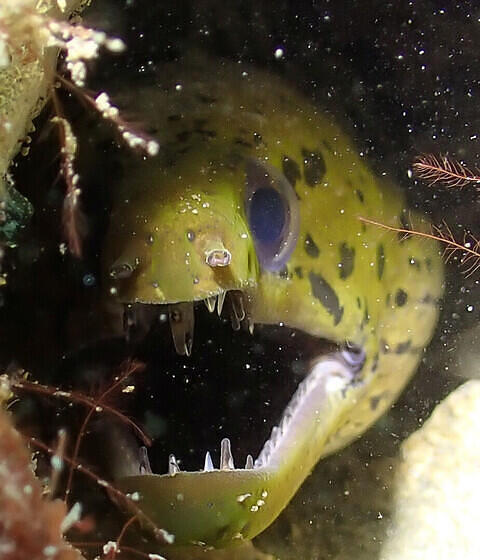
Gymnothorax fimbriatus (Bennett, 1832) (Fimbriated moray)
Occurs in lagoons, reef flats and seaward reefs . Prefers protected inshore waters among dead corals, common in harbors and small caves . Probably nocturnal . Feeds on fishes and crustaceans . Possibly a protogynous hermaphrodite .
Echidna nebulosa (Ahl, 1789) (Snowflake moray)
Found between rocks and corals of intertidal reef flats, also in shallow lagoon and seaward reefs to depths of at least 10 m . Are benthic . Feed mainly on crustaceans. Protogynous hermaphroditism unconfirmed for this species . Safely kept with small aquarium fishes .
Enchelycore schismatorhynchus (Bleeker, 1853) (White-margined moray)
Occurs in lagoon and seaward reefs .
Apogon fleurieu (Lacepède, 1802) (Cardinalfish)
Common in shallow coastal reefs with moderate currents . Also in tidal channels of estuaries . Adults usually in small schools comprising pairs .
Cirripectes polyzona (Bleeker, 1868) (Barred blenny)
Occur in algal ridge and ridge crests between surge channels of exposed seaward reefs to a depth of about 3 m . Benthic . Feed on algae and associated minute invertebrates like forams, ostracods, and gastropods. Oviparous . Eggs are demersal and adhesive .
Trimma macrophthalma (Tomiyama, 1936) (Flame goby)
Amblyeleotris guttata (Fowler, 1938) (Spotted prawn-goby)
Found in patches or expanses of coarse carbonate sand on outer lagoon and seaward reefs. Inhabits coastal to outer reef sand slopes to 25 meters depth .
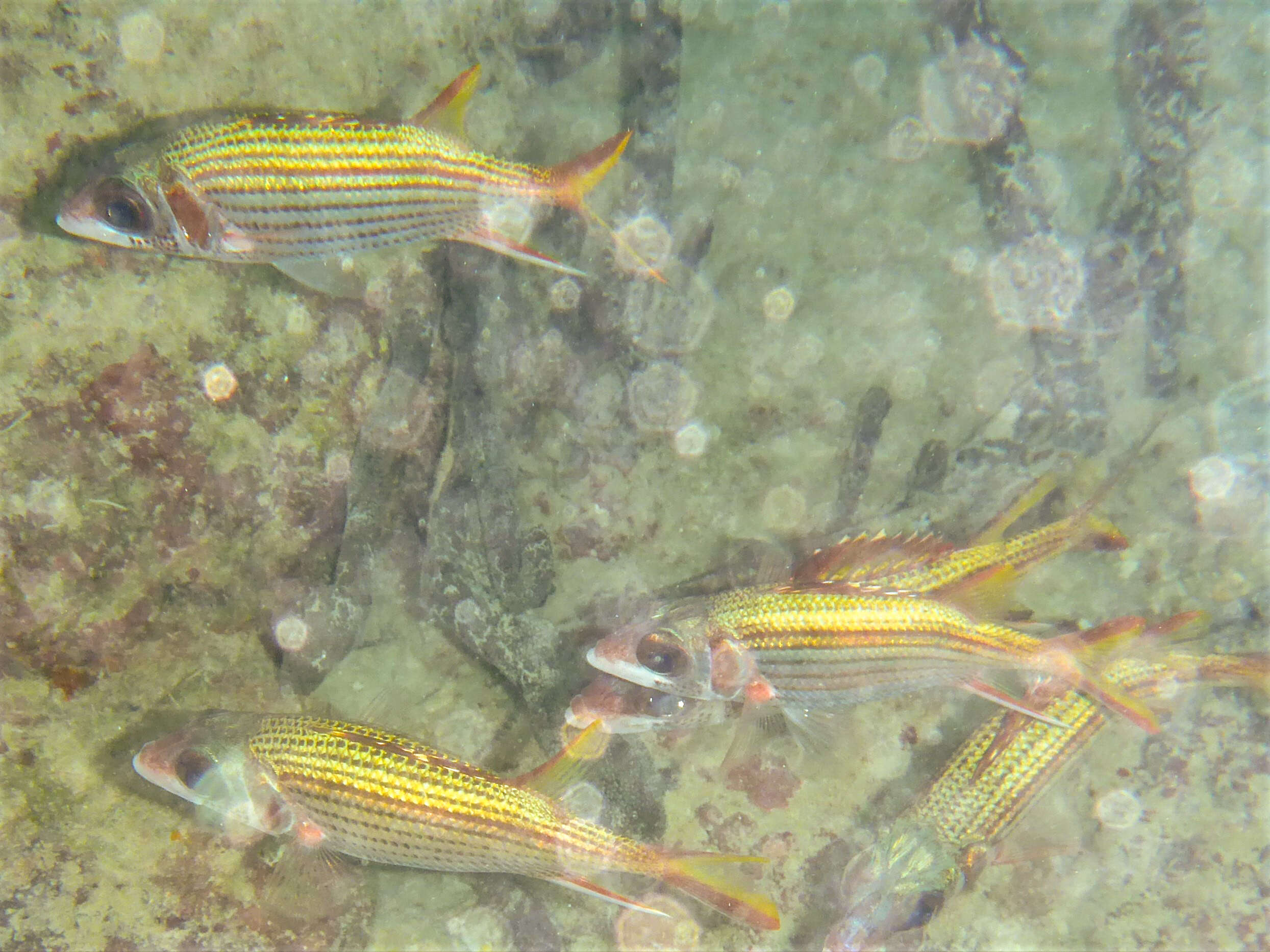
Neoniphon opercularis (Valenciennes, 1831) (Black squirrelfish)
Inhabits subtidal reef flats and lagoon and seaward reefs to depths of at least 20 m. Found singly or in small groups in coral-rich areas . Feeds mainly on benthic crabs and shrimps. Large spine at the corner of preope...
Read More
Read More
Sargocentron microstoma (Günther, 1859) (Smallmouth squirrelfish)
Inhabits virtually all coral reef zones . Benthopelagic in or near crevices and holes . Common in thickets of staghorn Acropora or in large Pocillopora heads . Feeds on small crustaceans, worms, and fishes during the ni...
Read More
Read More
Premnas biaculeatus (Bloch, 1790) (Spinecheek anemonefish)
Inhabits lagoon and seaward reefs , found mainly in protected coastal waters and lagoons. Typically found in pairs in which males are much smaller than females . Feeds primarily on zooplankton and benthic algae . Has been reared in captivity . Associated with the anemone Entacmaea quadricolor .
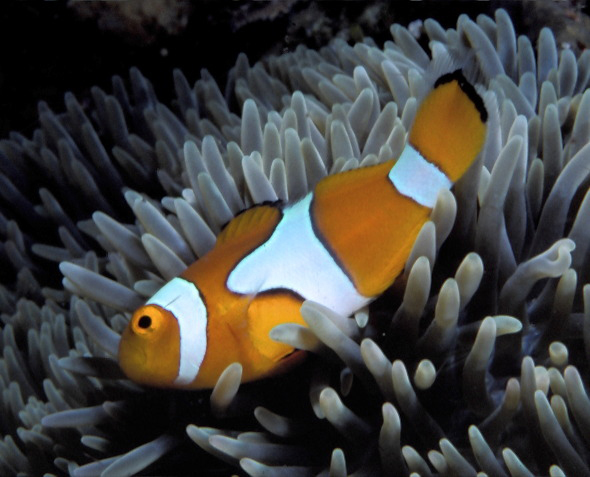
Amphiprion ocellaris Cuvier, 1830 (false clown anemonefish)
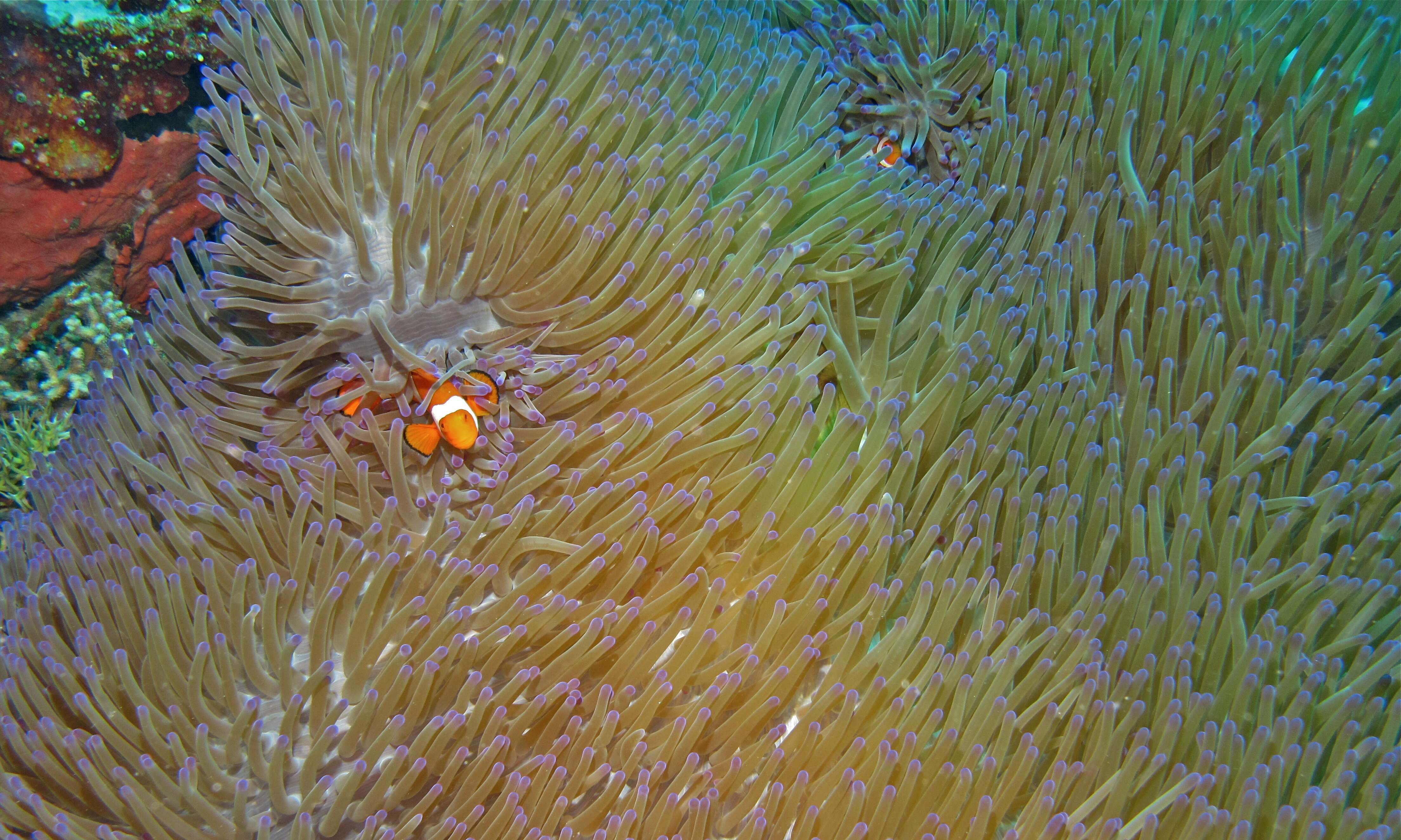
Amphiprion percula (Lacepède, 1802) (Orange clownfish)
Inhabits lagoon and seaward reefs . Each group of fish consists of a breeding pair and 0-4 non-breeders. Within each group there is a size-based hierarchy: the female is largest, the male is second largest, and the non-...
Read More
Read More
Share on Social Networks
- Facebook:

personalize your shared text as well as its destination (wall, page...) or send as a private message to a friend
- Twitter: Tweet personalize your tweet
- Google Plus:
Direct link to this dive
- Long link:
- Short link:


 We are participating today in the startup contest Techcrunch Disrupt. Support Diveboard by voting for us!
























































































2nd dive, even tide nice conditions at DBC. Drop in end of pier, S swim out to demolished sea mount, bad in pieces, but many fish there. Back across to pier area to area of many small coral heads I call the cemetary cause it looks like many same size headstones. Nice macro, water getting darker and silty with change of tide. Back to shallows and exit
multilevel
Highlight Fimbriated Moray eel near end of dive