


 Beachnutts



 Philippines
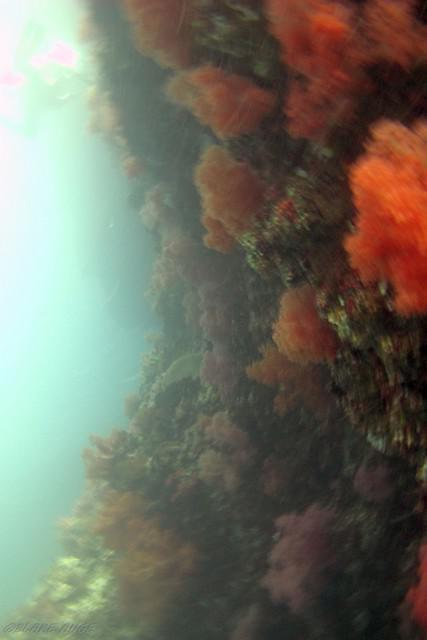
-
Nº27
 Date: 2022-06-15 - 12:35
-
 Max Depth: 22.6m Duration: 65mins
Dive Location

- Surface interval:72 mins
- Temp: Surf 27°C Bottom 27°C
- Dive type : Recreational, Cave, Photo
- Visibility: Average Water: Salt
Specific gear used
- BCD: Seac Sub - Portofino
- Camera: Canon - G12
- Computer: Oceanic - OCS
- Fins: Scubapro - Jet Fins
- Mask: Cressi Sub - Big Eyes
- Regulator: Aqualung - Titan LX
- Wet suit: Blue Ocean - Diveskin
- Weights: 4.1 kg
Dive reviews
| Overall review | ||
| Dive difficulty | ||
| Marine life quality |
Recent Divers in Gato lsland, Malapascua, Cebu

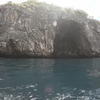
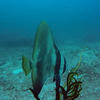
Recent Pictures in Gato lsland, Malapascua, Cebu
Dive Shop & Buddies
 Dive with Barry

Link to this spot:
- Spot:
- Country:
- Area:
- Body of water:
Dive Profile
- 1. Air
- 10L Aluminium 207 → 21 bar
- Average depth: 15m
Data provided by EOL.org






Species Identified
Apogon monospilus Fraser, Randall & Allen, 2002 (Yellow-eye cardinalfish)
Nocturnal species which inhabits coral reef . Most specimens were collected from deeper waters .
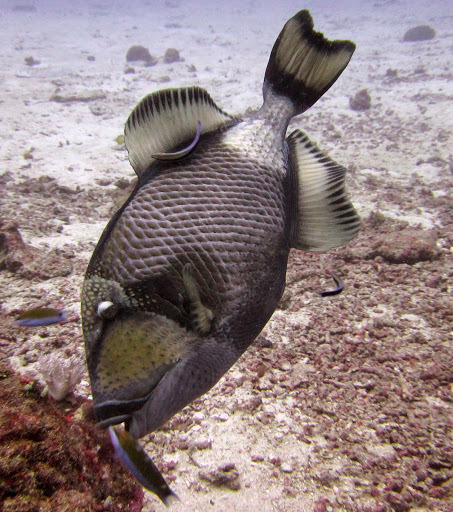
Balistoides viridescens (Bloch and Schneider, 1801) (Titan triggerfish)
Occur in lagoon, seaward reefs and sheltered inner reef slopes . Juveniles often associated with isolated patches of branching coral or rubble of shallow sandy protected areas. Adults occur singly or in pairs on the slo...
Read More
Read More
Balistapus undulatus (Park, 1797) (Orange-lined triggerfish)
Occurs in coral-rich areas of deep lagoon and seaward reefs from the lower surge zone to at least 50 meters, Ref. 48637. Feeds on a variety of benthic organisms such as algae, echinoderms, fishes, mollusks, tunicates, spo...
Read More
Read More
Placospongia melobesioides Gray, 1867
Luffariella variabilis (Polejaeff, 1884)
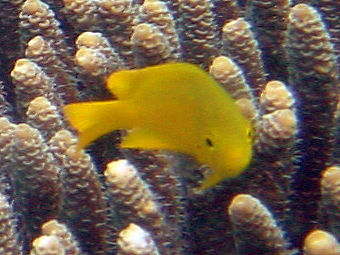
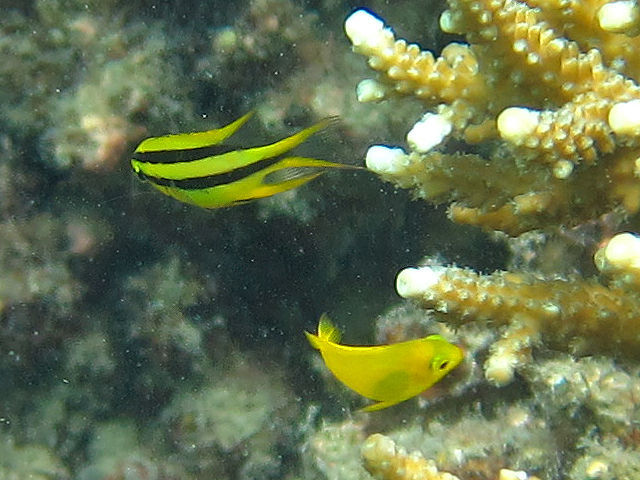
Pomacentrus moluccensis Bleeker, 1853 (Lemon damsel)
Inhabits clear lagoon and seaward reefs among branching corals. Occurs in small aggregations. Feeds mainly on algae and planktonic crustaceans.
Amblyglyphidodon curacao (Bloch, 1787) (Black-snouted sergeant-major)
Inhabits lagoons, coastal embayments, reef passages and outer reefs. Juveniles often found among Sarcophyton and Sinularia soft corals. Feeding aggregations are frequently observed over growths of the staghorn coral Acro...
Read More
Read More
Chromis weberi Fowler and Bean, 1928 (Weber's chromis)
Occurs singly or in small to large aggregations in passes and steep outer reef slopes.
Plectroglyphidodon lacrymatus (Quoy and Gaimard, 1825) (whitespeckled demoiselle)
Inhabits clear lagoon and seaward reefs, in areas with mixed coral and rubble or dead coral rocks. Feeds mainly on benthic algae and associated small invertebrates and fish eggs.
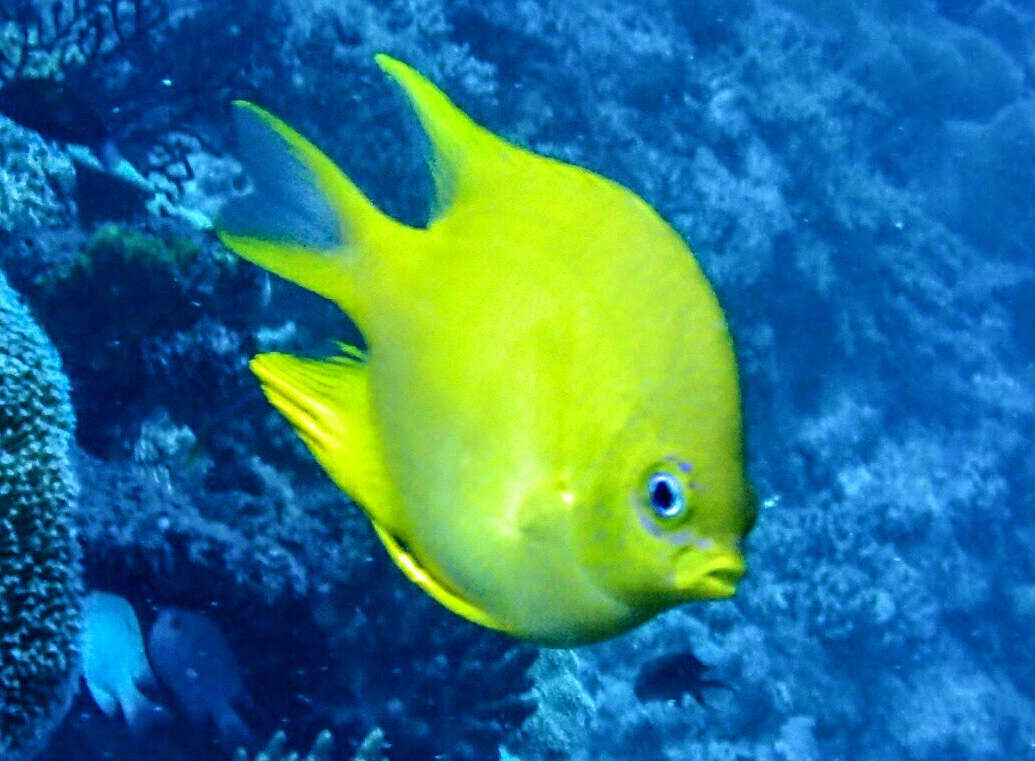
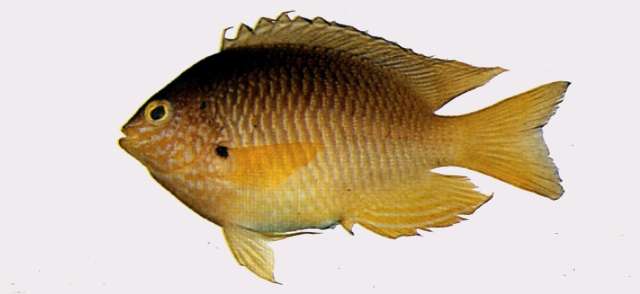
Amblyglyphidodon aureus (Cuvier, 1830) (Golden damsel)
Occurs in steep outer reef, occasionally in deep lagoons and along channel walls, usually in current prone habitats and where there are abundant gorgonian and long sea-whip corals on which they lay and guard eggs. Juvenil...
Read More
Read More
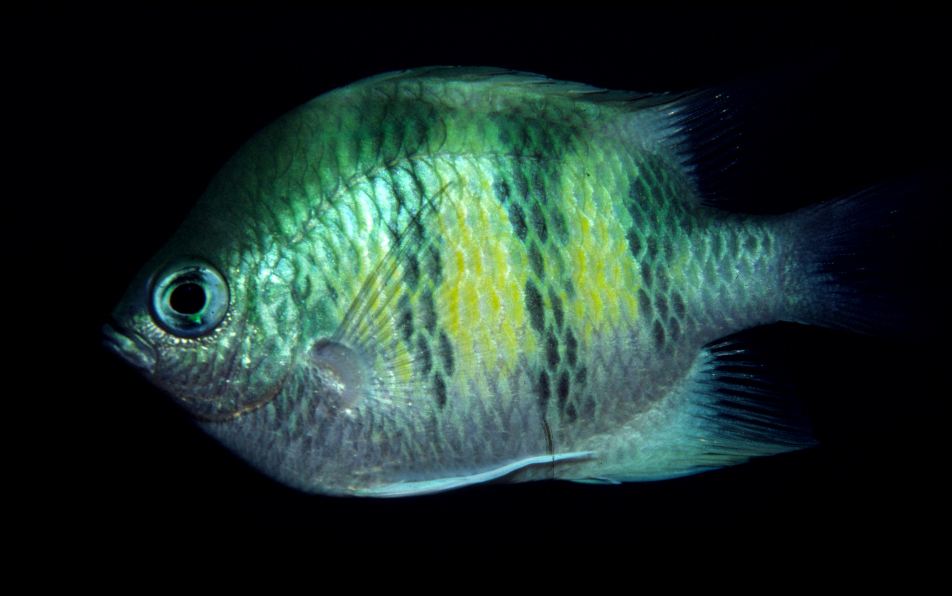
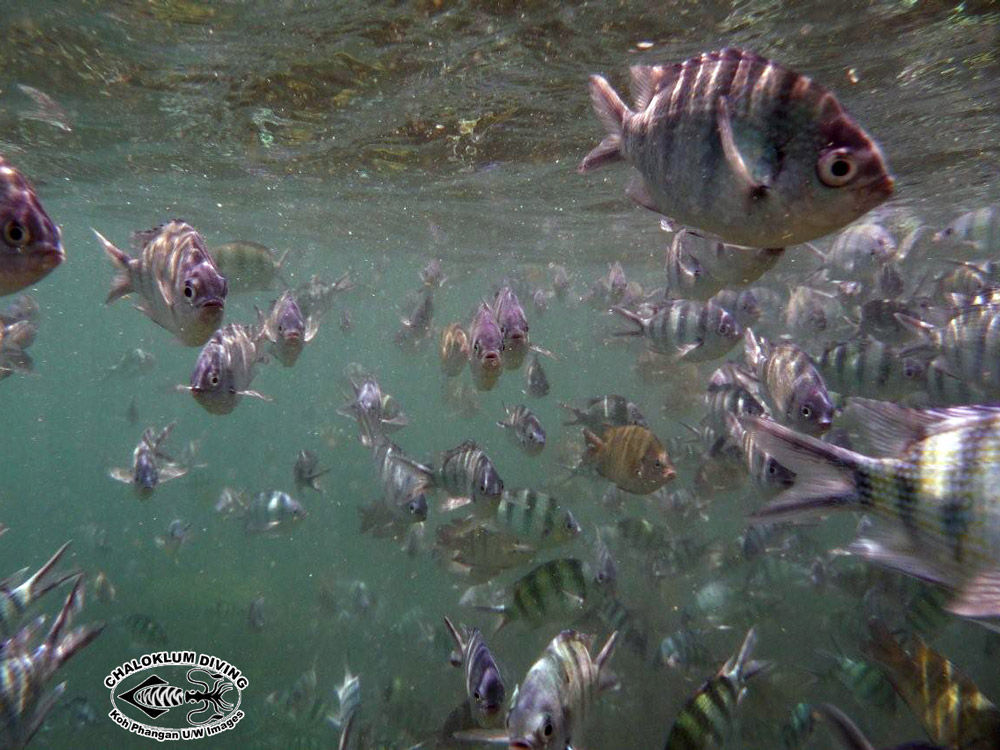
Abudefduf sexfasciatus (Lacepède, 1801) (Natal sergeant)
Inhabits inshore and offshore coral or rocky reefs. Also in shallow coastal reef flats or crests, usually where lots of tall soft corals or hydroid colonies are present . Feeds on zooplankton and algae and aggregates high in the water column .
Pomacentrus amboinensis Bleeker, 1868 (Ambon damsel)
An ubiquitous species found in lagoons, coastal reefs, passages and outer reef slopes. Inhabits sandy areas around coral or rock outcrops or other protective shelter. Usually in small groups . Feeds primarily on algae, but also takes zooplankton. Has been reared in captivity (Ref. 35404.
Neoglyphidodon melas (Cuvier, 1830) (black damselfish)
Found in coral-rich areas of lagoon and seaward reefs and usually associated with soft corals on which it feeds . Occur singly or in pairs . Juveniles are encountered in around staghorn Acropora corals . Adults often near Tridacna clams and may feed on their feces .
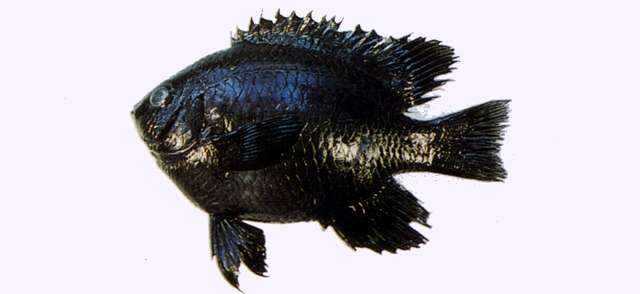
Neoglyphidodon nigroris (Cuvier, 1830) (Yellowfin damsel)
Two forms: long-tailed and black as adults occurs in the Andaman Sea, ranging east to western Bali and north to Japan. Second form, probably valid as N. xanthurus occurs in the rest of the West Pacific and the two overla...
Read More
Read More
Dascyllus aruanus (Linnaeus, 1758) (black-and-white damselfish)
Territorial, inhabit shallow lagoon and subtidal reef flats. Form large aggregations above staghorn Acropora thickets or in smaller groups above isolated coral heads. Feed on zooplankton, benthic invertebrates, and algae...
Read More
Read More
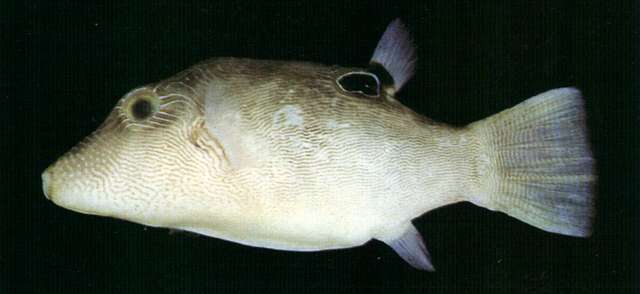
Canthigaster compressa (Marion de Procé, 1822) (Compressed toby)
Inhabits sandy areas of shallow lagoons and channels . Also found in silty bays or harbors around wharf pilings. Adults usually in pairs .
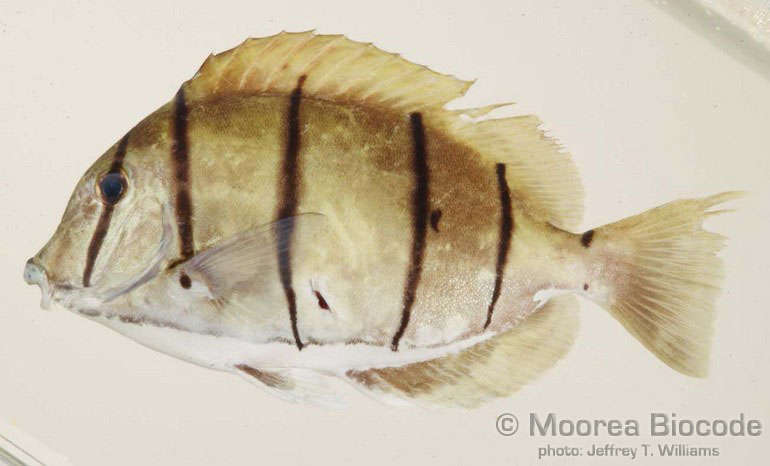
Acanthurus triostegus (Linnaeus, 1758) (Convict surgeonfish)
Occur in lagoon and seaward reefs with hard substrate; young abundant in tide pools . Benthopelagic . Often feeding near freshwater run-offs where certain algae grow on rocks that are grazed . Occasionally form schools;...
Read More
Read More
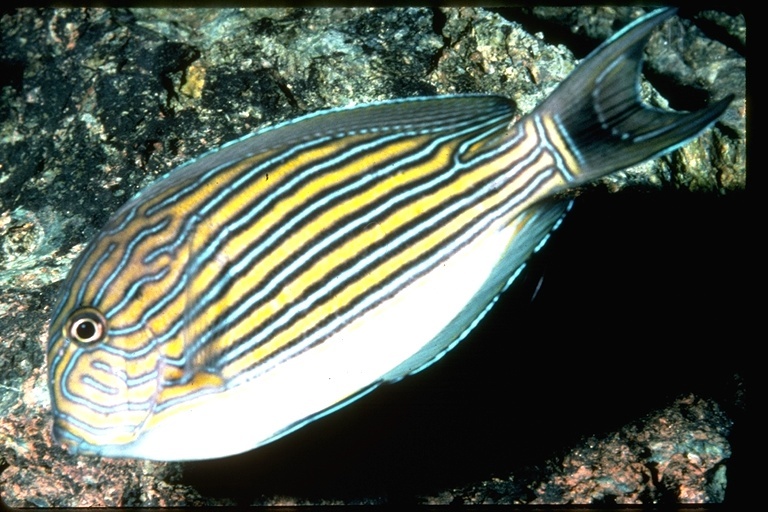
Acanthurus lineatus (Linnaeus, 1758) (Blue banded surgeonfish)
A territorial species which is common in surge zones of exposed seaward reefs. The large male controls well-defined feeding territories and harems of females . Benthopelagic . Adult usually forms schools and commonly f...
Read More
Read More
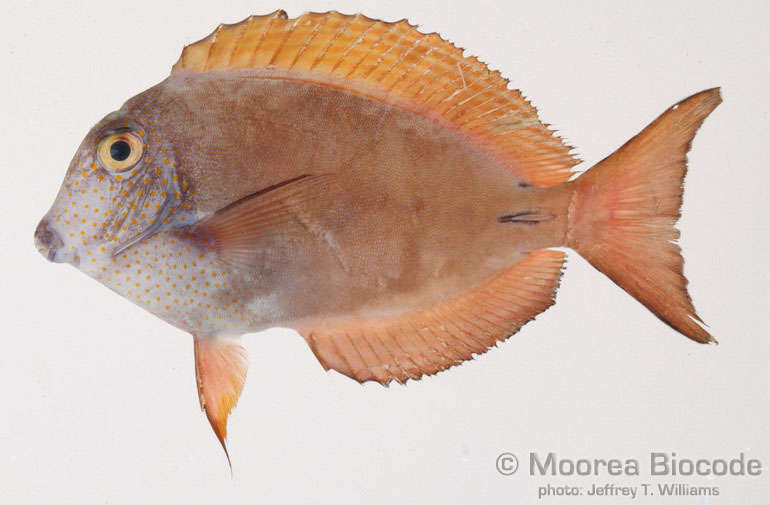
Acanthurus nigrofuscus (Forsskål, 1775) (Brown surgeonfish)
Found on hard substrates of shallow lagoon and seaward reefs from the lower surge zone to a depth of more than 15 m . Benthopelagic . Feed on filamentous algae. Form spawning aggregations . Adults usually in small grou...
Read More
Read More
Share on Social Networks
- Facebook:

personalize your shared text as well as its destination (wall, page...) or send as a private message to a friend
- Twitter: Tweet personalize your tweet
- Google Plus:
Direct link to this dive
- Long link:
- Short link:


 We are participating today in the startup contest Techcrunch Disrupt. Support Diveboard by voting for us!
























































































2nd dive Gato Island, trying to wait for less current, day after Full Strawberry moon. Tunnel was fun, but crowded, not much spotted after tunnel. DM had issues using Suunto Zoop computer AGAIN!!
DISAPPOINTING
PO2 0.68