


 Beachnutts



 Philippines
-
Nº158
 Date: 2024-12-07 - 11:24
-
 Max Depth: 23.8m Duration: 96mins
Dive Location

- Temp: Surf 27°C Bottom 27°C
- Dive type : Recreational, Drift, Reef, Photo
- Visibility: Excellent Water: Salt
Specific gear used
- BCD: Scubapro - Glide Plus
- Camera: Olympus - TG6
- Compass:
- Computer: Oceanic - OCS
- Fins: Scubapro - Jet Fins
- Lift bag: ScubaMax - SMB
- Light: Sofirn - SD05
- Mask: Promate - Scope
- Regulator: SEAC - Synchro
- Wet suit: Blue Ocean - Diveskin
- Weights: 3.2 kg
Dive reviews
| Overall review | ||
| Dive difficulty | ||
| Marine life quality |
Recent Divers in Samal island, Davao
Recent Pictures in Samal island, Davao
Dive Shop & Buddies
 Dive with Reymar Tano
 Dive buddies:
Reymar Tano,
Beachnutts

Link to this spot:
- Spot:
- Country:
- Area:
- Body of water:
Dive Profile
- 1. Air
- 10L Aluminium 207 → 21 bar
- Average depth: 15.8m
Data provided by EOL.org











Species Identified
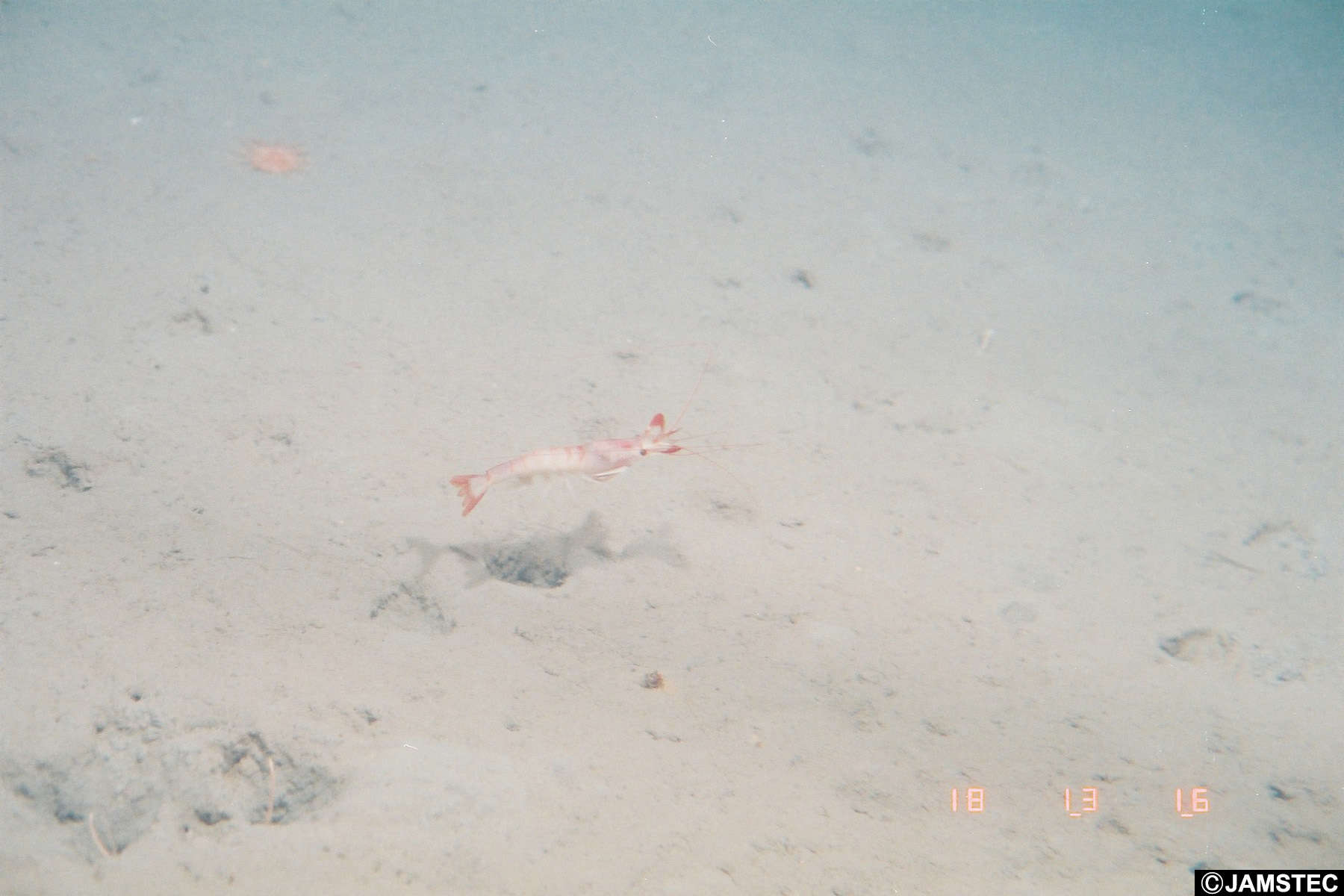
Aristeus virilis (Bate, 1881) (stout red shrimp)
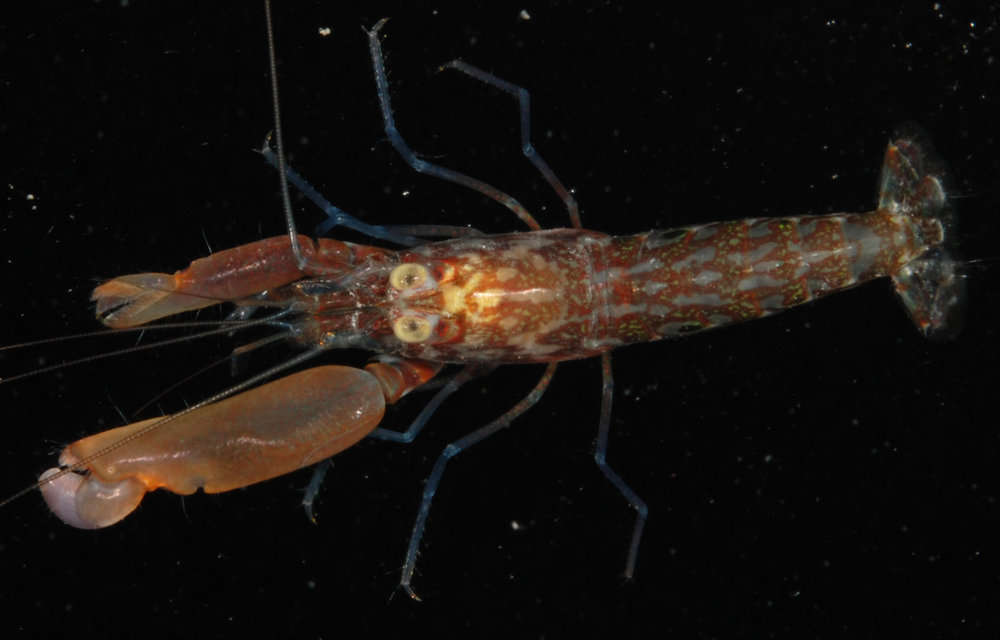
Alpheus gracilipes Stimpson, 1860 (daisy snapping shrimp)
Corycaeus speciosus Dana, 1849
Dendrochirus zebra (Cuvier, 1829) (Zebra turkeyfish)
Found on coral, rubble, or rock bottoms of reef flats ; also in coastal to outer reef habitats in sheltered lagoons and in caves, sometimes in small aggregations. Usually shallow, from 3-60m but also reported to 80 m dep...
Read More
Read More
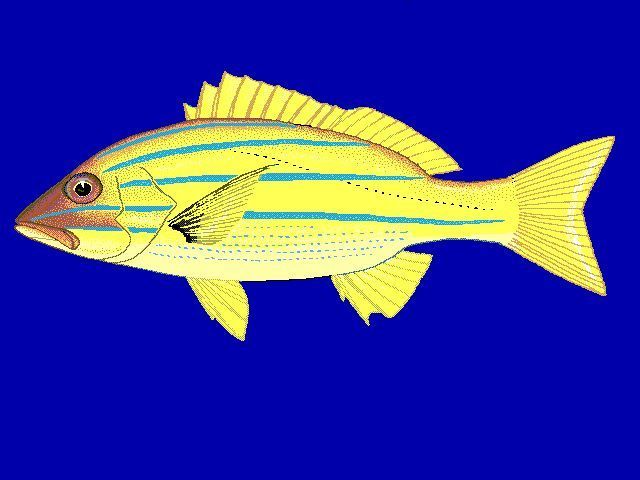
Lutjanus carponotatus (Richardson, 1842) (Spanish flag snapper)
Inhabits coral reefs in both sheltered lagoons and on outer reef slopes. Often encountered in schools of up to 20 to 30 individuals.
Lutjanus fulvus (Forster, 1801) (flame-colored snapper)
Inhabit lagoon and semi-protected seaward reefs . Prefer sheltered areas with deep holes or large boulders . Benthopelagic . Juveniles sometimes found in shallow mangrove swamps and the lower parts of freshwater streams. Feed at night on fishes, shrimps, crabs, holothurians and cephalopods .
Lutjanus kasmira (Forsskål, 1775) (bluebanded sea perch)
Lutjanus fulviflamma (Forsskål, 1775) (Dory snapper)
Inhabit coral reefs . Often in large aggregations with Lutjanus kasmira and Lutjanus lutjanus . Juveniles are sometimes found in mangrove estuaries or in the lower reaches of freshwater streams. Adults usually school on...
Read More
Read More
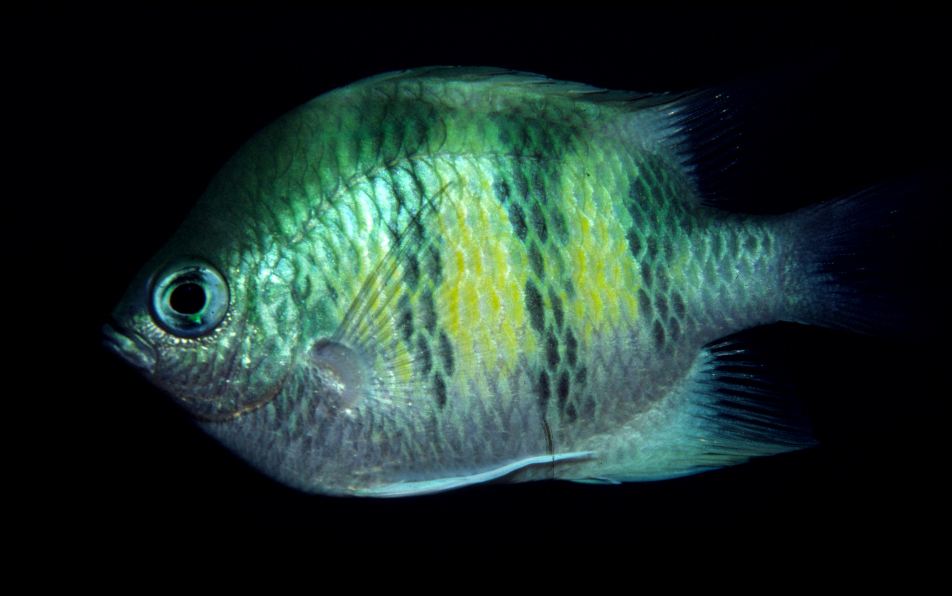
Amblyglyphidodon curacao (Bloch, 1787) (Black-snouted sergeant-major)
Inhabits lagoons, coastal embayments, reef passages and outer reefs. Juveniles often found among Sarcophyton and Sinularia soft corals. Feeding aggregations are frequently observed over growths of the staghorn coral Acro...
Read More
Read More
Pomacentrus brachialis Cuvier, 1830 (Charcoal damsel)
Found in passages and outer reef slopes ; also in current prone and clear water reef flats to 40 m depth . Occurs singly or in small groups . Feeds on zooplankton and benthic algae .
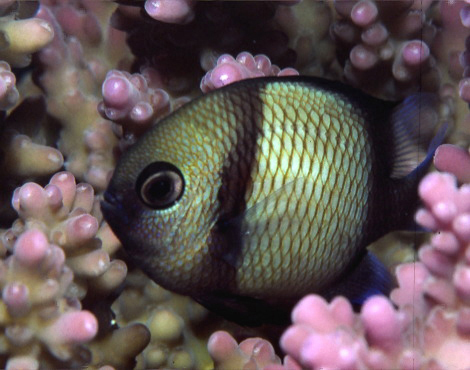
Dascyllus aruanus (Linnaeus, 1758) (black-and-white damselfish)
Territorial, inhabit shallow lagoon and subtidal reef flats. Form large aggregations above staghorn Acropora thickets or in smaller groups above isolated coral heads. Feed on zooplankton, benthic invertebrates, and algae...
Read More
Read More
Dascyllus trimaculatus (Rüppell, 1829) (threespot humbug)
Inhabits coral and rocky reefs, juveniles often commensal with large sea anemones, sea urchins, or small coral heads . Occurs in small to large aggregations. Stomach contents include algae, copepods, and other planktonic crustaceans.
Plectroglyphidodon lacrymatus (Quoy and Gaimard, 1825) (whitespeckled demoiselle)
Inhabits clear lagoon and seaward reefs, in areas with mixed coral and rubble or dead coral rocks. Feeds mainly on benthic algae and associated small invertebrates and fish eggs.
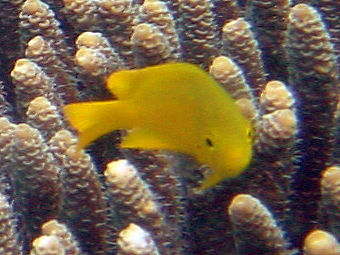
Pomacentrus moluccensis Bleeker, 1853 (Lemon damsel)
Inhabits clear lagoon and seaward reefs among branching corals. Occurs in small aggregations. Feeds mainly on algae and planktonic crustaceans.
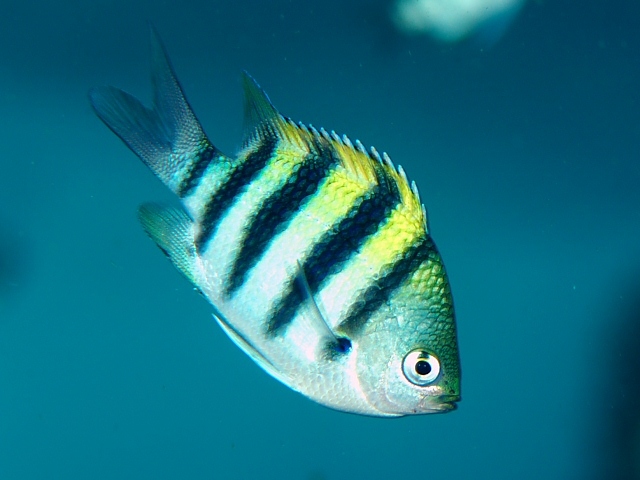
Abudefduf vaigiensis (Quoy and Gaimard, 1825) (Five finger)
Adults inhabit upper edge of outer reef slopes and inshore rocky reefs. Juveniles associated with drifting seaweed . Benthopelagic . Feed on zooplankton, benthic algae, and small invertebrates . Often in aggregations ...
Read More
Read More
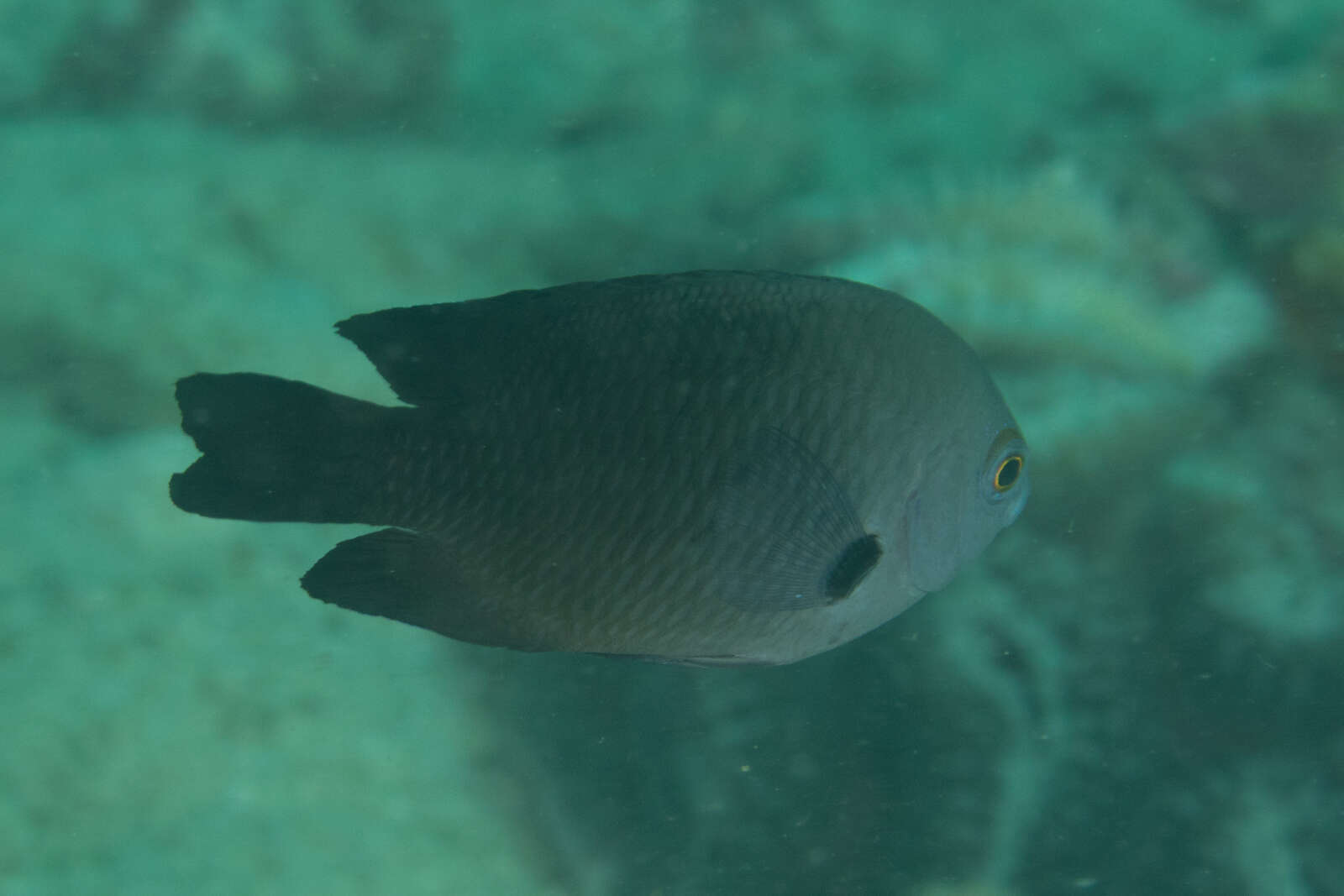
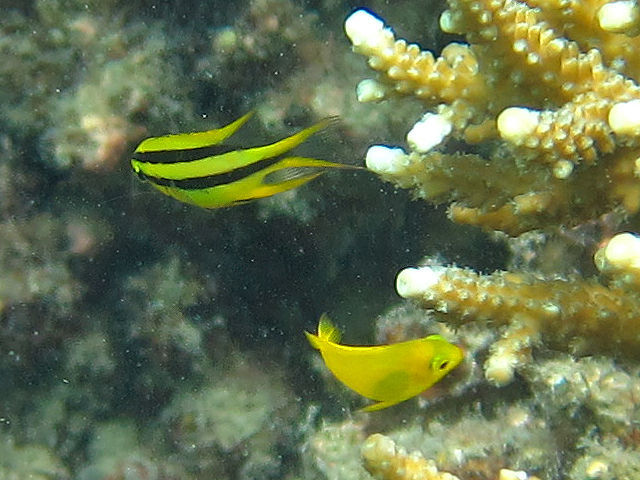
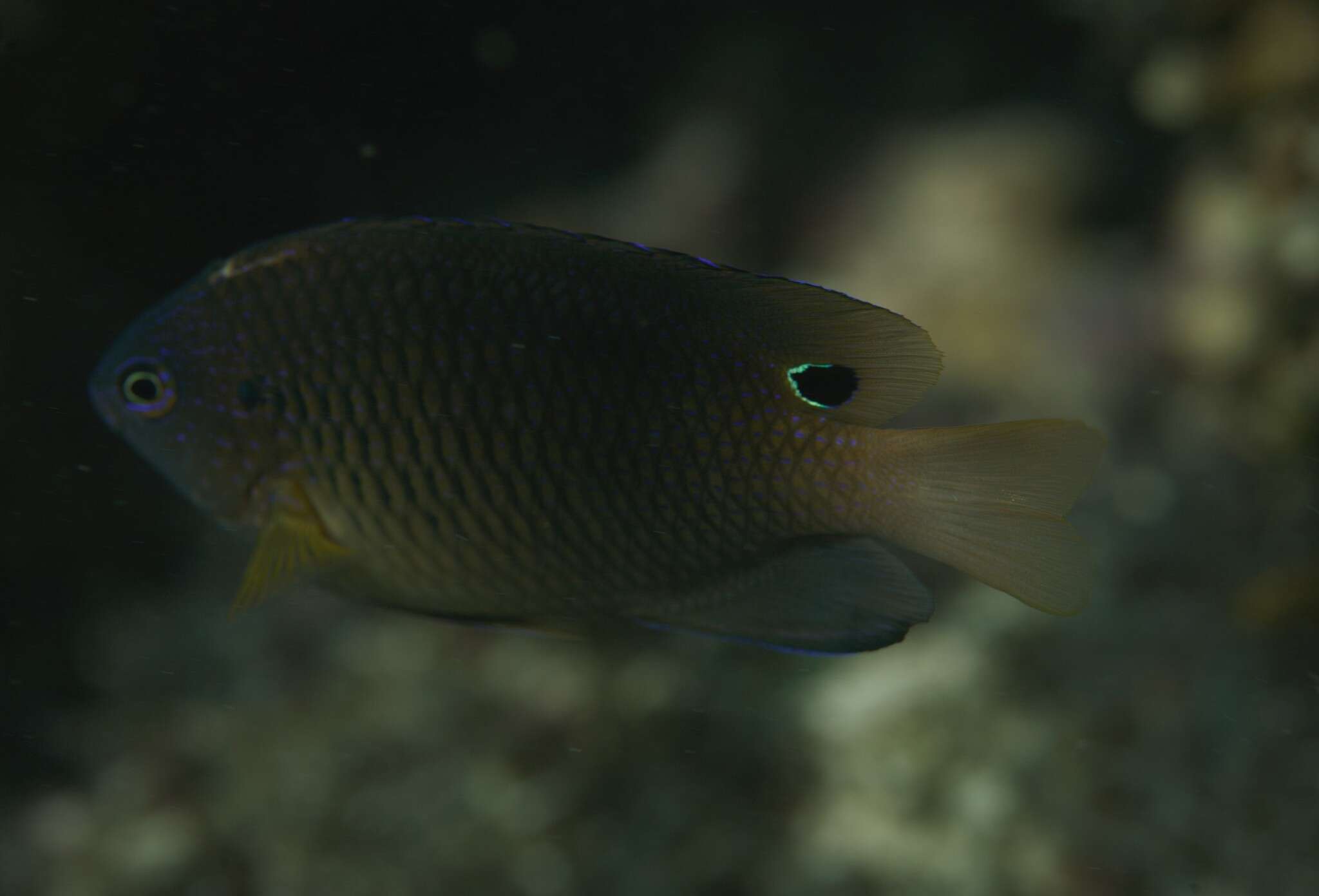
Neoglyphidodon nigroris (Cuvier, 1830) (Yellowfin damsel)
Two forms: long-tailed and black as adults occurs in the Andaman Sea, ranging east to western Bali and north to Japan. Second form, probably valid as N. xanthurus occurs in the rest of the West Pacific and the two overla...
Read More
Read More
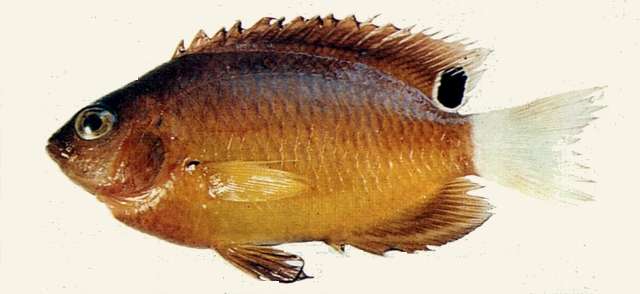
Pomacentrus bankanensis Bleeker, 1853 (Speckled damselfish)
Occurs solitarily or in small groups in lagoons, reef flats, passages, and outer reef slopes. Usually amongst coarse rubble or rock . Feeds primarily on algae, but also takes copepods, isopods, and pelagic tunicates.
Pomacentrus adelus Allen, 1991 (Obscure damsel)
Inhabits lagoon, coastal and seaward reefs , usually on open rubble patches .
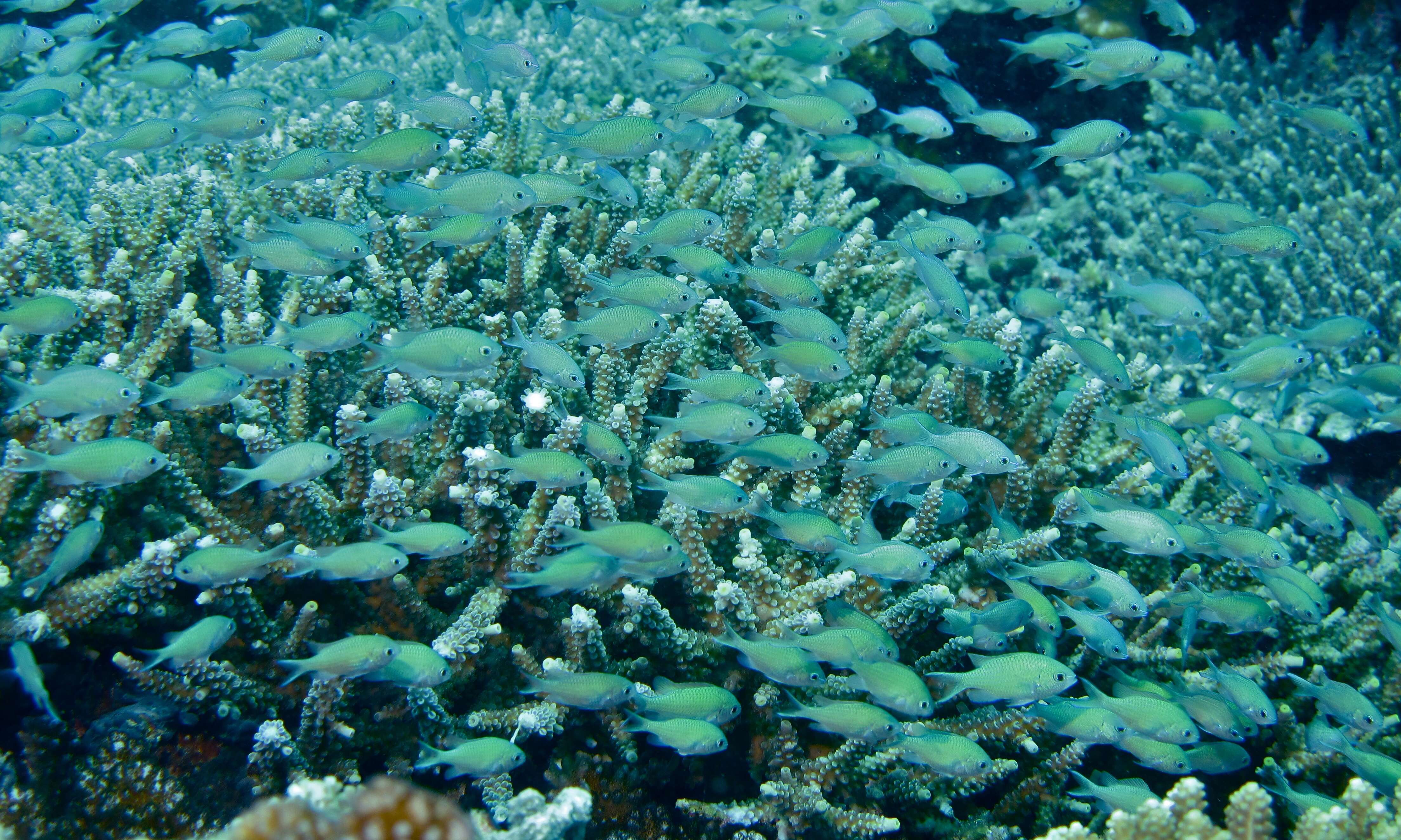
Chromis viridis (Cuvier, 1830) (blue-green chromis)
Found in large aggregations above thickets of branching Acropora corals in sheltered areas such as subtidal reef flats and lagoons. Juveniles closely tied to individual coral heads . Phytoplankton feeders. Breeding is d...
Read More
Read More
Dascyllus reticulatus (Richardson, 1846) (twostriped damselfish)
Occurs in outer lagoon and seaward reefs. Inhabits branching coral heads, particularly Pocillopora eydouxi. Forms schools, often in silty habitats . Male prepares a nest by cleaning with its mouth a rock or coral surface where the female will attach the eggs .
Amblyglyphidodon leucogaster (Bleeker, 1847) (goldenscaled damselfish)
Inhabits lagoons, reef passages, and the outer reef slopes as solitary individuals or in small groups. Feeds on copepods, amphipods, mysids, fish eggs, crustacean larvae, and a small portion of algae.
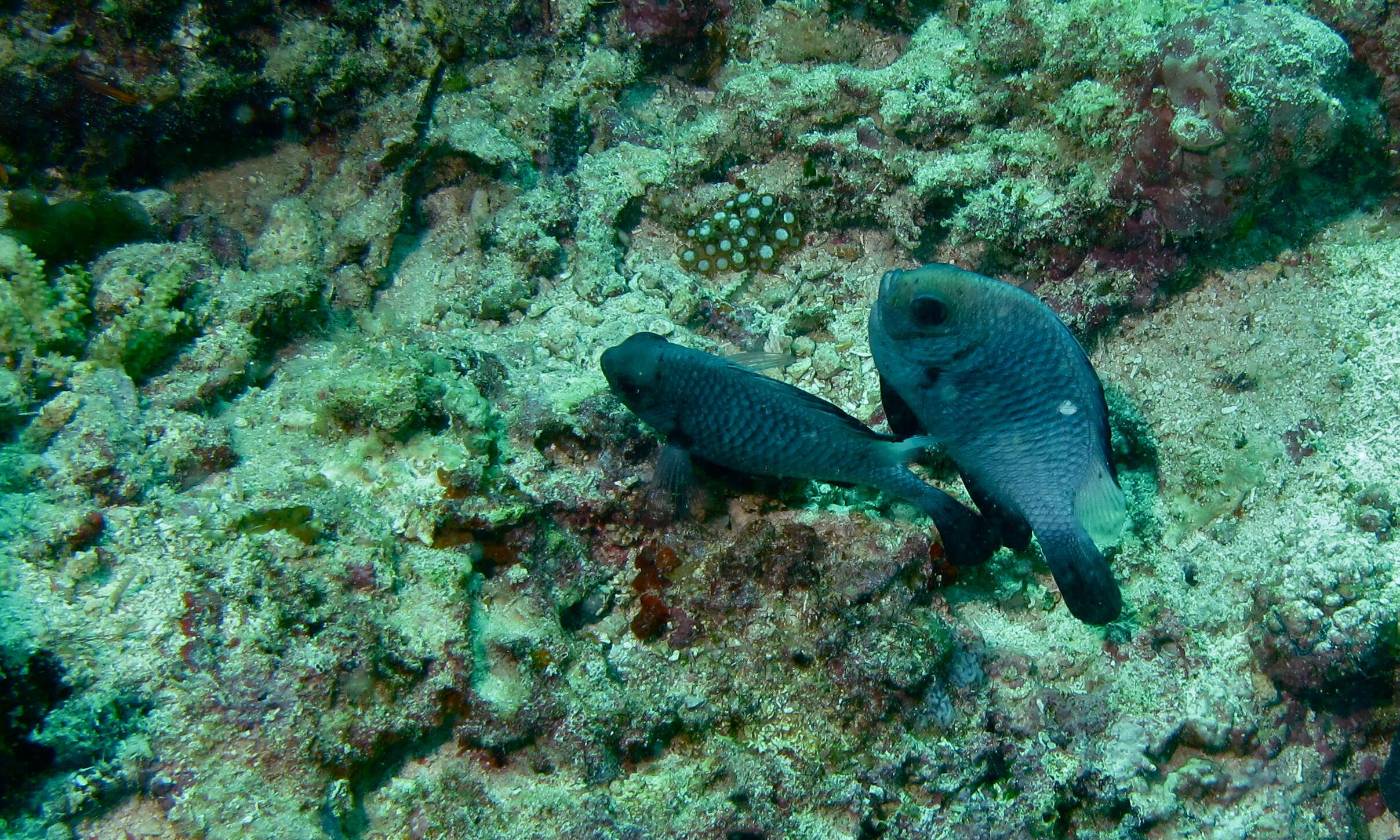
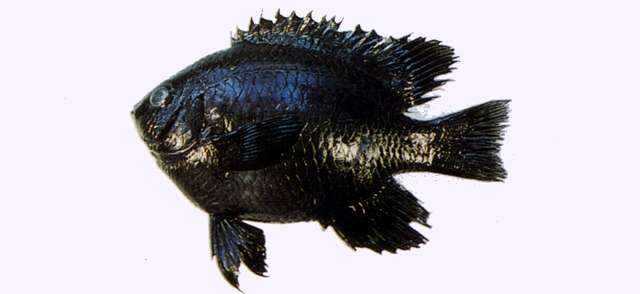
Neoglyphidodon melas (Cuvier, 1830) (black damselfish)
Found in coral-rich areas of lagoon and seaward reefs and usually associated with soft corals on which it feeds . Occur singly or in pairs . Juveniles are encountered in around staghorn Acropora corals . Adults often near Tridacna clams and may feed on their feces .
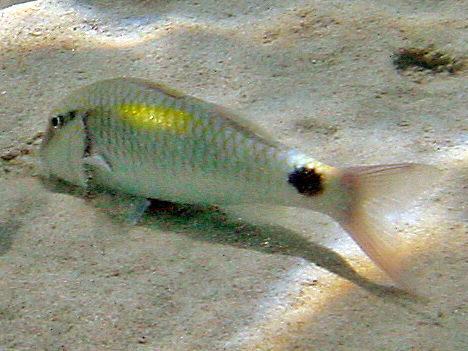
Parupeneus indicus (Shaw, 1803) (Indian goatfish)
Inhabit shallow sandy or silty areas of coastal and inner lagoon reefs . Occur singly or in schools . Large adults usually at moderate depths to about 30 m . Feed on benthic invertebrates; the diet including small crab...
Read More
Read More
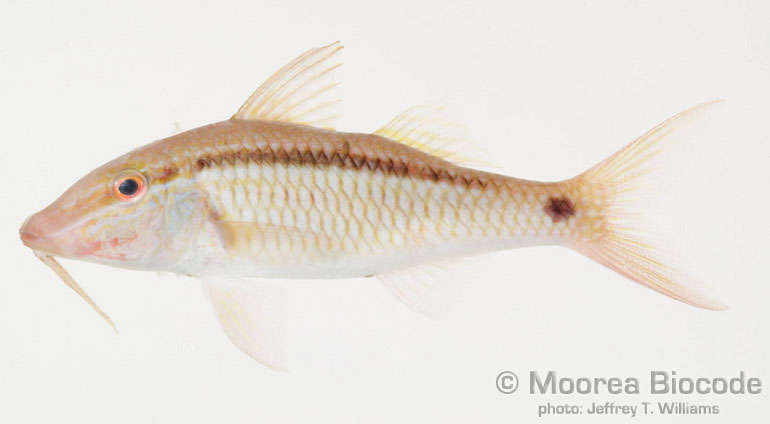
Parupeneus barberinus (Lacepède, 1801) (Dash-and-dot goatfish)
One of the most abundant species of Parupeneus . Inhabits large sand patches as well as sand and rubble areas of reef flats, and lagoon and seaward reefs to a depth of about 100 m. Forages on sand-dwelling invertebrates ...
Read More
Read More
Parupeneus trifasciatus (Lacepède, 1801) (threebarred goatfish)
This occasionally schooling species inhabits lagoon and seaward reefs: juveniles on reef flats, adults tend to occur around rocky or coralline areas of high vertical relief. Feeds on crustaceans at daytime and on fishes ...
Read More
Read More
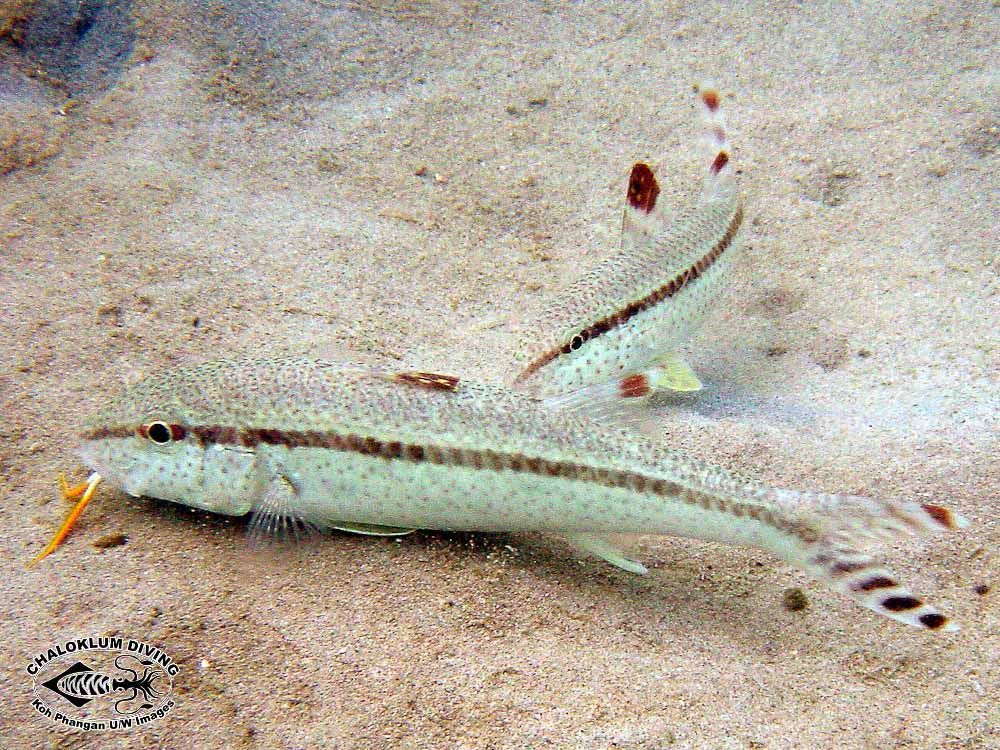
Upeneus tragula Richardson, 1846 (Freckled goatfish)
Found over sand and mud bottoms near coral reefs . Known to enter lower reaches of rivers. Generally solitary , but forms small to moderately large aggregations at all sizes . Minimum depth from Ref. 3470.
Antennarius commerson (Latreille, 1804) (Big angler)
Antennarius avalonis Jordan and Starks, 1907 (Frogfish)
Pentaceraster cumingi (Gray, 1840)
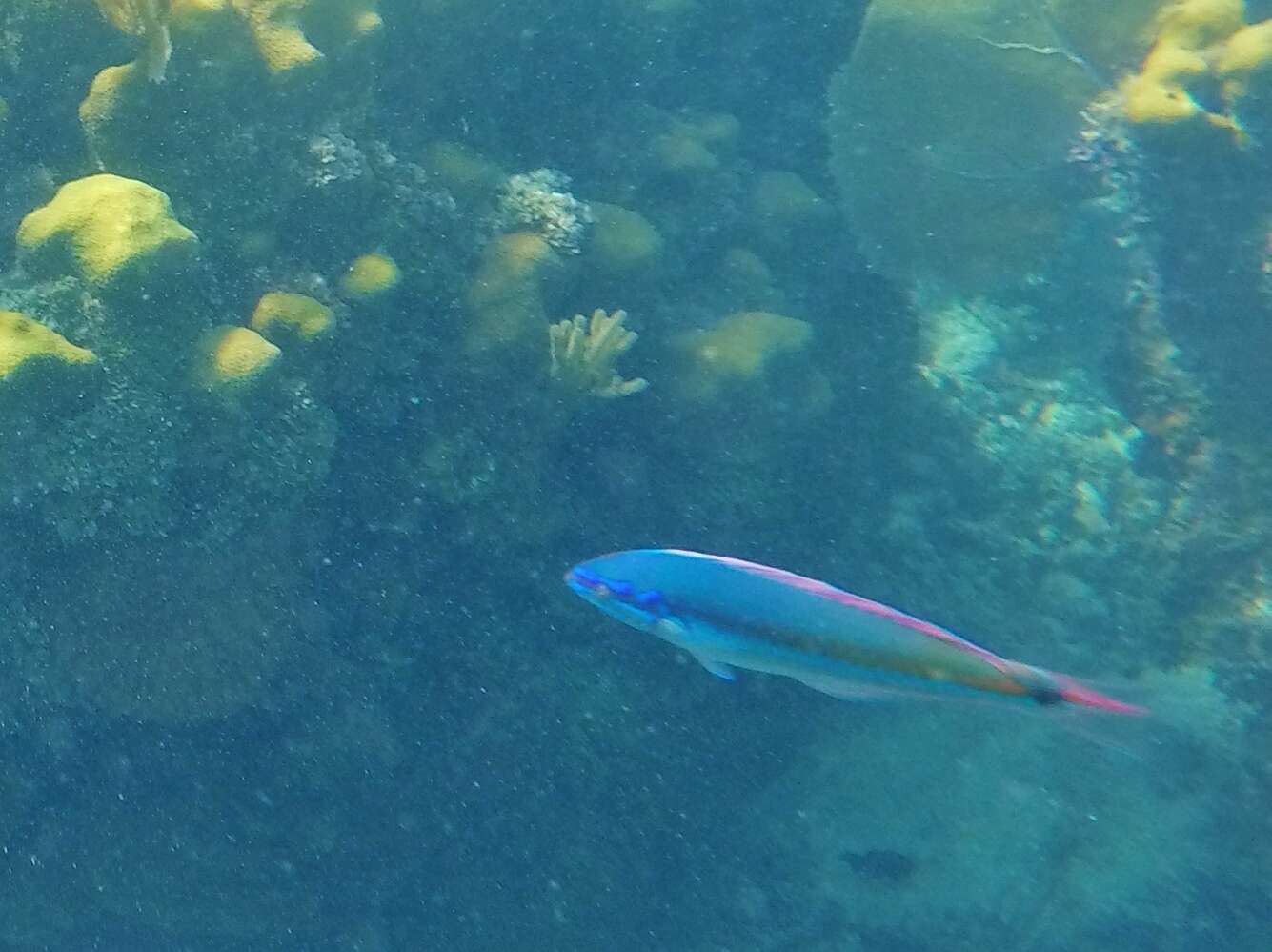
Halichoeres pictus (Poey, 1860) (painted wrasse)
Inhabits coral reefs, normally high above the bottom. Swims with worm-like movements. Feeds on various invertebrates. A protogynous hermaphrodite . Generally of no interest to fisheries because of its small average size .
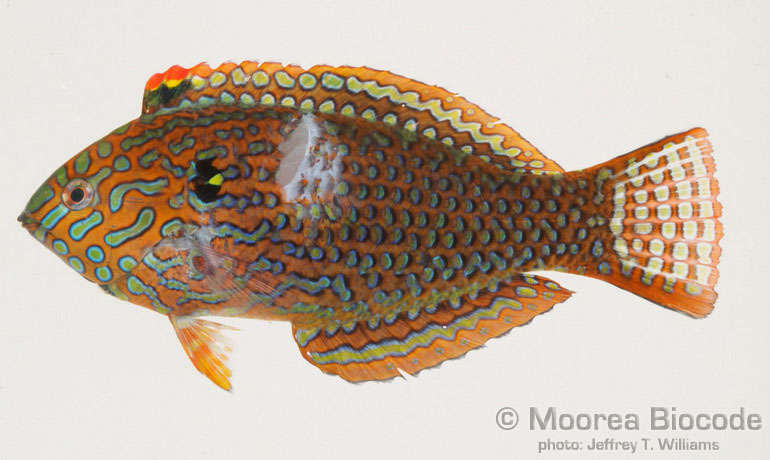
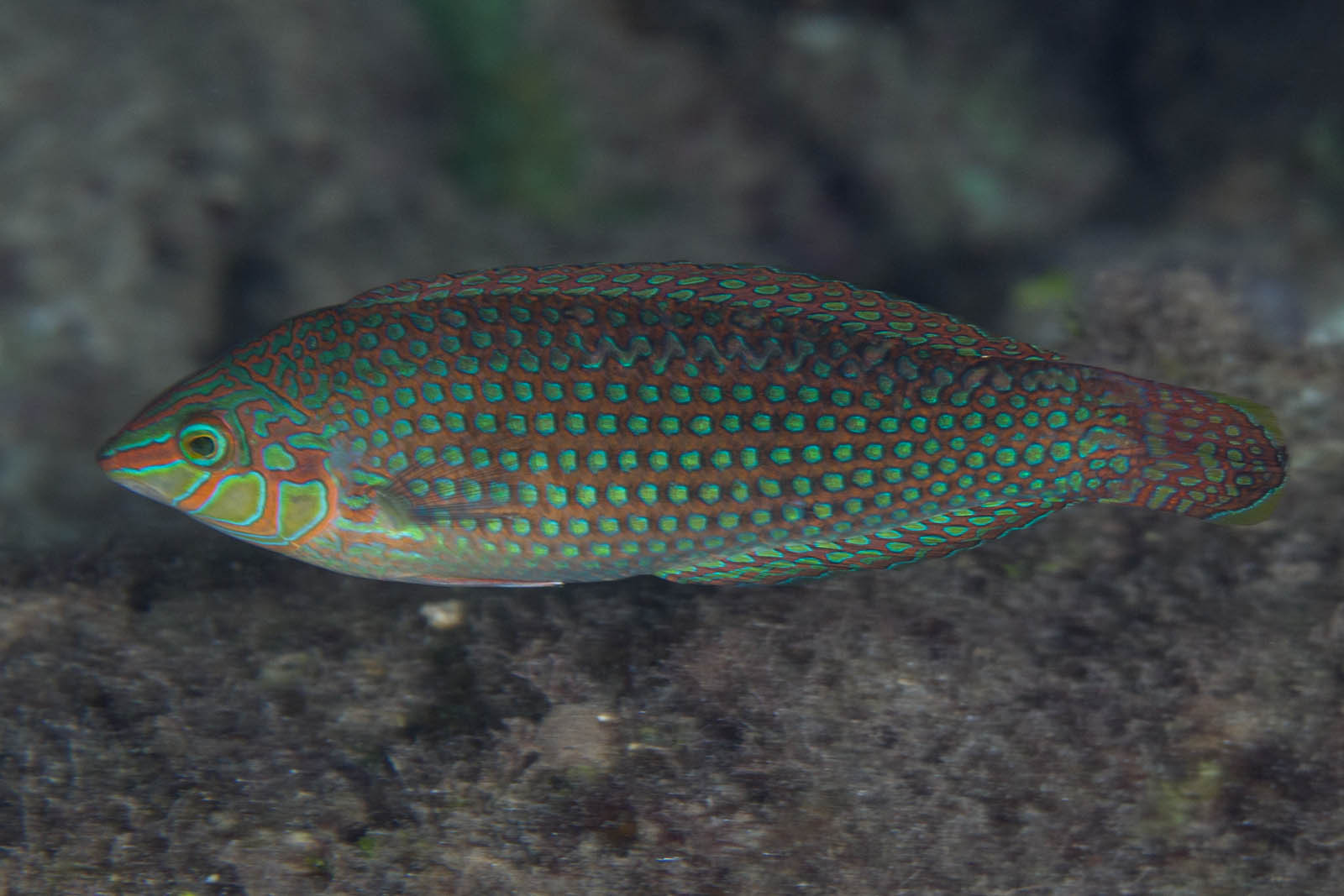
Macropharyngodon meleagris (Valenciennes, 1839) (Blackspotted wrasse)
Inhabits subtidal reef flats and outer lagoon and seaward reefs . Usually in areas with mixed sand, rubble, and coral . Feeds mainly on gastropods, other hard-shelled prey , and foraminiferans . Rarely marketed. Minimum depth reported from Ref. 27115.
Halichoeres semicinctus (Ayres, 1859) (rock wrasse)
Halichoeres argus (Bloch and Schneider, 1801) (Argus wrasse)
Inhabits shallow coastal reefs and seagrass flats , also in algae-rocky reef flats and lagoons .
Bodianus diana (Lacepède, 1801) (Diana's hogfish)
Found in coral rich areas of seaward reefs . Juveniles often shelter near black corals and gorgonians; also frequent cave ceilings . Feeds mainly on benthic invertebrates such as mollusks and crustaceans. Juveniles regularly remove parasites from other fishes .
Bodianus mesothorax (Bloch and Schneider, 1801) (Splitlevel hogfish)
Ranging into subtropical zones as juveniles expatriates caused by warm currents during pelagic stage . Inhabit coral-rich outer reef slopes at depths of 5 to over 20 m, particularly near caves. Juveniles in caves; adults...
Read More
Read More
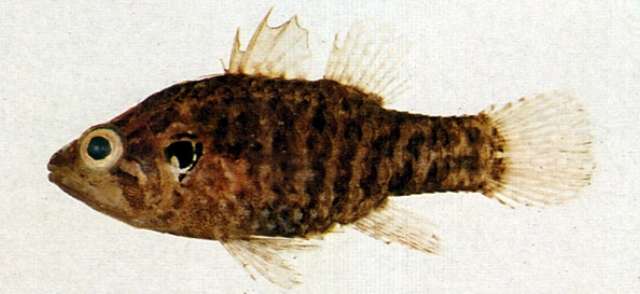
Fowleria variegata (Valenciennes, 1832) (Spotcheek cardinalfish)
Found in coral reefs and seagrass beds of inner bays and shallow lagoons ; also in dead reef and rubble . Nocturnal species .
Share on Social Networks
- Facebook:

personalize your shared text as well as its destination (wall, page...) or send as a private message to a friend
- Twitter: Tweet personalize your tweet
- Google Plus:
Direct link to this dive
- Long link:
- Short link:


 We are participating today in the startup contest Techcrunch Disrupt. Support Diveboard by voting for us!
























































































Saaml trip 2 tanker to Mushroom Rock aboard Datu Budas
1.7 hour trip to dive site
weather sketchy, cloudy breezy, passing showers, chop
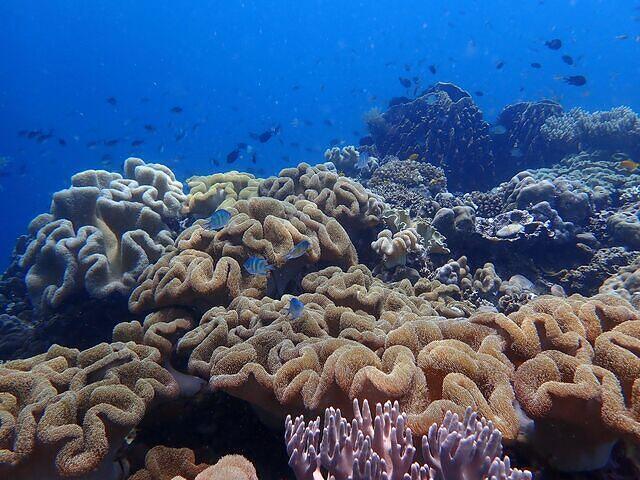
beautiful slope/wall, sand gardens nearshore swissfinity resort
multilevel, solo on way back to boat
highlight blue frogfish