


 Beachnutts



 Philippines
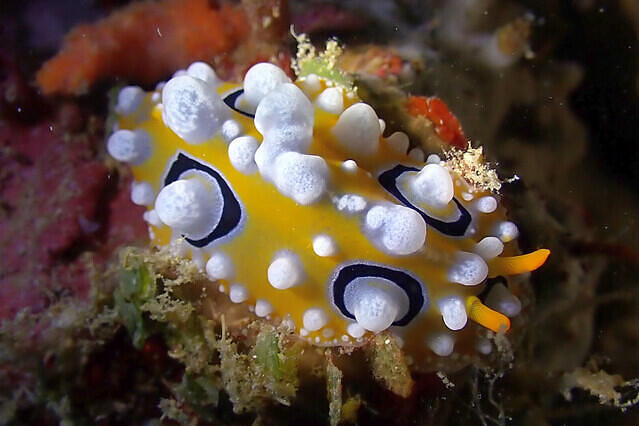
-
Nº147
 Date: 2024-09-15 - 11:33
-
 Max Depth: 28.3m Duration: 88mins
Dive Location

- Temp: Surf 27°C Bottom 27°C
- Dive type : Recreational, Reef, Photo
- Visibility: Good Water: Salt
Specific gear used
- BCD: Scubapro - Glide Plus
- Boots: Orca - Dive shoes
- Camera: Olympus - TG6
- Computer: Oceanic - OCS
- Fins: Scubapro - Jet Fins
- Knife: Scuba MAx - folding
- Lift bag: ScubaMax - SMB
- Light: Sofirn - SD05
- Mask: Promate - Scope
- Regulator: SEAC - Synchro
- Wet suit: Blue Ocean - Diveskin
- Weights: 3.2 kg
Dive reviews
| Overall review | ||
| Dive difficulty | ||
| Marine life quality |
Recent Divers in Talicud island, Davao
Recent Pictures in Talicud island, Davao
Dive Shop & Buddies
 Dive with Blake Auge from Carabao Dive Center
 Dive buddies:
Reymar Tano

Link to this spot:
- Spot:
- Country:
- Area:
- Body of water:
Dive Profile
- 1. Air
- 10L Aluminium 207 → 21 bar
- Average depth: 18.9m
Data provided by EOL.org


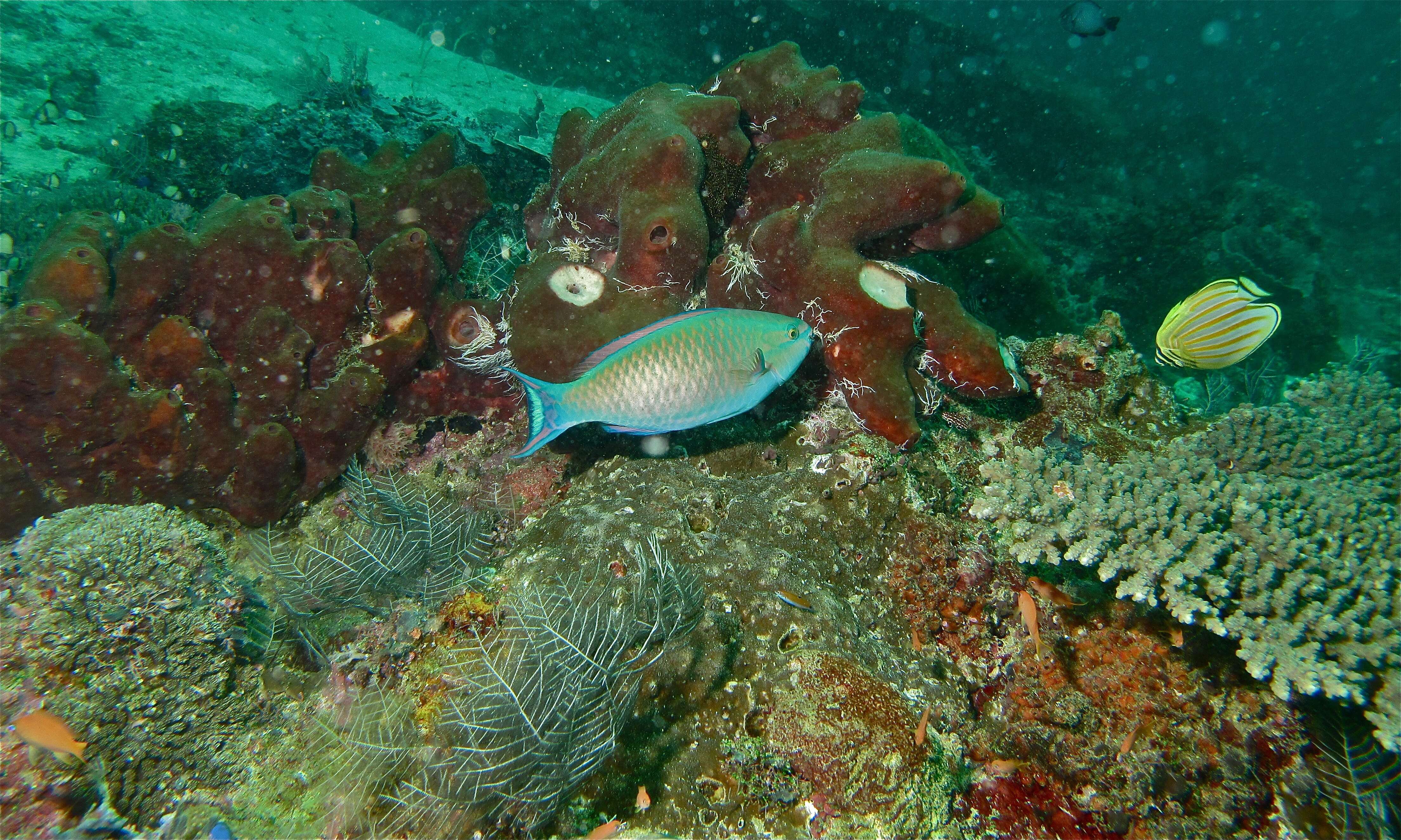
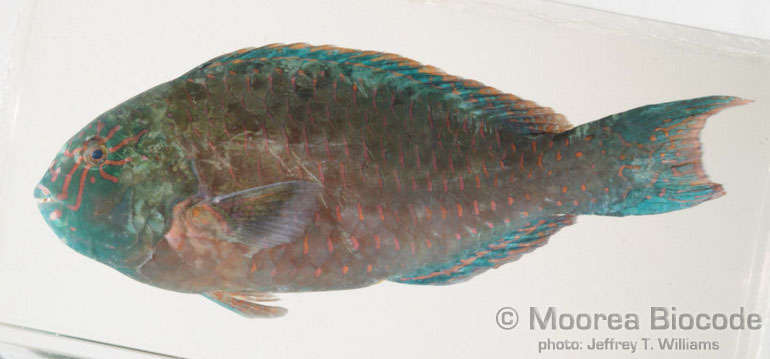

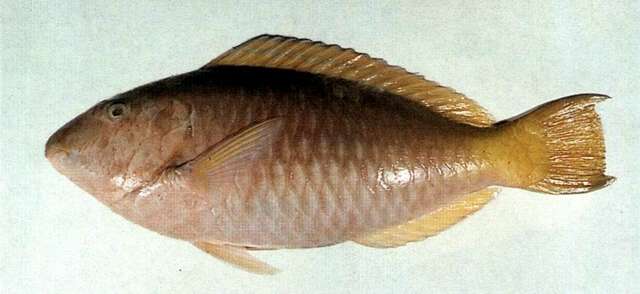








Species Identified
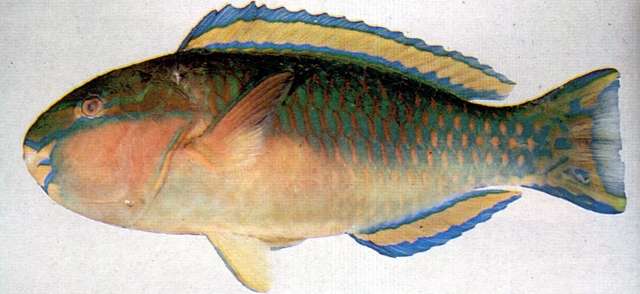
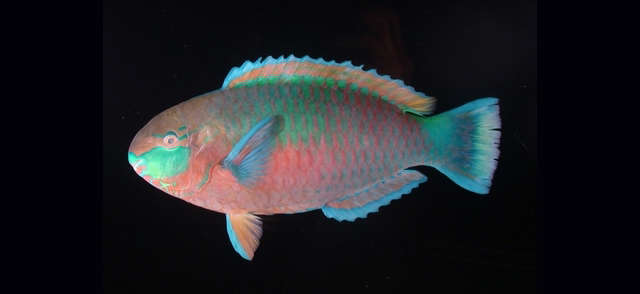
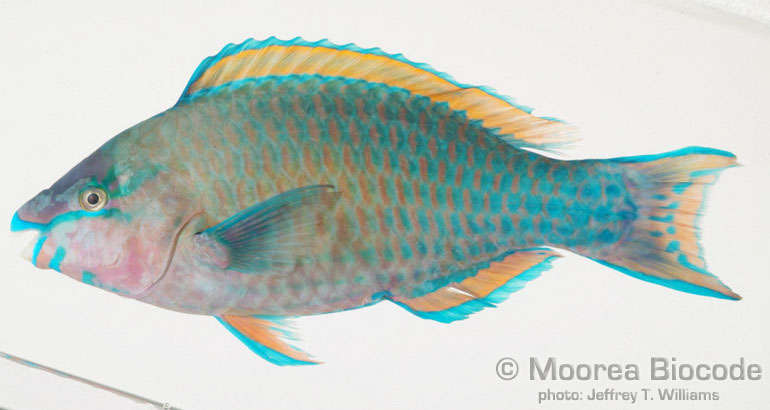
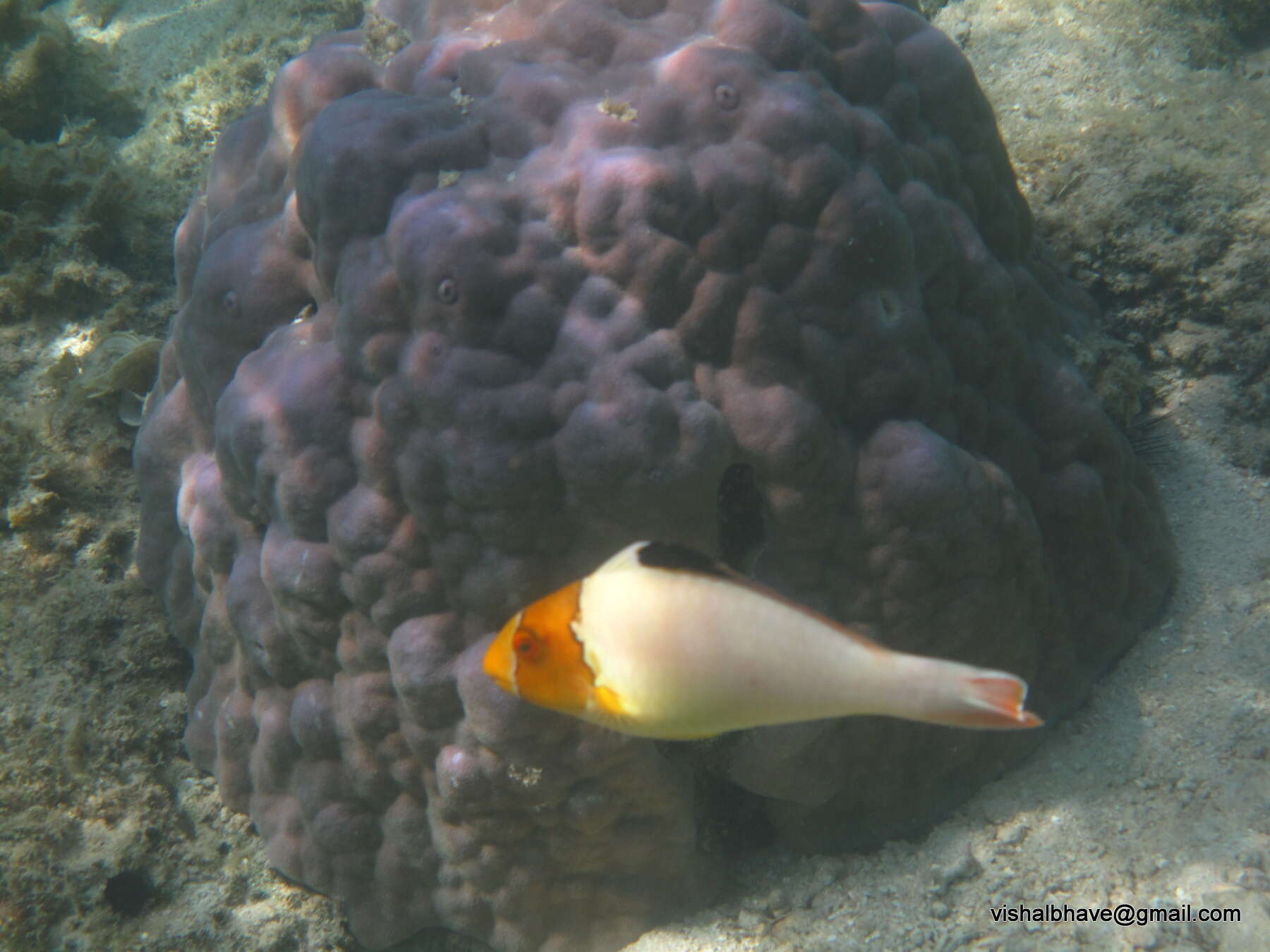
Chlorurus sordidus (Forsskål, 1775) (Daisy parrotfish)
Calotomus spinidens (Quoy and Gaimard, 1824) (Spinytooth parrotfish)
Found in coastal bays and deep lagoons . Inhabits seagrass beds or dense beds of algae. Well-camouflaged and easily overlooked . Feeds on these or the associated epiphytes. Caught nets and other types of artisanal gear.
Chlorurus japanensis (Bloch, 1789) (Palecheek parrotfish)
Inhabits seaward coral and rocky reefs ; inner reefs with rich coral habitat . Feeds on benthic algae . Caught mainly with traps, nets and other types of artisanal gear.
Scarus quoyi Valenciennes, 1840 (Quoy's parrotfish)
Inhabits coral-rich areas of outer channels and seaward reefs . Occurs singly or in small groups over intertidal flats to graze on algae during high water mark .
Scarus tricolor Bleeker, 1847 (Tricolour parrotfish)
Inhabits lagoon and seaward reefs, in areas with dense coral growth up to at least 30 m. Usually solitary, sometimes in groups . Feeds on benthic algae .
Calotomus carolinus (Valenciennes, 1840) (Carolines parrotfish)
Chlorurus bleekeri (De Beaufort, 1940) (Bleeker's parrotfish)
Found in clear coastal and inner reefs ; in lagoons and channel reefs . Feed mainly on algae . Females usually in small groups and maybe mixed with other species when feeding; males solitary nearby .
Hipposcarus longiceps (Valenciennes, 1840) (Pacific longnose parrotfish)
Inhabits turbid lagoons more than outer reef areas. Usually seen in aggregations; females usually in small groups . Large adults may occur to depths of at least 40 m.
Scarus scaber Valenciennes, 1840 (Dusky-capped parrotfish)
Inhabits shallow lagoon reefs, in areas with dense coral cover . Individuals in the initial phase form groups . Feeds on algae by incessant grazing in coral reefs . Marked sexual dimorphism.
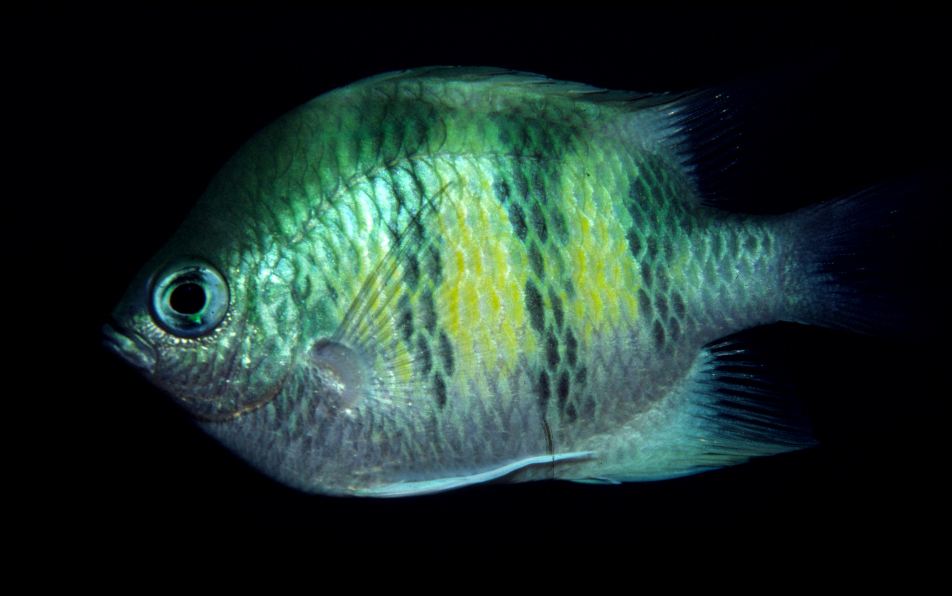
Leptoscarus vaigiensis (Quoy and Gaimard, 1824) (Lama G. Cuvier, 1800)
Found in sheltered bays, harbors and lagoons . Inhabits seagrass areas or areas with hard substrates heavy with algal cover. Usually occur in small groups. Unlike other parrotfishes, males and females look very similar and do not change sex . Feeds on seagrasses and algae . Marketed fresh .
Scarus psittacus Forsskål, 1775 (Common parrotfish)
Inhabit reef flats and lagoon and seaward reefs to at least 25 m depth . Found over corals . Benthopelagic . Initial-phase fish stage usually form small feeding schools . Graze on benthic algae . Secrete a mucus cocoon .
Scarus niger Forsskål, 1775 (loro)
Inhabits coral-rich areas of clear lagoons, channels, and outer reef slopes . Generally solitary . Juveniles in small groups on algae and coral reefs inshore . Feeds on benthic algae . Males maintain small harems and pair spawn .
Cetoscarus bicolor (Rüppell, 1829) (Bicolour parrotfish)
Occurs in clear lagoon and seaward reefs . Juveniles usually solitary; adults form harems ; males are territorial. Goes to several changes during growth and very large females change sex to the brightly colored male. Sm...
Read More
Read More
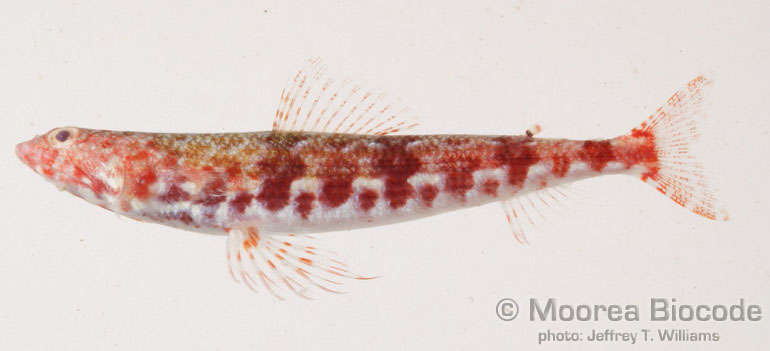
Synodus variegatus (Lacepède, 1803) (Variegated lizardfish)
Inhabits deep lagoon and seaward reefs to depths over 40 m ; sometimes found on sandy bottoms concealing itself in the sand. Prefers to rest on hard surfaces and frequently occurs in pairs . Benthic . Feeds on small fis...
Read More
Read More
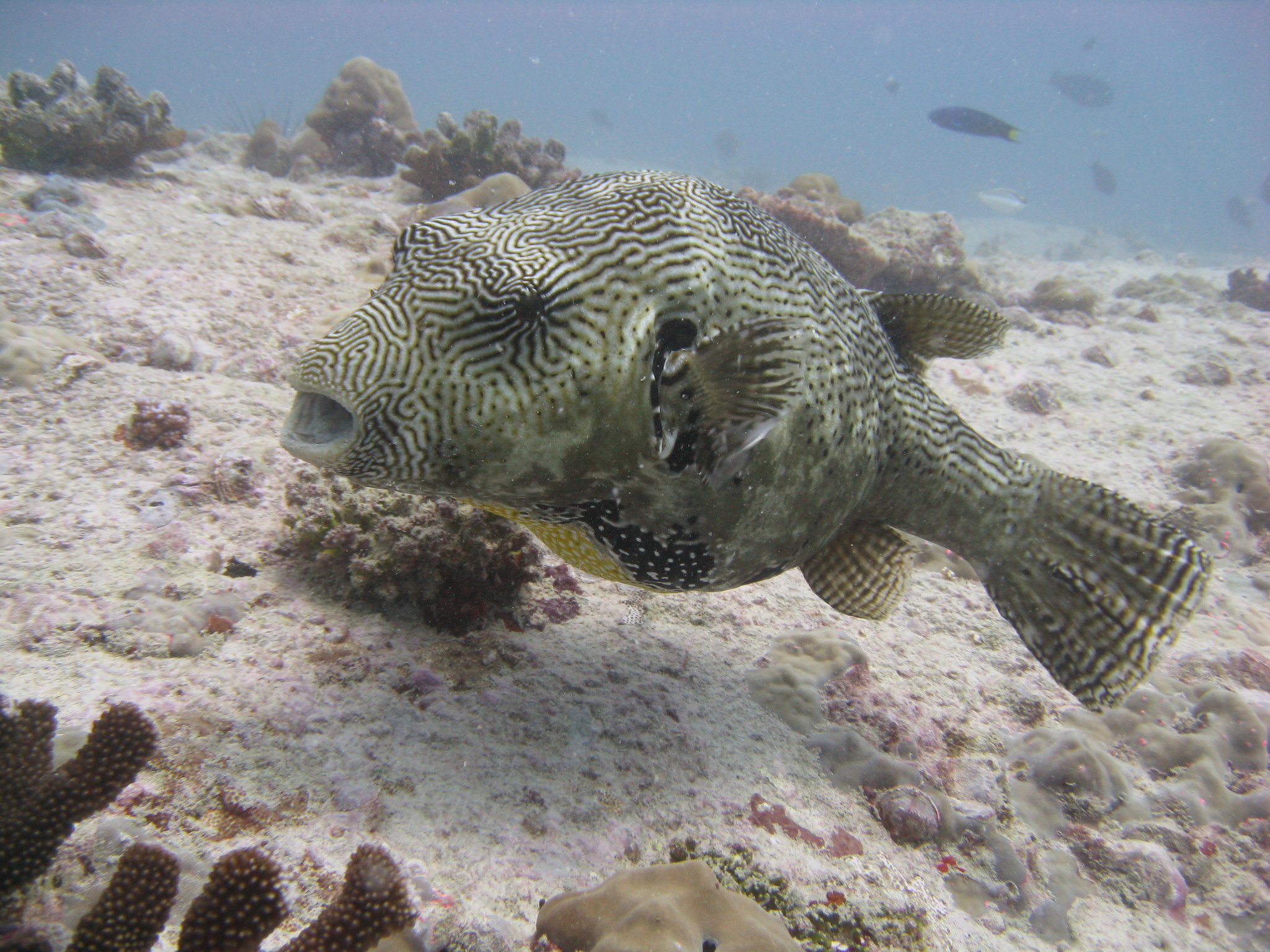
Arothron mappa (Lesson, 1831) (Map puffer)
Occur in clear lagoon and sheltered seaward reefs . Adults usually along deep drop-offs . Usually close to shelter. Occur singly . Feed on algae, sponges, and benthic invertebrates.
Canthigaster valentini (Bleeker, 1853) (Valentinni's sharpnose puffer)
Arothron nigropunctatus (Bloch & Schneider, 1801) (Blackspotted puffer)
Inhabit coastal to outer reef crest and slopes with rich invertebrate growth. Adults often in pairs . Feed on corals , crustaceans, mollusks, sponges, tunicates and algae . Generally common .
Canthigaster ocellicincta Allen & Randall, 1977 (Shy toby)
Inhabits invertebrate-rich inshore reef to outer reef walls where usually in caves in depths of about 25 meters or more. Found singly or in pairs and on one occasion a small groups was observed among plate-corals on soft ...
Read More
Read More
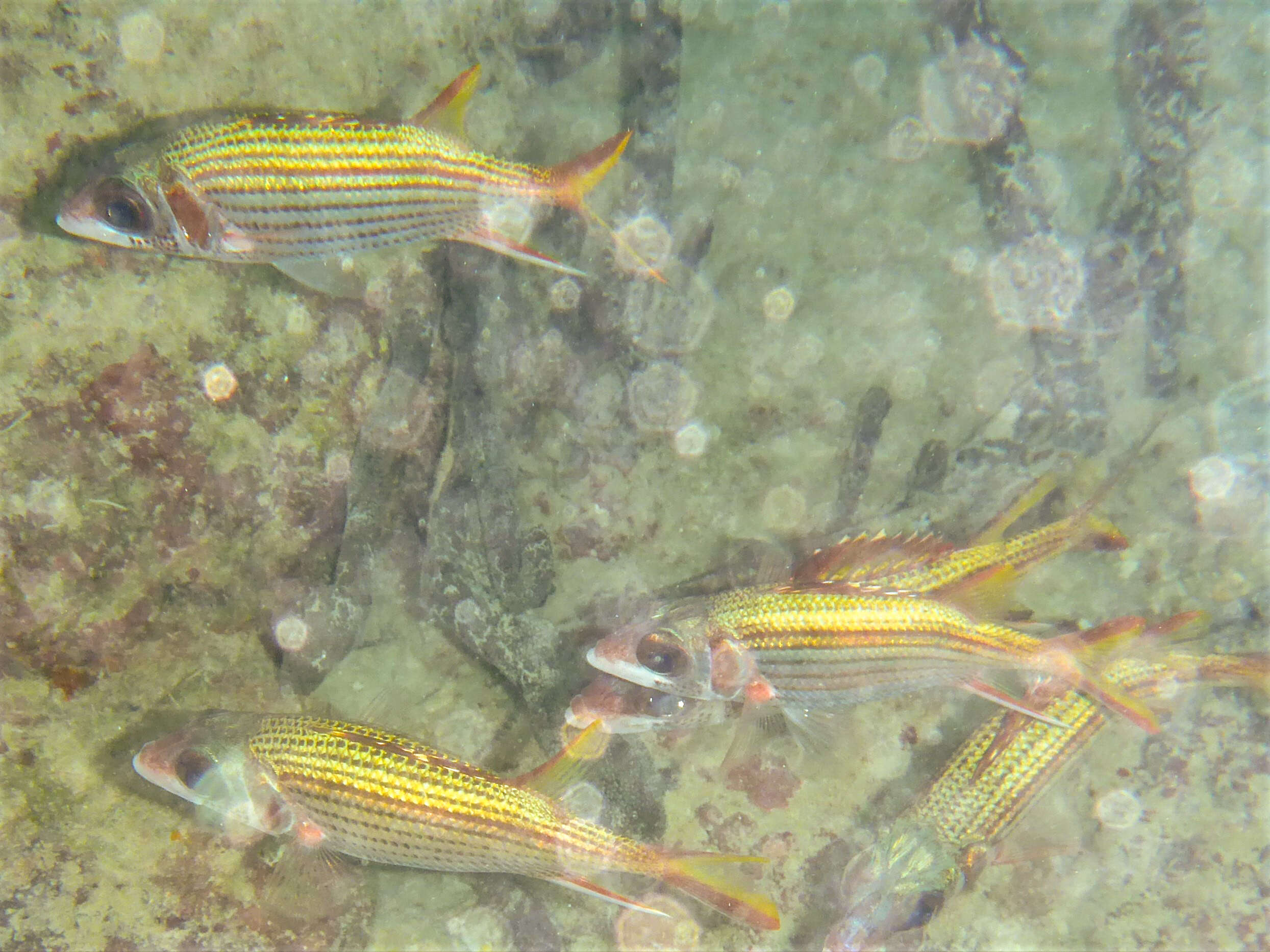
Sargocentron caudimaculatum (Rüppell, 1838) (Silverspot squirrelfish)
One of the most common of the squirrelfishes that occurs in outer reef areas, also encountered in lagoons and drop-offs from less than 2 to 40 m; either solitary or in groups . Nocturnal, feeds mainly on benthic crabs and shrimps.
Sargocentron praslin (Lacepède, 1802) (Dark-striped squirrelfish)
Inhabits reef flats and shallow protected reefs, often in dead reef areas . Secretive during the day .
Sargocentron tiereoides (Bleeker, 1853) (Pink squirrelfish)
Found in relatively deep waters of outer reef slopes and has been collected on reef flat and lagoon patch reefs. Feeds mainly on benthic crabs and shrimps at night. Spine of preopercle venomous.
Neoniphon argenteus (Valenciennes, 1831) (Clearfin squirrelfish)
Found mainly around oceanic islands . It is an uncommon inhabitant of reef flats, lagoon and semi-sheltered seaward reefs to depths over 20 m. Occurs with N. sammara in coral-rich areas with large staghorn Acropora corals. Feeds mainly on benthic invertebrates .
Sargocentron microstoma (Günther, 1859) (Smallmouth squirrelfish)
Inhabits virtually all coral reef zones . Benthopelagic in or near crevices and holes . Common in thickets of staghorn Acropora or in large Pocillopora heads . Feeds on small crustaceans, worms, and fishes during the ni...
Read More
Read More
Eretmochelys imbricata (LINNAEUS) 1766 (Hawksbill Turtle)
Hawksbills may take decades to mature and it could be between 20 to 40 years before they are ready to breed . Upon reaching sexual maturity, a female will typically lay up to five clutches of around 100 to 140 eggs in one ...
Read More
Read More
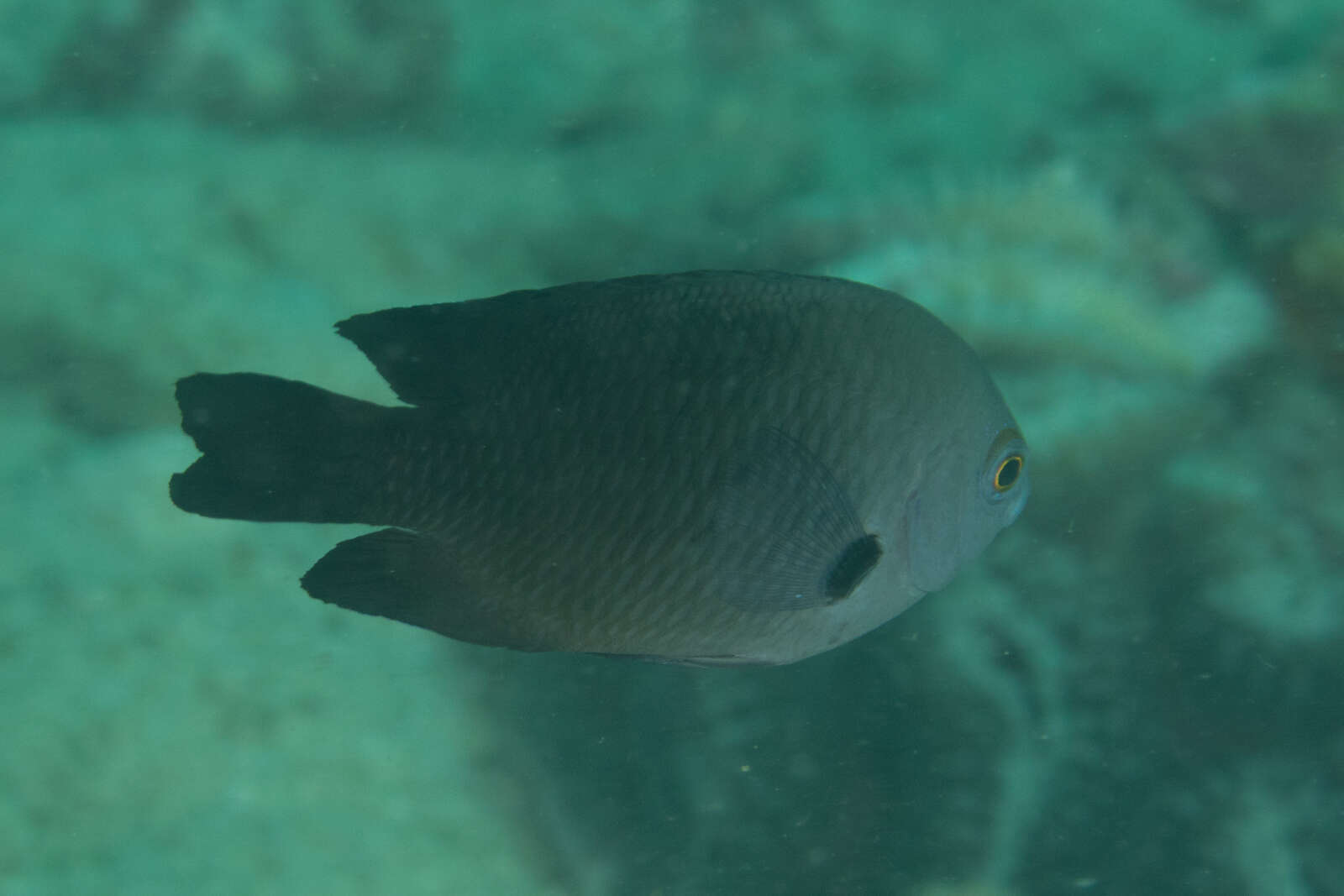
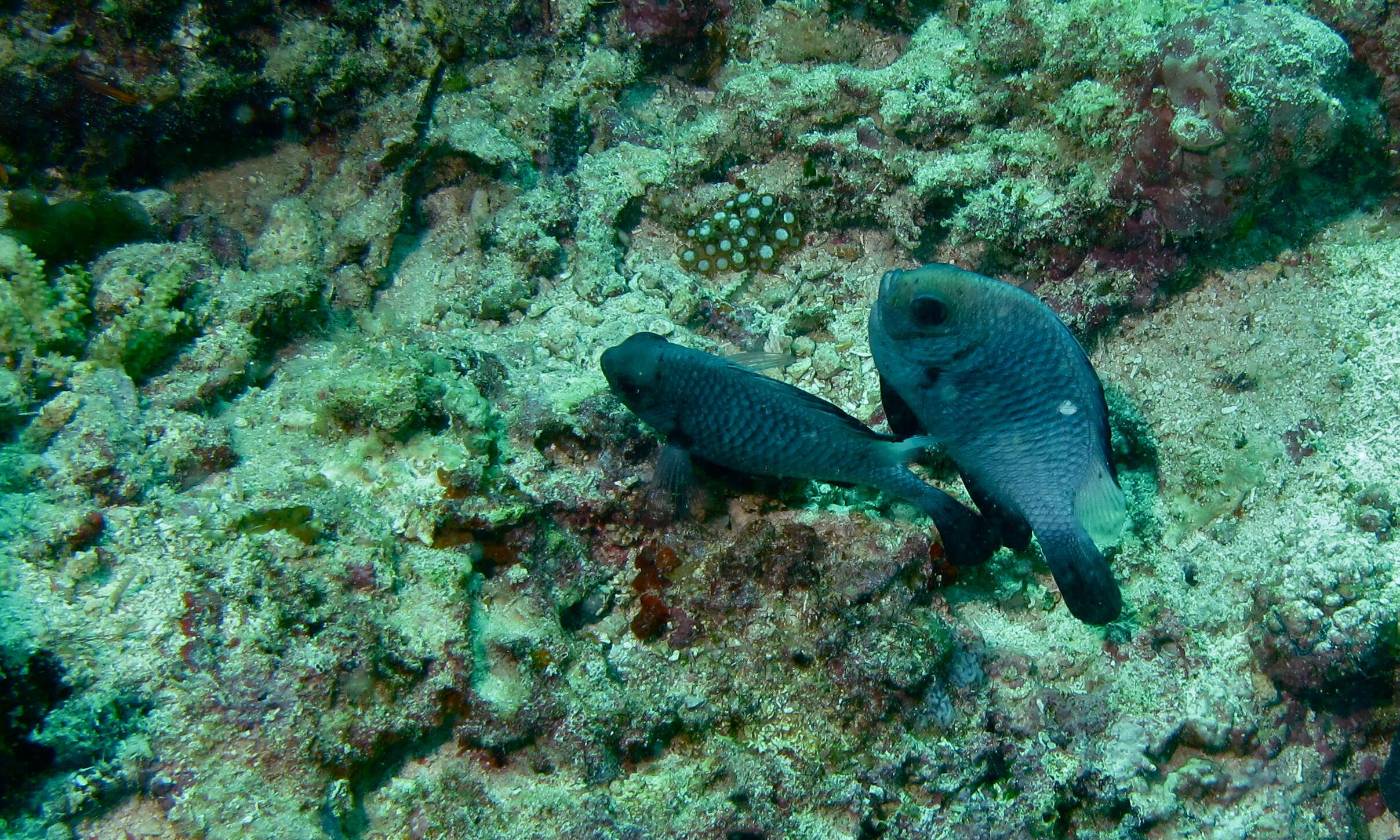
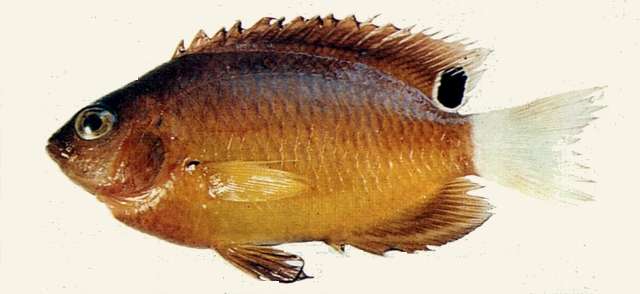
Pomacentrus brachialis Cuvier, 1830 (Charcoal damsel)
Found in passages and outer reef slopes ; also in current prone and clear water reef flats to 40 m depth . Occurs singly or in small groups . Feeds on zooplankton and benthic algae .
Dascyllus trimaculatus (Rüppell, 1829) (threespot humbug)
Inhabits coral and rocky reefs, juveniles often commensal with large sea anemones, sea urchins, or small coral heads . Occurs in small to large aggregations. Stomach contents include algae, copepods, and other planktonic crustaceans.
Plectroglyphidodon lacrymatus (Quoy and Gaimard, 1825) (whitespeckled demoiselle)
Inhabits clear lagoon and seaward reefs, in areas with mixed coral and rubble or dead coral rocks. Feeds mainly on benthic algae and associated small invertebrates and fish eggs.
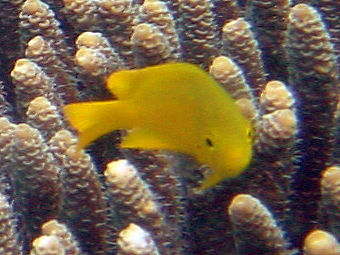
Pomacentrus moluccensis Bleeker, 1853 (Lemon damsel)
Inhabits clear lagoon and seaward reefs among branching corals. Occurs in small aggregations. Feeds mainly on algae and planktonic crustaceans.
Chromis weberi Fowler and Bean, 1928 (Weber's chromis)
Occurs singly or in small to large aggregations in passes and steep outer reef slopes.
Abudefduf vaigiensis (Quoy and Gaimard, 1825) (Five finger)
Adults inhabit upper edge of outer reef slopes and inshore rocky reefs. Juveniles associated with drifting seaweed . Benthopelagic . Feed on zooplankton, benthic algae, and small invertebrates . Often in aggregations ...
Read More
Read More
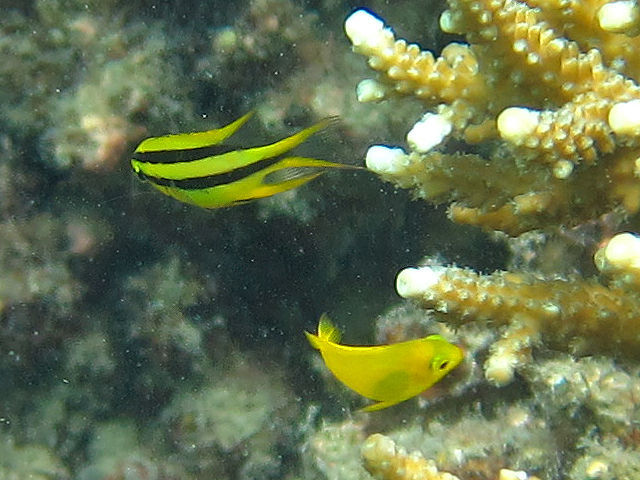
Neoglyphidodon nigroris (Cuvier, 1830) (Yellowfin damsel)
Two forms: long-tailed and black as adults occurs in the Andaman Sea, ranging east to western Bali and north to Japan. Second form, probably valid as N. xanthurus occurs in the rest of the West Pacific and the two overla...
Read More
Read More
Pomacentrus bankanensis Bleeker, 1853 (Speckled damselfish)
Occurs solitarily or in small groups in lagoons, reef flats, passages, and outer reef slopes. Usually amongst coarse rubble or rock . Feeds primarily on algae, but also takes copepods, isopods, and pelagic tunicates.
Chrysiptera biocellata (Quoy and Gaimard, 1825) (bluebanded damselfish)
Occurs in protected inner reef flats and shallow lagoons and channels, over rubble and rocky outcrops. Feeds primarily on filamentous algae.
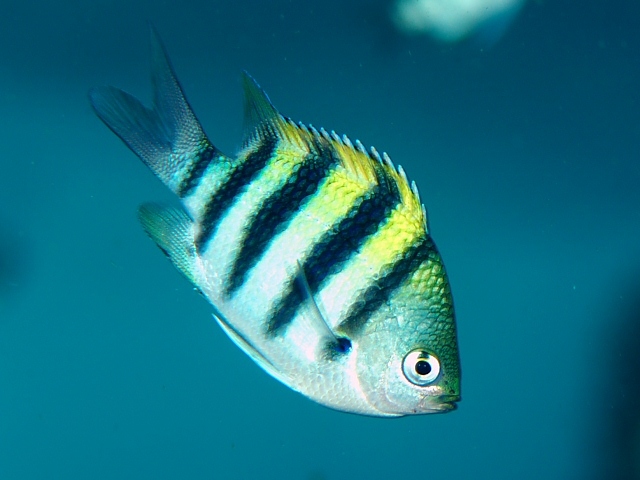
Amblyglyphidodon curacao (Bloch, 1787) (Black-snouted sergeant-major)
Inhabits lagoons, coastal embayments, reef passages and outer reefs. Juveniles often found among Sarcophyton and Sinularia soft corals. Feeding aggregations are frequently observed over growths of the staghorn coral Acro...
Read More
Read More
Dascyllus aruanus (Linnaeus, 1758) (black-and-white damselfish)
Territorial, inhabit shallow lagoon and subtidal reef flats. Form large aggregations above staghorn Acropora thickets or in smaller groups above isolated coral heads. Feed on zooplankton, benthic invertebrates, and algae...
Read More
Read More
Share on Social Networks
- Facebook:

personalize your shared text as well as its destination (wall, page...) or send as a private message to a friend
- Twitter: Tweet personalize your tweet
- Google Plus:
Direct link to this dive
- Long link:
- Short link:


 We are participating today in the startup contest Techcrunch Disrupt. Support Diveboard by voting for us!
























































































1st dive 2 dive day aboard Dive Crew, with Carabao Dive Center
Habagat winds and swell forced long trip following shorelines to Talicud. Dive South middle Andlel's Cove, swim to boulders area, then back to middle and shallows.
SOLO, multilevel, many intros on boat
good viz despite recent heavy rains and swollen rivers