


 Beachnutts


 Philippines
-
Nº39
 Date: 2022-09-18 - 10:34
-
 Max Depth: 26.5m Duration: 84mins
Dive Location

- Temp: Surf 28°C Bottom 28°C
- Dive type : Recreational, Reef, Photo
- Visibility: Average Water: Salt
Specific gear used
- BCD: Scubapro - Glide Plus
- Camera: Canon - Powershot SD780
- Computer: Oceanic - OCS
- Fins: Scubapro - Jet Fins
- Knife: Scuba MAx - folding
- Mask: Promate - Scope
- Regulator: Aqualung - Titan LX
- Wet suit: Blue Ocean - Diveskin
- Weights: 3.2 kg
Dive reviews
| Overall review | ||
| Dive difficulty | ||
| Marine life quality |
Dive Shop & Buddies
 Dive with Maeng Lejarso

Link to this spot:
- Spot:
- Country:
- Area:
- Body of water:
Dive Profile
- 1. Air
- 10L Aluminium 207 → 21 bar
- Average depth: 17.7m
Data provided by EOL.org






Species Identified
Halichoeres garnoti (Valenciennes, 1839) (yellowhead wrasse)
Commonly found on shallow and deep reefs and exposed rocky ledges. Feeds on various invertebrates. Forms leks during breeding . A protogynous hermaphrodite . Constantly on the move but easily attracted by divers. Generally of no interest to fisheries because of its small average size .
Pteragogus guttatus (Fowler and Bean, 1928) (Sneaky wrasse)
Found in sheltered inner reefs amongst broken coral and rubble. Usually seen in less than 10 m depth, staying well hidden in reefs, but sometimes swimming amongst the long-spined Diadema urchins or in thick algae coverage .
Choerodon schoenleinii (Valenciennes, 1839) (Green wrasse)
Inhabit flat sandy or weedy areas near lagoon and seaward reefs . Solitary. Feed mainly on hard-shelled prey including crustaceans, mollusks and sea urchins. Marketed mostly fresh. In Hong Kong live fish markets .
Thalassoma cupido (Temminck and Schlegel, 1845) (Cupid wrasse)
Commercially cultured in Japan.
Cymolutes praetextatus (Quoy and Gaimard, 1834) (Knife razorfish)
Inhabits reef flats and shallow lagoons, in sandy, current-swept areas with rubble and weed . Capable of diving into the sand with the approach of danger. Rarely caught by fishers or aquarium collectors .
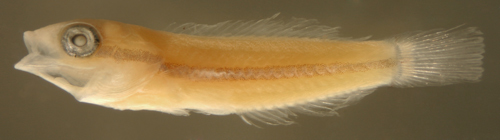
Halichoeres bathyphilus (Beebe and Tee-Van, 1932) (greenband wrasse)
Inhabits deep reefs . Traded as an aquarium fish at Ceará, Brazil .
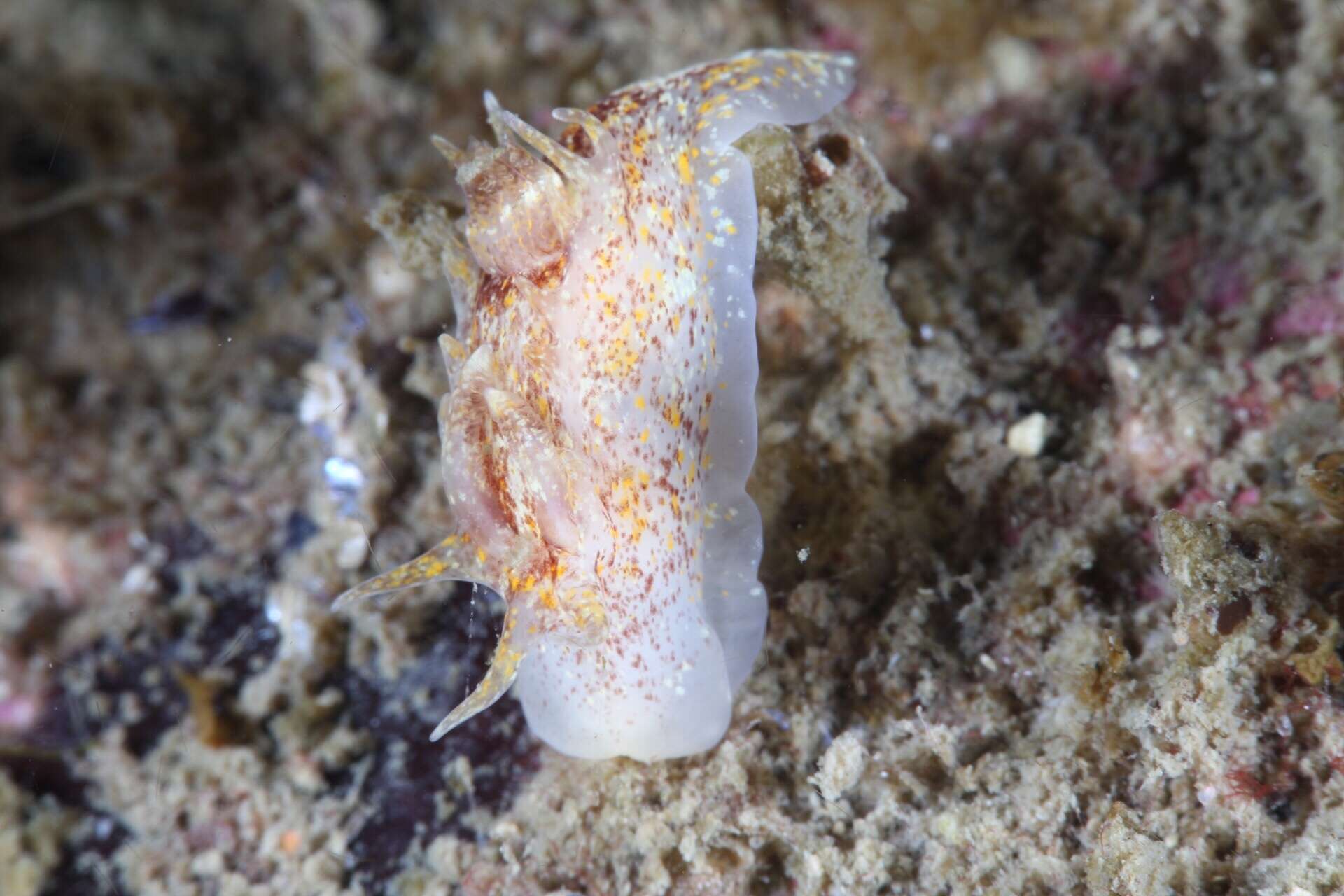
Cuthona veronicae (A. E. Verrill, 1880)
Flabellina nobilis (A. E. Verrill, 1880)
Doto formosa A. E. Verrill, 1875
Onchidoris grisea (Gould, 1870)
Okenia quadricornis (Montagu, 1815) (seasquirt okenia)
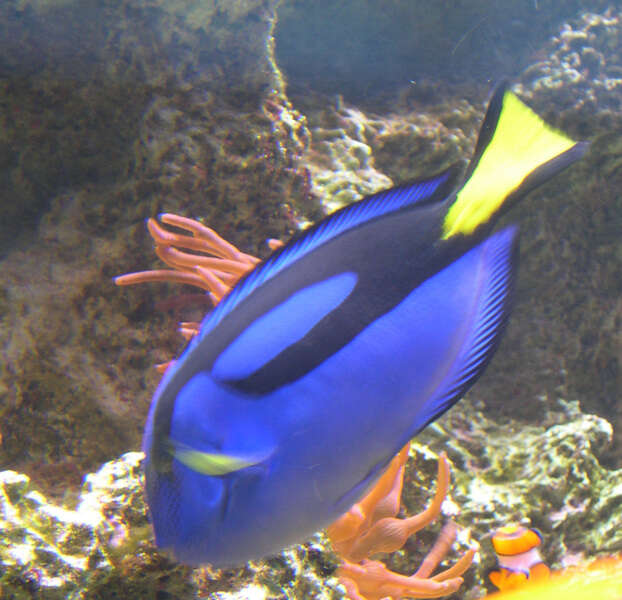
Paracanthurus hepatus (Linnaeus, 1766) (Palette surgeonfish)
Occur in clear, current-swept terraces of seaward reefs. Observed in loose aggregations 1 or 2 meters above the bottom; juveniles and subadults typical in groups near isolated Pocillopora eydouxi coral heads and when alar...
Read More
Read More
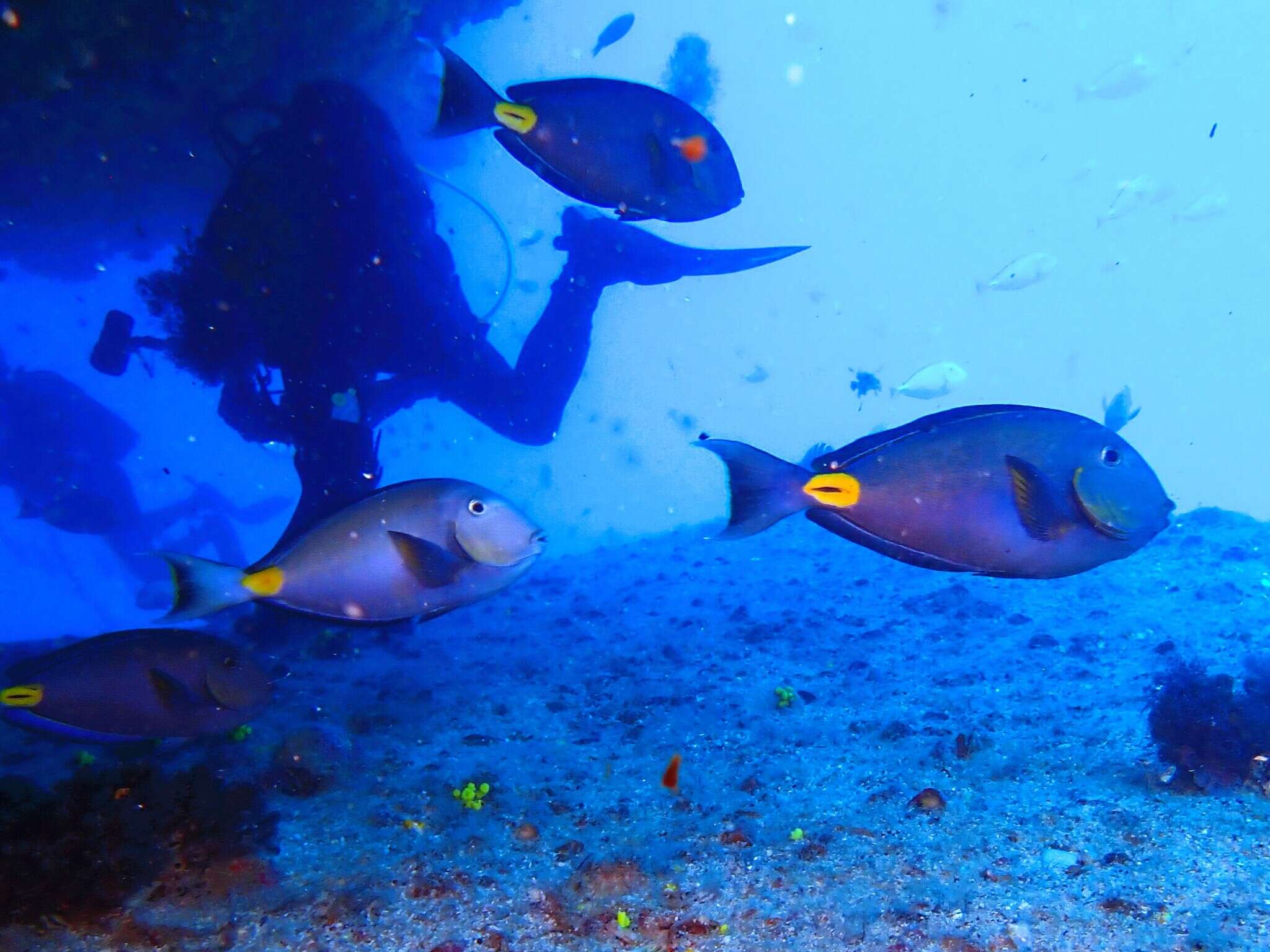
Acanthurus monroviae Steindachner, 1876 (Monrovia doctorfish)
Coastal species found in the mouth of rivers and lagoons . Found on rocky and coral bottoms . Feeds on zooplankton, phytoplankton and detritus . Minimum depth reported from Ref. 27115.
Acanthurus bahianus Castelnau, 1855 (Barber)
Inhabits shallow bottoms with coral or rocky formations . Usually occurs in groups of five or more individuals. Mainly diurnal species. Feeds on algae. The spine on both sides of the caudal peduncle may inflict painful wounds . Marketed fresh. Minimum depth reported from Ref. 27115.
Zebrasoma desjardinii (Bennett, 1836) (Desjardin's sailfin tang)
Found in lagoon and seaward reefs to depths greater then 30 m; juveniles in sheltered inner reef areas . Adults usually occur in pairs. Juveniles solitary and commonly among staghorn corals in lagoons or protected reefs .
Prionurus punctatus Gill, 1862 (surgeonfish)
Amphiprion percula (Lacepède, 1802) (Orange clownfish)
Inhabits lagoon and seaward reefs . Each group of fish consists of a breeding pair and 0-4 non-breeders. Within each group there is a size-based hierarchy: the female is largest, the male is second largest, and the non-...
Read More
Read More
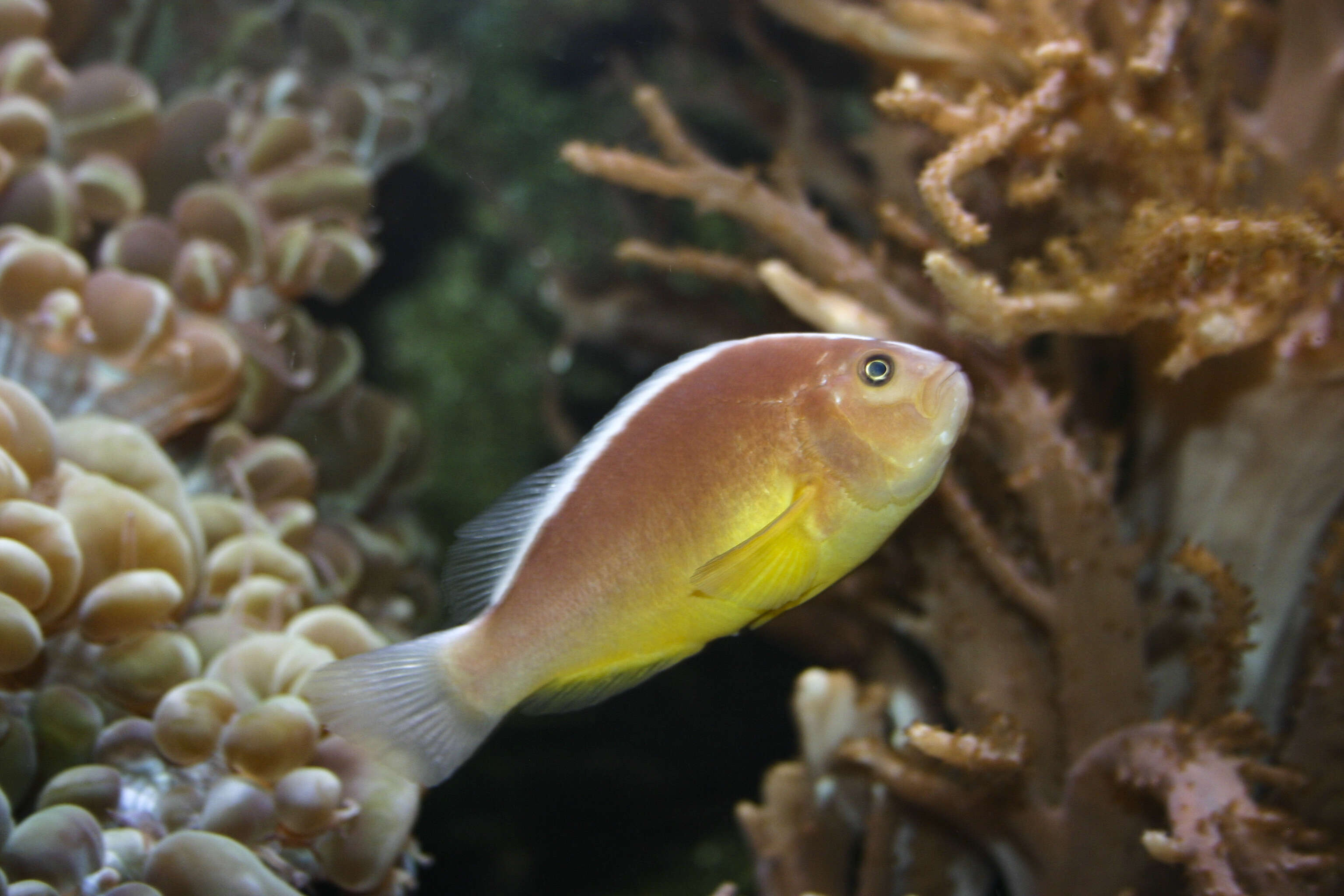
Amphiprion ocellaris Cuvier, 1830 (false clown anemonefish)
Amphiprion akallopisos Bleeker, 1853 (skunk-stripe anemonefish)
Found in shallow inshore reef habitats, often in strong current zones to about 15 m depth . Are protandrous hermaphrodites . Each pair is monogamous . Each anemone with a large female, a smaller functional male and seve...
Read More
Read More
Share on Social Networks
- Facebook:

personalize your shared text as well as its destination (wall, page...) or send as a private message to a friend
- Twitter: Tweet personalize your tweet
- Google Plus:
Direct link to this dive
- Long link:
- Short link:


 We are participating today in the startup contest Techcrunch Disrupt. Support Diveboard by voting for us!
























































































1st dive, 2 dive boat trip, Talicud Samal Island
multilevel
Drop in 50 metres South of marine sanctuary buoy, North swim towards boundary, down coral -sand slope to depth back up over dense corals back to shallows and boat
viz clearing after bad few weeks
some clouds sunny blue skies HOT, water calm some wind current on top