


 Beachnutts


 Philippines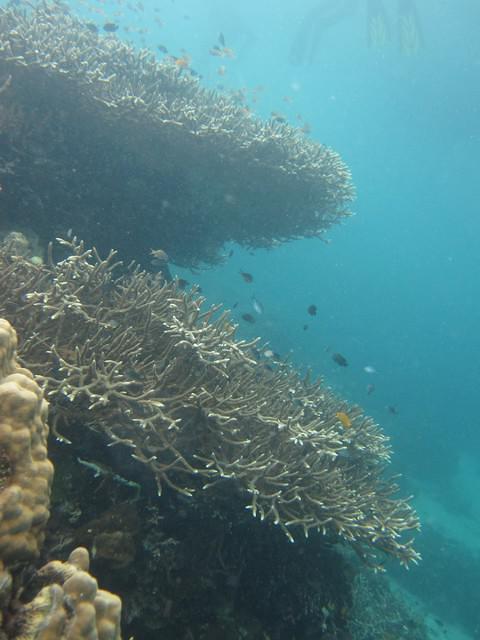
-
Nº58
 Date: 2023-01-21 - 10:40
-
 Max Depth: 27.4m Duration: 83mins
Dive Location

- Temp: Surf 27°C Bottom 27°C
- Dive type : Recreational, Reef, Photo
- Visibility: Average Water: Salt
Specific gear used
- BCD: Scubapro - Glide Plus
- Camera: Canon - Powershot SD780
- Computer: Oceanic - OCS
- Fins: Scubapro - Jet Fins
- Knife: Scuba MAx - folding
- Lift bag: ScubaMax - SMB
- Light: Sofirn - SD05
- Mask: Promate - Scope
- Regulator: Aqualung - Titan LX
- Wet suit: Blue Ocean - Diveskin
- Weights: 3.2 kg
Dive reviews
| Overall review | ||
| Dive difficulty | ||
| Marine life quality |
Dive Shop & Buddies
 Dive with Maeng

Link to this spot:
- Spot:
- Country:
- Area:
- Body of water:
Dive Profile
- 1. Air
- 10L Aluminium 207 → 34 bar
- Average depth: 18.3m
Data provided by EOL.org





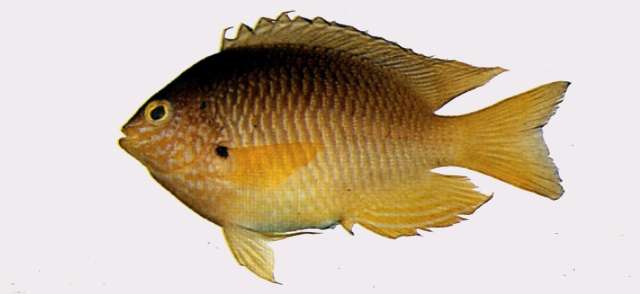
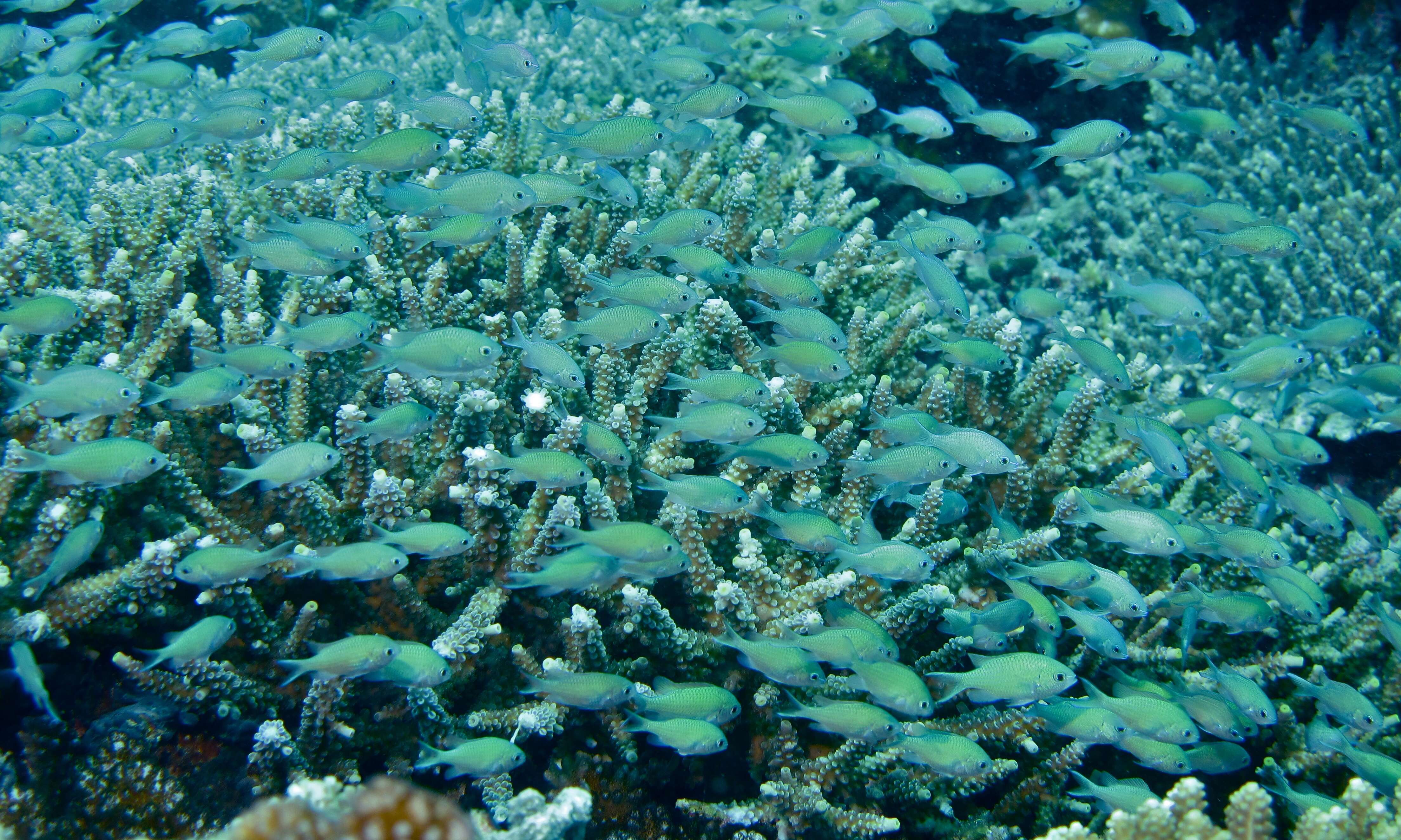
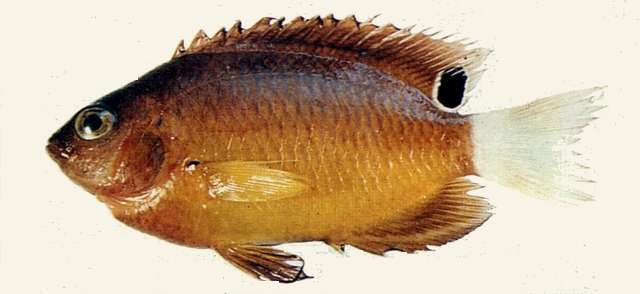
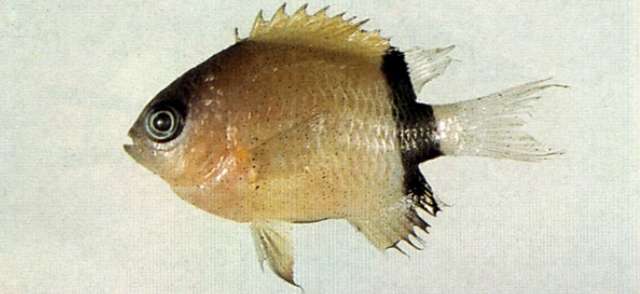



Species Identified
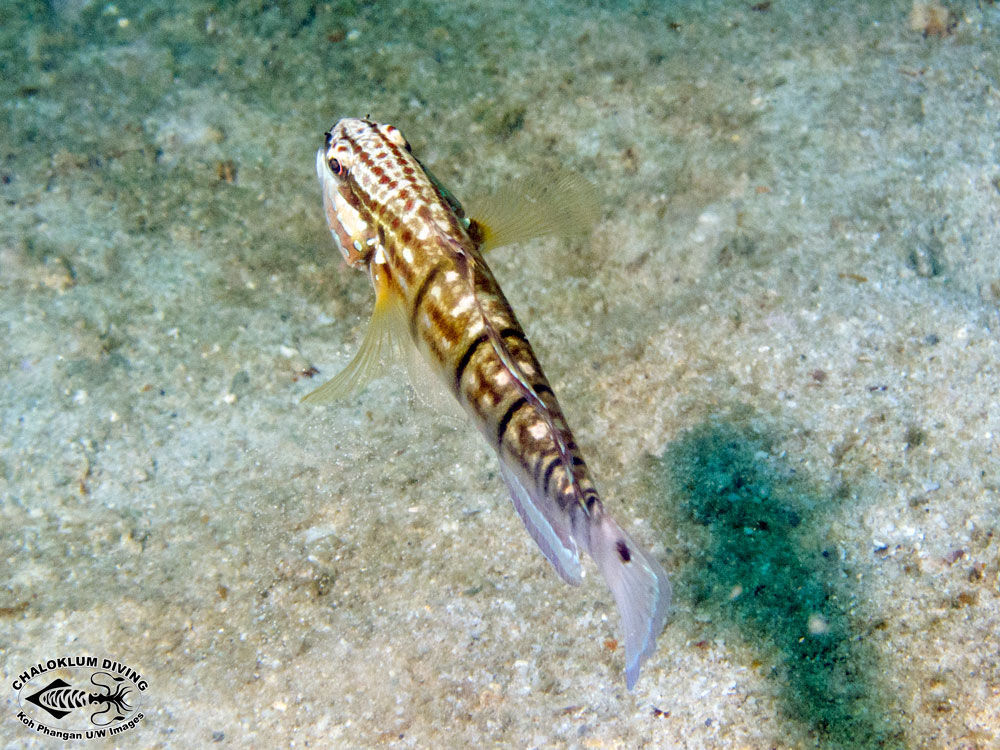
Amblygobius phalaena (Valenciennes, 1837) (Banded goby)
Adults inhabit coastal reefs and lagoons on sand and rubble margins of algal reefs and sometimes near seagrass beds . Feed by sifting mouthfuls of sand and expelling it through the gills, to capture small invertebrates, o...
Read More
Read More
Amblyeleotris wheeleri (Polunin & Lubbock, 1977) (Gorgeous prawn-goby)
Apparently the most common shallow-water species of the genus found in coral reef areas, but may occur at depths greater than 30 m. Usually found in rubble areas near or within coral reefs and in symbiotic association wit...
Read More
Read More
Caranx melampygus Cuvier, 1833 (Bayad)
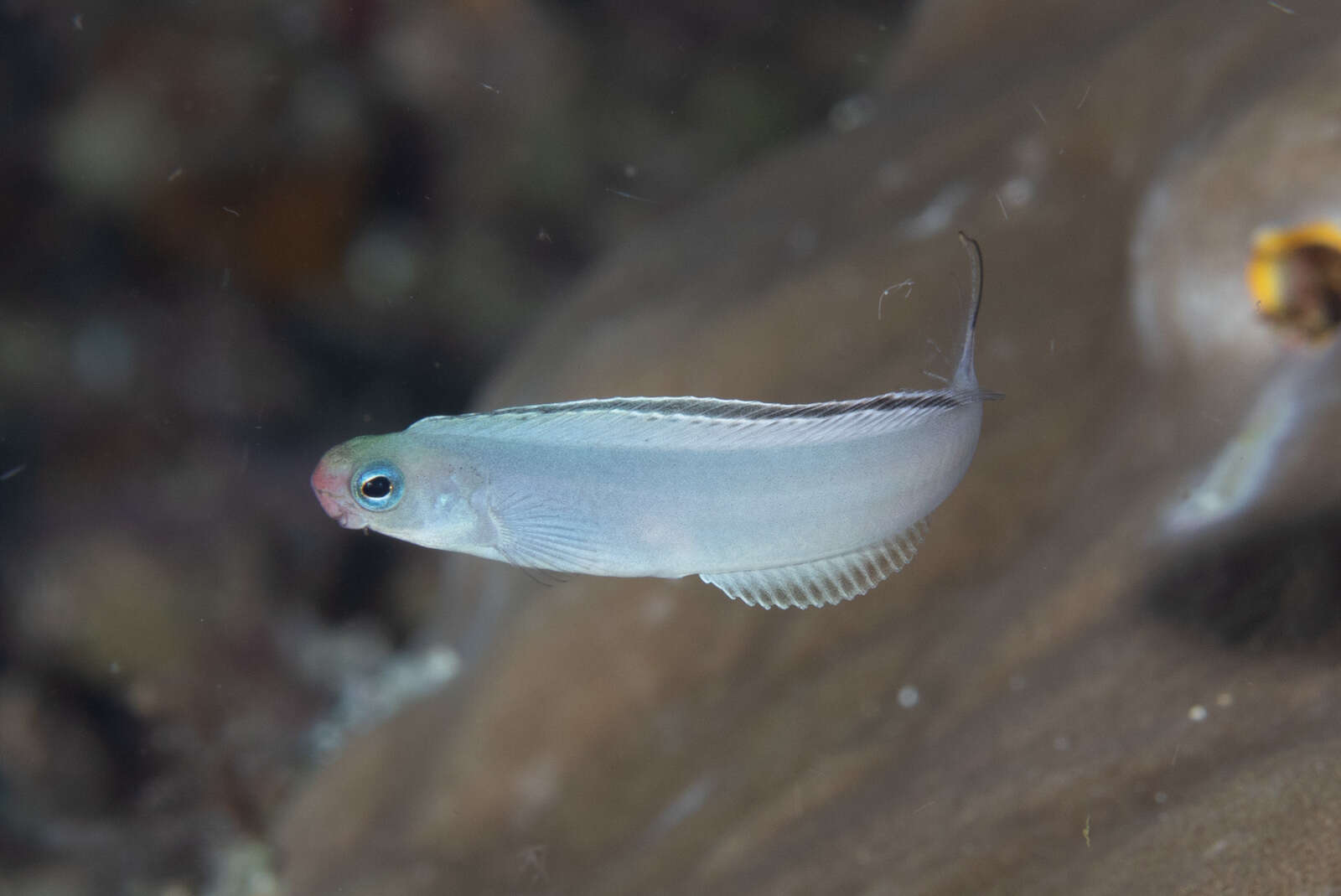
Cirripectes filamentosus (Alleyne & Macleay, 1877) (Filamentous blenny)
Usually found on coral or rocky reefs. Oviparous . Eggs are demersal and adhesive .
Plagiotremus laudandus (Whitley, 1961) (Bicolour fangblenny)
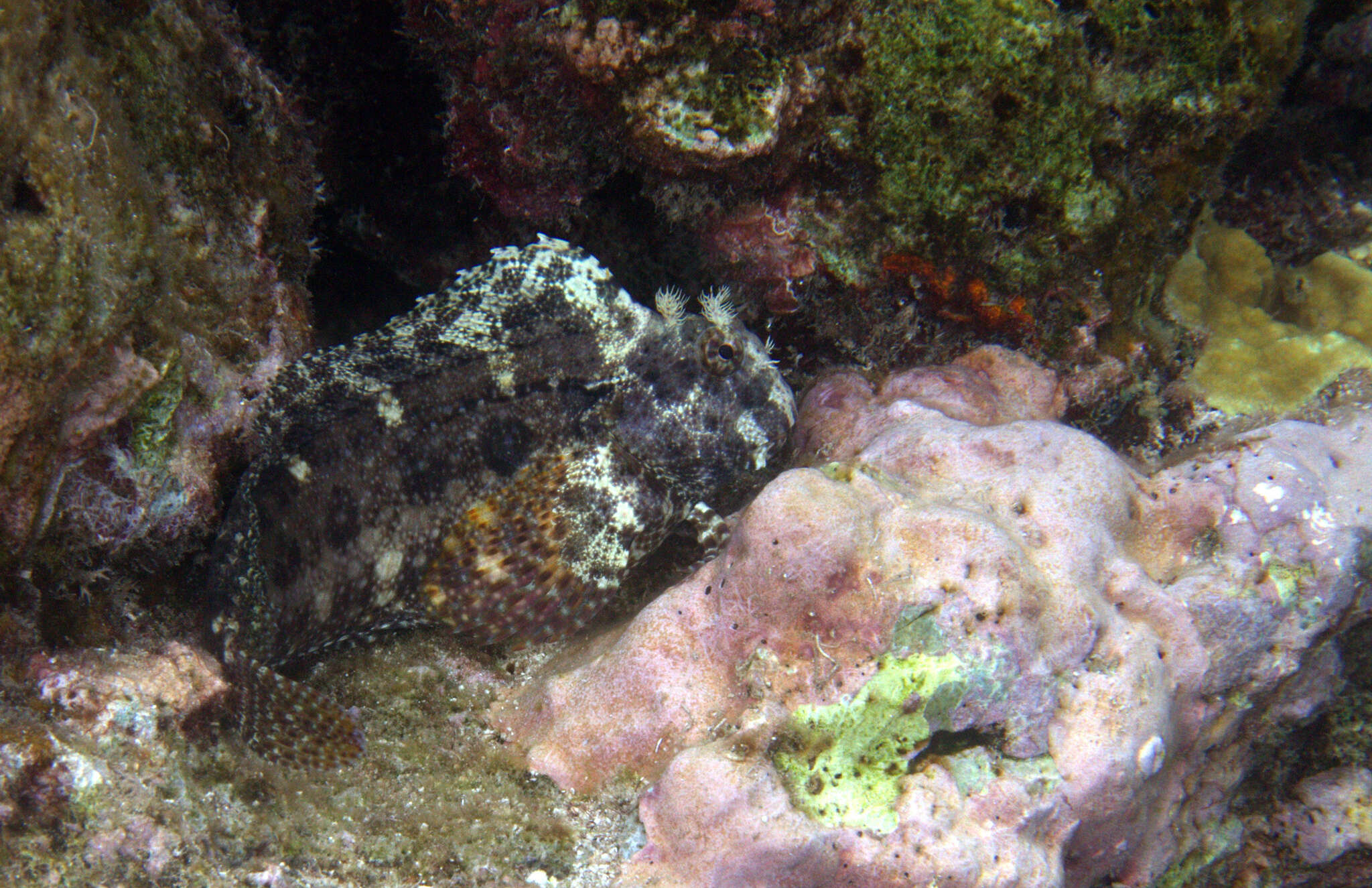
Salarias segmentatus Bath & Randall, 1991 (Segmented blenny)
Inhabits shallow lagoon reefs, on algal covered rocks and rubble .Feeds on algae growing at the coral bases. Oviparous . Eggs are demersal and adhesive . Maximum depth reported by Ref. 48636.
Salarias ceramensis Bleeker, 1852 (Seram blenny)
Occurs in sheltered bays and lagoons, often silty habitat, amongst mixed algae and coral rubble to about 10 m depth . Oviparous . Eggs are demersal and adhesive .
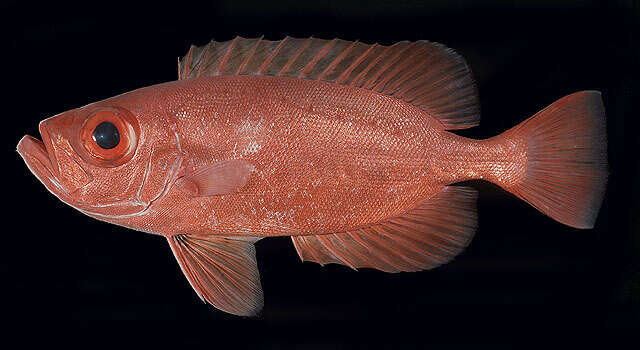
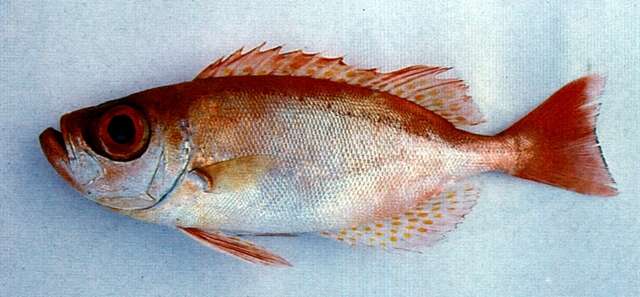
Priacanthus blochii Bleeker, 1853 (Paeony bulleye)
Occurs in lagoon and seaward reefs, under ledges or in caves by day ; often silty habitat . Rarely trawled .
Priacanthus macracanthus Cuvier, 1829 (Red bigeye)
Occurs in inshore and offshore reefs from less than 20 m to more than 400 m depths. Apparently forms aggregations in open bottom areas and is very abundant in the South China Sea and Andaman Sea. Marketed fresh, whole. Sound production has been studied in this species.
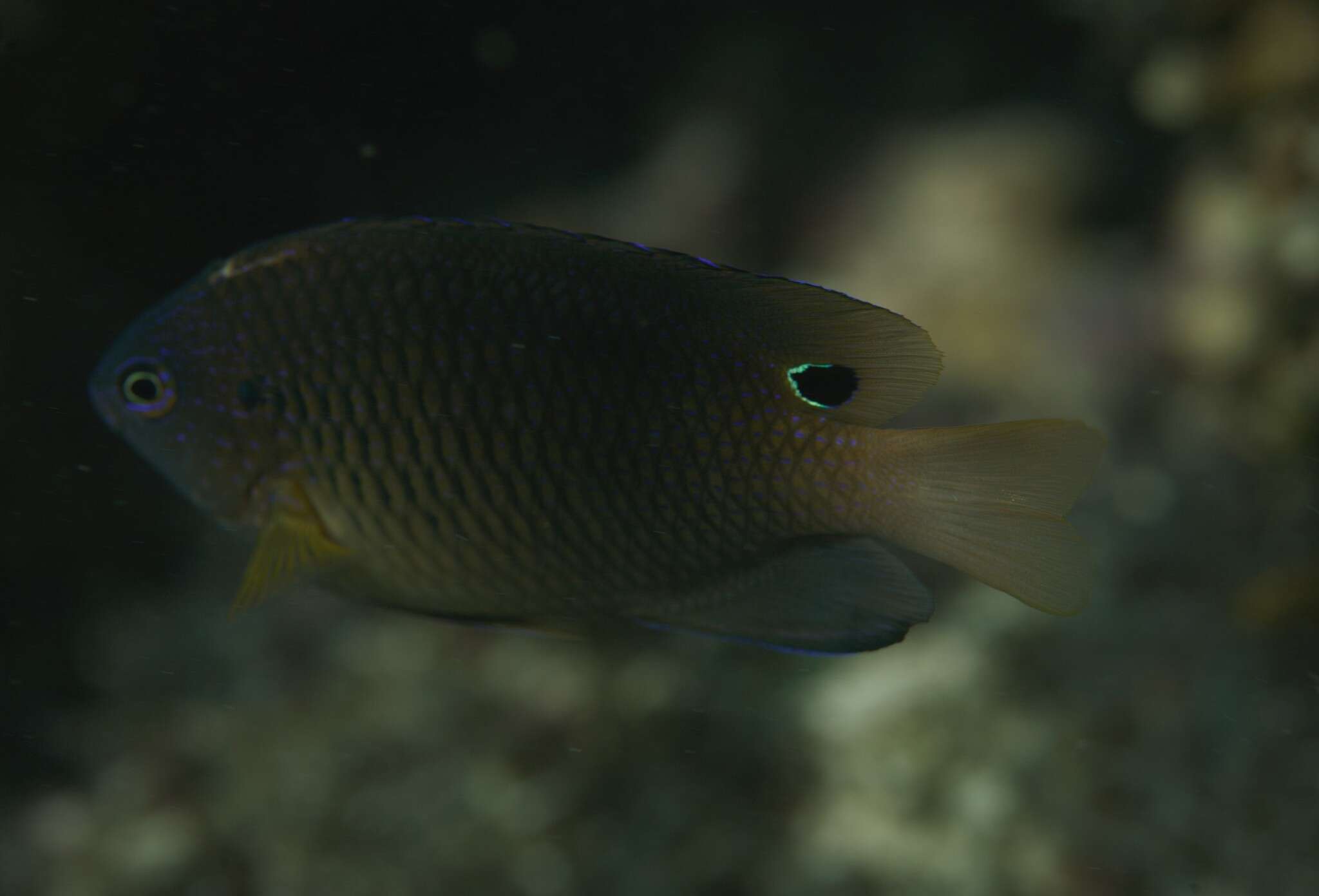
Plectroglyphidodon lacrymatus (Quoy and Gaimard, 1825) (whitespeckled demoiselle)
Inhabits clear lagoon and seaward reefs, in areas with mixed coral and rubble or dead coral rocks. Feeds mainly on benthic algae and associated small invertebrates and fish eggs.
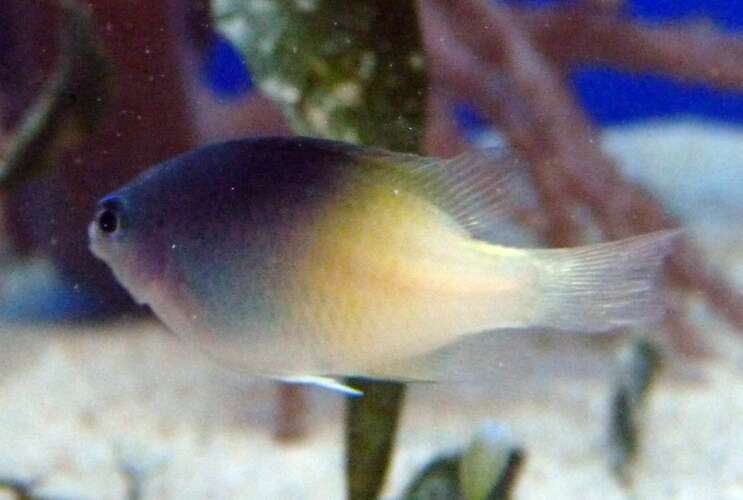
Chrysiptera biocellata (Quoy and Gaimard, 1825) (bluebanded damselfish)
Occurs in protected inner reef flats and shallow lagoons and channels, over rubble and rocky outcrops. Feeds primarily on filamentous algae.
Chrysiptera rollandi (Whitley, 1961) (Rolland's demoiselle)
Occurs singly or in small groups in lagoons, harbors, and outer reef slopes. Found among corals and coral rubble . Feeds mainly on zooplankton.
Pomacentrus adelus Allen, 1991 (Obscure damsel)
Inhabits lagoon, coastal and seaward reefs , usually on open rubble patches .
Pomacentrus amboinensis Bleeker, 1868 (Ambon damsel)
An ubiquitous species found in lagoons, coastal reefs, passages and outer reef slopes. Inhabits sandy areas around coral or rock outcrops or other protective shelter. Usually in small groups . Feeds primarily on algae, but also takes zooplankton. Has been reared in captivity (Ref. 35404.
Chromis viridis (Cuvier, 1830) (blue-green chromis)
Found in large aggregations above thickets of branching Acropora corals in sheltered areas such as subtidal reef flats and lagoons. Juveniles closely tied to individual coral heads . Phytoplankton feeders. Breeding is d...
Read More
Read More
Pomacentrus bankanensis Bleeker, 1853 (Speckled damselfish)
Occurs solitarily or in small groups in lagoons, reef flats, passages, and outer reef slopes. Usually amongst coarse rubble or rock . Feeds primarily on algae, but also takes copepods, isopods, and pelagic tunicates.
Chromis retrofasciata Weber, 1913 (Black-bar chromis)
Inhabits coral-rich areas of clear lagoon and seaward reefs. Occurs singly or in small groups and remains close to thickly branching coral shelter .
Dascyllus reticulatus (Richardson, 1846) (twostriped damselfish)
Occurs in outer lagoon and seaward reefs. Inhabits branching coral heads, particularly Pocillopora eydouxi. Forms schools, often in silty habitats . Male prepares a nest by cleaning with its mouth a rock or coral surface where the female will attach the eggs .
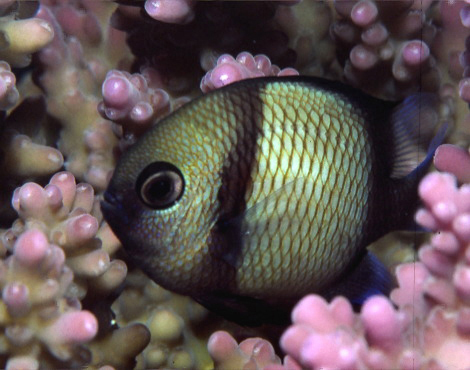
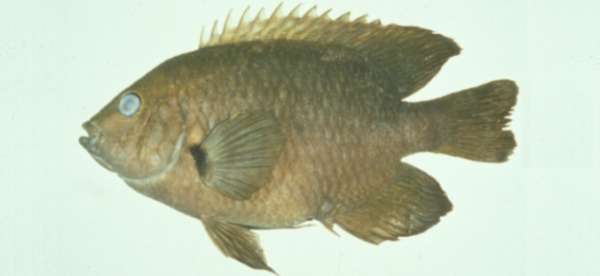
Hemiglyphidodon plagiometopon (Bleeker, 1852) (Purple-spotted demoiselle)
Occurs in protected lagoon and coastal reefs around branching corals , usually with lots of algae on coral bases on the substrate . Feeds on algae . Large species, to at least 18 cm .
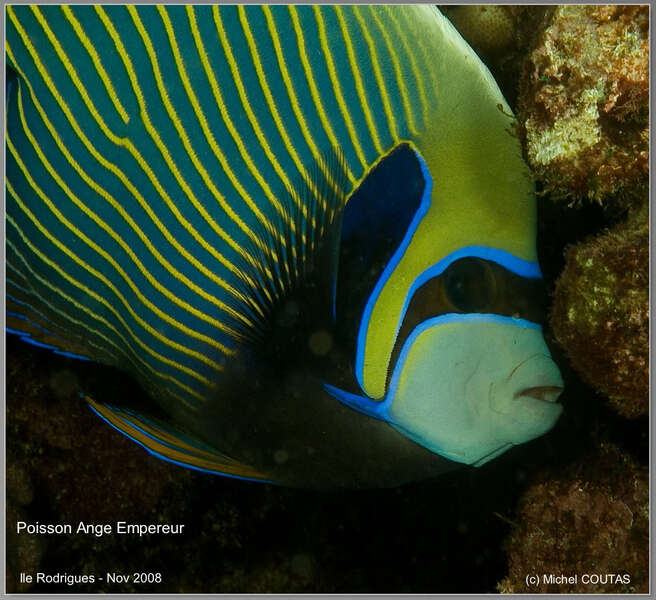
Pomacanthus imperator (Bloch, 1787) (Angel fish)
Juveniles are encountered under ledges, or in holes of outer lagoon patch reefs or semi-protected areas of exposed channels and outer reef flats. Subadults move to reef front holes and surge channels. Large adults inhabi...
Read More
Read More
Centropyge flavicauda Fraser-Brunner, 1933 (Whitetail angelfish)
Inhabits coral bottoms of channels and over reef slopes . Herbivorous . Occasionally exported through the aquarium trade . Often in small loose groups on inner reefs in low patches of brittle corals and coralline algae mix that is shared by damselfishes and small wrasses .
Centropyge multifasciata (Smith & Radcliffe, 1911) (Barred angelfish)
Inhabits ledges and caves and crevices of steep outer reef slopes; occasionally found in clear lagoon reefs. It is secretive and rarely goes out more than a few centimeters from an escape hole . Forms pairs or small grou...
Read More
Read More
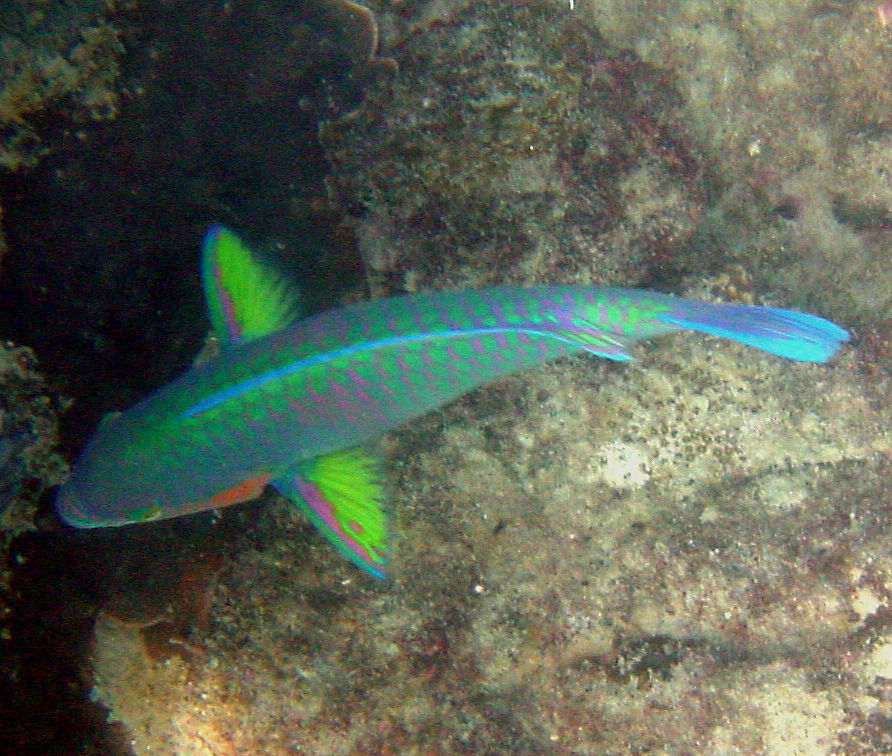
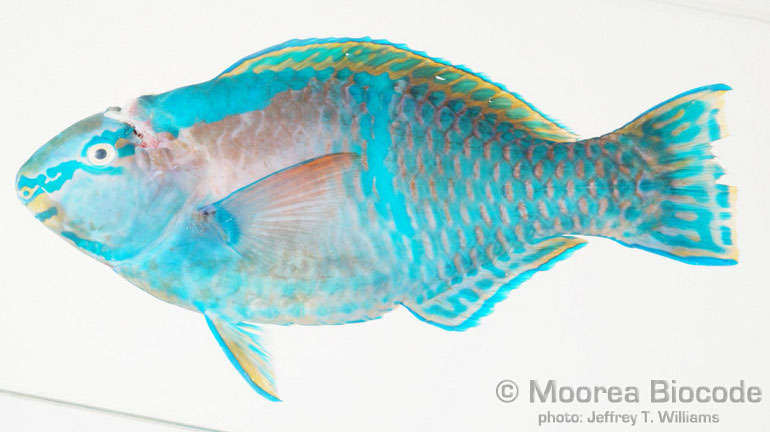
Scarus flavipectoralis Schultz, 1958 (Yellowfin parrotfish)
Inhabits lagoon and channel reefs, usually deeper 20 m .
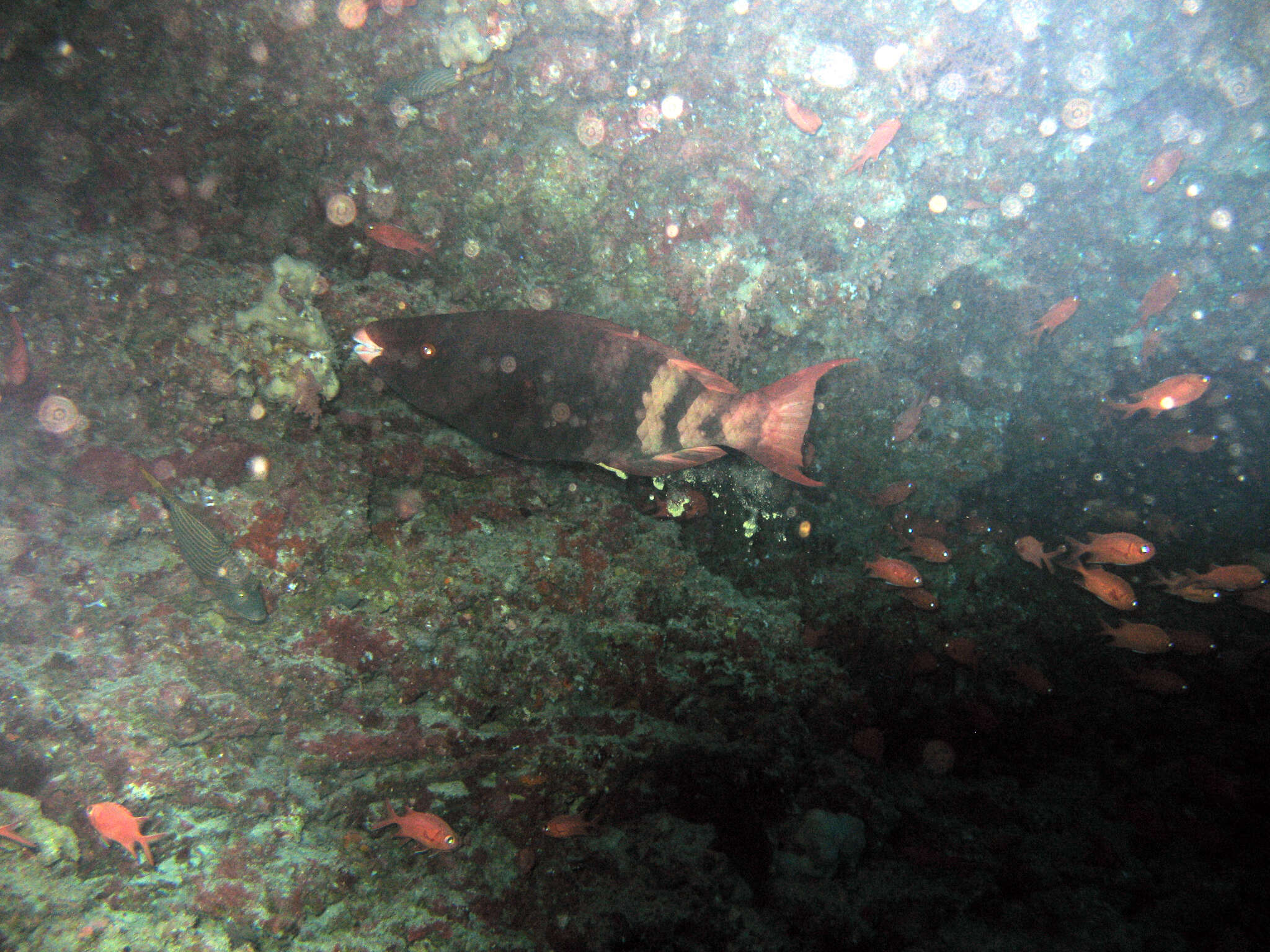
Scarus caudofasciatus (Günther, 1862) (Redbarred parrotfish)
Inhabits steep outer reef slopes . Solitary and wary species . Caught with nets and other kinds of artisanal gear. Mainly sold fresh.
Scarus rivulatus Valenciennes, 1840 (Rivulated parrotfish)
Inhabits rocky and coral reefs from tidal pools to at least 10 m deep. Form schools with 30 to 40 individuals. Grazes on benthic algae and corals . Reproductively active terminal males become bicolored .
Scarus schlegeli (Bleeker, 1861) (Yellowband parrotfish)
Inhabits lagoon and seaward reefs from 1 to over 50 m depth. Adults are common in areas with rich coral and high vertical relief . Juveniles may school with other species. Form feeding aggregations on rubble and mixed r...
Read More
Read More
Scarus dubius Bennett, 1828 (Regal parrot)
Inhabits seaward reefs . Benthopelagic . Grazes on benthic algae. Protogynous .
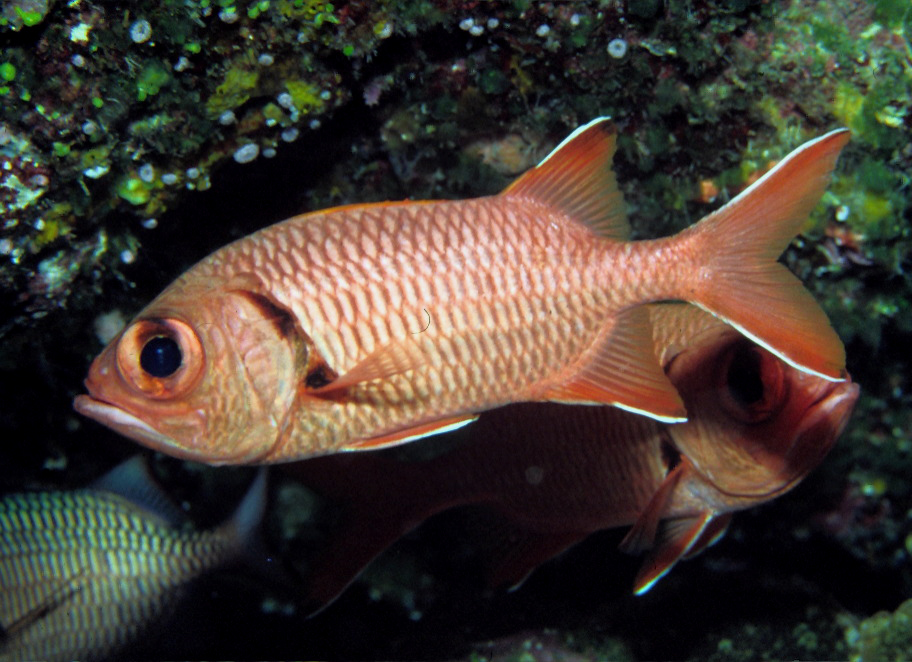
Myripristis murdjan (Forsskål, 1775) (Pinecone soldierfish)
Occur in reef flats and shallow lagoon and seaward reefs . Benthopelagic in or near crevices and caves . Mainly nocturnal. Feed mainly on plankton such as crab larvae . Secretive, hovering under ledges and in caves . Oviparous, with planktonic eggs and larvae .
Share on Social Networks
- Facebook:

personalize your shared text as well as its destination (wall, page...) or send as a private message to a friend
- Twitter: Tweet personalize your tweet
- Google Plus:
Direct link to this dive
- Long link:
- Short link:


 We are participating today in the startup contest Techcrunch Disrupt. Support Diveboard by voting for us!
























































































Datu Budas boat dives. 2 dive day.
Breezy and calm cloudy, overcast, humid and cool. Water dark but decent viz, bit silty
1st Rock, Yoyong's Place 1st dive drop in near vertical ledges, North swim some current, long swim, reverse, back to boat.
Not much to spot, very quiet, dark underwater.