


 Beachnutts


 Philippines
-
Nº172
 Date: 2025-04-13 - 12:51
-
 Max Depth: 24.7m Duration: 74mins
Dive Location

- Surface interval:76 mins
- Temp: Surf 27°C Bottom 27°C
- Dive type : Recreational, Reef, Photo
- Visibility: Average Water: Salt
Specific gear used
- BCD: Scubapro - Glide Plus
- Camera: Olympus - TG6
- Computer: Oceanic - OCS
- Fins: Scubapro - Go Rescue
- Knife: Scuba MAx - folding
- Lift bag: ScubaMax - SMB
- Light: Sofirn - SD05
- Mask: Promate - Scope
- Regulator: SEAC - Synchro
- Weights: 3.2 kg
Dive reviews
| Overall review | ||
| Dive difficulty | ||
| Marine life quality |
Recent Divers in Talikud Island, Davao

Recent Pictures in Talikud Island, Davao
Dive Shop & Buddies
 Dive with Maeng Lejarso
 Dive buddies:
Blake Auge,
Maeng,
Mike Tacansan,
Beachnutts
Dive buddies:
Blake Auge,
Maeng,
Mike Tacansan,
Beachnutts

Link to this spot:
- Spot:
- Country:
- Area:
- Body of water:
Dive Profile
- 1. Air
- 10L Aluminium 207 → 28 bar
- Average depth: 16.5m
Data provided by EOL.org









Species Identified
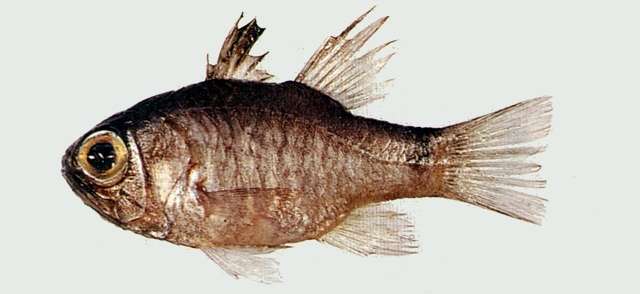
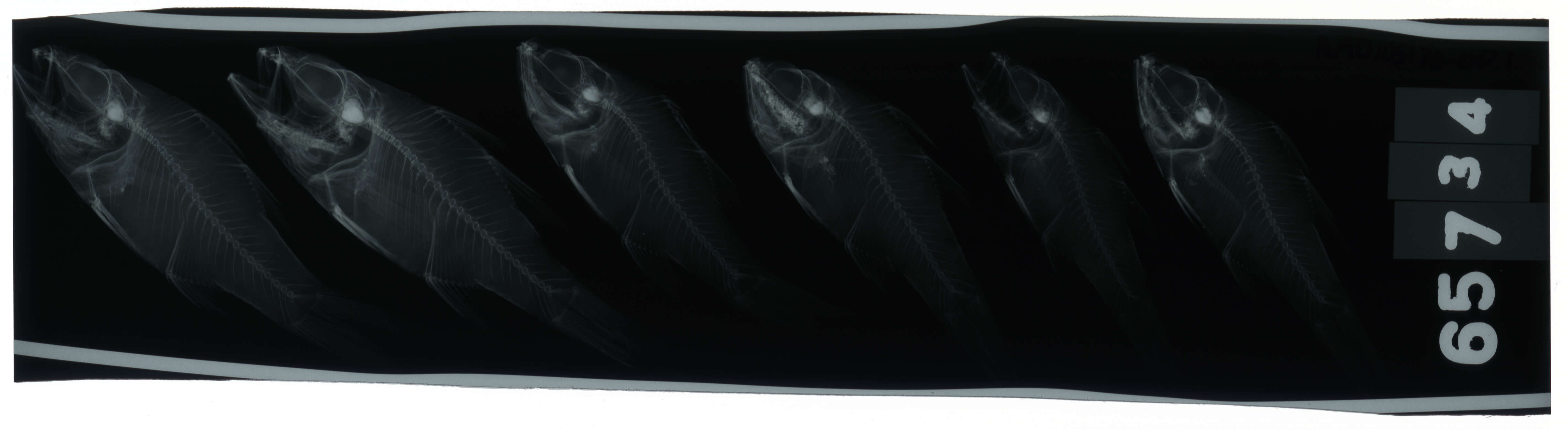
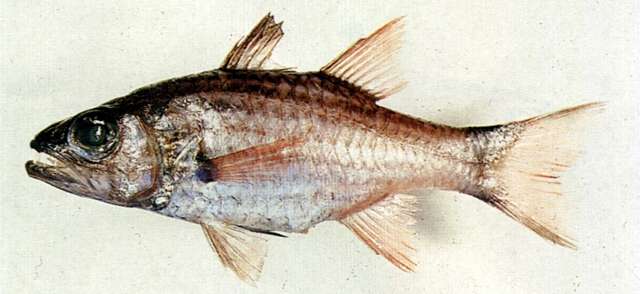
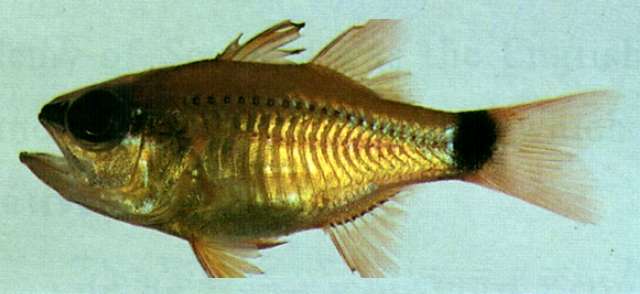
Apogon guamensis Valenciennes, 1832 (Guam cardinalfish)
Common in reef flats and shallow lagoons, but hiding by day within Acropora thickets and other corals, as well as in holes and crevices and emerging at night to forage on free-swimming invertebrates .
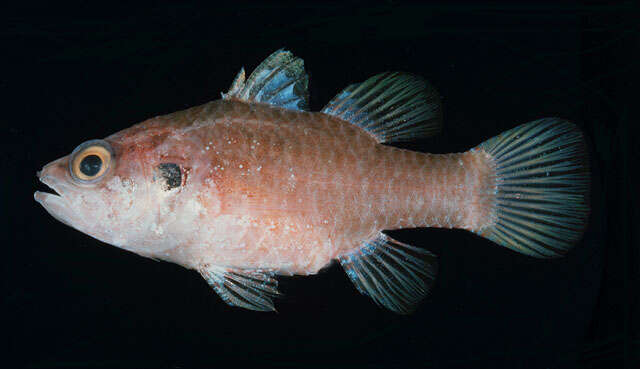
Apogon lateralis Valenciennes, 1832 (Ceram cardinalfish)
A euryhaline species , common in freshwater and estuaries , shallow sheltered inshore reefs or river mouths, among clumps of algae or algal covered rubble. Found in aggregations .
Cheilodipterus macrodon (Lacepède, 1802) (bigtooth percelle)
Common in outer reef slopes in 4-30 m depth; in caves and ledges of clear lagoon and seaward reefs from 0.5 to at least 40 m, generally hovering solitarily in midwater . Adults usually in pairs or small groups comprising ...
Read More
Read More
Apogon fleurieu (Lacepède, 1802) (Cardinalfish)
Common in shallow coastal reefs with moderate currents . Also in tidal channels of estuaries . Adults usually in small schools comprising pairs .
Apogon exostigma (Jordan & Starks, 1906) (Narrowstripe cardinalfish)
Found under ledges or among isolated coral heads in silty inner reef areas . Solitary and rather rare . Nocturnal species .
Fowleria vaiulae (Jordan & Seale, 1906) (Mottled cardinalfish)
Occurs inshore in reef areas among Acropora corals .
Archamia fucata (Cantor, 1849) (Orangelined cardinalfish)
Inhabits continental and insular shelves; on coral and rocky reefs in sheltered bays and lagoon, patch reefs, with muddy, sandy and silty bottoms or coral rubble, and mangroves ; typically forming dense aggregations at the entrance of caves and among branching corals . Nocturnal species .
Fowleria aurita (Valenciennes, 1831) (Crosseyed cardinalfish)
Occurs inshore in reef areas . Commonly found among weeds in tide pools . Nocturnal species . Minimum depth reported taken from Ref. 30874.
Apogon aureus (Lacepède, 1802) (Ringtailed cardinalfish)
Inhabits holes in rocks or under ledges in shallow waters. Known to occur in mixed aggregates with Apogon apogonoides during summer and autumn, but form separate aggregates in winter and spring .
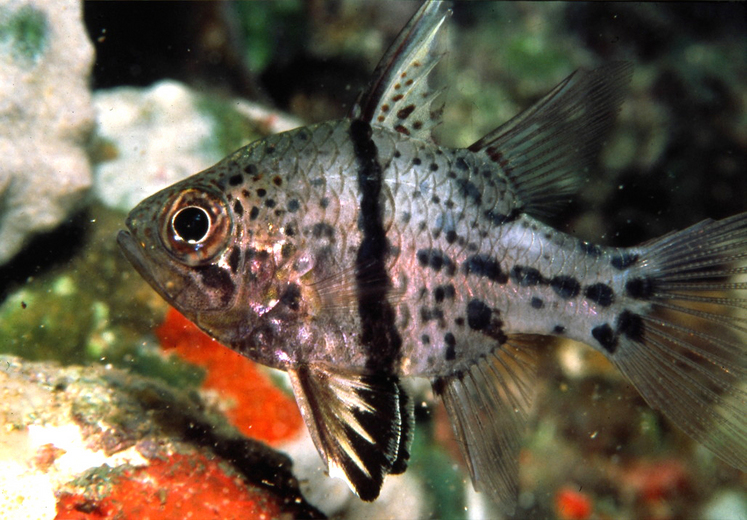
Sphaeramia orbicularis (Cuvier, 1828) (Orbiculate cardinalfish)
Restricted to coastal waters, forming small aggregations among mangroves, rocks, debris, or piers of shallow sheltered shorelines. Feeds at night , primarily on planktonic crustaceans. Courtship and spawning occur fortni...
Read More
Read More
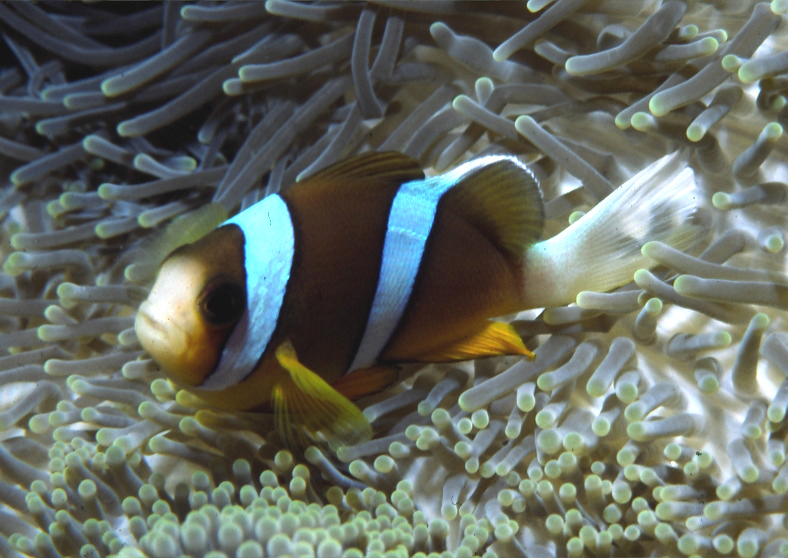
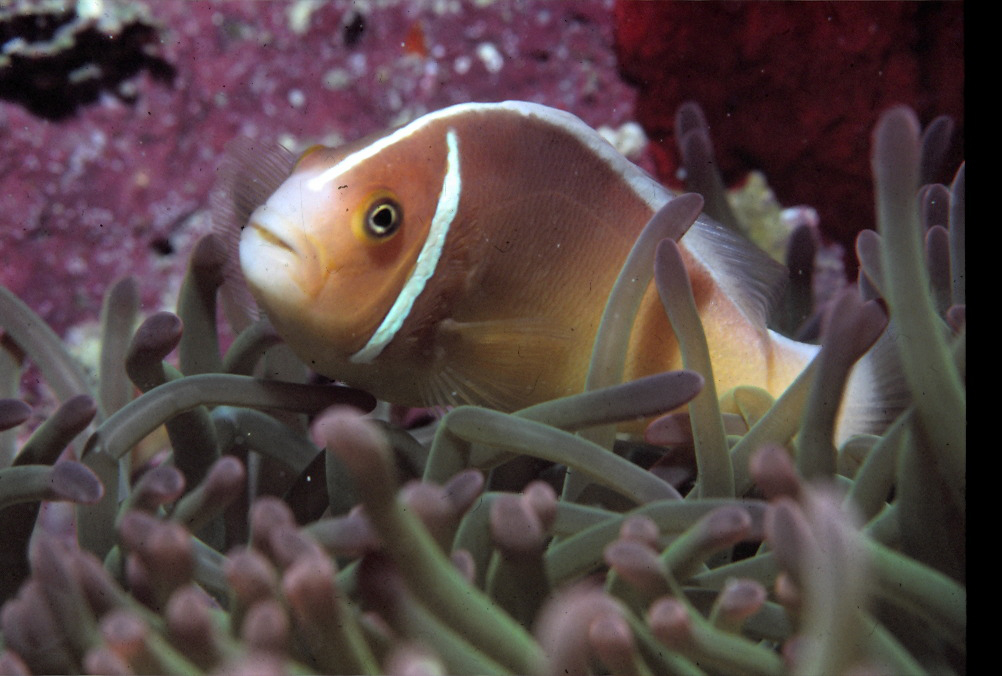
Amphiprion clarkii (Bennett, 1830) (Brown anemonefish)
Inhabits lagoons and outer reef slopes. Omnivorous. Oviparous, with elliptical eggs . Monogamous . Has been reared in captivity . Associated with the anemones: Cryptodendrum adhaesivum, Entacmaea quadricolor, Heterac...
Read More
Read More
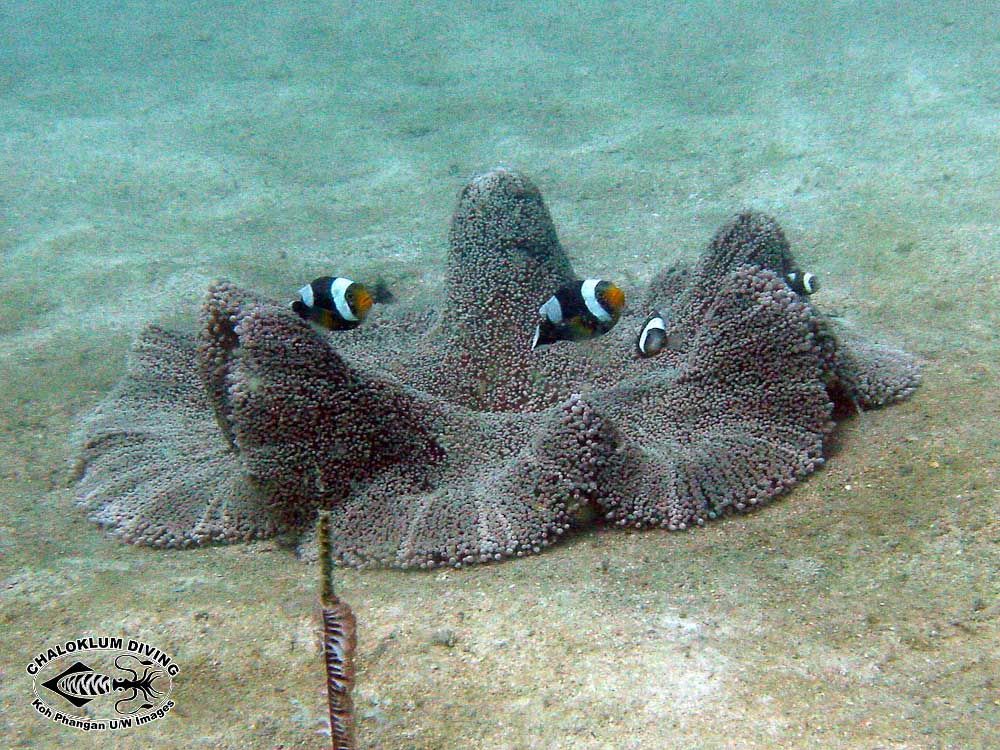
Amphiprion polymnus (Linnaeus, 1758) (yellowfinned anemonefish)
Inhabits silty lagoons and harbors. Monogamous . A protandrous hermaphrodite . Associated with the anemones: Heteractis crispa and Stichodactyla haddoni . Has been reared in captivity .
Premnas biaculeatus (Bloch, 1790) (Spinecheek anemonefish)
Inhabits lagoon and seaward reefs , found mainly in protected coastal waters and lagoons. Typically found in pairs in which males are much smaller than females . Feeds primarily on zooplankton and benthic algae . Has been reared in captivity . Associated with the anemone Entacmaea quadricolor .
Amphiprion perideraion Bleeker, 1855 (False skunk-striped anemonefish)
Inhabits lagoon and seaward reefs . Mainly diurnal. Non-burrowing. Monogamous . A protandrous hermaphrodite . Associated with the anemones: Heteractis magnifica , Heteractis crispa, Macrodactyla doreensis, and Sticho...
Read More
Read More
Amphiprion percula (Lacepède, 1802) (Orange clownfish)
Inhabits lagoon and seaward reefs . Each group of fish consists of a breeding pair and 0-4 non-breeders. Within each group there is a size-based hierarchy: the female is largest, the male is second largest, and the non-...
Read More
Read More
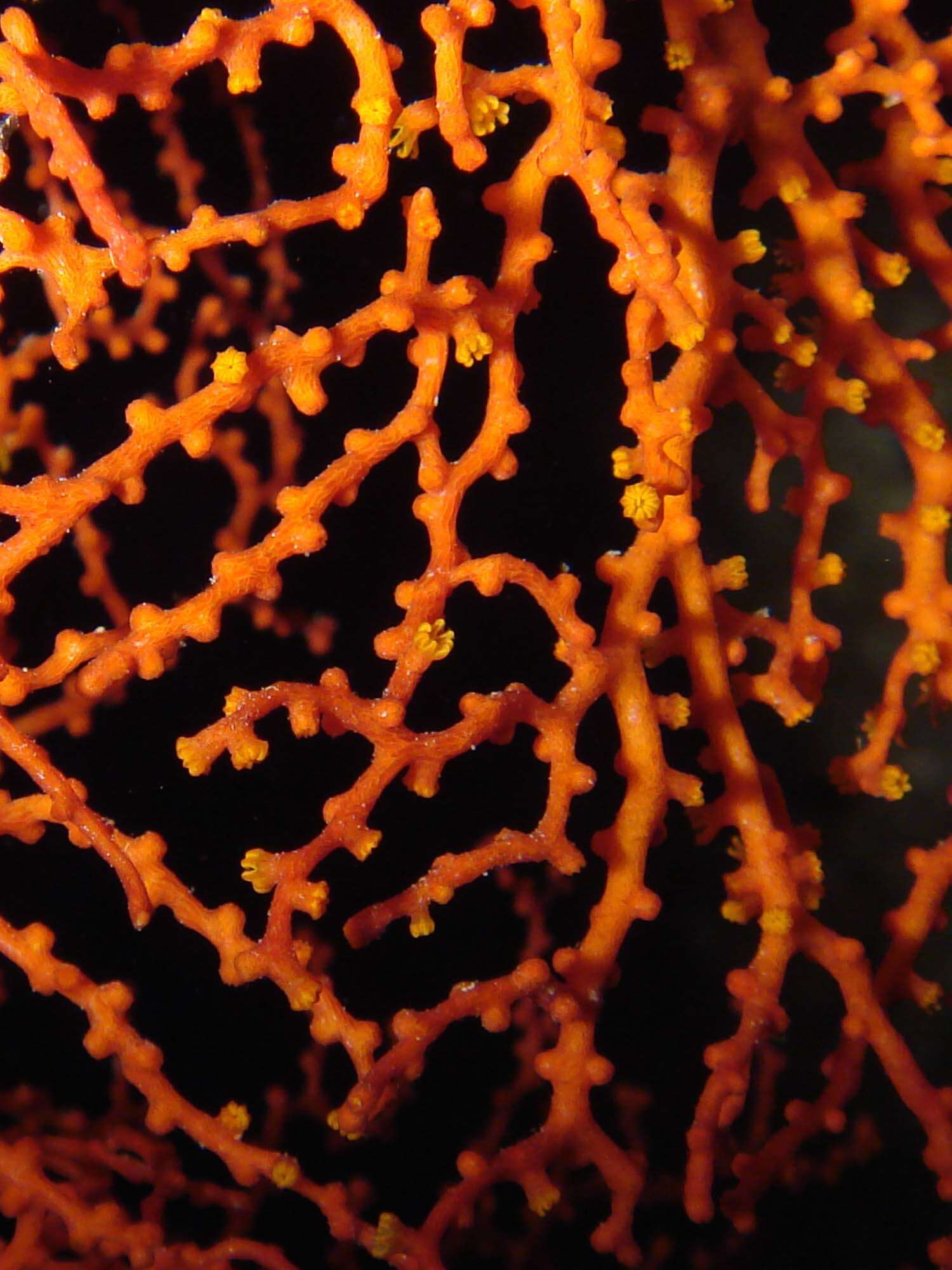
Muricella grandis Nutting, 1910
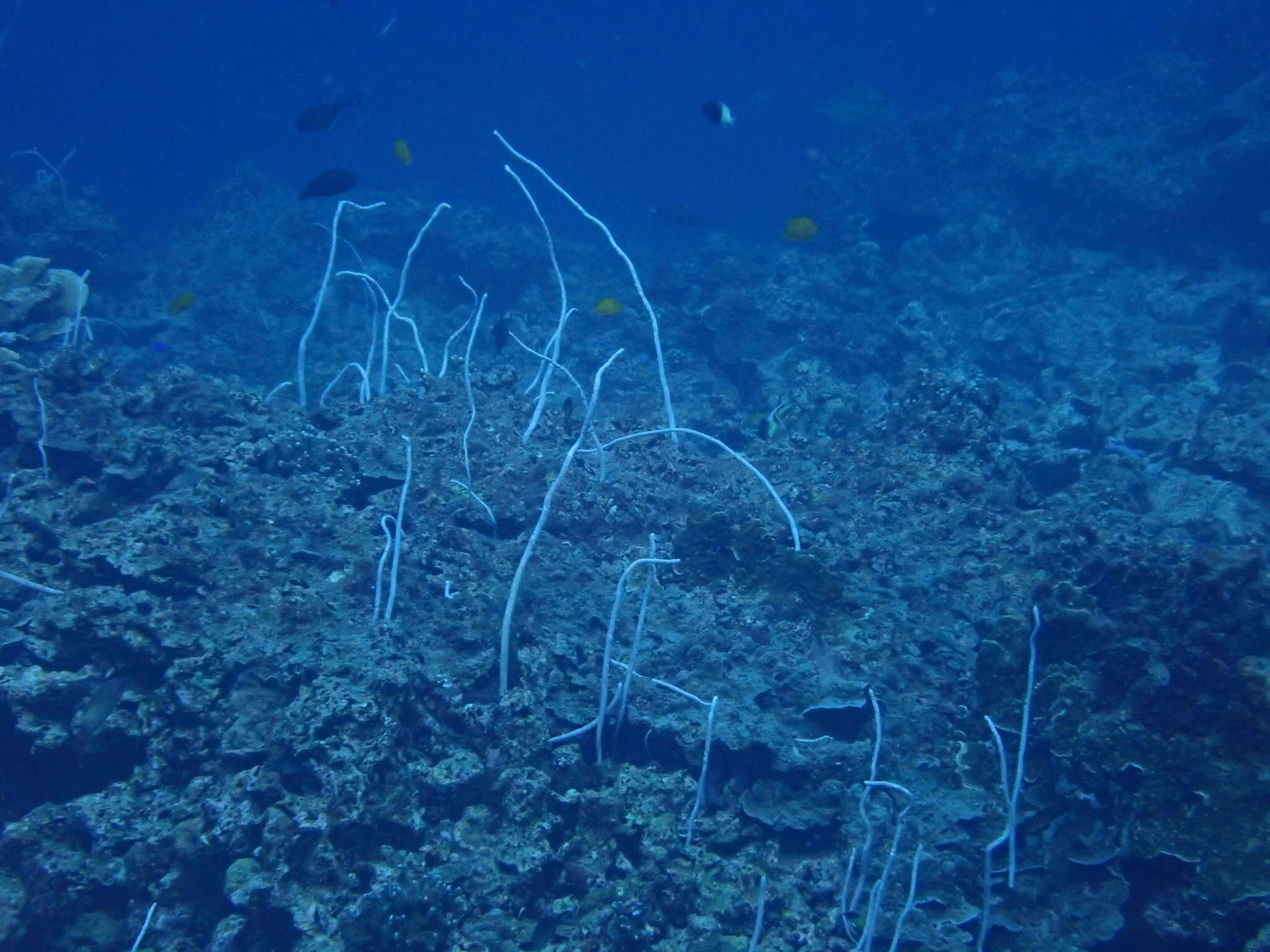
Junceella fragilis (Ridley, 1884)
Stephanogorgia diomedea Bayer & Muzik, 1976
Callogorgia flabellum (Ehrenberg, 1834)
Chromonephthea pellucida (Kükenthal, 1911)
Callogorgia cristata Aurivillius, 1931
Sinularia flexibilis (Quoy & Gaimard, 1833)
Chrysogorgia flexilis (Wright & Studer, 1889)
Solenocaulon sterroclonium Germanos, 1895
Nephthea cupressiformis Kükenthal, 1903
Sinularia nanolobata Verseveldt, 1977
Echinomuricea coronalis Germanos, 1896
Placogorgia dendritica Nutting, 1910
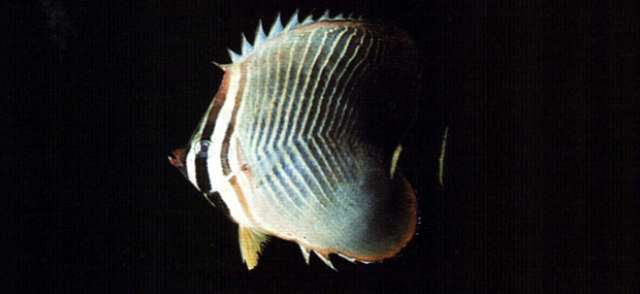
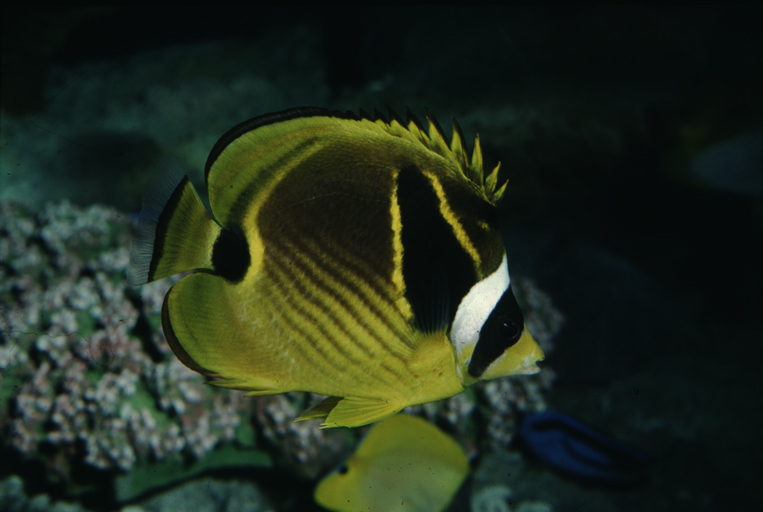
Chaetodon baronessa Cuvier, 1829 (Eastern triangular butterflyfish)
Occur in lagoon and seaward reefs. Feed exclusively on the polyps of the tubular Acropora corals. Swim in pairs and are territorial. Oviparous . Form pairs during breeding .
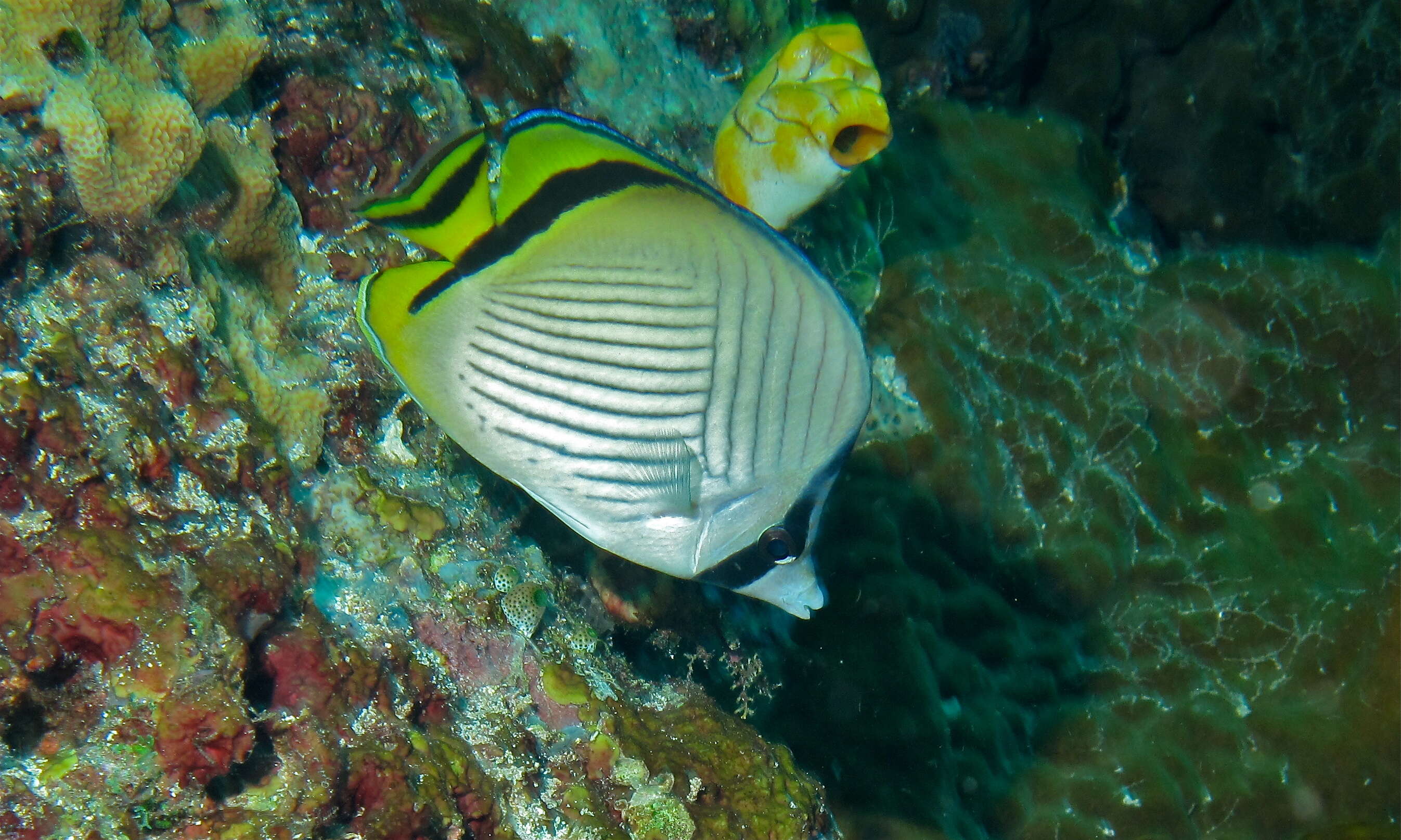
Chaetodon vagabundus Linnaeus, 1758 (Vagabond butterflyfish)
Found in reef flats, lagoon and seaward reefs and sometimes in turbid waters subject to freshwater runoff. Swim in pairs. Omnivorous, feed on algae, coral polyps, crustaceans and worms . Oviparous , monogamous . Stab...
Read More
Read More
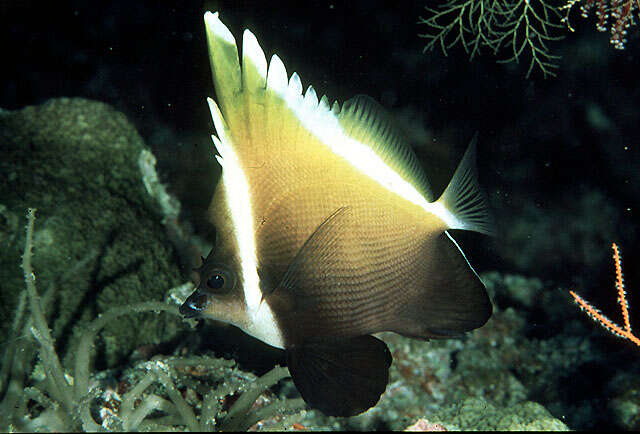
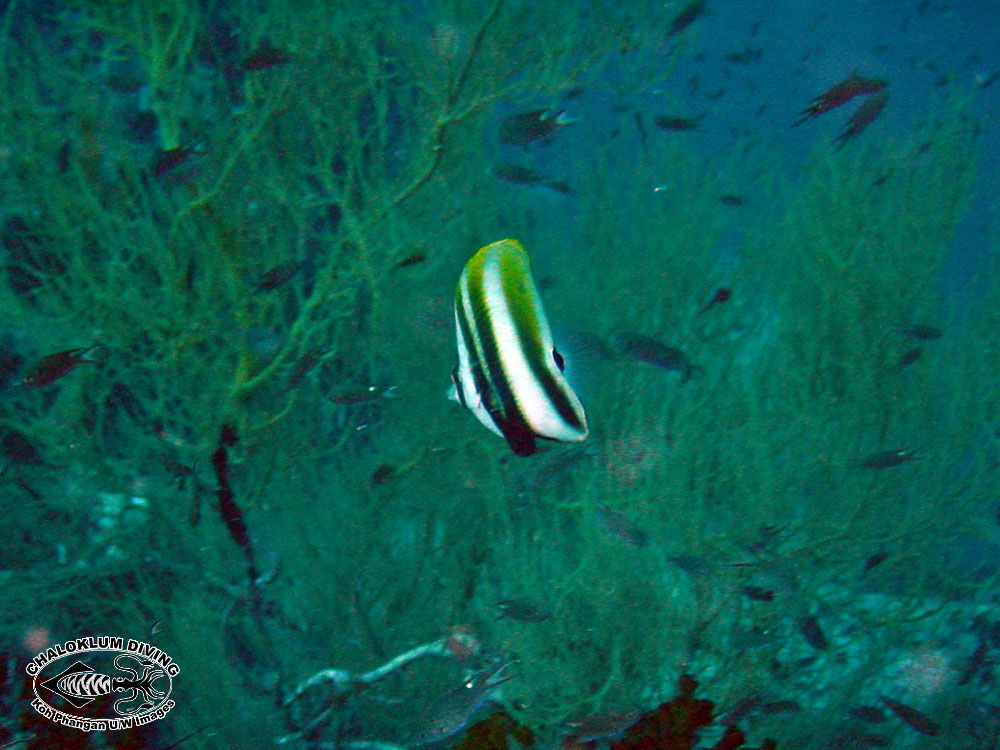
Heniochus varius (Cuvier, 1829) (Horned bannerfish)
Occur in deep lagoons and steep outer reef slopes, with mixed algae and coral growth . Solitary or in small groups. Feed on corals and other invertebrates . Oviparous . Form pairs during breeding . Maximum depth reported taken from Ref. 48636.
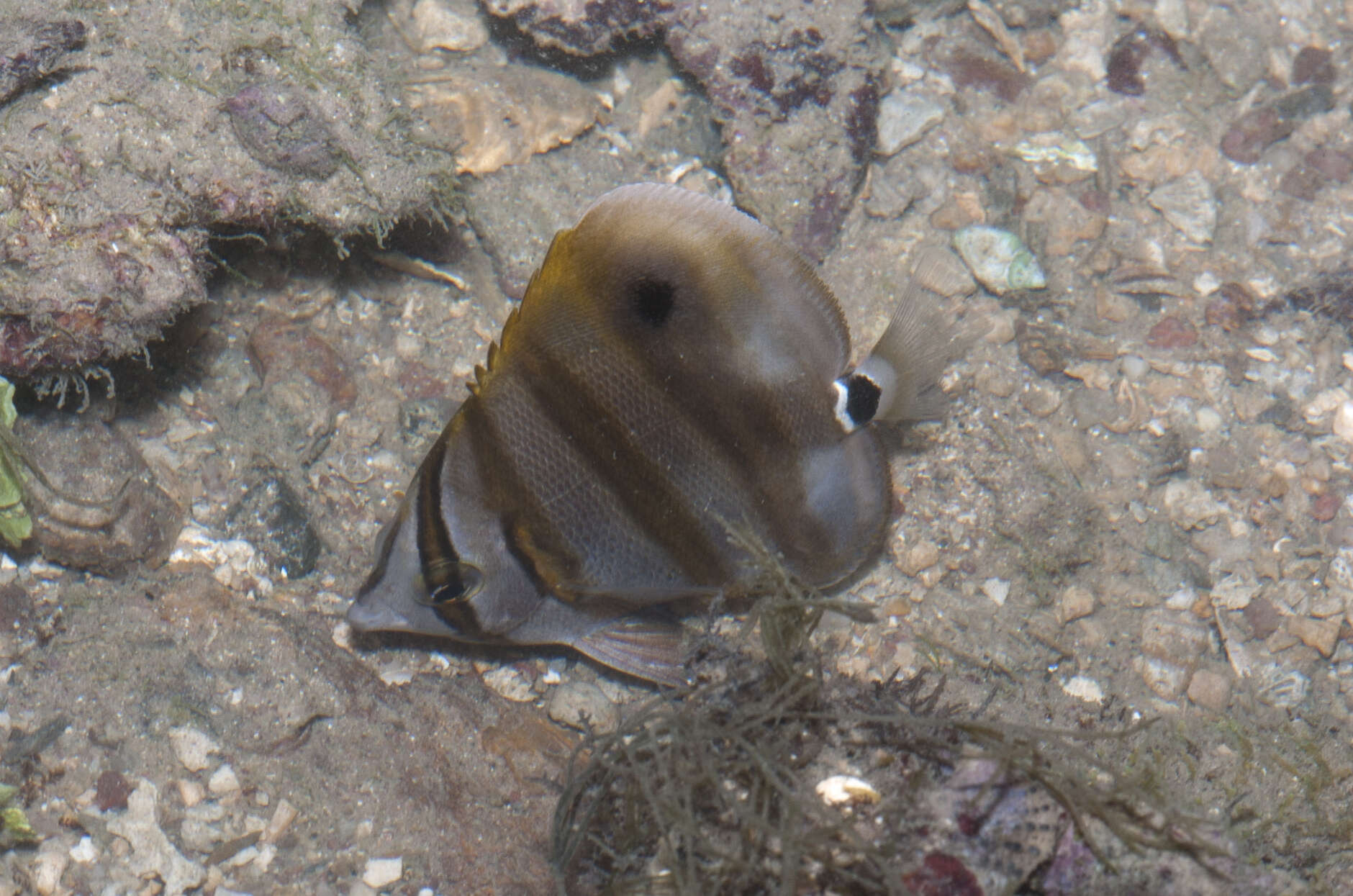
Parachaetodon ocellatus (Cuvier, 1831) (Sixspine butterflyfish)
Occur in pairs on flat sand or silty bottoms on coastal reefs. Adults school in large numbers over open muddy substrates in deep water. Juveniles sometimes in large lagoons with seagrasses in depths of about 5 m or more . Oviparous . Form pairs during breeding .
Chaetodon lunula (Lacepède, 1802) (Butterflyfish)
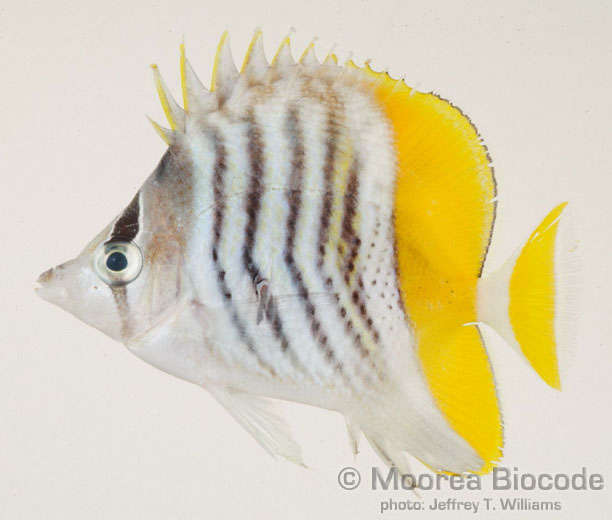
Coradion altivelis McCulloch, 1916 (High-finned coralfish)
A poorly known species . Found in inshore reefs in mixed algae and coral habitats and coastal drop-offs . Oviparous . Form pairs during breeding .
Chaetodon mertensii Cuvier, 1831 (Atoll butterflyfish)
Inhabit deep lagoons and seaward reefs. Occur singly or in pairs. Feed on algae and small benthic invertebrates . Oviparous . Form pairs during breeding . May hybridize with C. xanthurus.
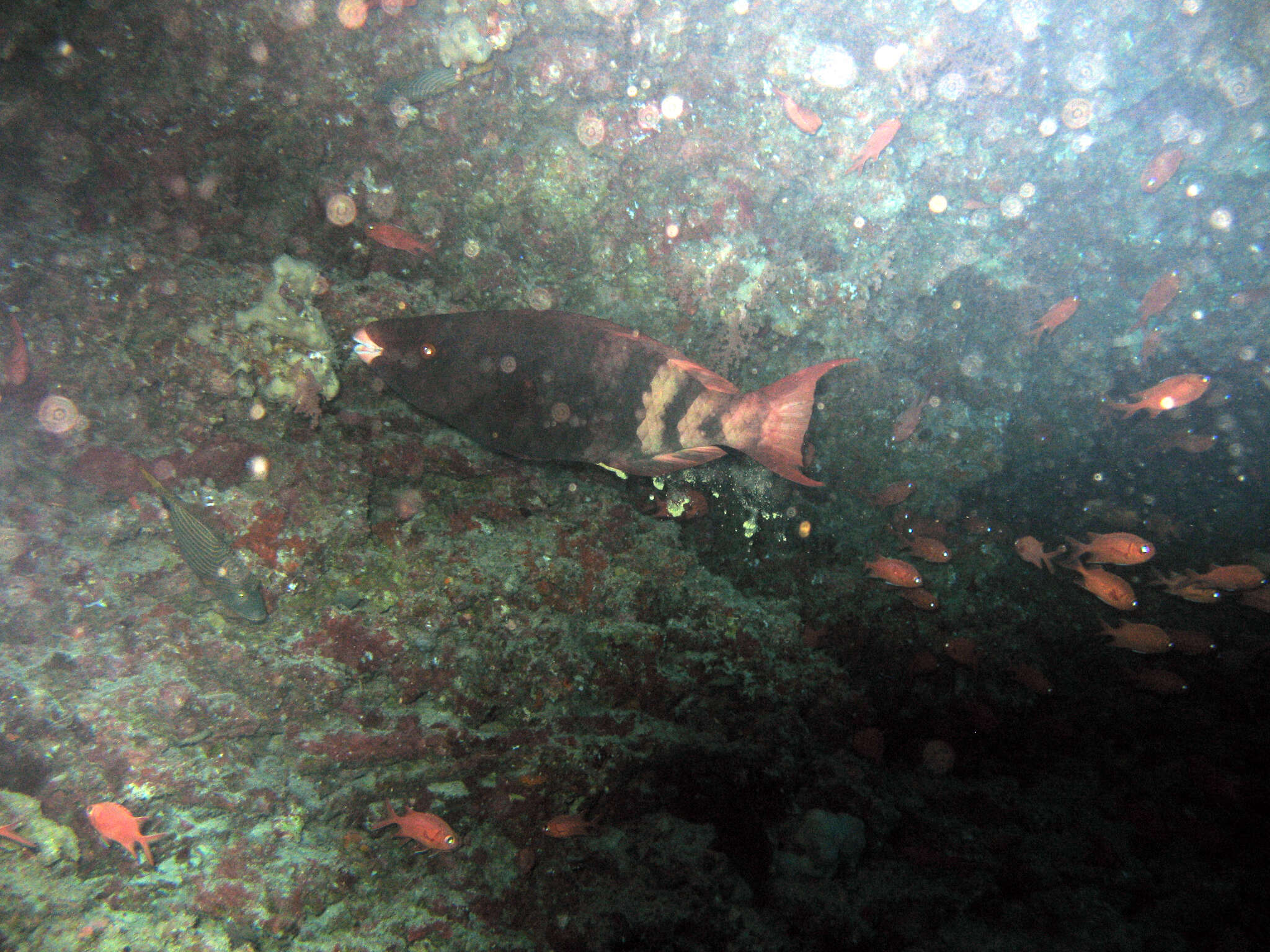
Scarus caudofasciatus (Günther, 1862) (Redbarred parrotfish)
Inhabits steep outer reef slopes . Solitary and wary species . Caught with nets and other kinds of artisanal gear. Mainly sold fresh.
Chlorurus troschelii (Bleeker, 1853) (Troschel's parrotfish)
Inhabits clear shallow seaward reefs, in areas with high coral cover .
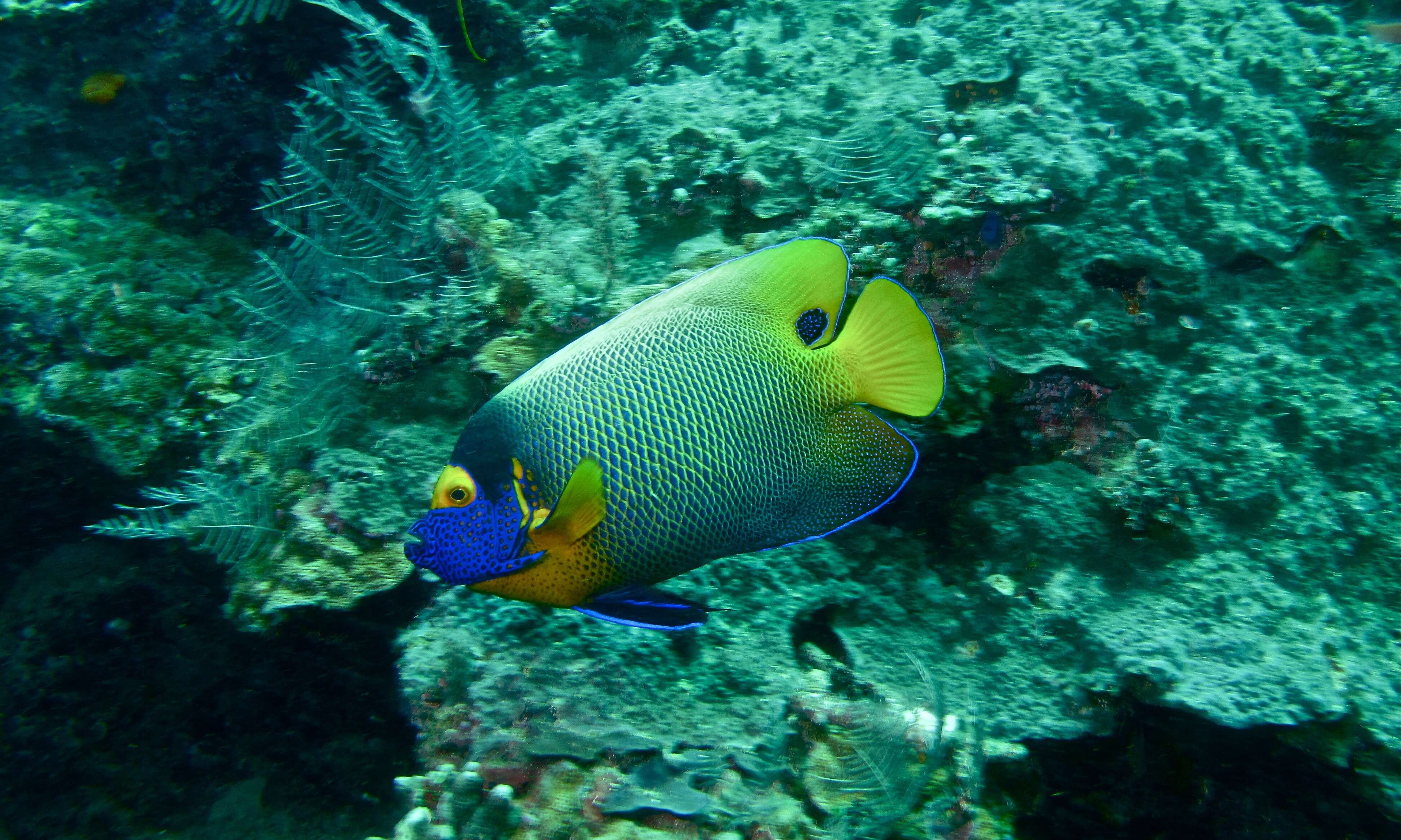
Pomacanthus xanthometopon (Bleeker, 1853) (Yellowface angelfish)
Found in coral rich areas of lagoons, channels, and outer reef slopes. Often near caves . Juveniles settle in very shallow inshore caves with algae growth . Usually solitary. Feeds on sponges and other encrusting organ...
Read More
Read More
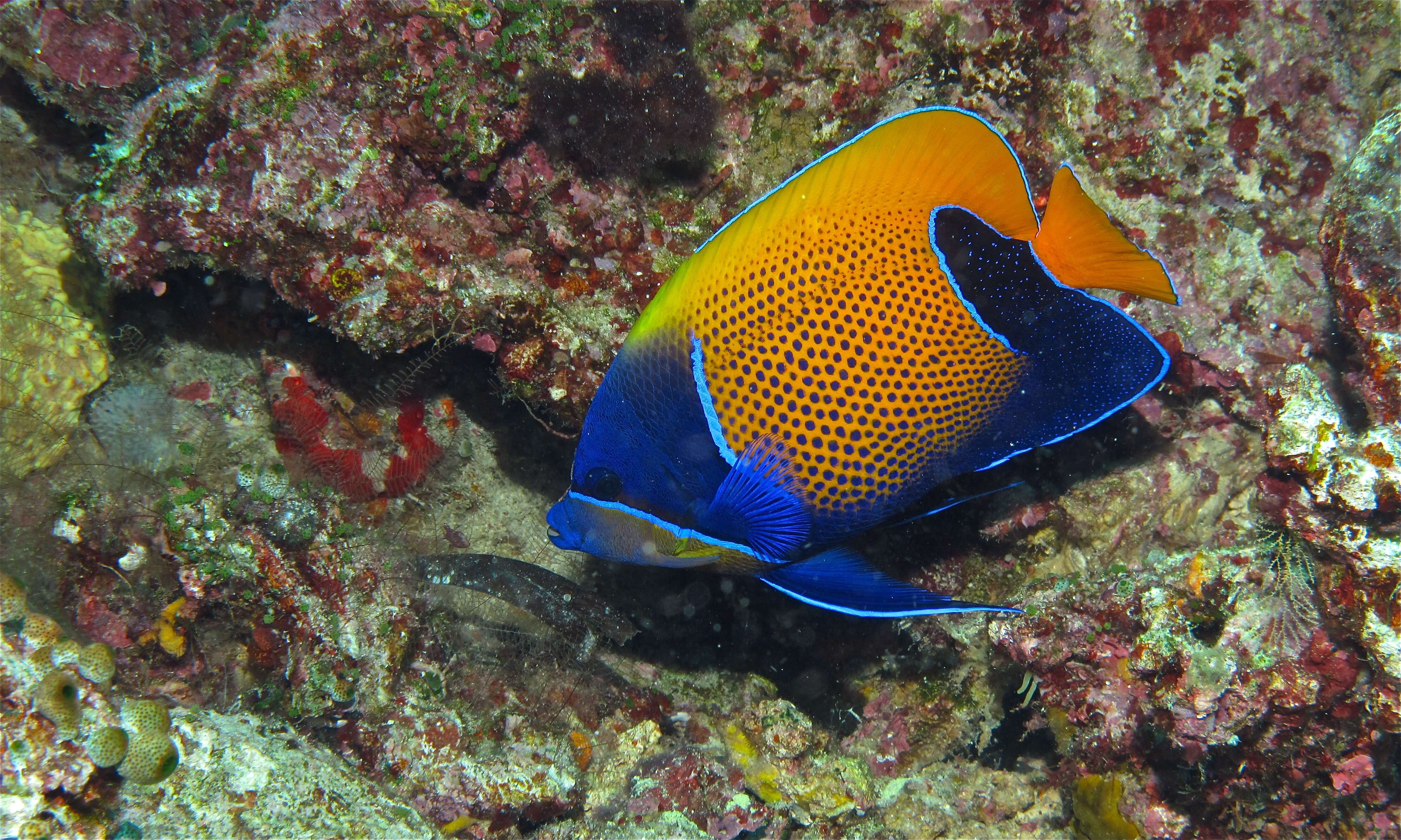
Pomacanthus navarchus (Cuvier, 1831) (Majestic angelfish)
Occurs in coral rich areas of clear lagoons, channels, and protected outer reef slopes. Changes to adult pattern is dramatic, and intermediate stage are rarely seen . Often solitary. Feeds on sponges and tunicates. Uncommon . Highly prized aquarium export .
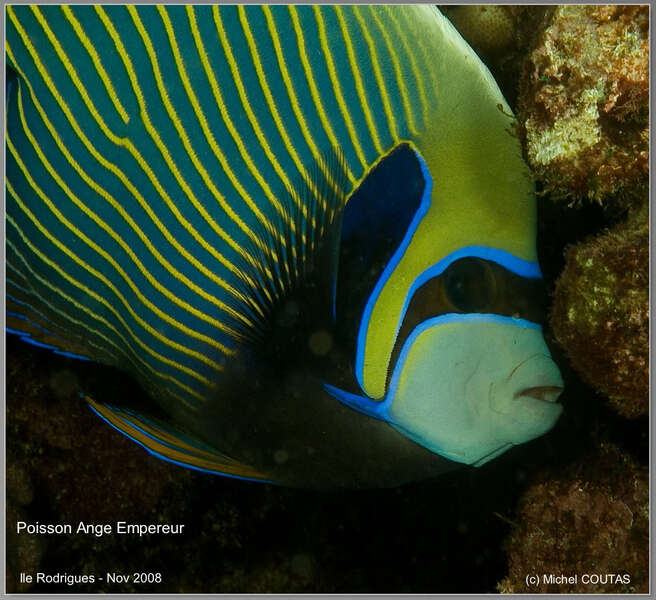
Pomacanthus imperator (Bloch, 1787) (Angel fish)
Juveniles are encountered under ledges, or in holes of outer lagoon patch reefs or semi-protected areas of exposed channels and outer reef flats. Subadults move to reef front holes and surge channels. Large adults inhabi...
Read More
Read More
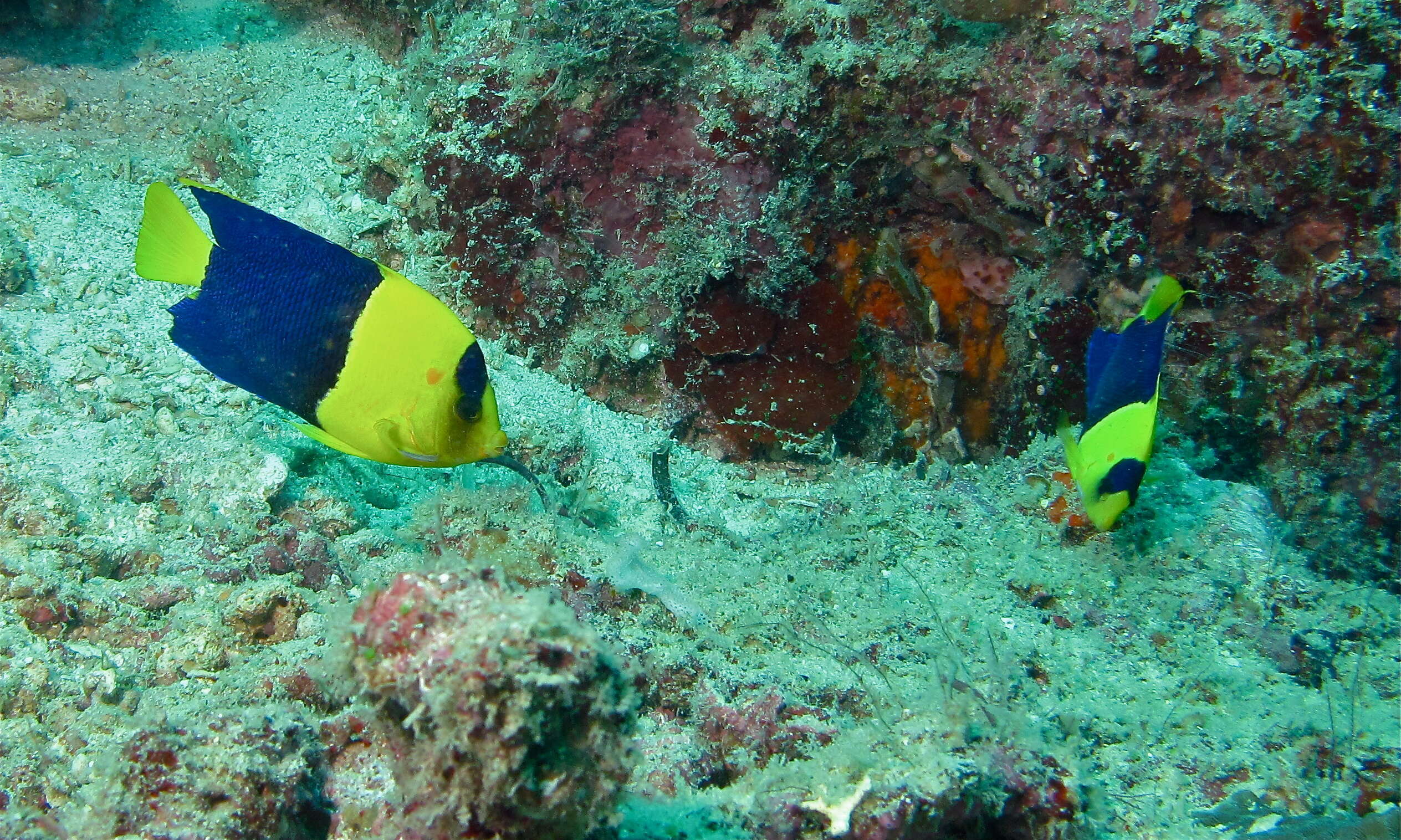
Centropyge bicolor (Bloch, 1787) (Bicolor angelfish)
Inhabits lagoon, channel, or protected seaward reef slopes, drop offs, coral and rubble areas . Usually in pairs or in small groups. Feeds on algae, small crustaceans and worms. Darts from one hiding place to the next. Commonly exported through the aquarium trade .
Centropyge tibicen (Cuvier, 1831) (Keyhole angelfish)
Relatively uncommon in mixed coral and rubble areas of lagoon and seaward reefs. The largest member of the genus . Feeds mainly on algae. Forms harems of 3-7 individuals. Frequently exported through the aquarium trade .
Balistapus undulatus (Park, 1797) (Orange-lined triggerfish)
Occurs in coral-rich areas of deep lagoon and seaward reefs from the lower surge zone to at least 50 meters, Ref. 48637. Feeds on a variety of benthic organisms such as algae, echinoderms, fishes, mollusks, tunicates, spo...
Read More
Read More
Sufflamen chrysopterum (Bloch & Schneider, 1801) (Halfmoon triggerfish)
Inhabit coastal to outer reefs. Habitats from silty lagoons to pristine outer reef walls . Occur in shallow lagoon and seaward reefs. Solitary and territorial. Feed on a wide variety of invertebrates. Also taken by drive-in nets . Oviparous . Monogamous .
Share on Social Networks
- Facebook:

personalize your shared text as well as its destination (wall, page...) or send as a private message to a friend
- Twitter: Tweet personalize your tweet
- Google Plus:
Direct link to this dive
- Long link:
- Short link:


 We are participating today in the startup contest Techcrunch Disrupt. Support Diveboard by voting for us!
























































































2nd dive 2 tanker Budas
drop in North end Angel's Cove swim to Dizon Wall/ Red House, boat pick up
solo some of dive, multilevel