


 Beachnutts



 Philippines
-
Nº157
 Date: 2024-11-24 - 12:58
-
 Max Depth: 19.2m Duration: 87mins
Dive Location

- Surface interval:71 mins
- Temp: Surf 27°C Bottom 27°C
- Dive type : Recreational, Reef, Photo
- Visibility: Average Water: Salt
Specific gear used
- BCD: Scubapro - Glide Plus
- Boots: Orca - Dive shoes
- Camera: Olympus - TG6
- Computer: Oceanic - OCS
- Fins: Scubapro - Jet Fins
- Knife: Scuba MAx - folding
- Lift bag: ScubaMax - SMB
- Light: Sofirn - SD05
- Mask: Promate - Scope
- Regulator: SEAC - Synchro
- Wet suit: Blue Ocean - Diveskin
- Weights: 3.2 kg
Dive reviews
| Overall review | ||
| Dive difficulty | ||
| Marine life quality |
Recent Divers in Talicud island, Davao
Recent Pictures in Talicud island, Davao
Dive Shop & Buddies
 Dive with Blake Auge
 Dive buddies:
Maeng,
Reymar Tano,
Beachnutts

Link to this spot:
- Spot:
- Country:
- Area:
- Body of water:
Dive Profile
- 1. Air
- 10L Aluminium 207 → 17 bar
- Average depth: 12.8m
Data provided by EOL.org







Species Identified
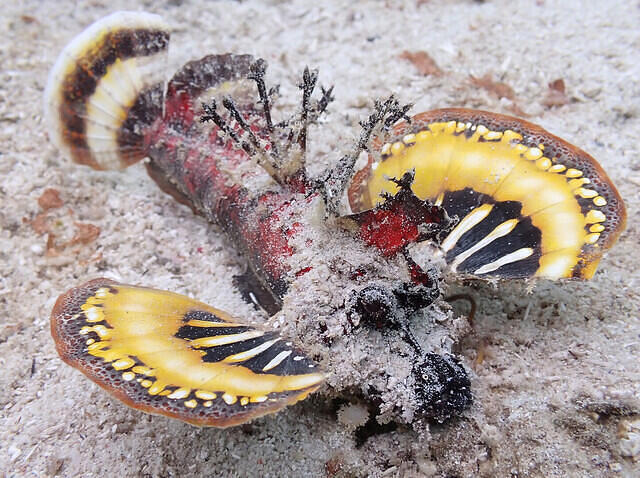
Melibe colemani Gosliner & Pola, 2012
Acropora spicifera (Dana, 1846)
zooxanthellate
Acropora selago (Studer, 1878)
zooxanthellate
Acropora subglabra (Brook, 1891)
zooxanthellate
Acropora squarrosa (Ehrenberg, 1834)
zooxanthellate
Acropora verweyi Veron and Wallace, 1984
zooxanthellate
Acropora tumida Verrill, 1866
zooxanthellate
Acropora azurea Veron and Wallace, 1984
zooxanthellate
Astreopora myriophthalma (Lamarck, 1816) (Starflower coral)
zooxanthellate
Acropora sordiensis Riegl, 1995
zooxanthellate
Acropora solitaryensis Veron and Wallace, 1984
zooxanthellate
Acropora simplex Wallace and Wolstenholme, 1998
zooxanthellate
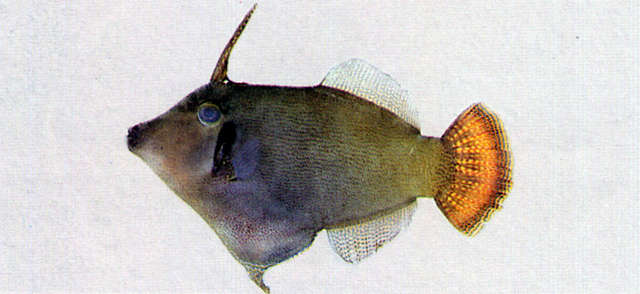
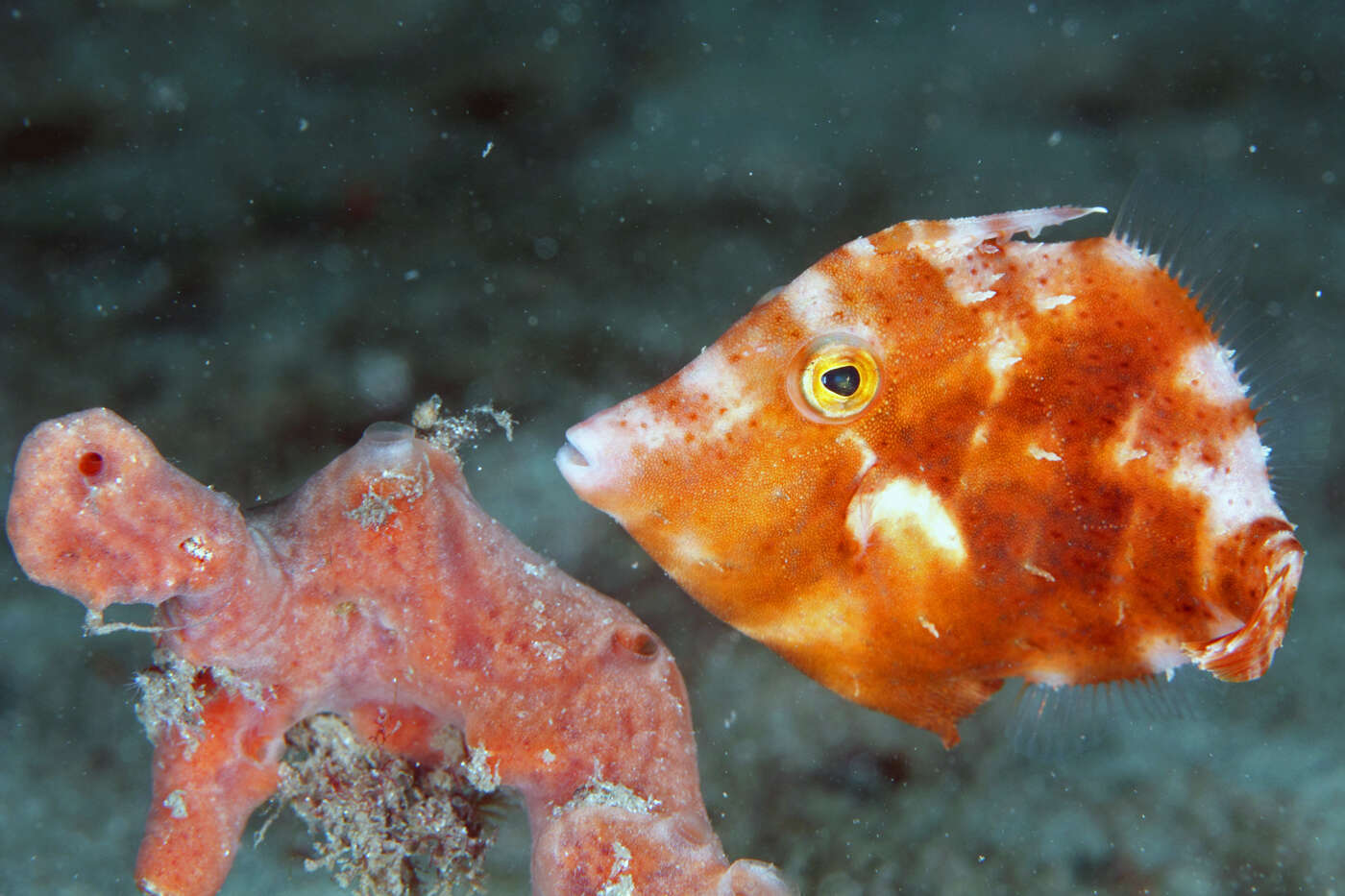
Pervagor janthinosoma (Bleeker, 1854) (Blackbar filefish)
Occurs in shallow lagoons and seaward reefs to a depth of about 15 m; common in coral-rich areas. Secretive species among rocks, sponges or in crevices on the bases of large coral formations. Adults usually form pairs but often only one is observed while the other one is hiding .
Pervagor aspricaudus (Hollard, 1854) (Orangetail filefish)
Inhabits clear lagoon and seaward reefs . Benthopelagic .
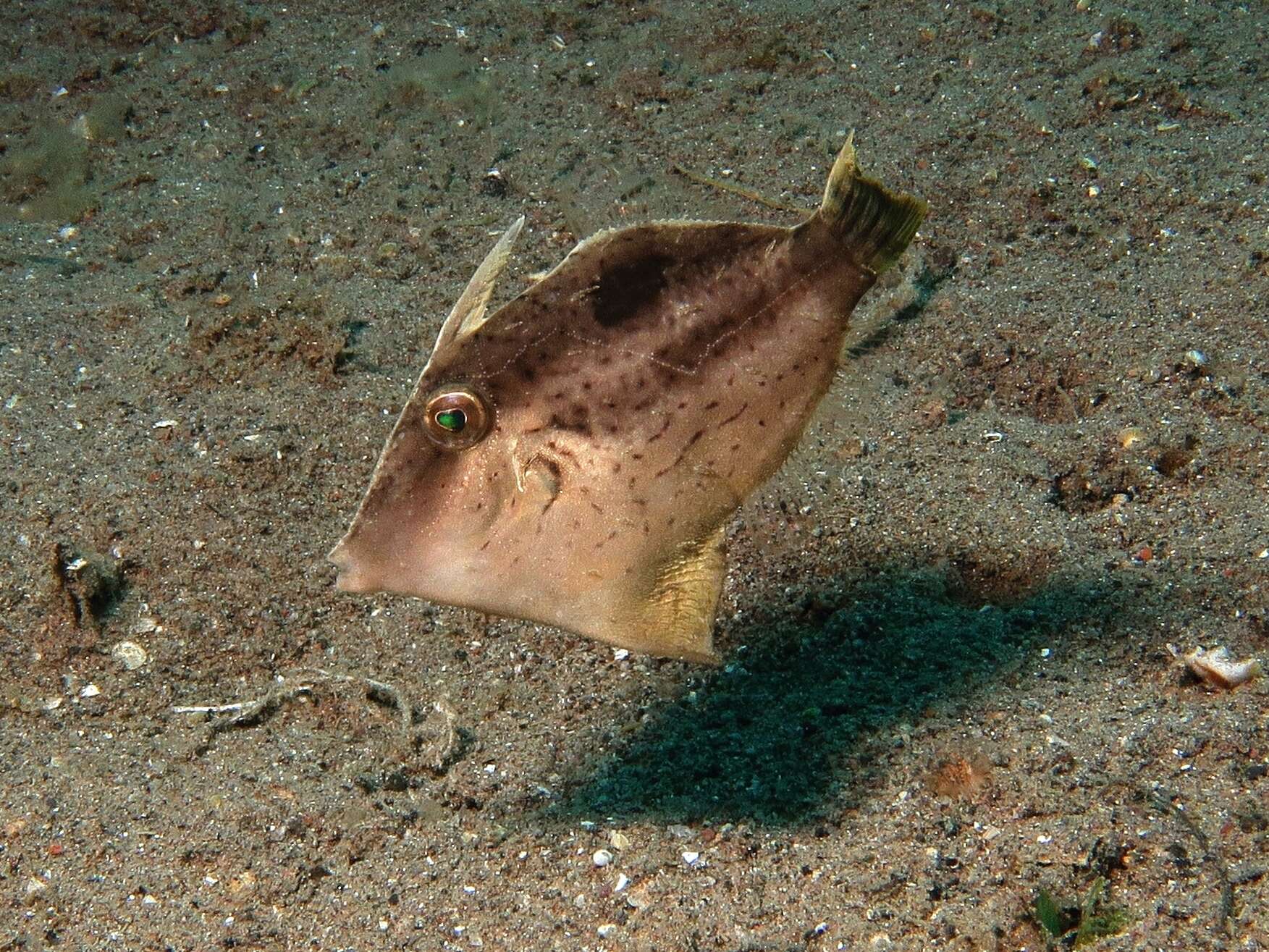
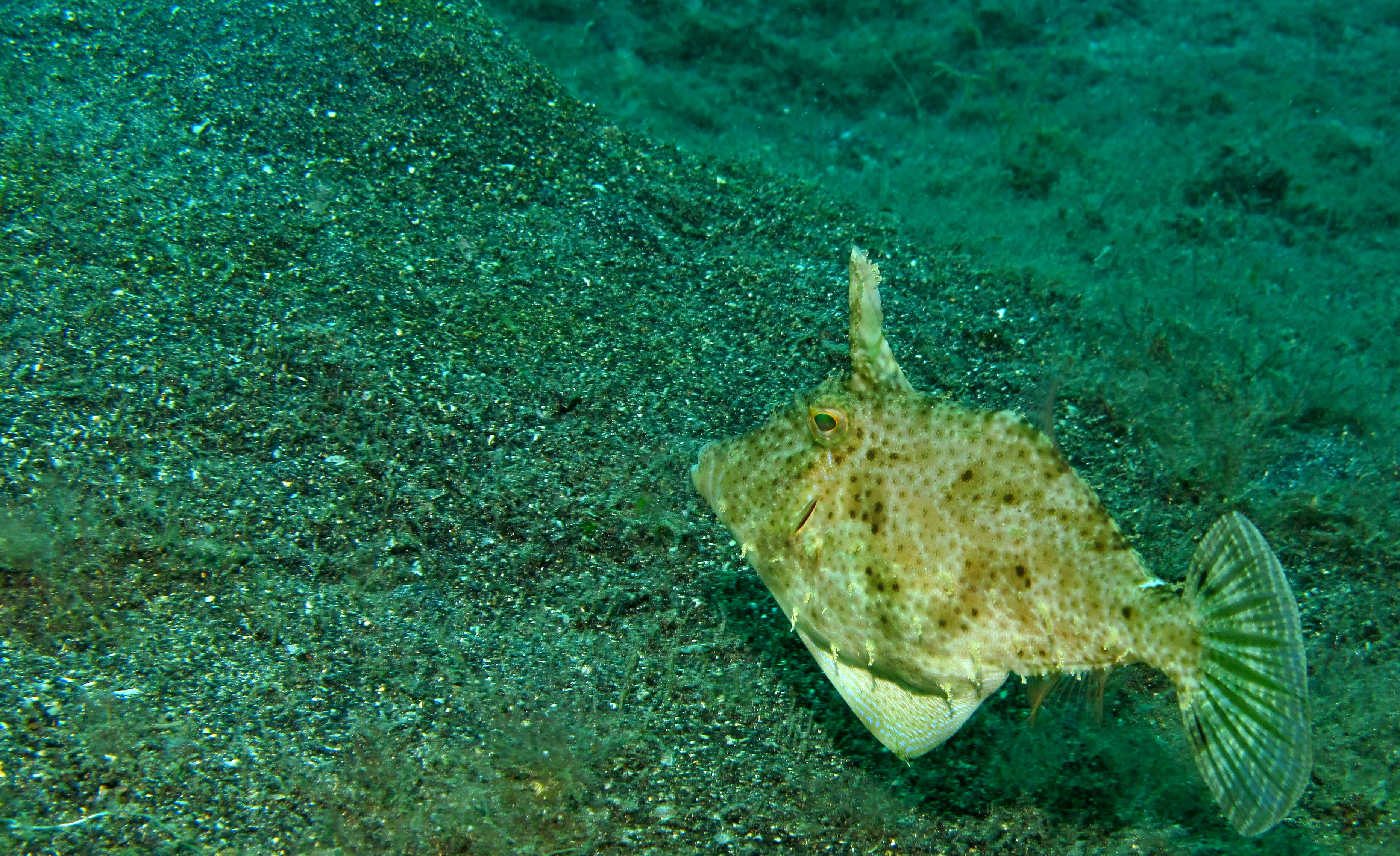
Paramonacanthus curtorhynchos (Bleeker, 1855)
Found on protected areas, on open, silty sand bottoms .
Monacanthus ciliatus (Mitchill, 1818) (Fringed Fiiefish)
Occurs in shallow water down to 50 m depth, over sandy and rocky bottoms, but more commonly in grass beds . Often seen moving head down among seagrass blades . The young are often associated with floating Sargassum . Feeds on plants and algae, and also on small crustaceans . Rarely consumed .
Stephanolepis hispidus (Linnaeus, 1766) (Common filefish)
Found on sand or mud bottoms. Associated with Sargassum . Adults feed on benthic invertebrates . Edible but generally rejected by fishers .
Oxymonacanthus longirostris (Bloch & Schneider, 1801) (Harlequin filefish)
Occurs in clear lagoon and seaward reefs from 0.5 to at least 30 m. Found in pairs or small groups and nests near bases of dead corals, often on clumps of algae. Monogamous . Feeds exclusively on Acropora polyps. Feeding takes place throughout the day becoming less towards the evening .
Pseudomonacanthus macrurus (Bleeker, 1857) (Strap-weed file-fish)
Inhabits shallow coastal algal reefs and estuaries. Adults are often in pairs .
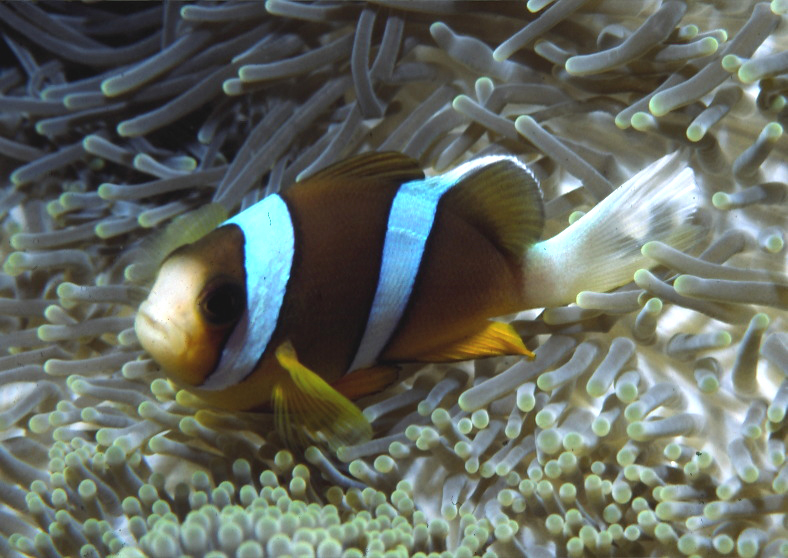
Amphiprion clarkii (Bennett, 1830) (Brown anemonefish)
Inhabits lagoons and outer reef slopes. Omnivorous. Oviparous, with elliptical eggs . Monogamous . Has been reared in captivity . Associated with the anemones: Cryptodendrum adhaesivum, Entacmaea quadricolor, Heterac...
Read More
Read More
Premnas biaculeatus (Bloch, 1790) (Spinecheek anemonefish)
Inhabits lagoon and seaward reefs , found mainly in protected coastal waters and lagoons. Typically found in pairs in which males are much smaller than females . Feeds primarily on zooplankton and benthic algae . Has been reared in captivity . Associated with the anemone Entacmaea quadricolor .
Pseudanthias bimaculatus (Smith, 1955) (Two-spot basslet)
Inhabits deep coastal drop-offs . In Java Sea, taken only in dead reef areas in somewhat turbid water . Closely related species such as P. pleurotaenia and P. bimaculatus may spawn at the same time and produce accidental hybrids .
Serranus flaviventris (Cuvier, 1829) (Twinspot bass)
A solitary species inhabiting rocky and coral reefs and seagrass beds . Synchronously hermaphroditic.
Hypoplectrus chlorurus (Cuvier, 1828) (Sheephead)
A solitary species found near the bottom of coral rich areas . Feeds on crustaceans and fishes .
Share on Social Networks
- Facebook:

personalize your shared text as well as its destination (wall, page...) or send as a private message to a friend
- Twitter: Tweet personalize your tweet
- Google Plus:
Direct link to this dive
- Long link:
- Short link:


 We are participating today in the startup contest Techcrunch Disrupt. Support Diveboard by voting for us!
























































































2nd dive aboard Datu Budas
back to Angel's Cove for the sardine run, Melibe photos
park near Dadatan Point swim back to the cove and back again
multilevel, solo