


 Beachnutts



 Philippines
-
Nº126
 Date: 2024-03-18 - 10:33
-
 Max Depth: 22.9m Duration: 73mins
Dive Location

- Temp: Surf 25°C Bottom 25°C
- Dive type : Recreational, Reef, Photo, Muck Dive
- Visibility: Good Water: Salt
Specific gear used
- BCD: Scubapro - Glide Plus
- Boots: Orca - Dive shoes
- Camera: Olympus - TG6
- Compass:
- Computer: Oceanic - OCS
- Fins: Scubapro - Jet Fins
- Lift bag: ScubaMax - SMB
- Light: Sofirn - SD05
- Mask: Promate - Scope
- Regulator: Aqualung - Calypso
- Wet suit: Blue Ocean - Diveskin
- Weights: 3.2 kg
Dive reviews
| Overall review | ||
| Dive difficulty | ||
| Marine life quality |
Dive Shop & Buddies
 Dive with Blake Auge
 Dive buddies:
Beachnutts

Link to this spot:
- Spot:
- Country:
- Area:
- Body of water:
Dive Profile
- 1. Air
- 10L Aluminium 207 → 34 bar
- Average depth: 15.2m
Data provided by EOL.org







Species Identified
Dascyllus aruanus (Linnaeus, 1758) (black-and-white damselfish)
Territorial, inhabit shallow lagoon and subtidal reef flats. Form large aggregations above staghorn Acropora thickets or in smaller groups above isolated coral heads. Feed on zooplankton, benthic invertebrates, and algae...
Read More
Read More
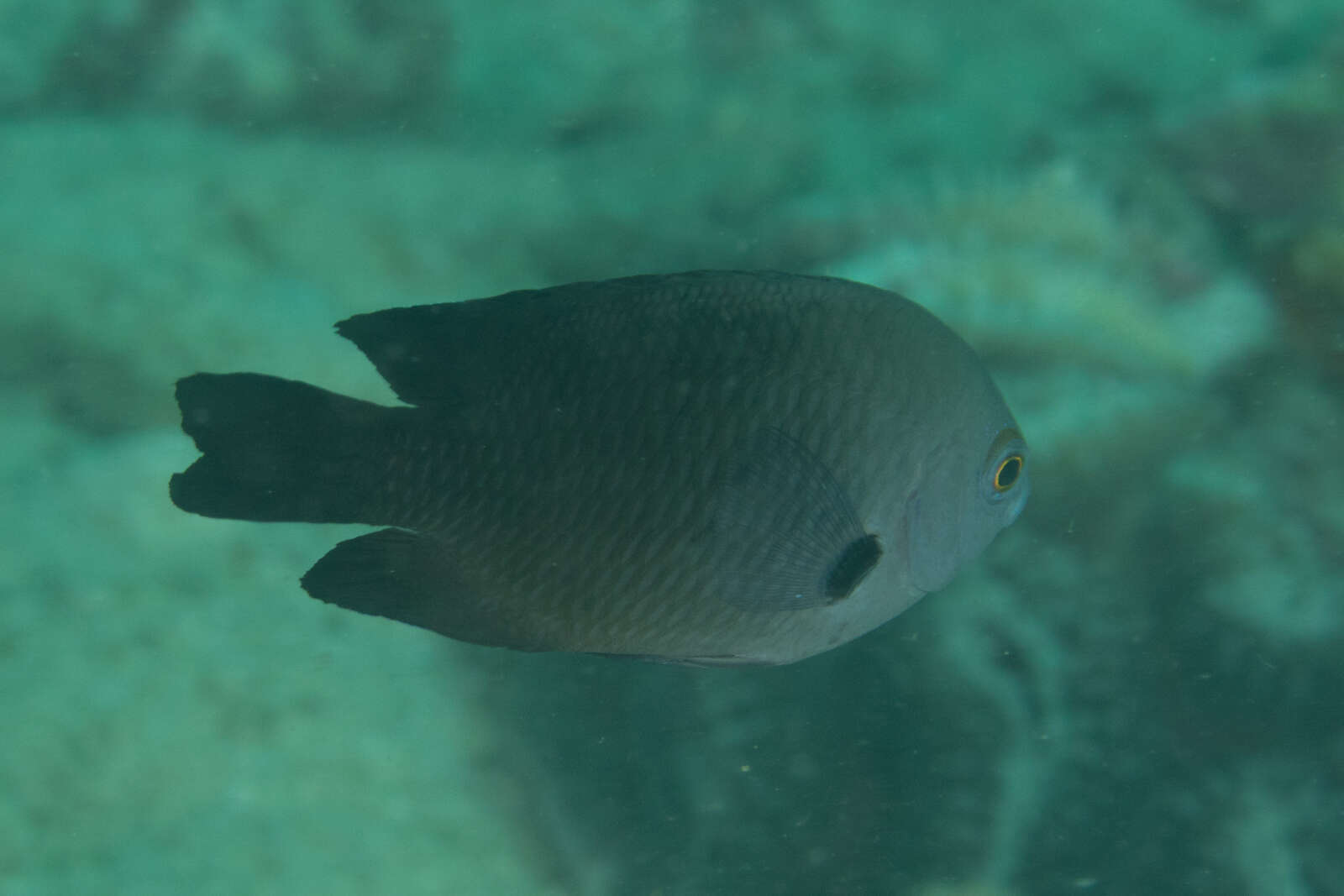
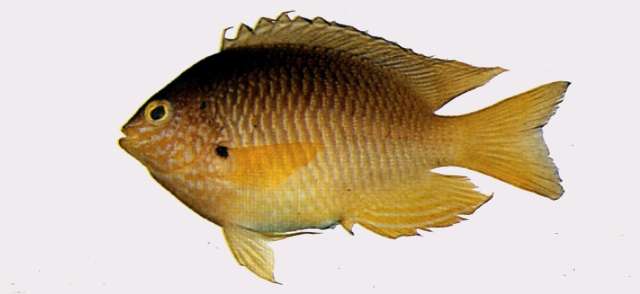
Pomacentrus brachialis Cuvier, 1830 (Charcoal damsel)
Found in passages and outer reef slopes ; also in current prone and clear water reef flats to 40 m depth . Occurs singly or in small groups . Feeds on zooplankton and benthic algae .
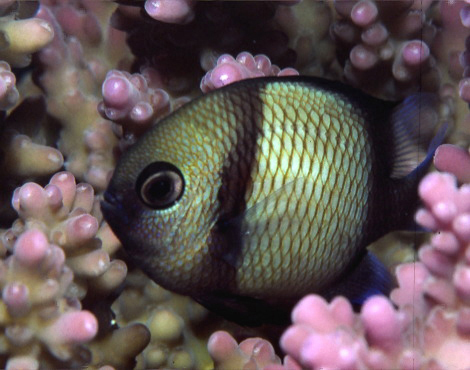
Dascyllus reticulatus (Richardson, 1846) (twostriped damselfish)
Occurs in outer lagoon and seaward reefs. Inhabits branching coral heads, particularly Pocillopora eydouxi. Forms schools, often in silty habitats . Male prepares a nest by cleaning with its mouth a rock or coral surface where the female will attach the eggs .
Pomacentrus bankanensis Bleeker, 1853 (Speckled damselfish)
Occurs solitarily or in small groups in lagoons, reef flats, passages, and outer reef slopes. Usually amongst coarse rubble or rock . Feeds primarily on algae, but also takes copepods, isopods, and pelagic tunicates.
Pomacentrus amboinensis Bleeker, 1868 (Ambon damsel)
An ubiquitous species found in lagoons, coastal reefs, passages and outer reef slopes. Inhabits sandy areas around coral or rock outcrops or other protective shelter. Usually in small groups . Feeds primarily on algae, but also takes zooplankton. Has been reared in captivity (Ref. 35404.
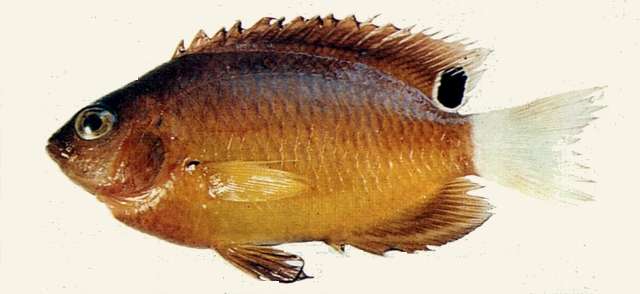
Pomacentrus adelus Allen, 1991 (Obscure damsel)
Inhabits lagoon, coastal and seaward reefs , usually on open rubble patches .
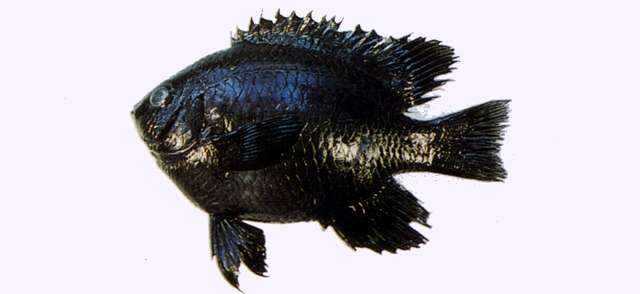
Neoglyphidodon melas (Cuvier, 1830) (black damselfish)
Found in coral-rich areas of lagoon and seaward reefs and usually associated with soft corals on which it feeds . Occur singly or in pairs . Juveniles are encountered in around staghorn Acropora corals . Adults often near Tridacna clams and may feed on their feces .
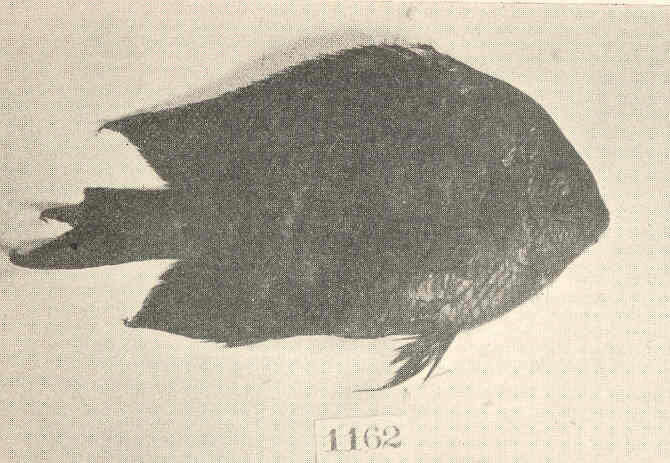
Pomacentrus littoralis Cuvier, 1830 (Smoky damsel)
Inhabits rock, rubble or coral reefs usually inshore. Visits reefs submerged by high tides. Occurs in small loose groups or solitary .
Acanthochromis polyacanthus (Bleeker, 1855) (Spiny chromis)
Inhabits inshore and offshore coral reefs . Also found in harbors, lagoons and outer reef slopes. The only pomacentrid species that lacks a pelagic larval stage. One of the very few marine fishes where fry are guarded b...
Read More
Read More
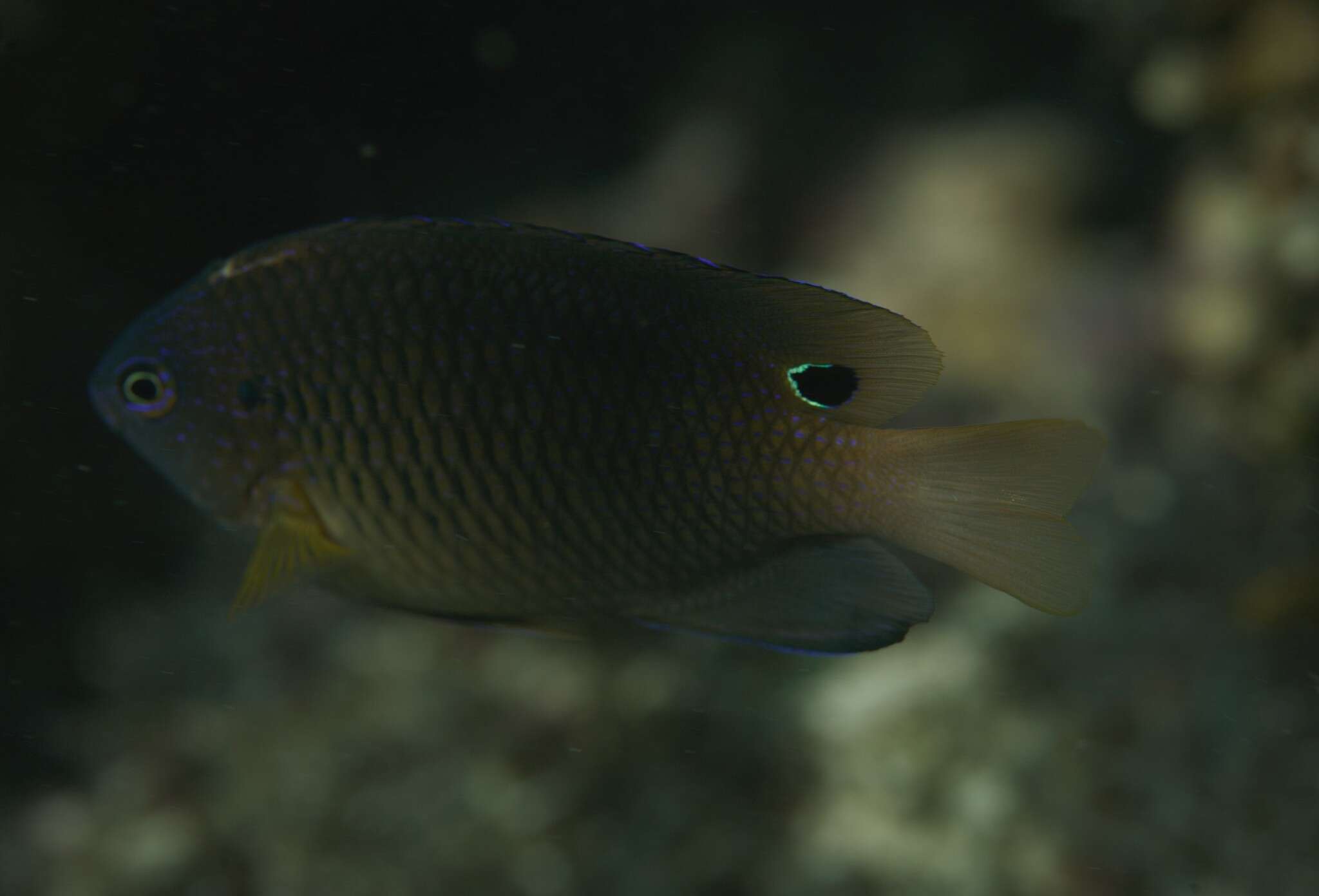
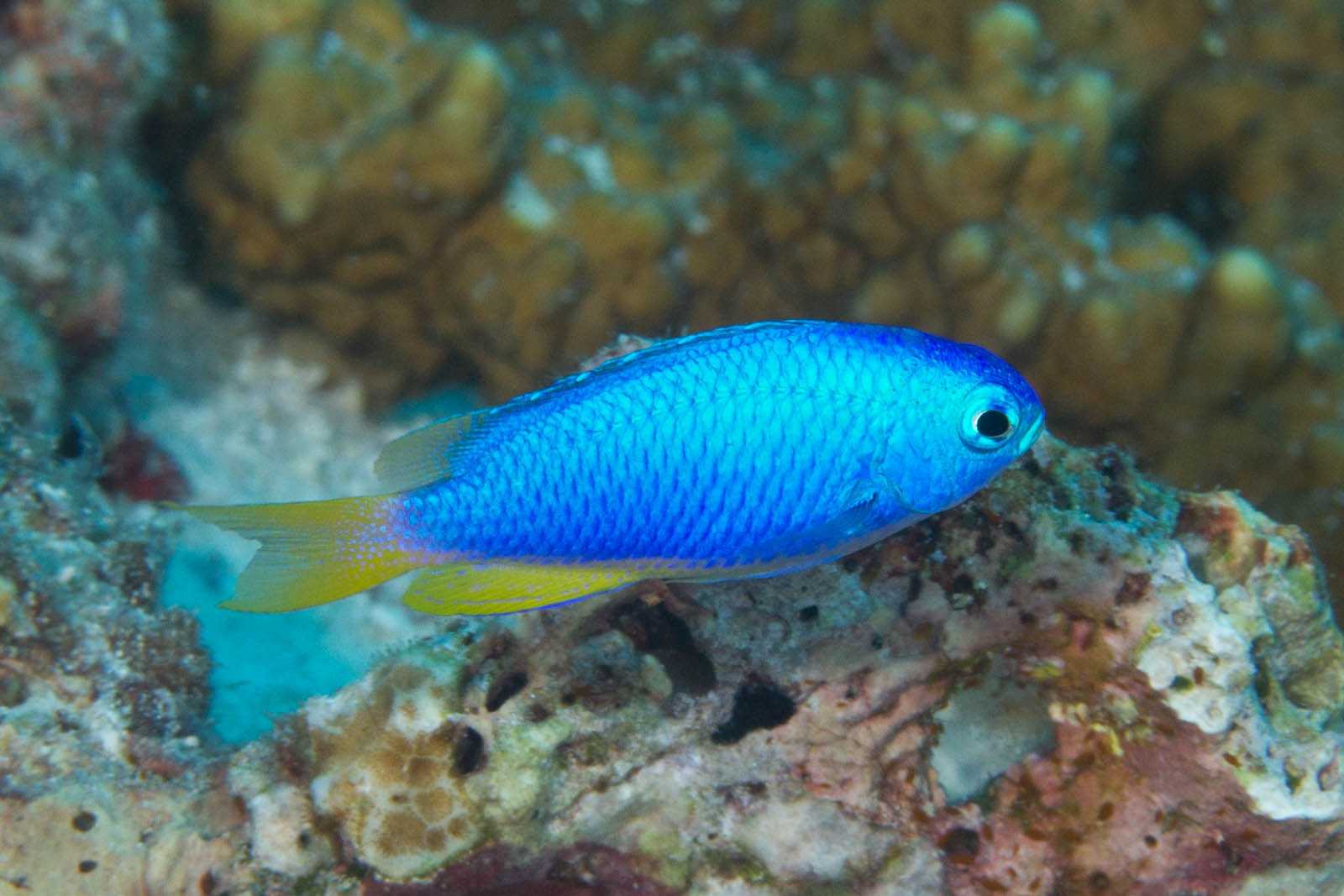
Pomacentrus coelestis Jordan and Starks, 1901 (Neon damsel)
Pomacentrus alexanderae Evermann and Seale, 1907 (Alexander's damsel)
Occur in lagoon, inshore, and offshore reefs . Usually seen solitary, often swimming well above substrate . Feed on algae, barnacle nauplii, copepods, fish eggs, and small gastropods.
Diodon liturosus Shaw, 1804 (Black-blotched porcupinefish)
Inhabits reef edges and slopes . Hides in caves and ledges during the day and forages at night . Also found below plate-corals during the day and often deep, ranging to at least 40 meters depth. Juveniles occur in lagoo...
Read More
Read More
Enneapterygius similis Fricke, 1997 (Blacktail triplefin)
Found usually in surge channels or on vertical encrusted rock walls; also in tidal pools on reef crests .
Enneapterygius flavoccipitis Shen, 1994 (Yellownape tripplefin)
Occurs on rocky substrates in association with coral reefs or coral reef lagoons, from shallow areas to the outer reef slope, also in intertidal rock pools .
Salarias sinuosus Snyder, 1908 (Fringelip blenny)
Found in shallow protected reefs, usually in intertidal areas . Oviparous . Eggs are demersal and adhesive .
Blenniella chrysospilos (Bleeker, 1857) (Redspotted blenny)
Inhabits clear coastal reef flats, often in exposed habitats, common in outer intertidal reef flats and surge-swept seaward reef; usually where algal growth is prolific . Enter small holes, with just its head protruding. ...
Read More
Read More
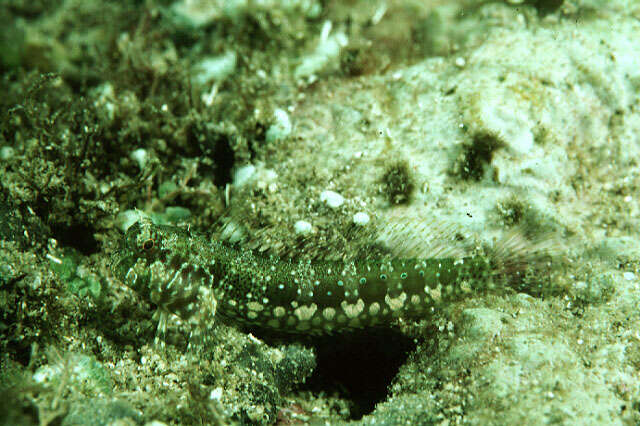
Diplogrammus goramensis (Bleeker, 1858) (Goram dragonet)
Inhabits coastal bays and estuaries , over sand, mud, or dead coral rubble of lagoons and outer reef slopes. Feeds mainly on small benthic invertebrates. Usually buried in substrate. Occurs in small groups .
Cantherhines sandwichiensis (Quoy & Gaimard, 1824) (brown leatherjacket)
Benthopelagic over coral and rock . Feeds mainly on algae and detritus, but also takes tunicates, corals, sponges and other benthic animals . Young spotted .
Rudarius minutus Tyler, 1970 (Minute leatherjacket)
Collected from mixed sand-coral habitats. Lives mainly on coastal reefs and most often found on outcrops of coral in sheltered sandy bays subject to moderate tidal currents . Occurs singly or in groups among the branches of gorgonians, soft corals, or finely-branched fire corals .
Oxymonacanthus longirostris (Bloch & Schneider, 1801) (Harlequin filefish)
Occurs in clear lagoon and seaward reefs from 0.5 to at least 30 m. Found in pairs or small groups and nests near bases of dead corals, often on clumps of algae. Monogamous . Feeds exclusively on Acropora polyps. Feeding takes place throughout the day becoming less towards the evening .
Paramonacanthus cryptodon (Bleeker, 1855) (隐牙副单角鲀)
Abalistes stellaris (Bloch & Schneider, 1801) (Star puffer)
Inhabit coastal areas, usually found over muddy and sandy bottoms, also around reefs, together with the sponges and algae . Feed on benthic animals . Oviparous . Also caught with vertical long-lines . Marketed fresh and dried-salted .
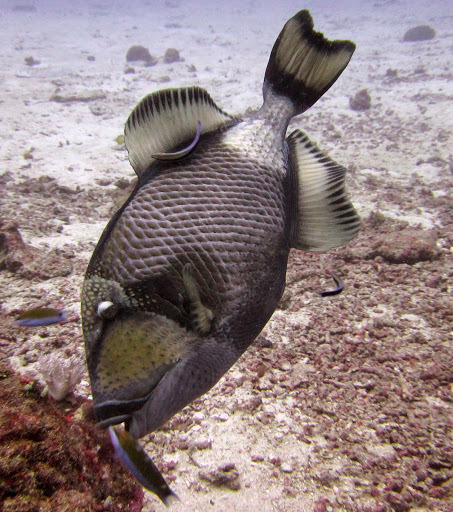
Balistoides viridescens (Bloch and Schneider, 1801) (Titan triggerfish)
Occur in lagoon, seaward reefs and sheltered inner reef slopes . Juveniles often associated with isolated patches of branching coral or rubble of shallow sandy protected areas. Adults occur singly or in pairs on the slo...
Read More
Read More
Balistapus undulatus (Park, 1797) (Orange-lined triggerfish)
Occurs in coral-rich areas of deep lagoon and seaward reefs from the lower surge zone to at least 50 meters, Ref. 48637. Feeds on a variety of benthic organisms such as algae, echinoderms, fishes, mollusks, tunicates, spo...
Read More
Read More
Share on Social Networks
- Facebook:

personalize your shared text as well as its destination (wall, page...) or send as a private message to a friend
- Twitter: Tweet personalize your tweet
- Google Plus:
Direct link to this dive
- Long link:
- Short link:


 We are participating today in the startup contest Techcrunch Disrupt. Support Diveboard by voting for us!
























































































1st dive, 2 dive day, great conditions at DBC
High tide 10:27am, but near even tide all day, very small changes. Calm clear water, sunny conditions
drop in N swim to depth, then up among small coral mounds back to shallows and exit, multilevel