


 Beachnutts


 Philippines
-
Nº137
 Date: 2024-05-28 - 02:05
-
 Max Depth: 16.2m Duration: 82mins
Dive Location

- Temp: Surf 28°C Bottom 28°C
- Dive type : Recreational, Reef, Photo, Muck Dive
- Visibility: Bad Water: Salt
Specific gear used
- BCD: Scubapro - Glide Plus
- Boots: Orca - Dive shoes
- Camera: Olympus - TG6
- Compass:
- Computer: Oceanic - OCS
- Knife: Scuba MAx - folding
- Lift bag: ScubaMax - SMB
- Mask: Promate - Scope
- Regulator: Aqualung - Legend
- Wet suit: Blue Ocean - Diveskin
- Fins: Tabata / Tusa - Liberator X
- Weights: 3.2 kg
Dive reviews
| Overall review | ||
| Dive difficulty | ||
| Marine life quality |
Dive Shop & Buddies
 Dive with Blake Auge
 Dive buddies:
Beachnutts
Dive buddies:
Beachnutts

Link to this spot:
- Spot:
- Country:
- Area:
- Body of water:
Dive Profile
- 1. Air
- 10L Aluminium 207 → 34 bar
- Average depth: 10.8m
Data provided by EOL.org



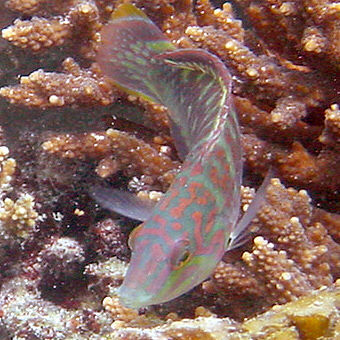
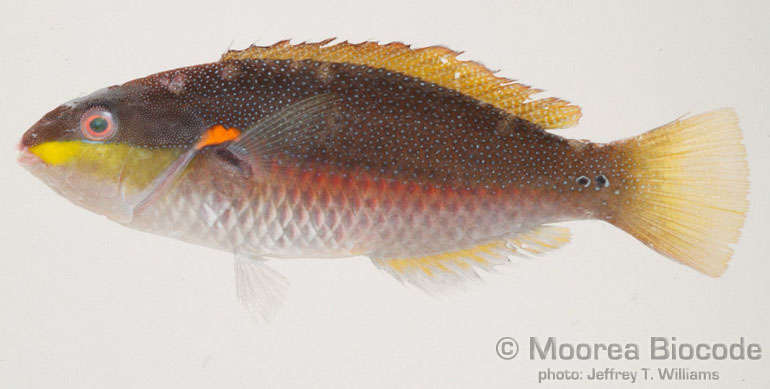
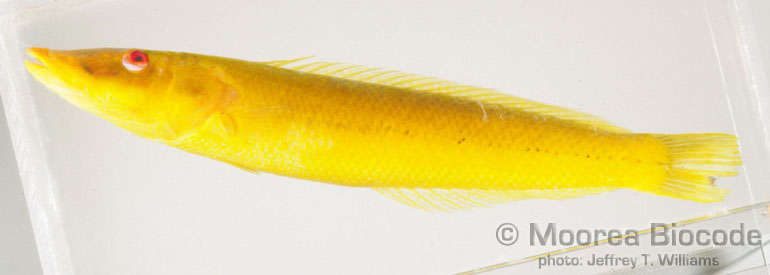

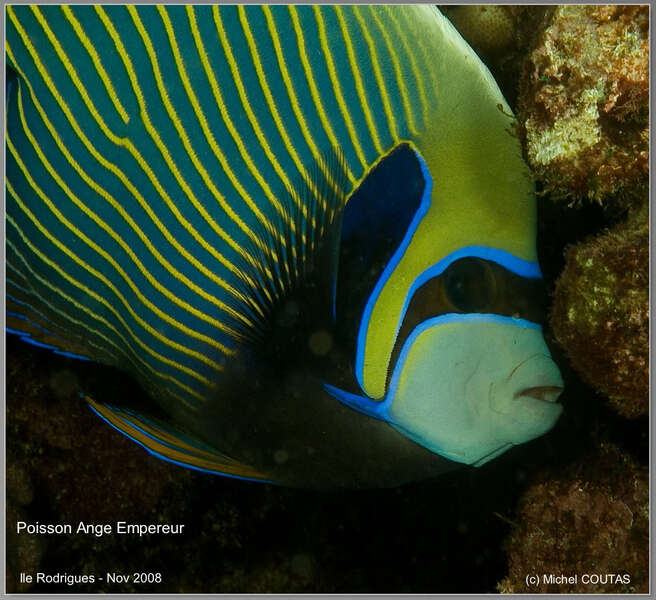






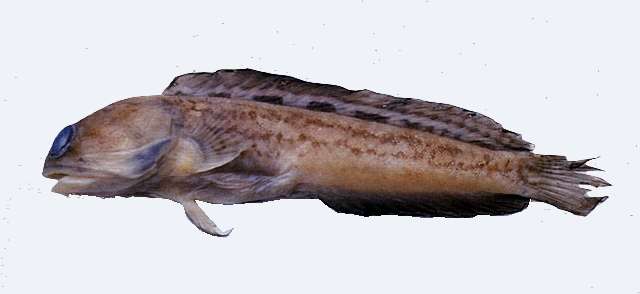



Species Identified
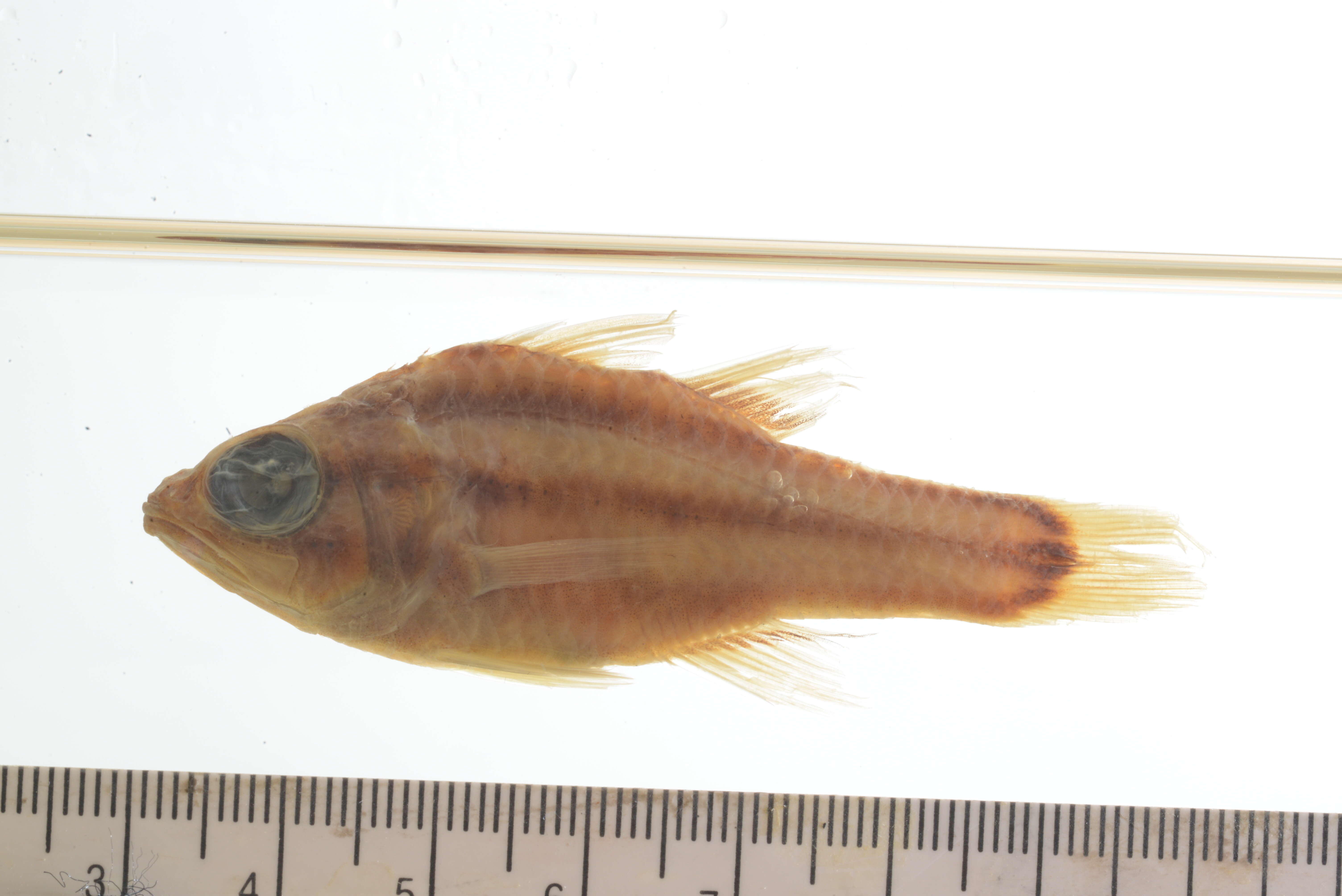
Apogon nigrofasciatus Lachner, 1953 (Blackstripe cardinalfish)
Occurs on reef flats and shallow lagoon reef, usually seen singly or in pairs under ledges or in crevices. Feed on small benthic invertebrates at night .
Apogon trimaculatus Cuvier, 1828 (Three-spot cardinalfish)
Inhabits inshore coral reefs . Nocturnal species .
Fowleria isostigma (Jordan & Seale, 1906) (犬形乳突天竺鲷)
Found on muddy bottoms and near rocky areas .
Cheilinus trilobatus Lacepède, 1801 (Tripletail wrasse)
Adults inhabit lagoon and seaward reefs at depths of 1 to over 30 m, and relatively common along shallow reef margins with good coral cover . Usually solitary . Feed mainly on shelled benthic invertebrates such as mollus...
Read More
Read More
Halichoeres argus (Bloch and Schneider, 1801) (Argus wrasse)
Inhabits shallow coastal reefs and seagrass flats , also in algae-rocky reef flats and lagoons .
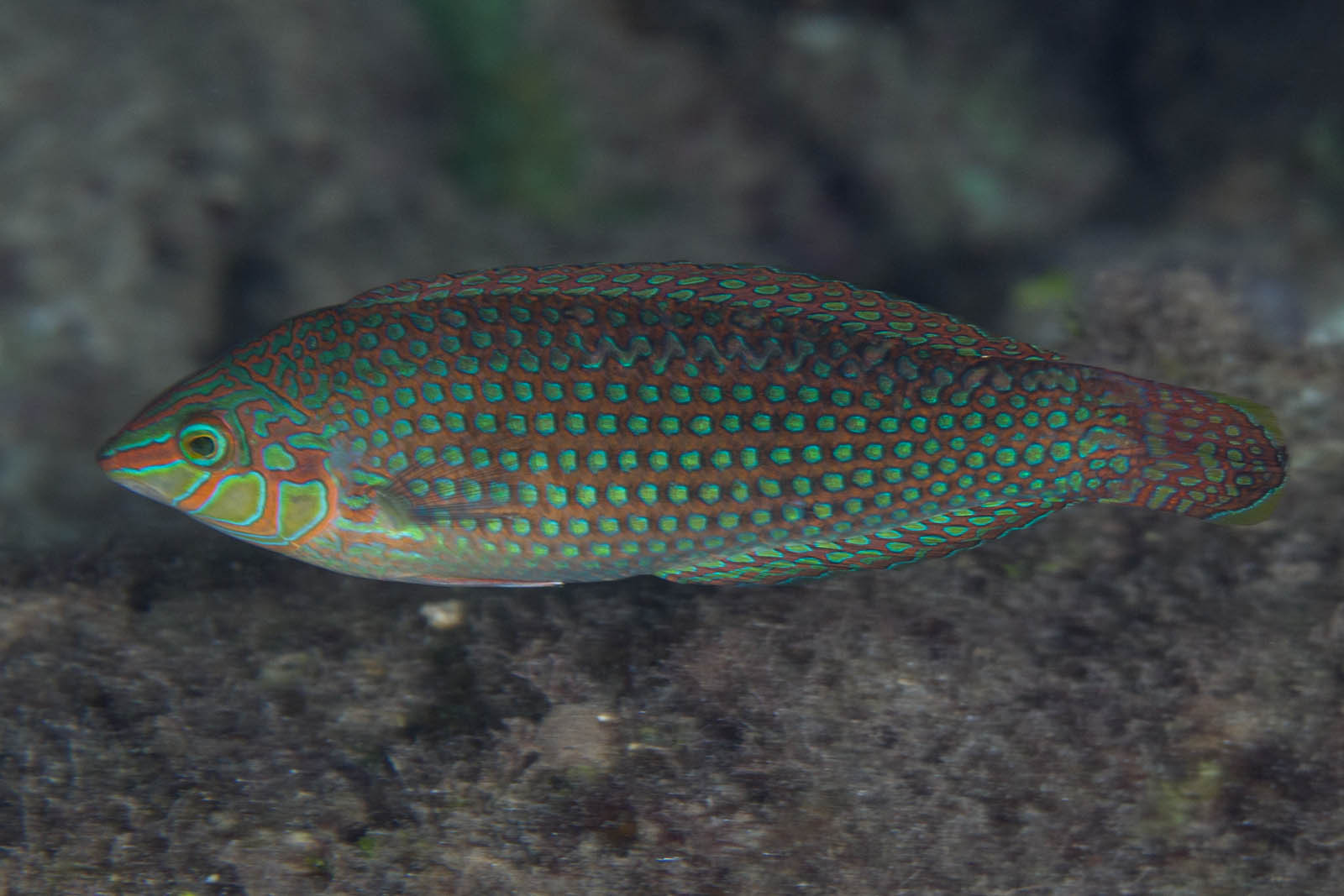
Halichoeres melanurus (Bleeker, 1851) (Tail-spot wrasse)
Found mostly on shallow coral reefs and rocky shores . Found over 15 m depth . Feed on small invertebrates such as polychaetes, copepods, isopods and forams .
Halichoeres margaritaceus (Valenciennes, 1839) (Pink-belly wrasse)
Inhabits shallow reefs and rocky shores, usually in weedy areas exposed to surge . Feeds on benthic crustaceans, mollusks, polychaetes, forams, fishes, and fish eggs . One of several similar species that have near identical juvenile and female stages .
Stethojulis bandanensis (Bleeker, 1851) (Red shoulder wrasse)
Cheilio inermis (Forsskål, 1775) (Sharp-nosed rainbowfish)
Inhabit seagrass beds and algal-covered flats, occasionally in lagoon and seaward reefs to a depth of at least 30 m . Benthopelagic . Usually solitary. Juveniles secretive in seagrasses or attached Sargassum; adults usu...
Read More
Read More
Pseudocheilinus evanidus Jordan and Evermann, 1903 (Striated wrasse)
Found among patches of rubble or among branching coral of seaward reef slopes from 6 to at least 40 m . Benthopelagic . Rare in less than 20 m . Generally solitary and feeds on small benthic invertebrates .
Pomacanthus imperator (Bloch, 1787) (Angel fish)
Juveniles are encountered under ledges, or in holes of outer lagoon patch reefs or semi-protected areas of exposed channels and outer reef flats. Subadults move to reef front holes and surge channels. Large adults inhabi...
Read More
Read More
Amphiprion percula (Lacepède, 1802) (Orange clownfish)
Inhabits lagoon and seaward reefs . Each group of fish consists of a breeding pair and 0-4 non-breeders. Within each group there is a size-based hierarchy: the female is largest, the male is second largest, and the non-...
Read More
Read More
Premnas biaculeatus (Bloch, 1790) (Spinecheek anemonefish)
Inhabits lagoon and seaward reefs , found mainly in protected coastal waters and lagoons. Typically found in pairs in which males are much smaller than females . Feeds primarily on zooplankton and benthic algae . Has been reared in captivity . Associated with the anemone Entacmaea quadricolor .
Cirrhitichthys oxycephalus (Bleeker, 1855) (Coral hawkfish)
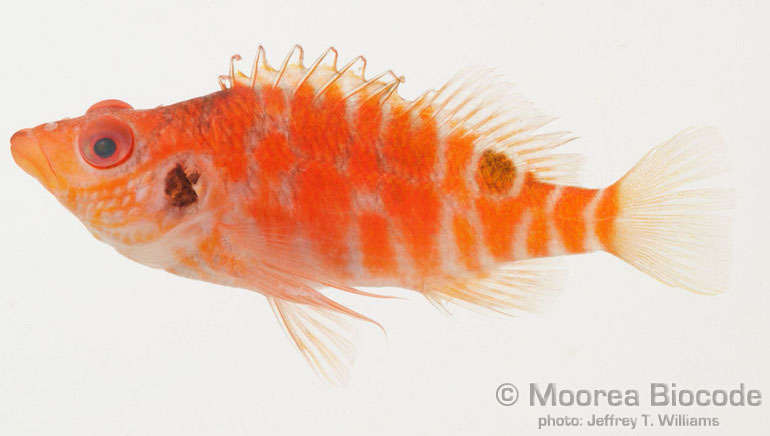
Amblycirrhitus bimacula (Jenkins, 1903) (Twospot hawkfish)
A secretive species remaining in or near interstices of rock, coral, or rubble . Moderately common in seaward reefs in areas exposed to moderate surge or currents . Benthic . Minimum depth reported from Ref. 30874.
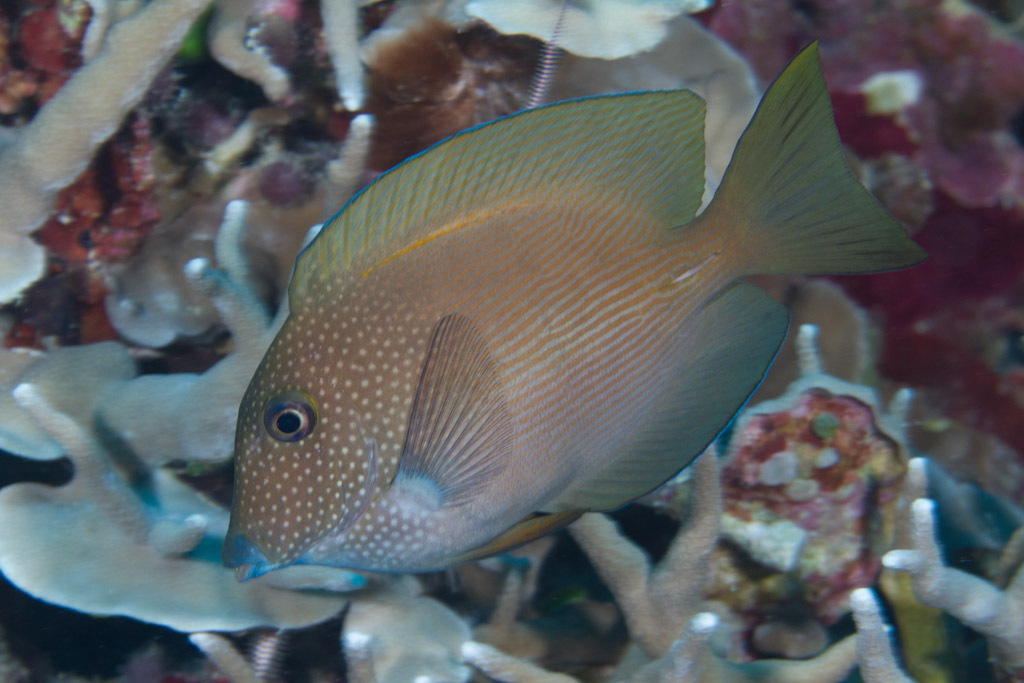
Ctenochaetus striatus (Quoy and Gaimard, 1825) (Striated surgeonfish)
Inhabits reef flats and lagoon and seaward reefs to a depth of over 30 m. Occurs over coral , rock, pavement, or rubble substrates. May occur singly or in small to very large, often mixed-species aggregations . Feeds on...
Read More
Read More
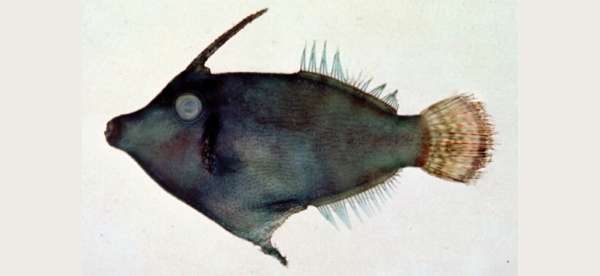
Pervagor melanocephalus (Bleeker, 1853) (Redtail filefish)
Inhabits clear coastal reefs and protected outer reef habitats with rich invertebrate growth . Prefers deeper reefs. Often in pairs . Secretive, adults are usually in pairs .
Cantherhines sandwichiensis (Quoy & Gaimard, 1824) (brown leatherjacket)
Benthopelagic over coral and rock . Feeds mainly on algae and detritus, but also takes tunicates, corals, sponges and other benthic animals . Young spotted .
Paramonacanthus cryptodon (Bleeker, 1855) (隐牙副单角鲀)
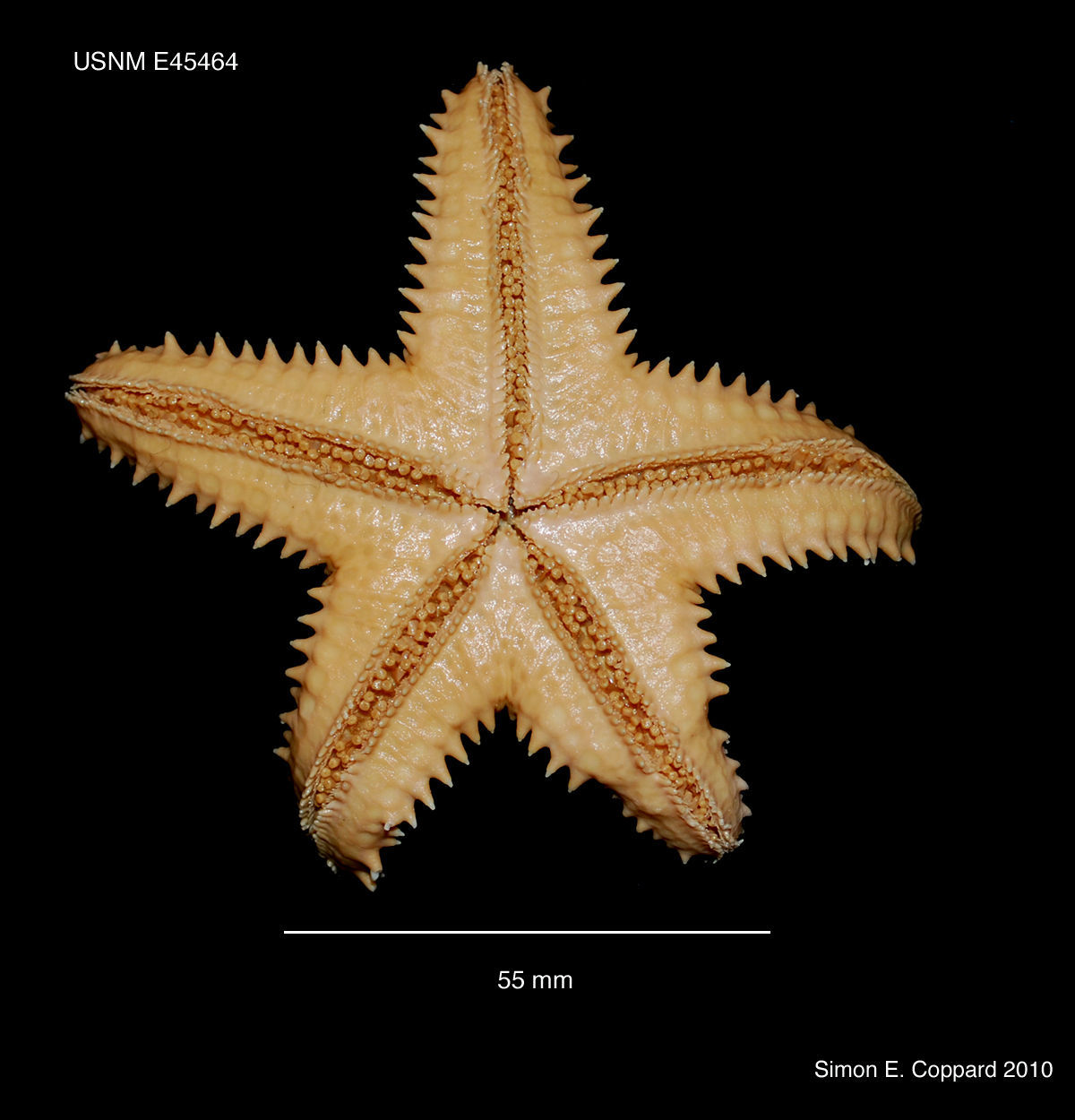
Cheiraster gazellae Studer, 1884
Euchone rosea
Heteractis crispa (Hemprich and Ehrenberg in Ehrenberg, 1834) (Leathery sea anemone)
Cryptodendrum adhaesivum Klunzinger, 1877 (Adhesive sea anemone)
Actinodendron arboreum (Quoy and Gaimard, 1833)
burrowing
Asteropsis carinifera (Lamarck, 1816)
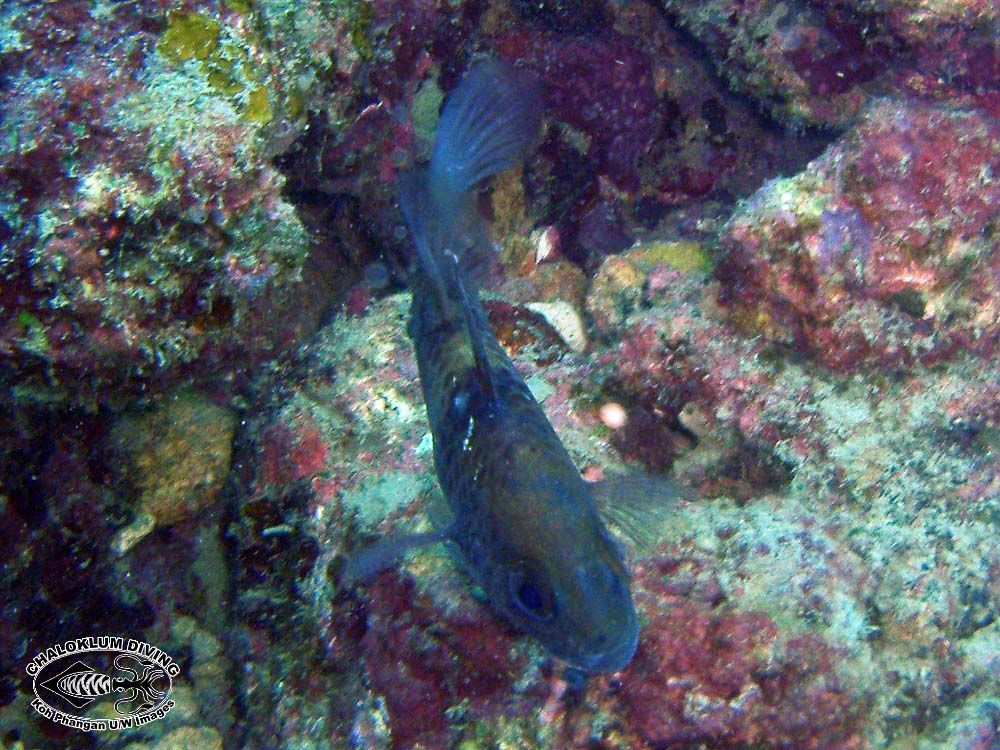
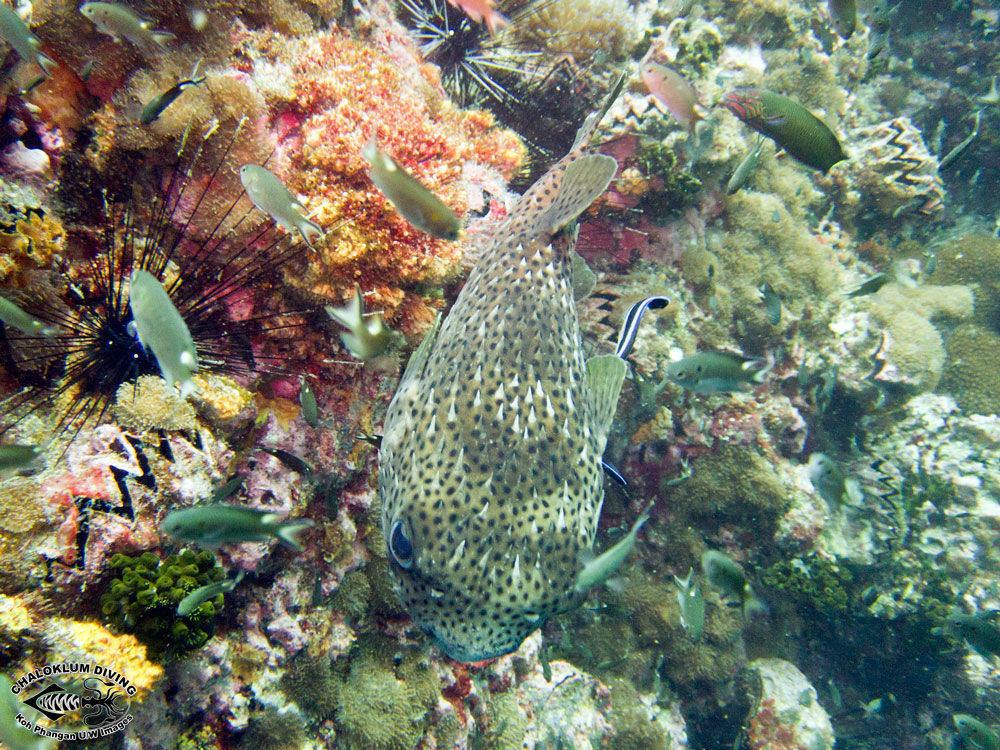
Diodon liturosus Shaw, 1804 (Black-blotched porcupinefish)
Inhabits reef edges and slopes . Hides in caves and ledges during the day and forages at night . Also found below plate-corals during the day and often deep, ranging to at least 40 meters depth. Juveniles occur in lagoo...
Read More
Read More
Diodon hystrix Linnaeus, 1758 (Spot-fin porcupinefish)
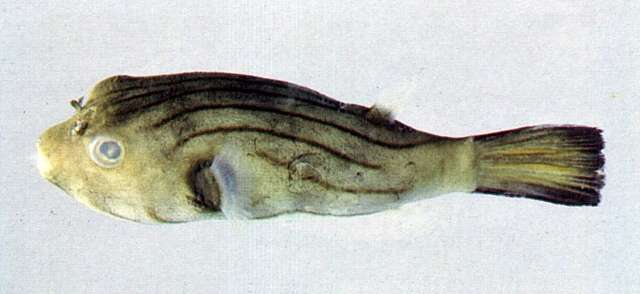
Arothron manilensis (Marion de Procé, 1822) (Narrow-lined puffer)
Inhabits muddy substrates, usually shallow coastal slopes to about 20 meters depth and in shallow estuaries . Occurs in estuaries, sheltered reef flats, and lagoons to a depth of more than 17 m. Common in seagrass beds and sandy areas; juveniles found among mangroves . Benthopelagic .
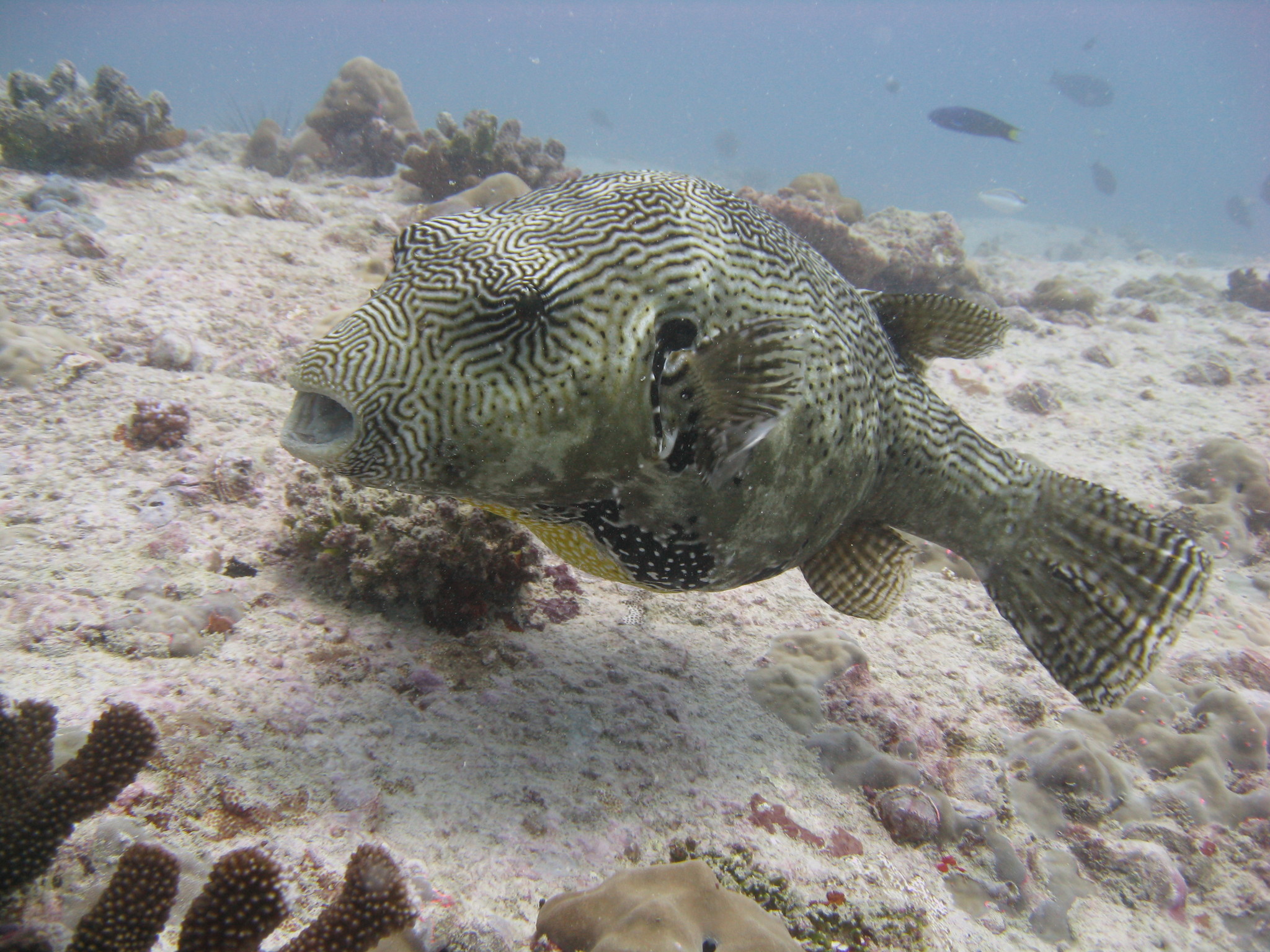
Arothron mappa (Lesson, 1831) (Map puffer)
Occur in clear lagoon and sheltered seaward reefs . Adults usually along deep drop-offs . Usually close to shelter. Occur singly . Feed on algae, sponges, and benthic invertebrates.
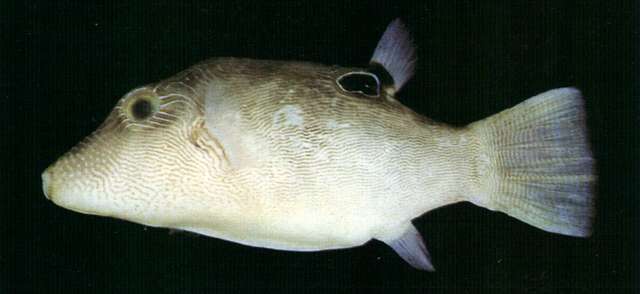
Canthigaster ocellicincta Allen & Randall, 1977 (Shy toby)
Inhabits invertebrate-rich inshore reef to outer reef walls where usually in caves in depths of about 25 meters or more. Found singly or in pairs and on one occasion a small groups was observed among plate-corals on soft ...
Read More
Read More
Canthigaster papua (Bleeker, 1848) (Papuan toby)
Lives in coastal to outer reef habitats from silty to pristine reefs . Occurs in clear, coral-rich areas of lagoon and seaward reefs . Adults often in pairs along deep drop-offs while juveniles can be found in shallow estuaries .
Canthigaster compressa (Marion de Procé, 1822) (Compressed toby)
Inhabits sandy areas of shallow lagoons and channels . Also found in silty bays or harbors around wharf pilings. Adults usually in pairs .
Opistognathus castelnaui Bleeker, 1860 (Blue-spotted jawfish)
Inhabits open sand and rubble substrates in about 20-25 meters . May be found in depths greater than 100 m . Mouthbrooders .
Sebastapistes strongia (Cuvier, 1829) (Barchin scorpionfish)
Common in areas with mixed sand and rubble in reef flats, shallow lagoons and channels. A nocturnal species.
Pterois volitans (Linnaeus, 1758) (Red lionfish)
Dendrochirus zebra (Cuvier, 1829) (Zebra turkeyfish)
Found on coral, rubble, or rock bottoms of reef flats ; also in coastal to outer reef habitats in sheltered lagoons and in caves, sometimes in small aggregations. Usually shallow, from 3-60m but also reported to 80 m dep...
Read More
Read More
Share on Social Networks
- Facebook:

personalize your shared text as well as its destination (wall, page...) or send as a private message to a friend
- Twitter: Tweet personalize your tweet
- Google Plus:
Direct link to this dive
- Long link:
- Short link:


 We are participating today in the startup contest Techcrunch Disrupt. Support Diveboard by voting for us!
























































































Single dive day DBC recent heavy rains rivers flowing. cloudy, silty, blowing sand, bad viz, strong current at times
low tide 3:02pm
off pier to N dive looking for clear water , to the cleaner shrimp rock, back to shallows , beach
multilevel, not much to photo, hard to spot
SOLO