


 Beachnutts


 Philippines
-
Nº43
 Date: 2022-10-23 - 09:55
-
 Max Depth: 23.5m Duration: 85mins
Dive Location

- Temp: Surf 28°C Bottom 28°C
- Dive type : Recreational, Reef, Photo
- Visibility: Good Water: Salt
Specific gear used
- BCD: Oceanic - OceanPro
- Camera: Canon - Powershot SD780
- Computer: Oceanic - OCS
- Fins: Scubapro - Jet Fins
- Knife: Scuba MAx - folding
- Light: Sofirn - SD05
- Mask: Cressi Sub - Big Eyes
- Regulator: SEAC - Synchro
- Wet suit: Blue Ocean - Diveskin
- Weights: 3.2 kg
Dive reviews
| Overall review | ||
| Dive difficulty | ||
| Marine life quality |
Dive Shop & Buddies
 Dive with Blake Auge

Link to this spot:
- Spot:
- Country:
- Area:
- Body of water:
Dive Profile
- 1. Air
- 10L Aluminium 207 → 24 bar
- Average depth: 15.6m
Data provided by EOL.org

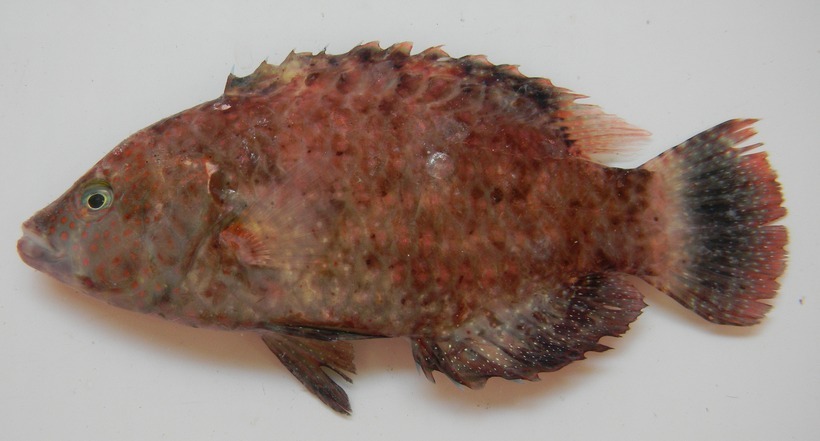
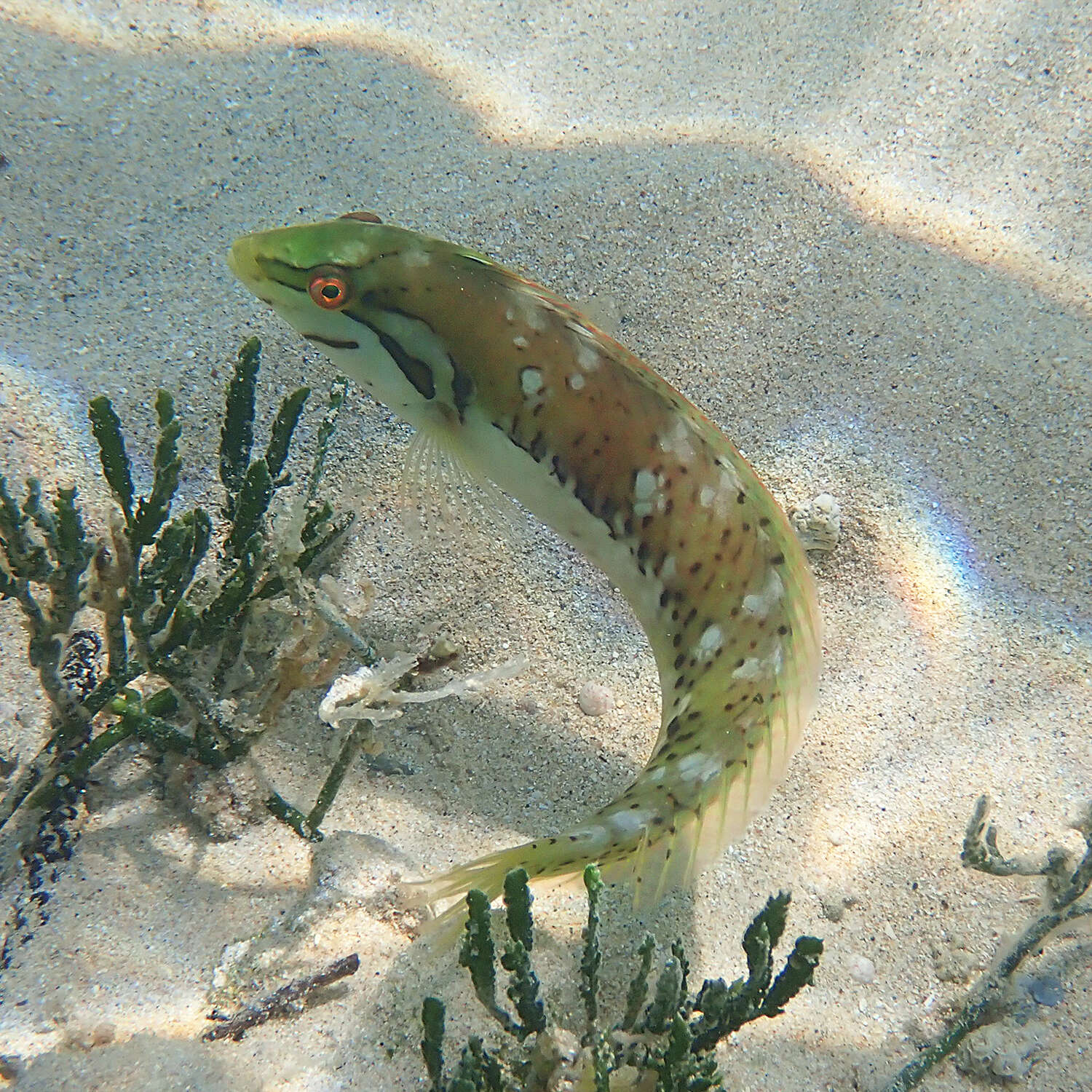
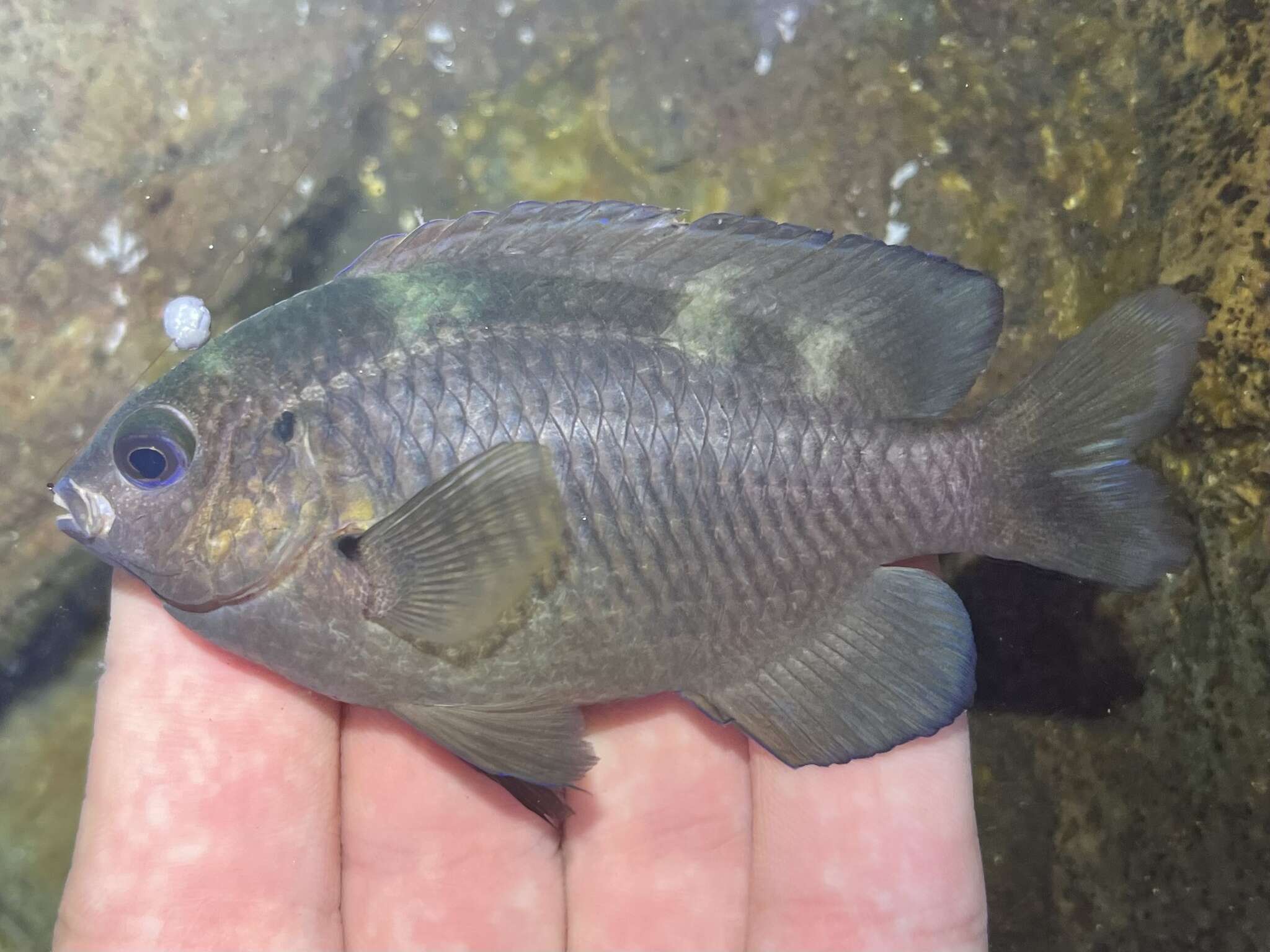









Species Identified
Suezichthys gracilis (Steindachner and Döderlein, 1887) (Slender wrasse)
Found around coral and rock patches in shallow protected sandy areas . Amphipods, small crustaceans, and polychaetes have been reported from the stomachs of Japanese specimens.
Cheilinus chlorourus (Bloch, 1791) (yellowdotted maori wrasse)
Inhabits lagoon and coastal reefs, in areas with mixed sand, rubble, and coral . Occasionally in grassy areas. Feeds mainly on benthic invertebrates such as mollusks and crustaceans.
Novaculichthys macrolepidotus (Bloch, 1791) (Seagrass wrasse)
Found in seagrass beds and sandy algal flats of lagoons and mangrove channels. Secretive amongst the vegetation and well-camouflaged .
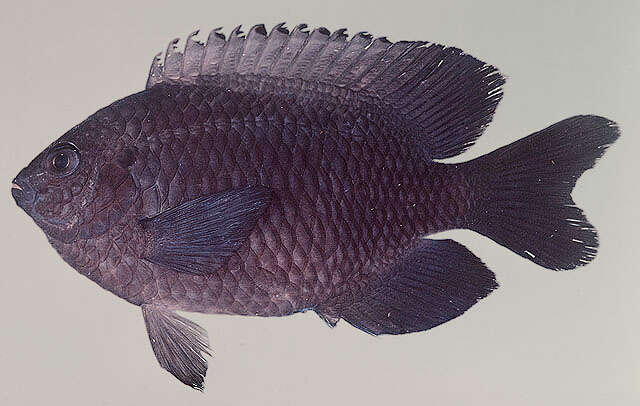
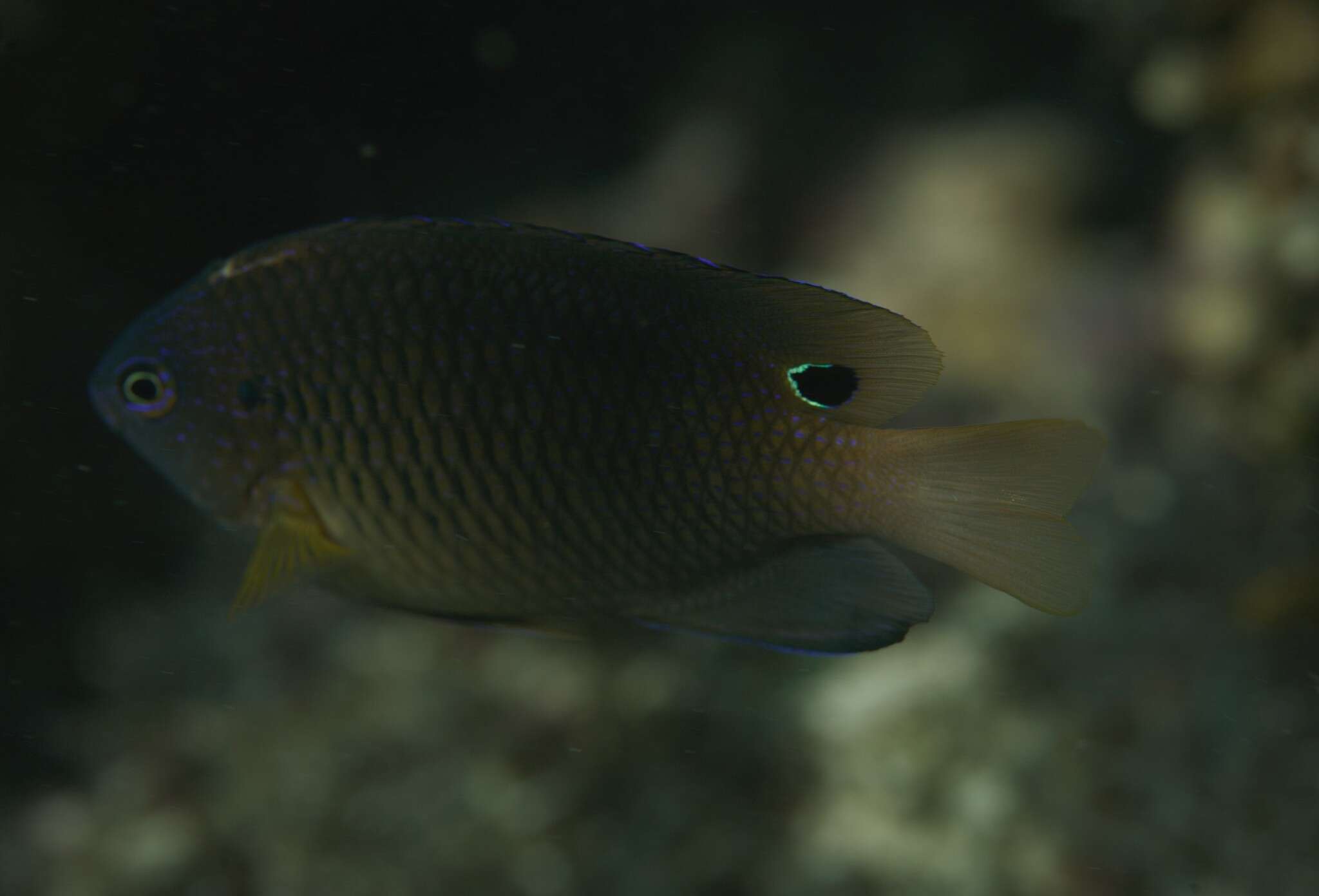
Pomacentrus spilotoceps Randall, 2002 (Guru)
Pomacentrus agassizii Bliss, 1883 (Creole damsel)
Inhabits lagoon and inshore coral reefs .
Plectroglyphidodon sindonis (Jordan and Evermann, 1903) (Rock damselfish)
Found in very shallow water in the surge zone of exposed rocky shores . Benthopelagic . Feeds mainly on benthic algae and occasionally on small invertebrates .
Pomacentrus simsiang Bleeker, 1856 (Blueback damsel)
Occurs singly or in small aggregations at slightly turbid areas of lagoon and coastal reefs. Feeds mainly on benthic algae.
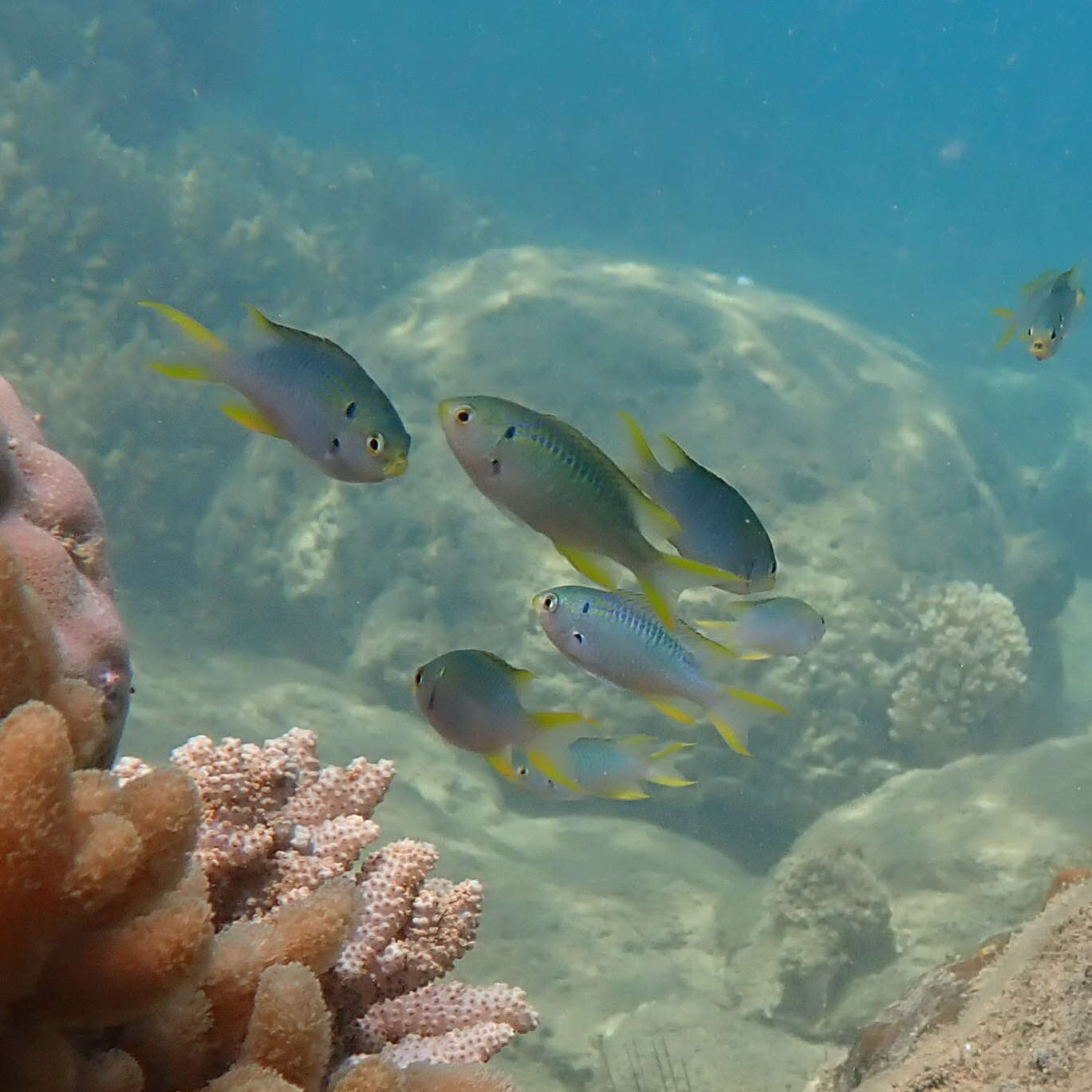
Neopomacentrus filamentosus (Macleay, 1882) (Brown demoiselle)
Sporadic distribution . Inhabits soft bottoms of lagoons and inshore reefs around coral outcrops, rocks, debris, etc.
Neopomacentrus nemurus (Bleeker, 1857) (Coral demoiselle)
Inhabits lagoon and inshore coral reefs, usually in areas where silting is prevalent. Aggregates over coral outcrops to feed on zooplankton .
Pomacentrus adelus Allen, 1991 (Obscure damsel)
Inhabits lagoon, coastal and seaward reefs , usually on open rubble patches .
Pomacentrus aquilus Allen and Randall, 1980 (Dark damsel)
Inhabits inshore coral reefs.
Chaetodon hemichrysus Burgess & Randall, 1978 (Half-yellow butterflyfish)
Oviparous . Form pairs during breeding .
Chaetodon humeralis Günther, 1860 (Butterflyfish)
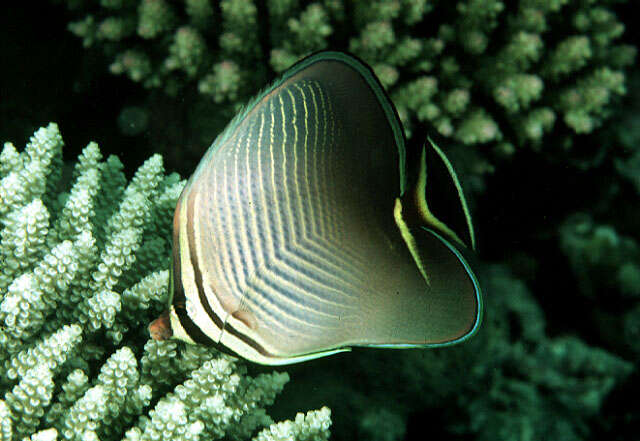
Chaetodon triangulum Cuvier, 1831 (Triangle butterflyfish)
Inhabit lagoon and seaward reefs . Closely associated with Acropora corals, particularly the staghorn variety. Territorial and in pairs . Juveniles solitary among coral branches . Feed mainly on coral polyps and theref...
Read More
Read More
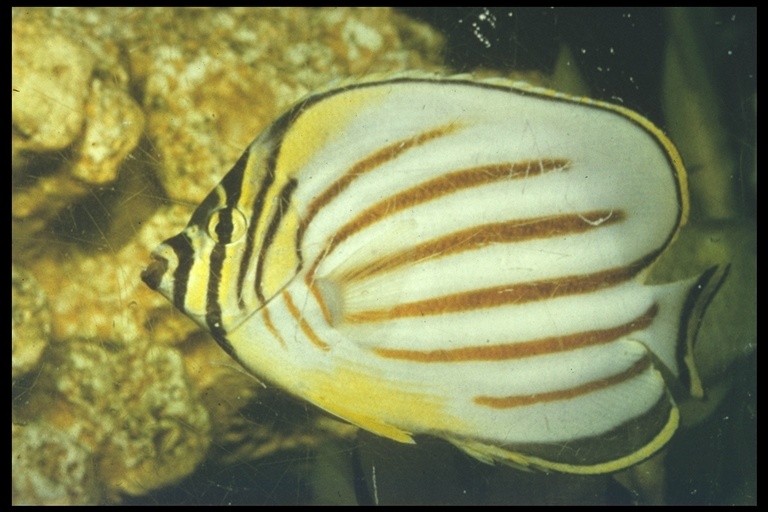
Chaetodon ornatissimus Cuvier, 1831 (Ornate butterflyfish)
Occur in clear waters and coral-rich areas of lagoon and seaward reefs. However, only common in seaward reefs . Benthopelagic . Juveniles are solitary, living among branching corals, while adults are almost always in pa...
Read More
Read More
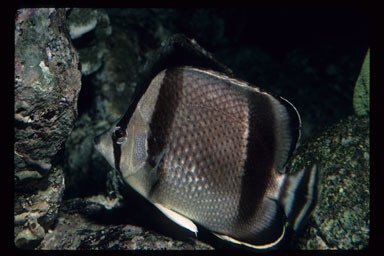
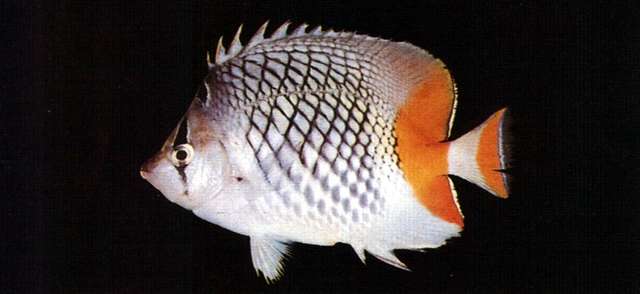
Chaetodon xanthurus Bleeker, 1857 (Pearlscale butterflyfish)
Clear coastal to outer reef slopes and drop-offs . Found around staghorn corals. The only member of the family with a crosshatch pattern of dark lines on the sides. Generally seen below 15 m depth and occurs singly or i...
Read More
Read More
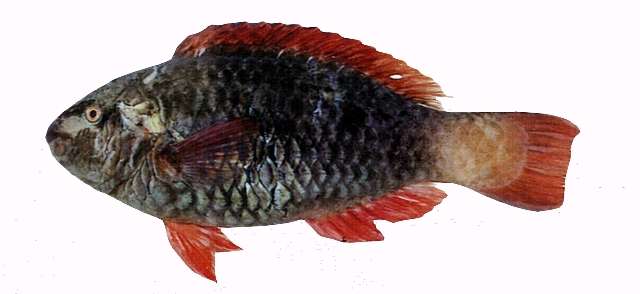
Sparisoma rubripinne (Valenciennes, 1840) (Redfin parrot)
Inhabits coral reefs and seagrass beds. Juveniles or primary-phase fish can rapidly assume a mottled pattern as it comes to rest on the bottom. Spawning is usually a group activity in similarly colored males and females . Feeds on benthic algae and seagrasses . A protogynous hermaphrodite .
Scarus frenatus Lacepède, 1802 (Bridled parrotfish)
Usually found on exposed outer reefs, sometimes in very shallow water . Juveniles occur among coral and rubble of lagoon reefs. Grazes on benthic algae . Generally solitary . Often in schools of mixed species when feeding .
Chlorurus rhakoura Randall and Anderson, 1997
Inhabits inshore rocky reefs and often in small schools .
Sparisoma chrysopterum (Bloch and Schneider, 1801) (Blisterside)
Occurs in coral reefs and adjacent habitats, the young especially in seagrass beds. Juveniles or primary-phase adults rapidly assume a mottled pattern with which they blend with the substratum when they come to rest on the bottom. Feeds on benthic algae and seagrasses.
Calotomus spinidens (Quoy and Gaimard, 1824) (Spinytooth parrotfish)
Found in coastal bays and deep lagoons . Inhabits seagrass beds or dense beds of algae. Well-camouflaged and easily overlooked . Feeds on these or the associated epiphytes. Caught nets and other types of artisanal gear.
Genicanthus takeuchii Pyle, 1997 (Mizutama-yakko)
Inhabits coral reefs .
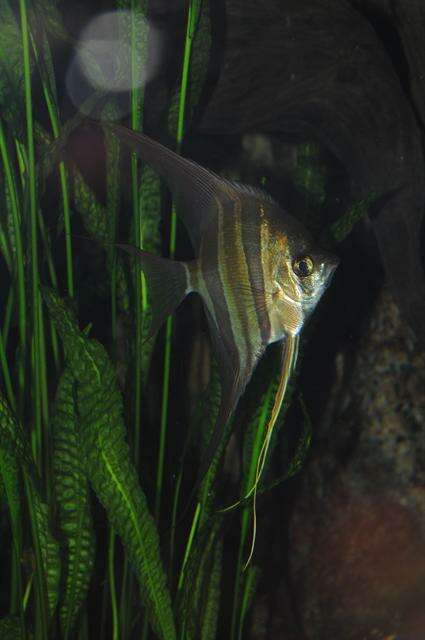
Pterophyllum altum Pellegrin, 1903 (deep angelfish)
Inhabits rivers. May reach about 20 cm in height . Maximum length 18 cm TL .
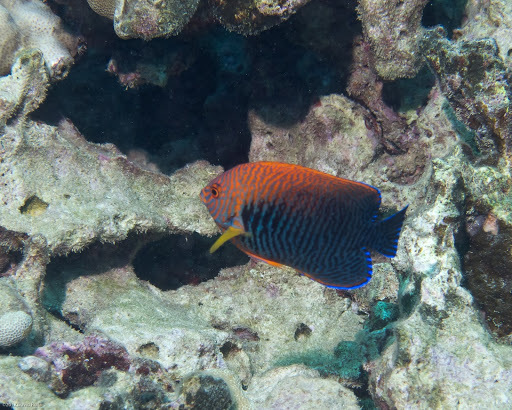
Centropyge potteri (Jordan and Metz, 1912) (Russet angelfish)
Inhabit rock, coral, or rubble areas of seaward reefs; juveniles occasionally in 5 m . Benthopelagic . Feed on algae and detritus . Oviparous , monogamous . Peak reproductive activity occurs from mid-December through May. Spawn at dusk during the week before full moon .
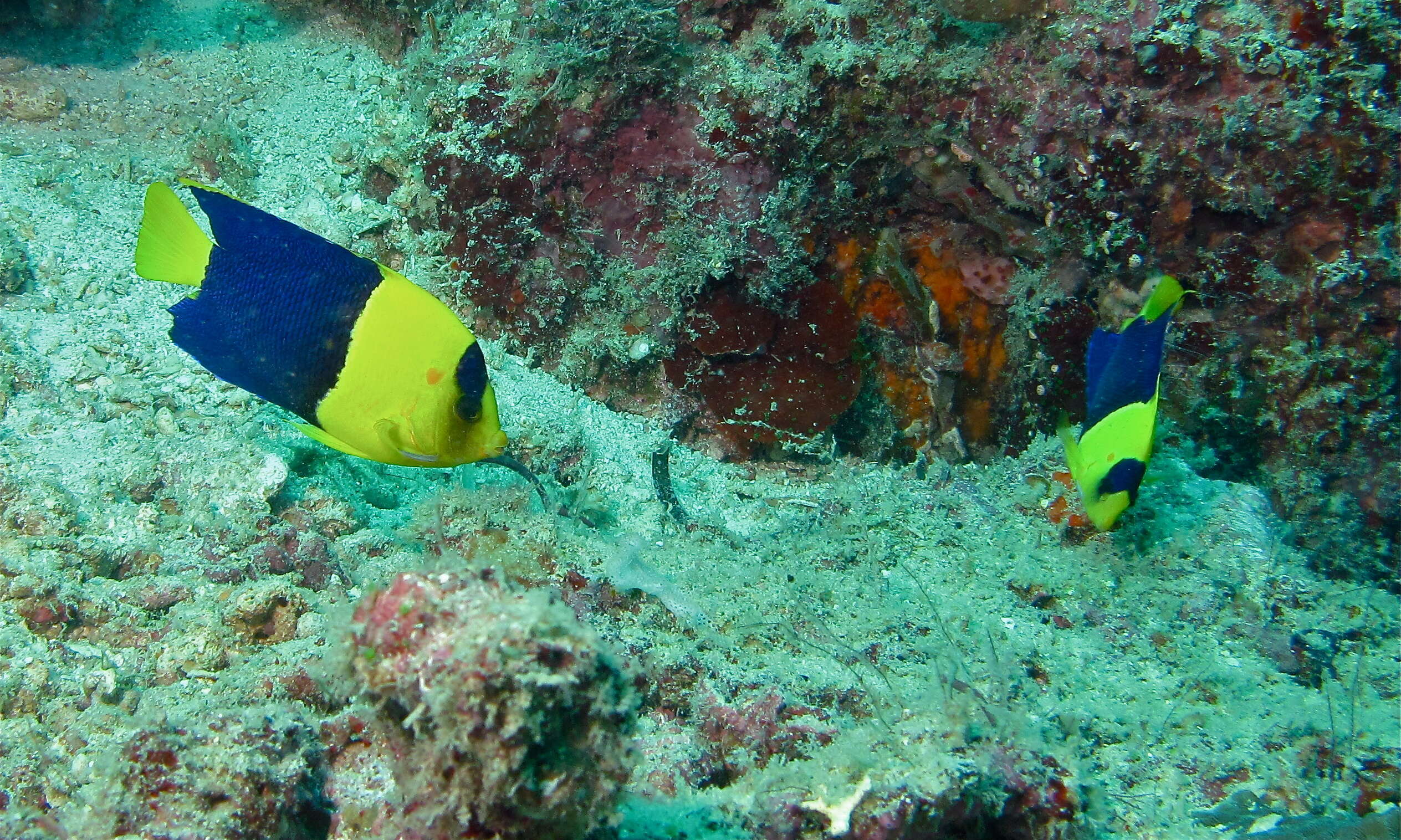
Centropyge bicolor (Bloch, 1787) (Bicolor angelfish)
Inhabits lagoon, channel, or protected seaward reef slopes, drop offs, coral and rubble areas . Usually in pairs or in small groups. Feeds on algae, small crustaceans and worms. Darts from one hiding place to the next. Commonly exported through the aquarium trade .
Centropyge resplendens Lubbock and Sankey, 1975 (Resplendent angelfish)
The habitat of this species consists of rock and rubble at depths of from 15 m to at least 40 m. Has been reared in captivity .
Centropyge joculator Smith-Vaniz and Randall, 1974 (Yellowhead angelfish)
Found in coral and rubble areas on steep outer reef slopes. Solitary or in small groups of four to five individuals.
Centropyge flavipectoralis Randall and Klausewitz, 1977 (Yellowfin angelfish)
Found in area of rubble with little coral growth. Occurs in small groups on semi-open substrate, Maximum depth reported taken from Ref. 48636.
Share on Social Networks
- Facebook:

personalize your shared text as well as its destination (wall, page...) or send as a private message to a friend
- Twitter: Tweet personalize your tweet
- Google Plus:
Direct link to this dive
- Long link:
- Short link:


 We are participating today in the startup contest Techcrunch Disrupt. Support Diveboard by voting for us!
























































































Coral Garden Beach Resort - North CGBR - North
1st dive 2 boat dive
buoy front of CGBR, drop in drop to depth turn North swim in Coral heads, coral gardens, reefs, back to boat
multilevel, solo dive with divers close in area
windy choppy morning, partly cloudy, good viz, low to no current